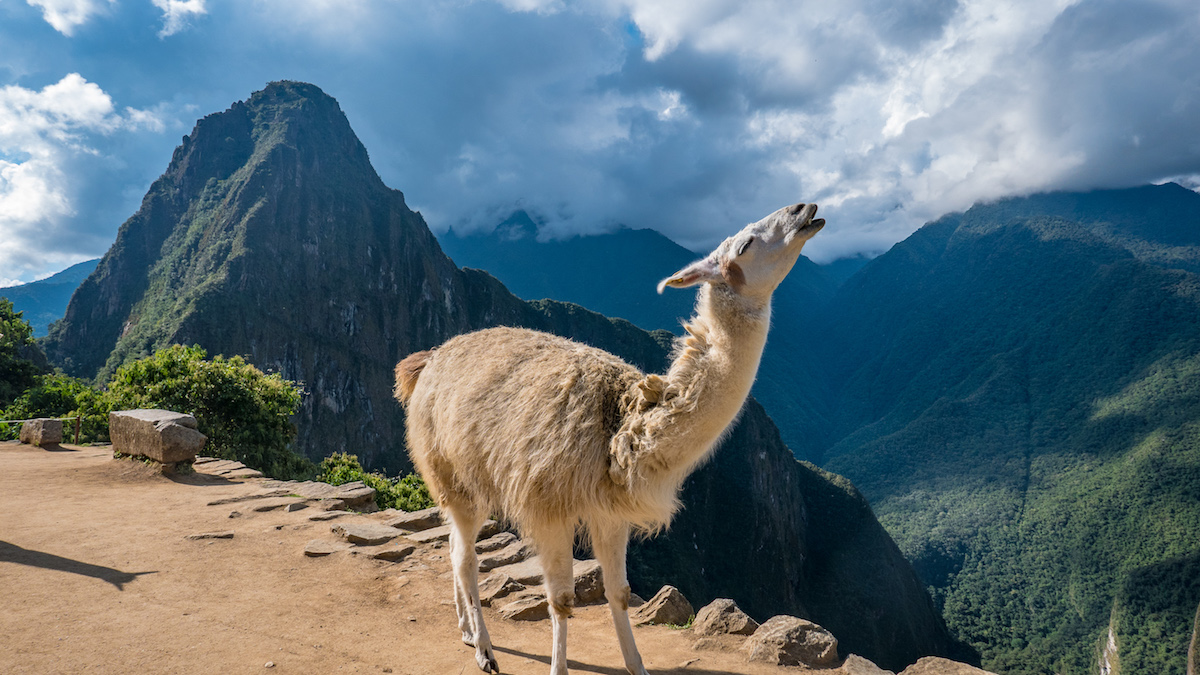
Perusing Peru
It’s time to wrap things up. I am writing this from cloudy and windy Dublin (thanks Ireland for delivering with the summer weather as usual <3), listening to The End by The Doors and the memories are getting hazy but it would not be fair to leave Peru out of this blog altogether.
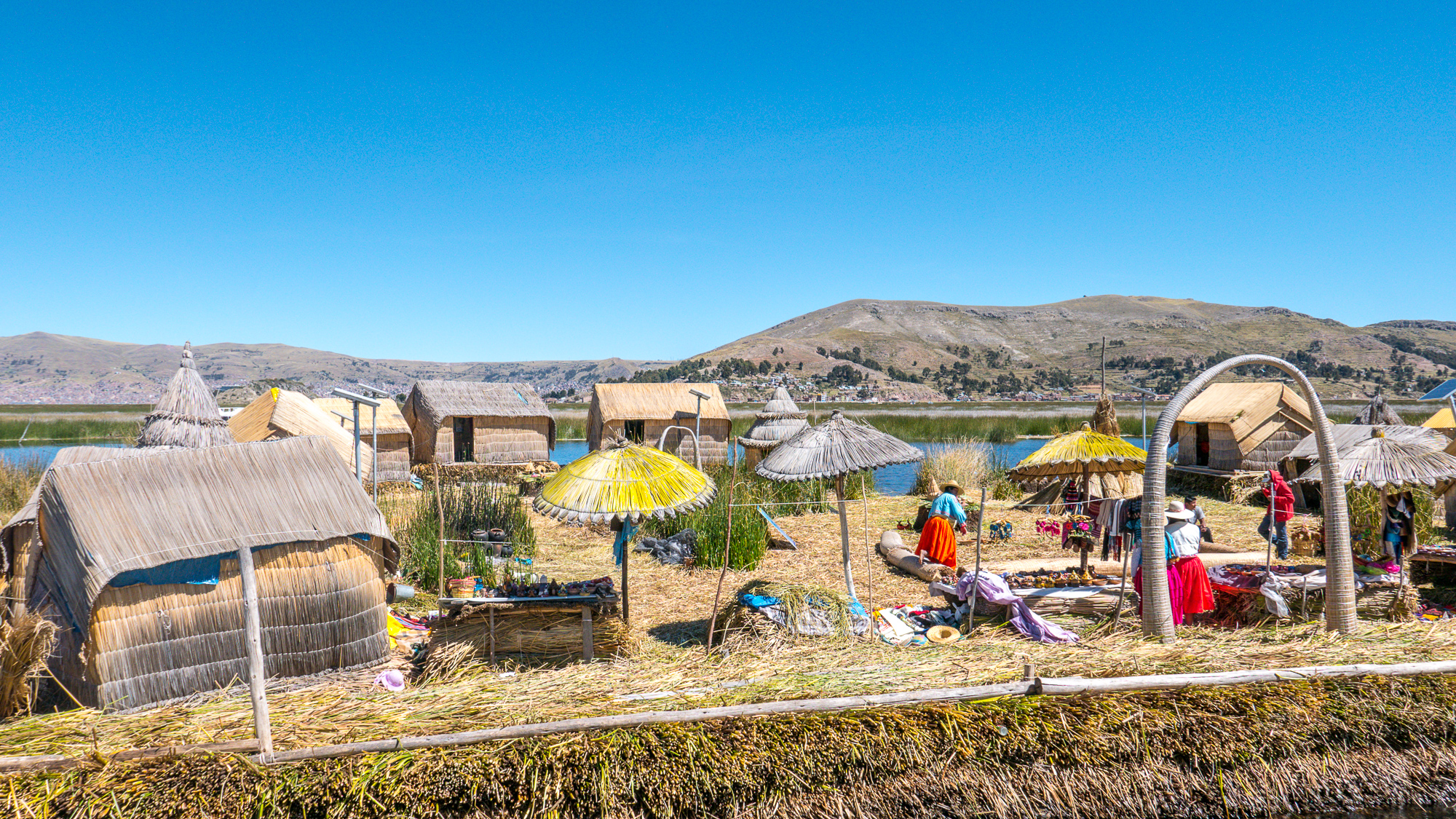
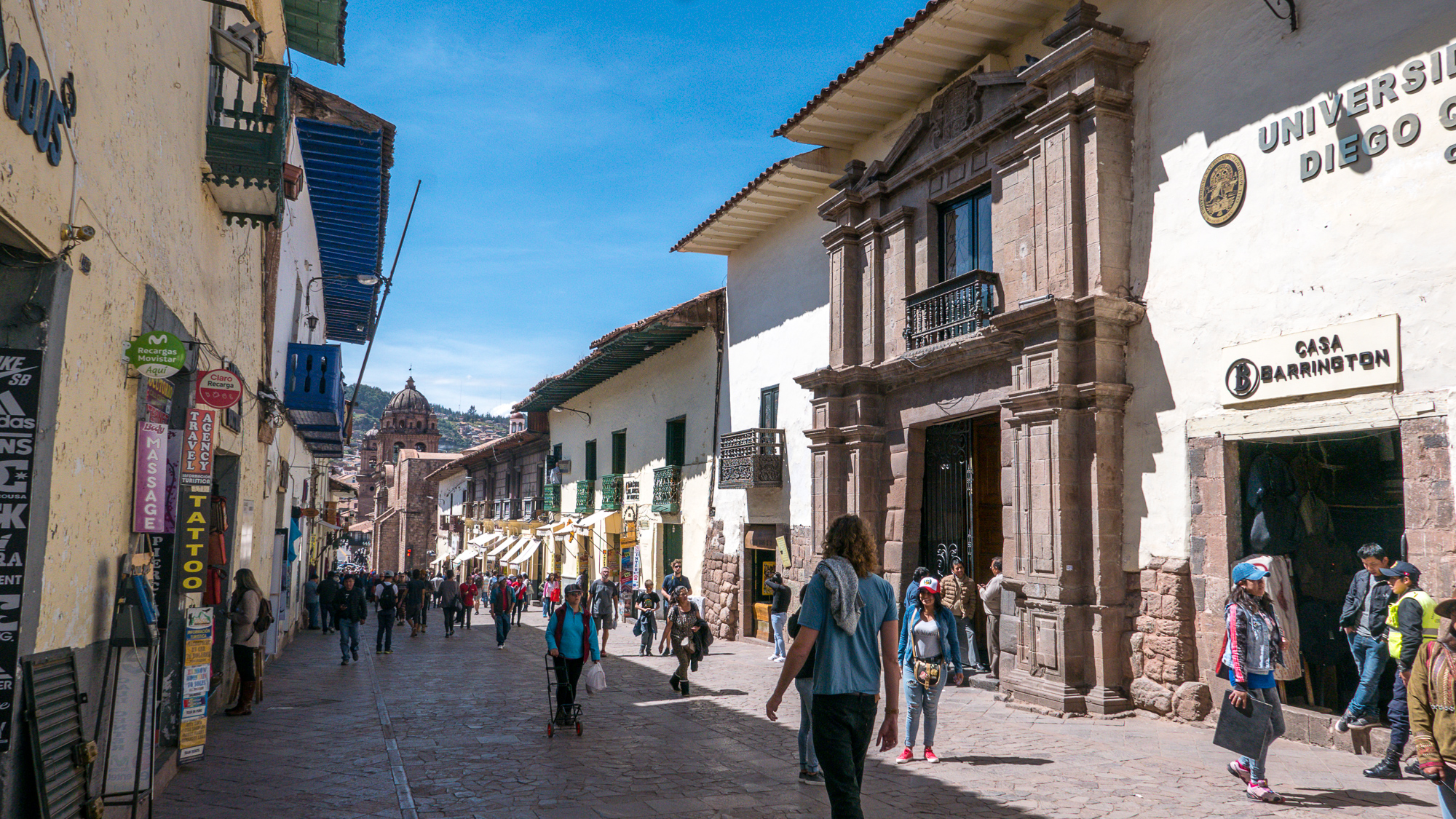
Our days in Peru included the most touristy experience ever - The Floating Islands - and days wasted in Puno, a great week in Cusco, last hiking in Machu Picchu, a 14 hr bus turned into a 19 hr bus to an oasis in the middle of the desert, expensive sandboarding in Huacachina, three days in Amazonas, tan & chill in Mancora, and lastly couple rainy days in Lima.
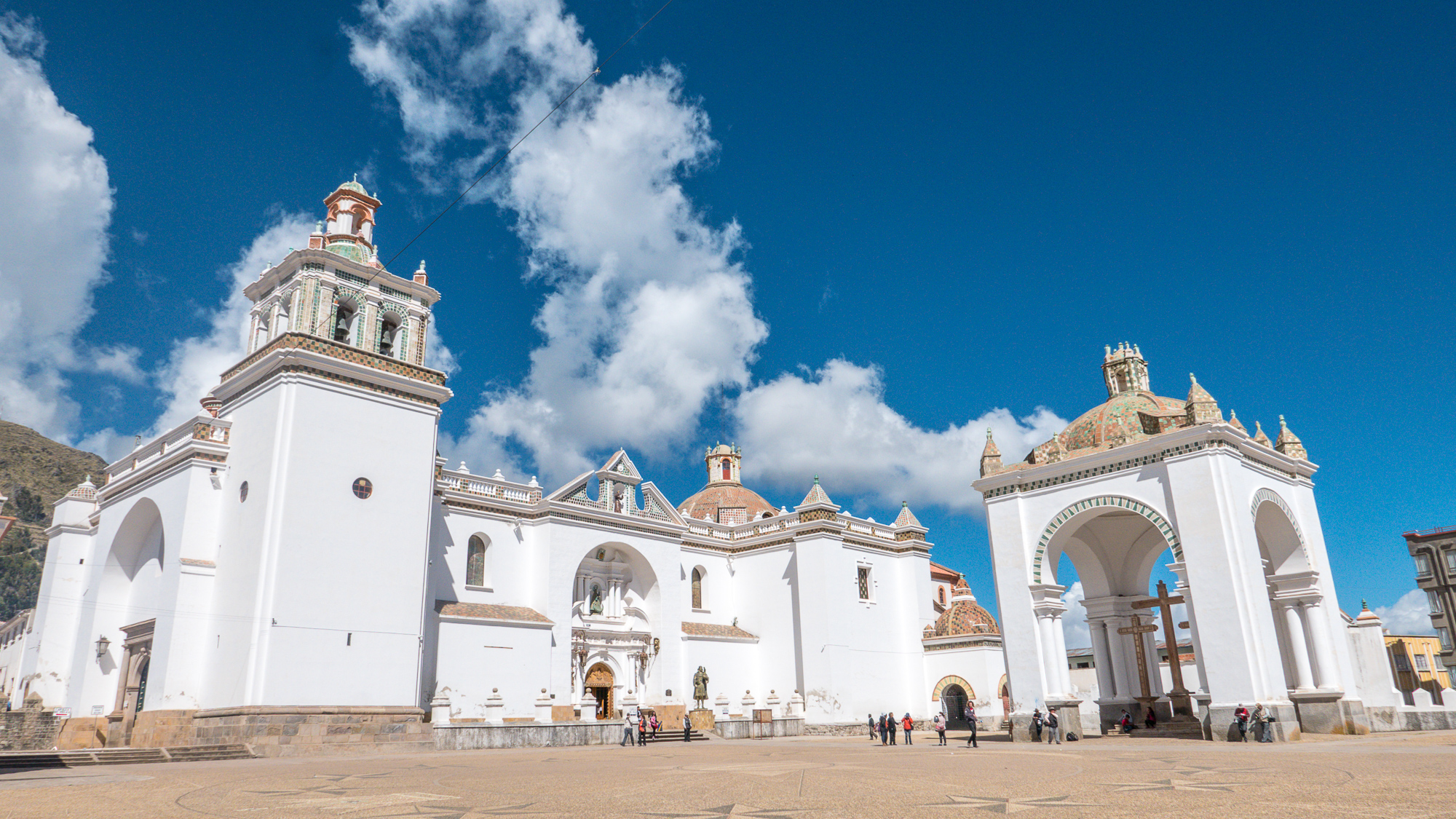

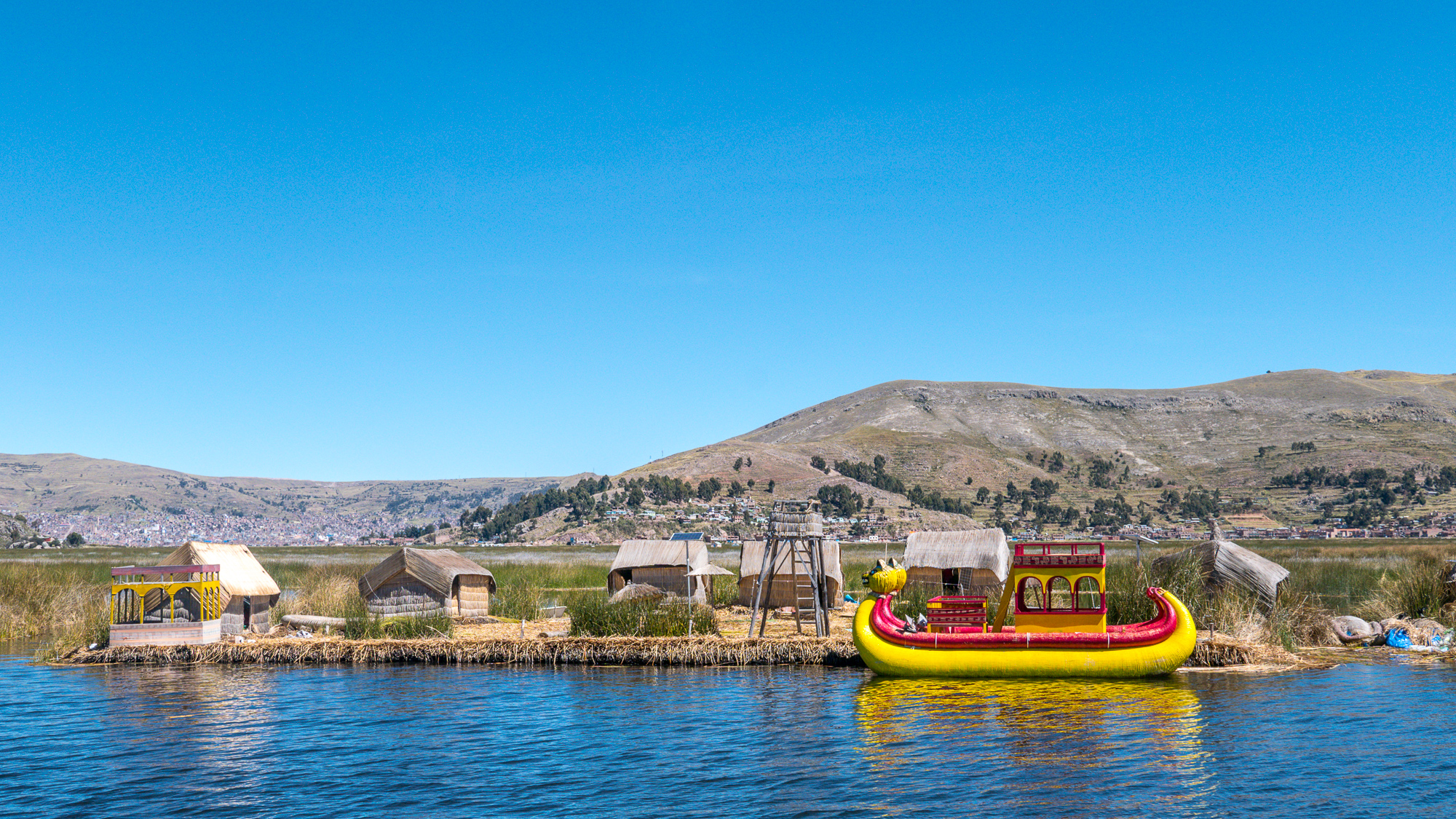
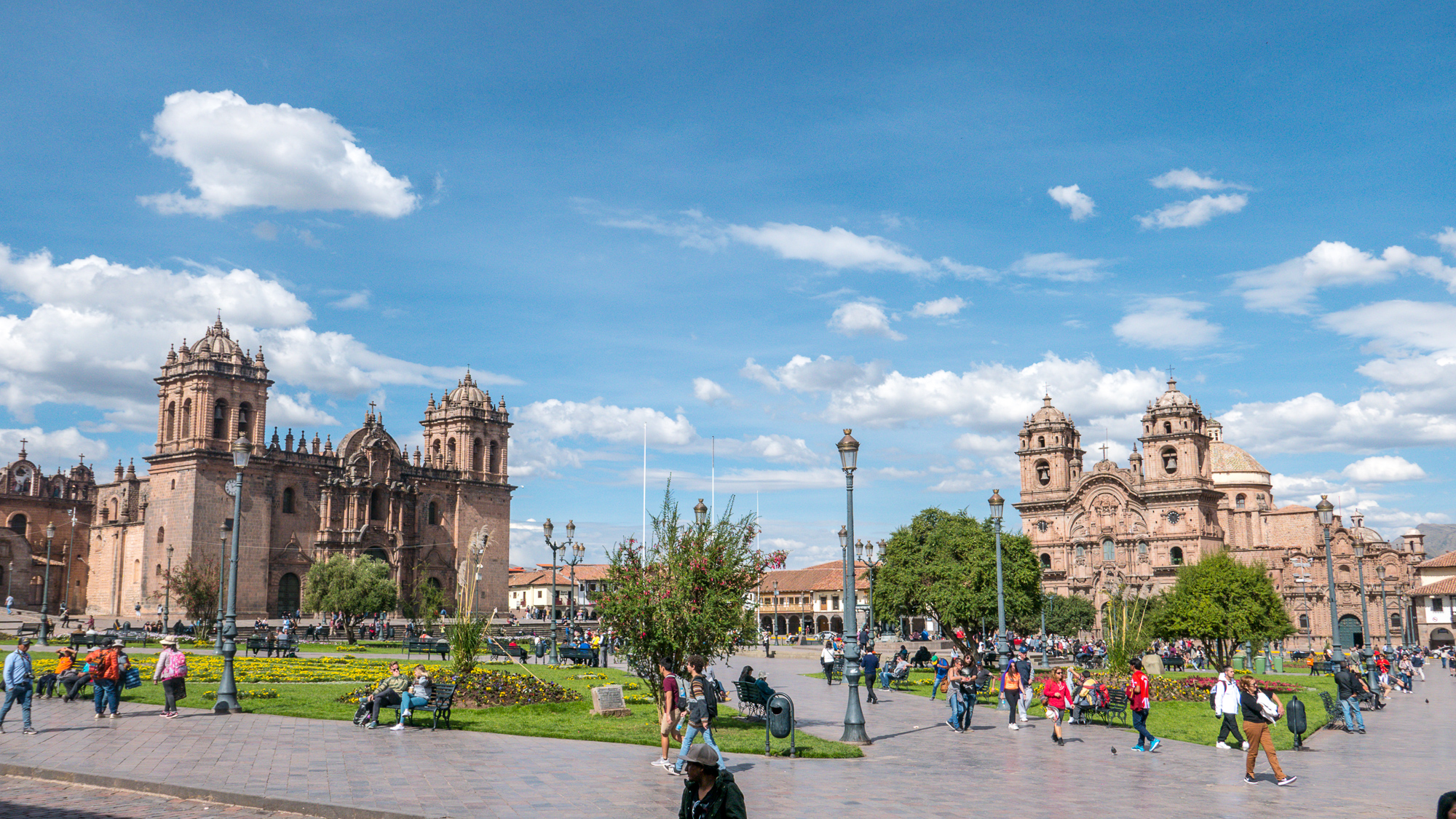
One could also describe our time in Peru in terms of “skip that, we’re not hiking” which led to not going to Rainbow Mountain and Huarez at all. Just couldn’t be bothered any more. And I am pretty sure those colors of the Rainbow Mountain are photoshopped into the pictures afterwards anyway so I hope we didn’t miss that much.
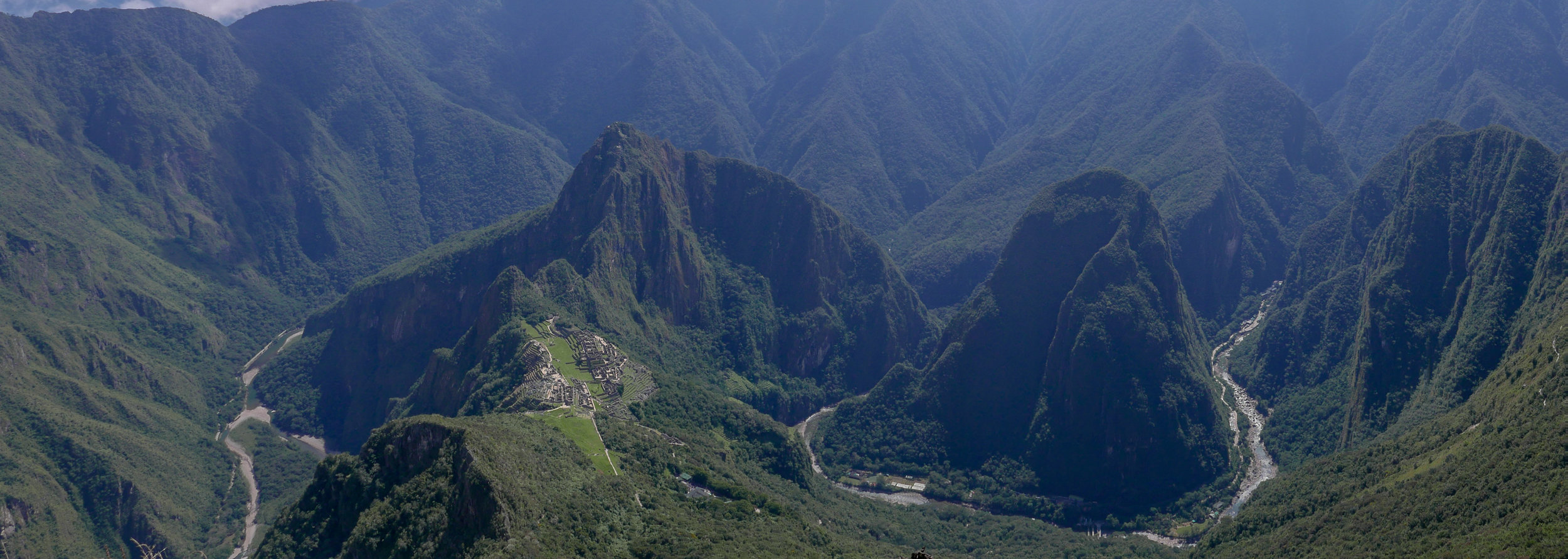
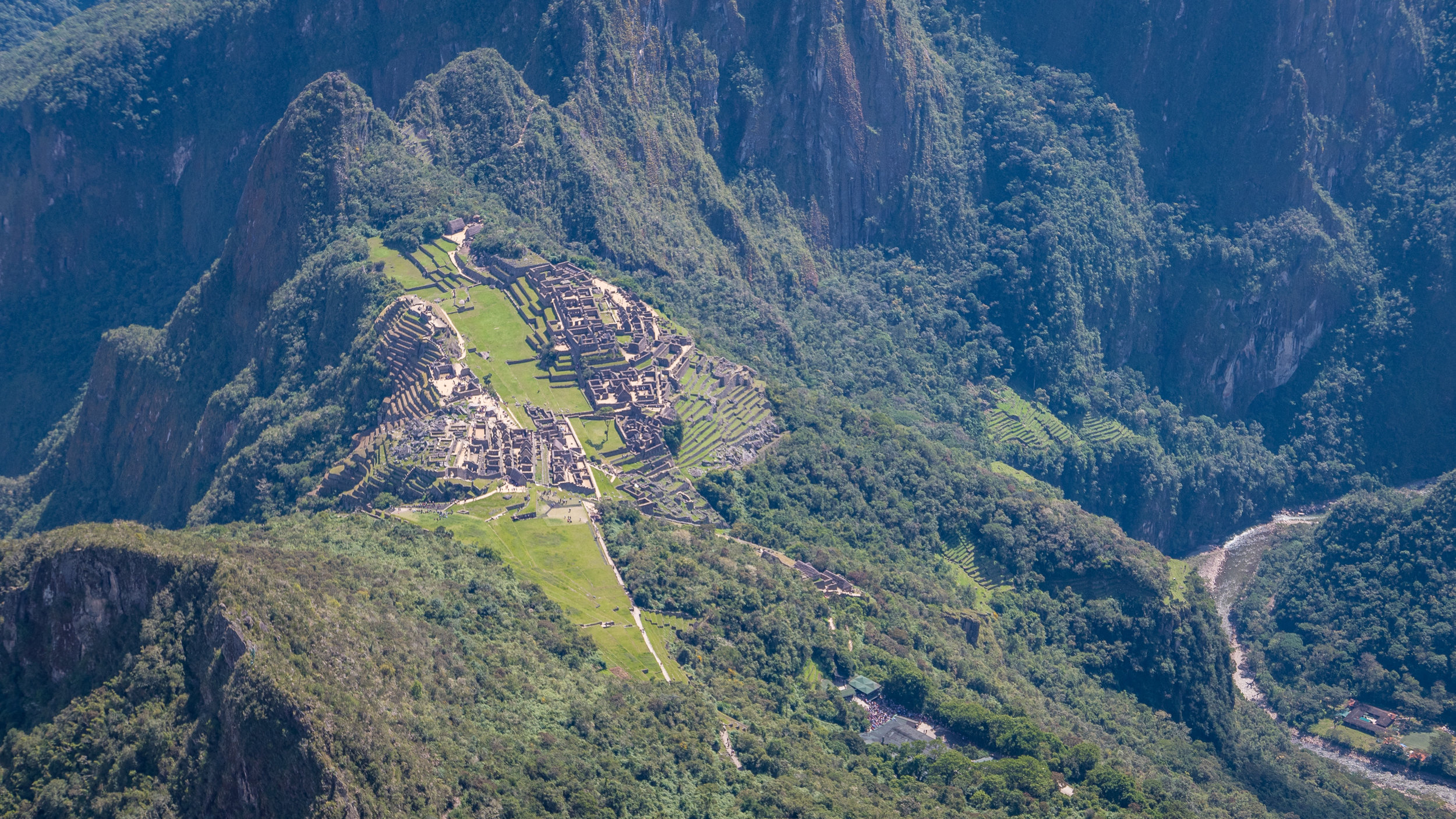
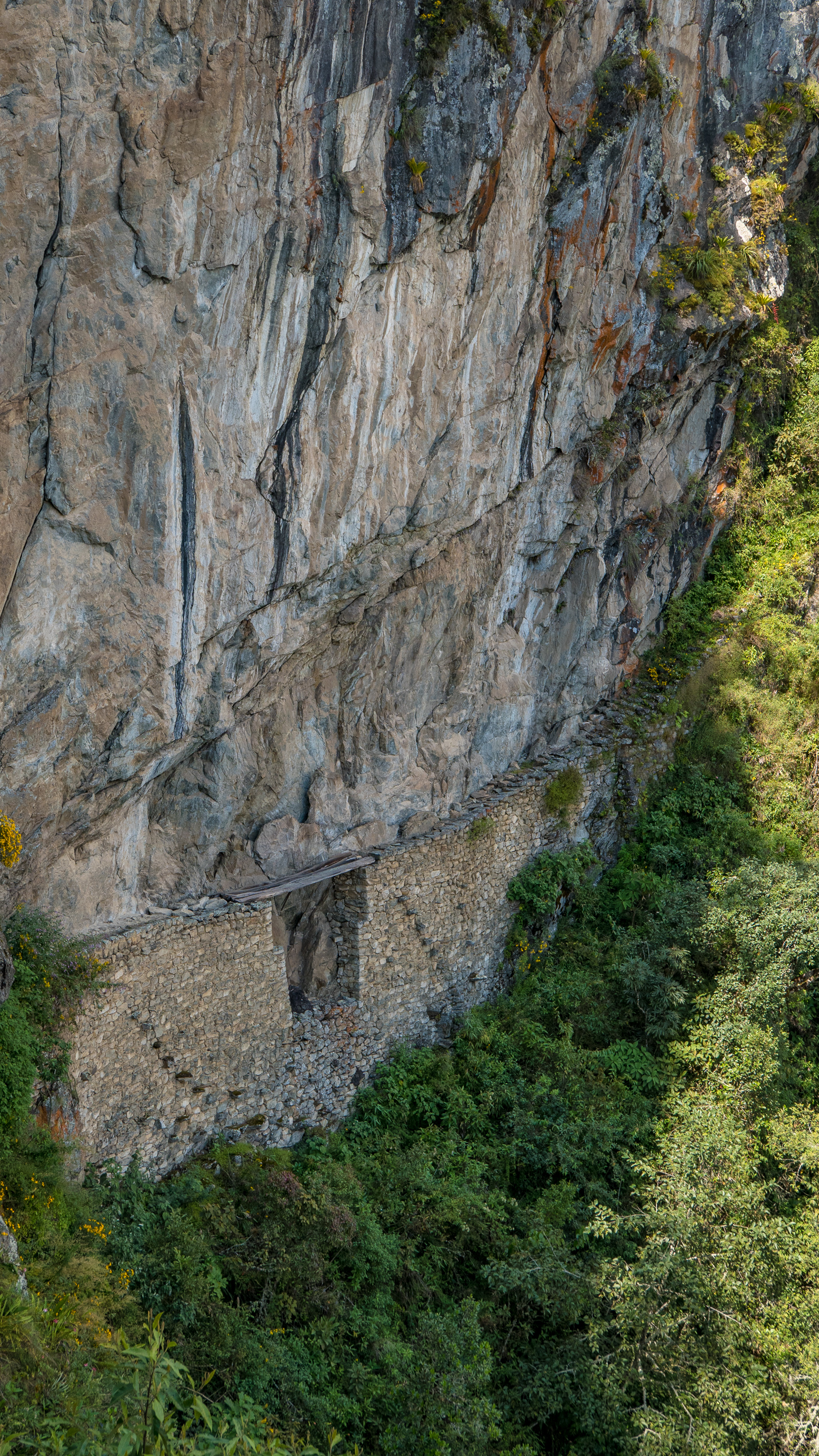
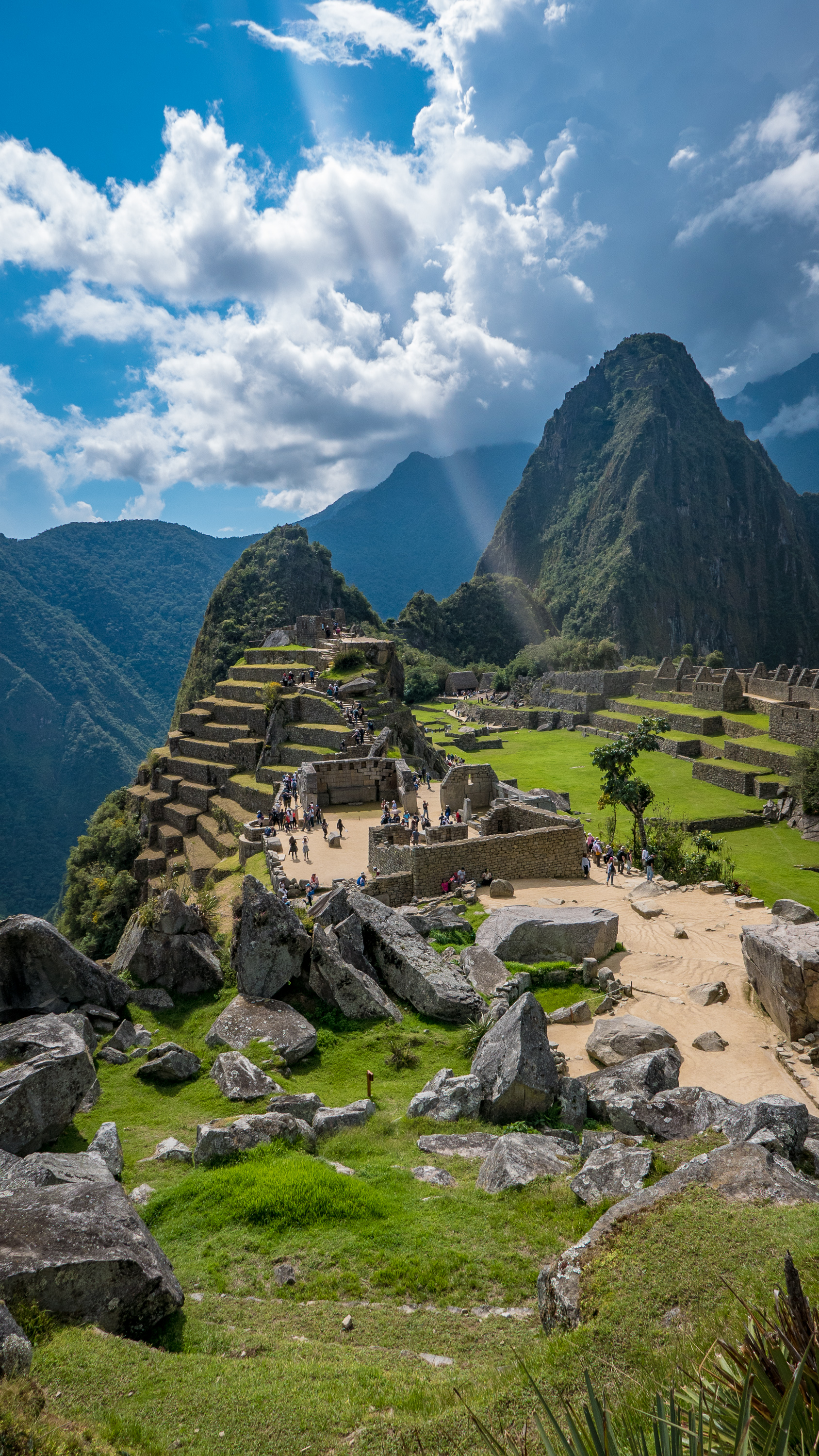
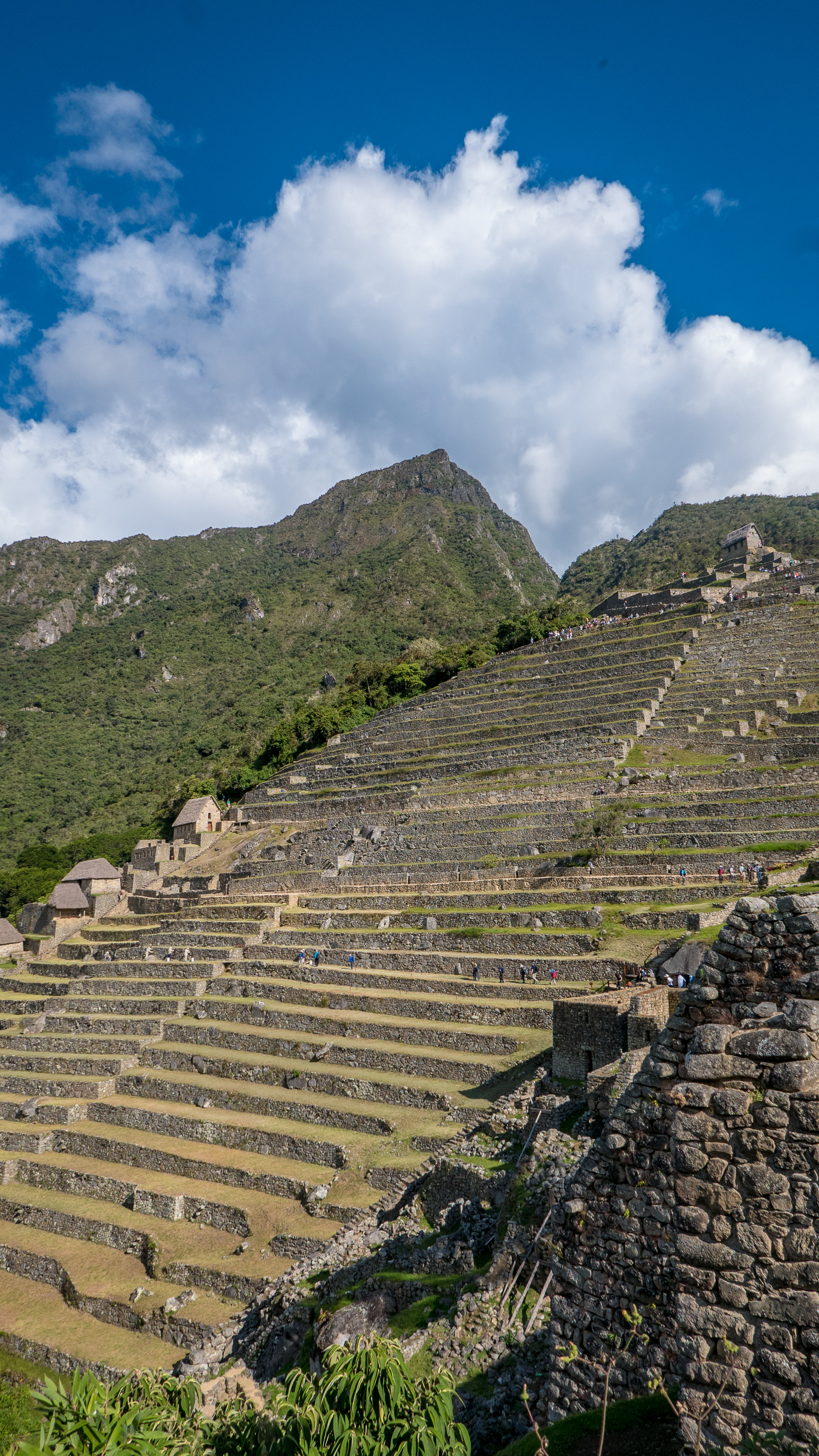
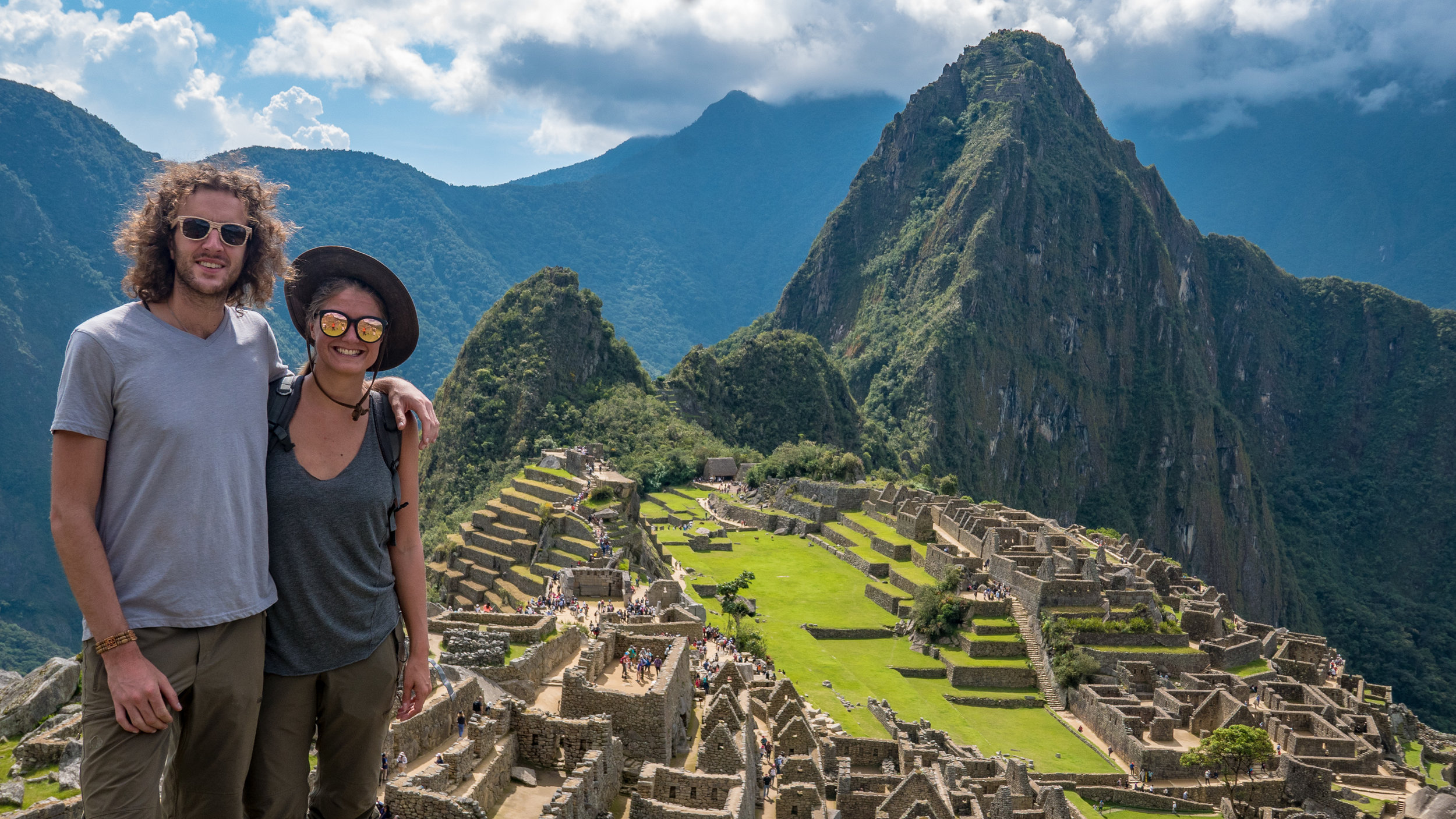
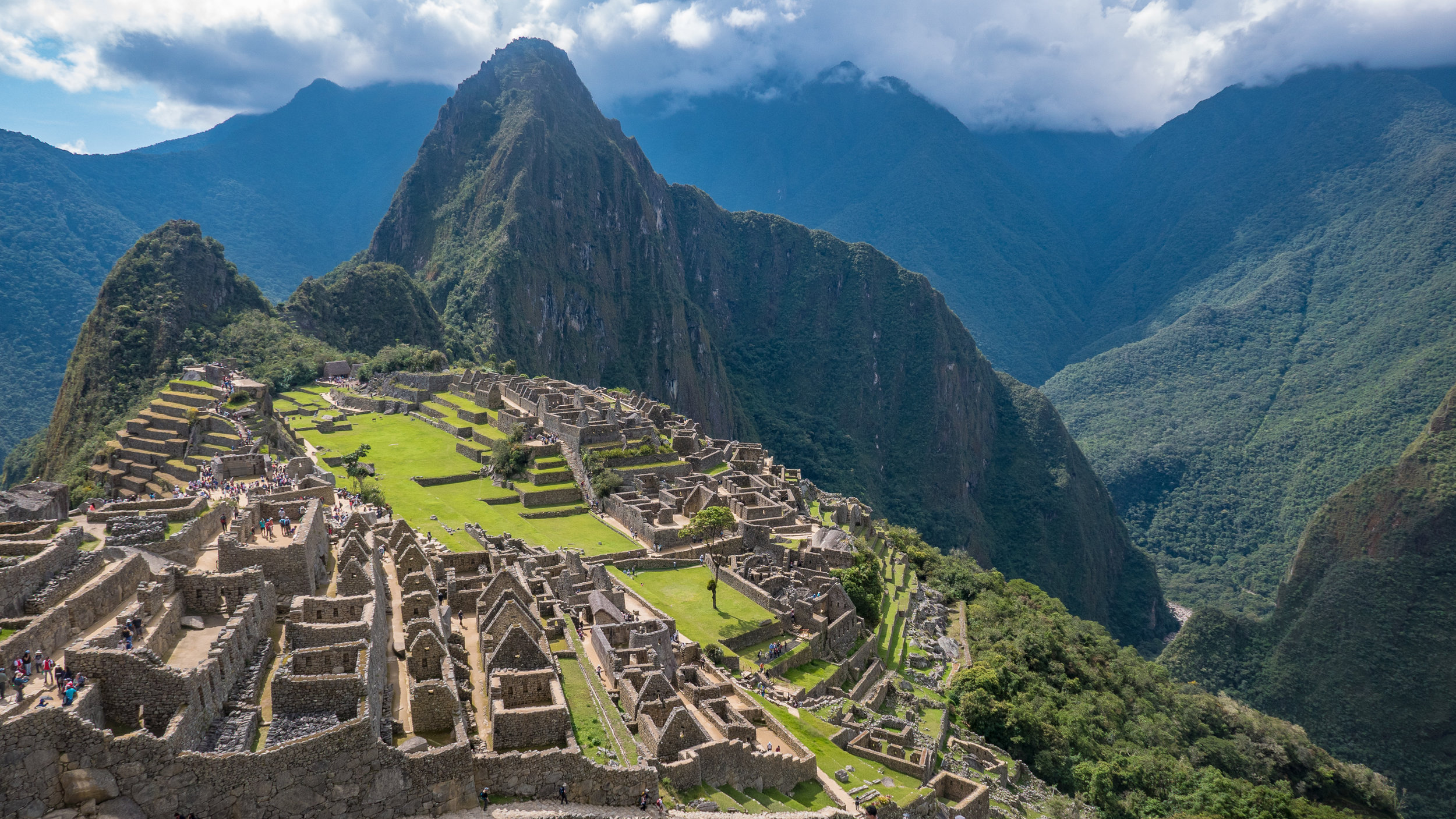
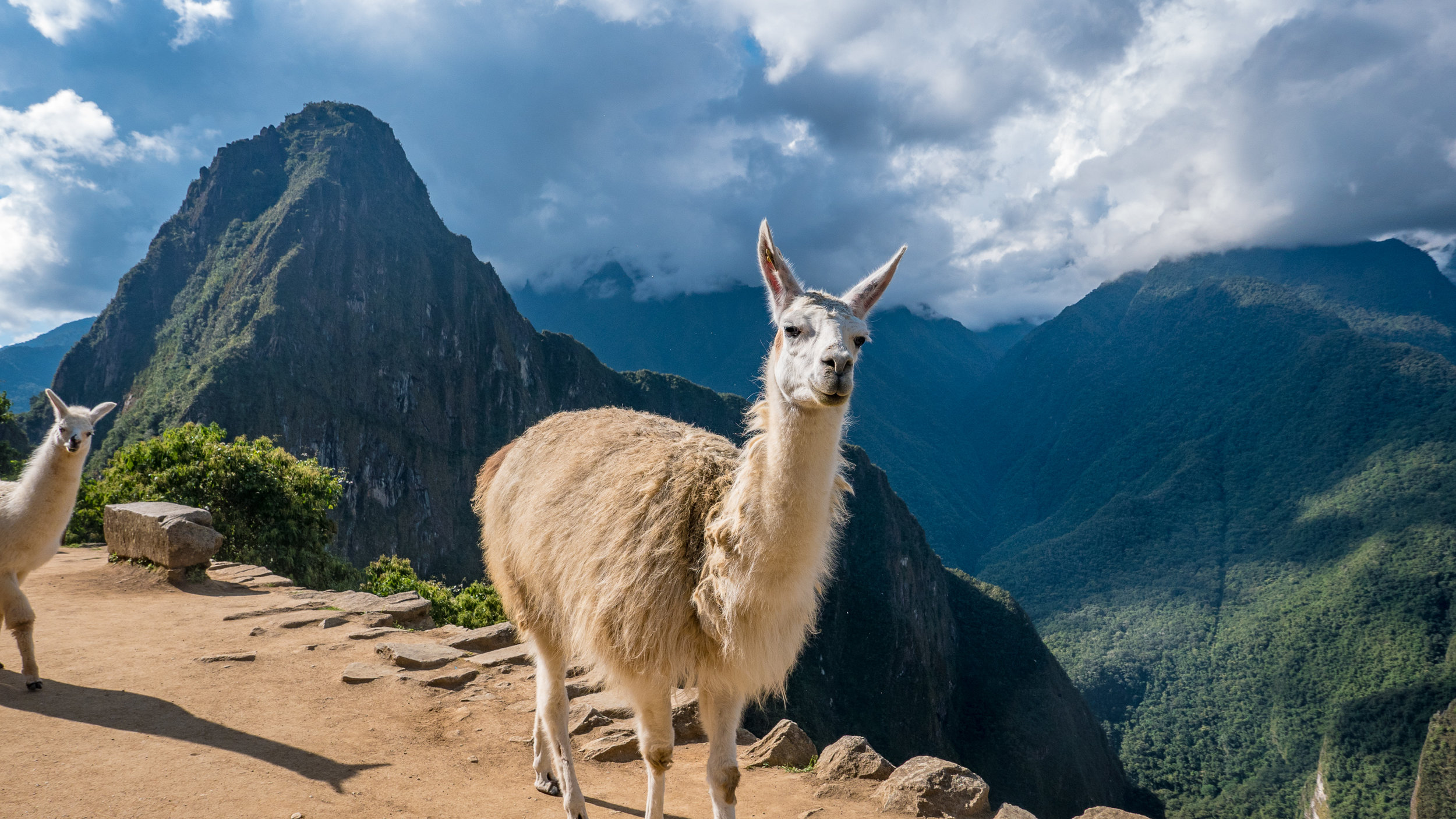
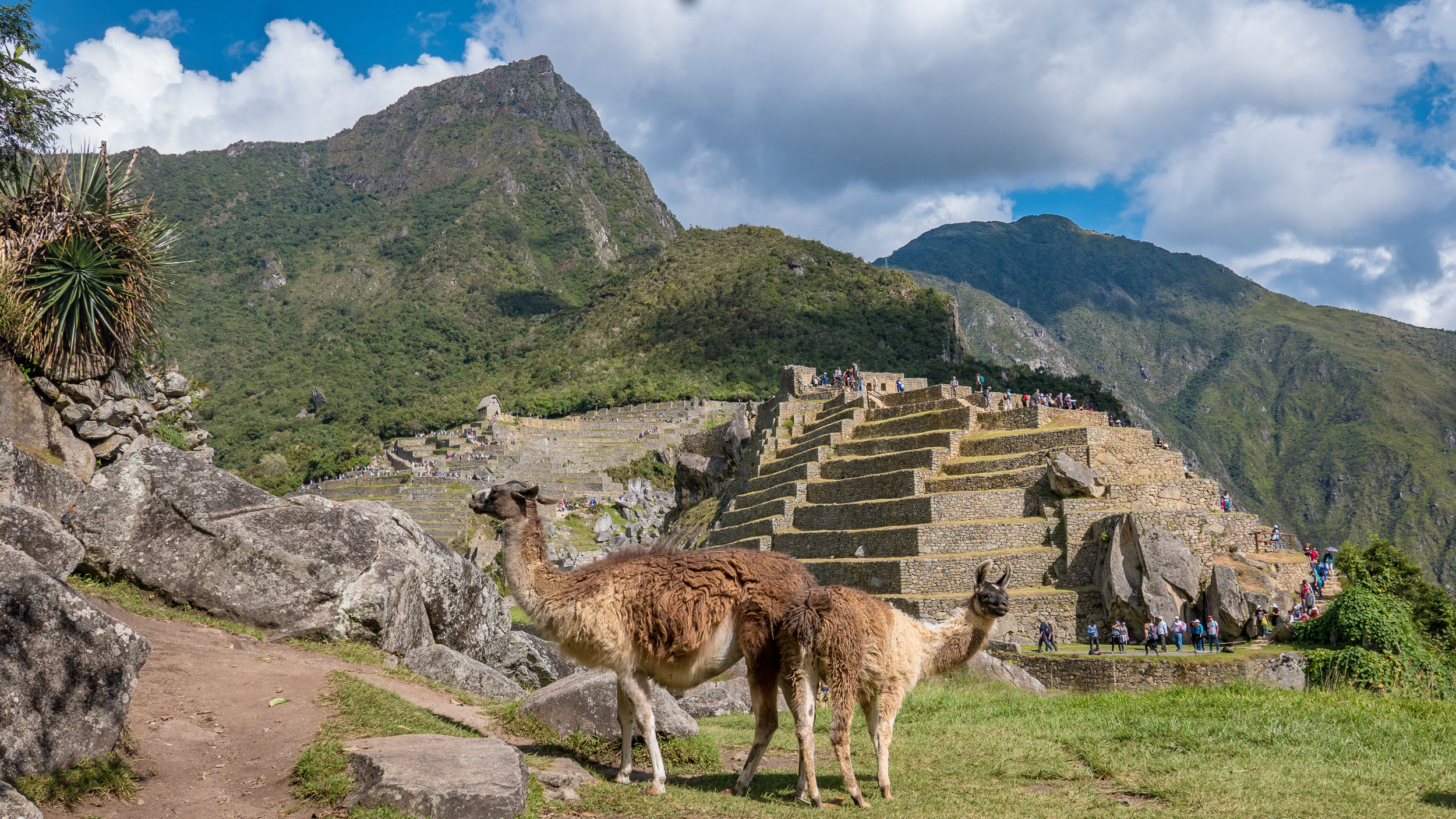
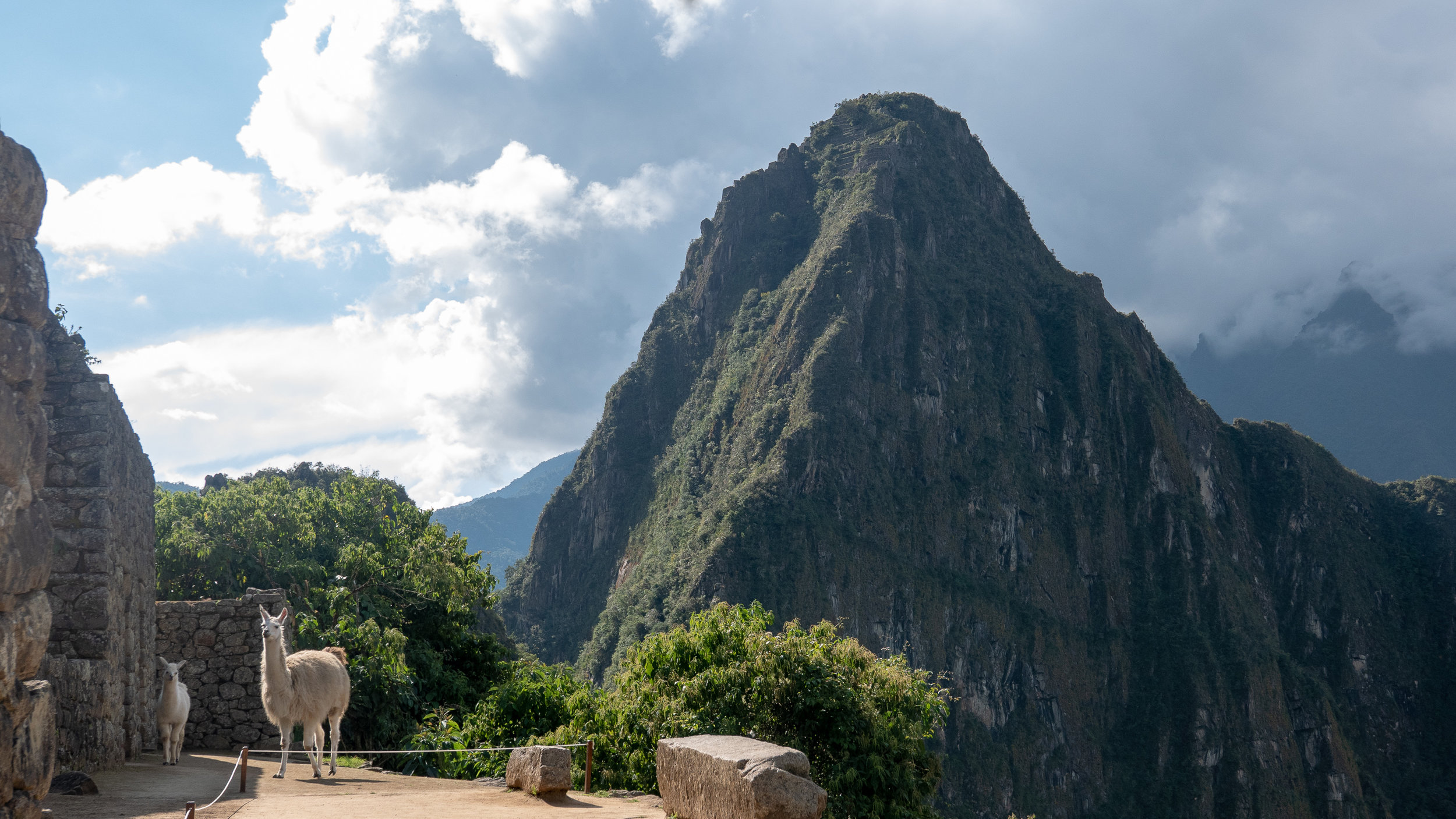
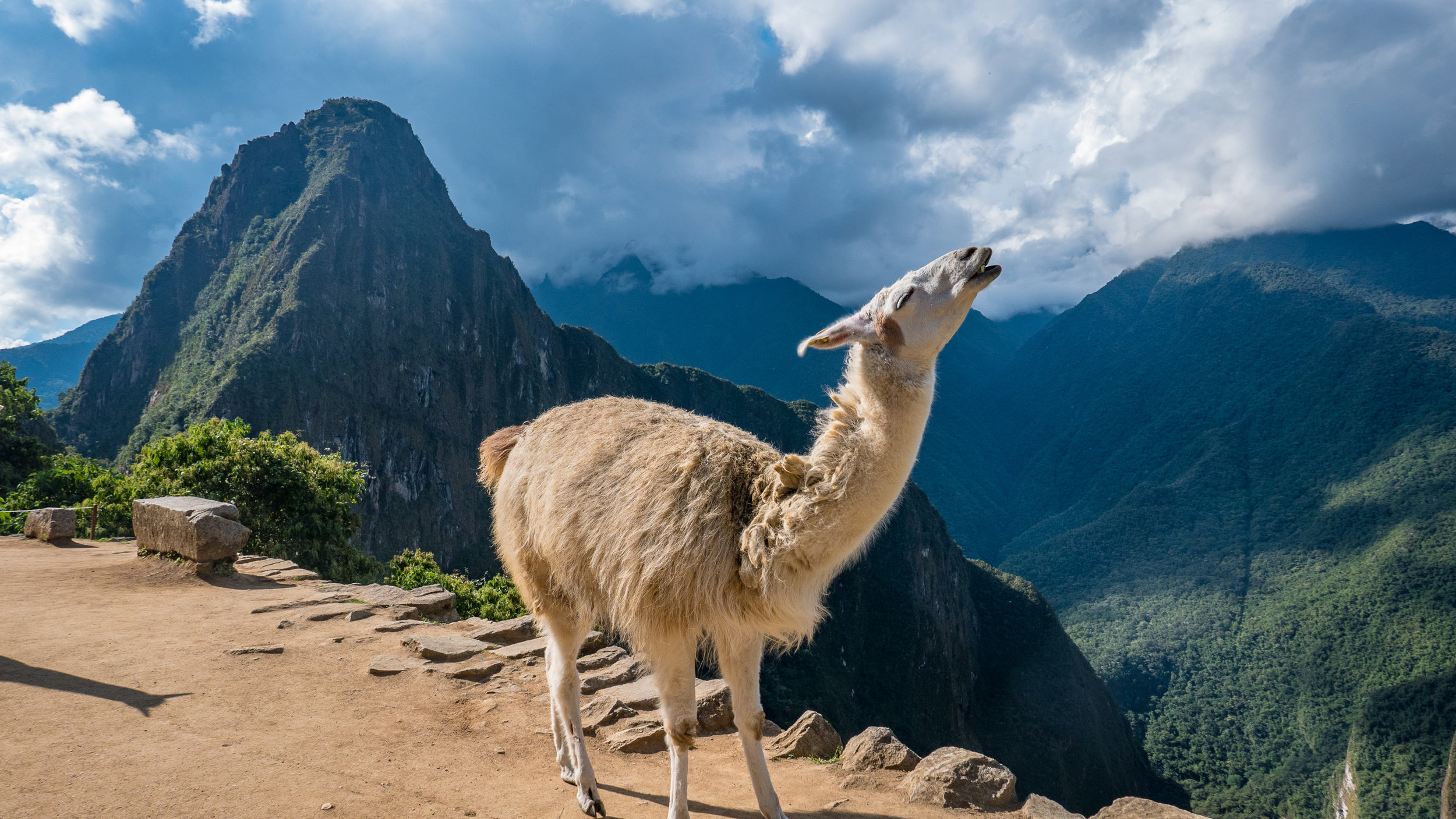
The place worth of our last hiking efforts was Machu Picchu. You would think that after all the ruins we visited in Mexico, Belize and Guatemala nothing could impress us. This ancient Inka summer house proved us wrong. The views are just breathtaking and you can’t understand how all of this was built on top of a mountain. Now of course there is a bus to take all lazy (including us) tourists aaaalll the way to the top and back so that one wouldn’t need to bother with walking that much.
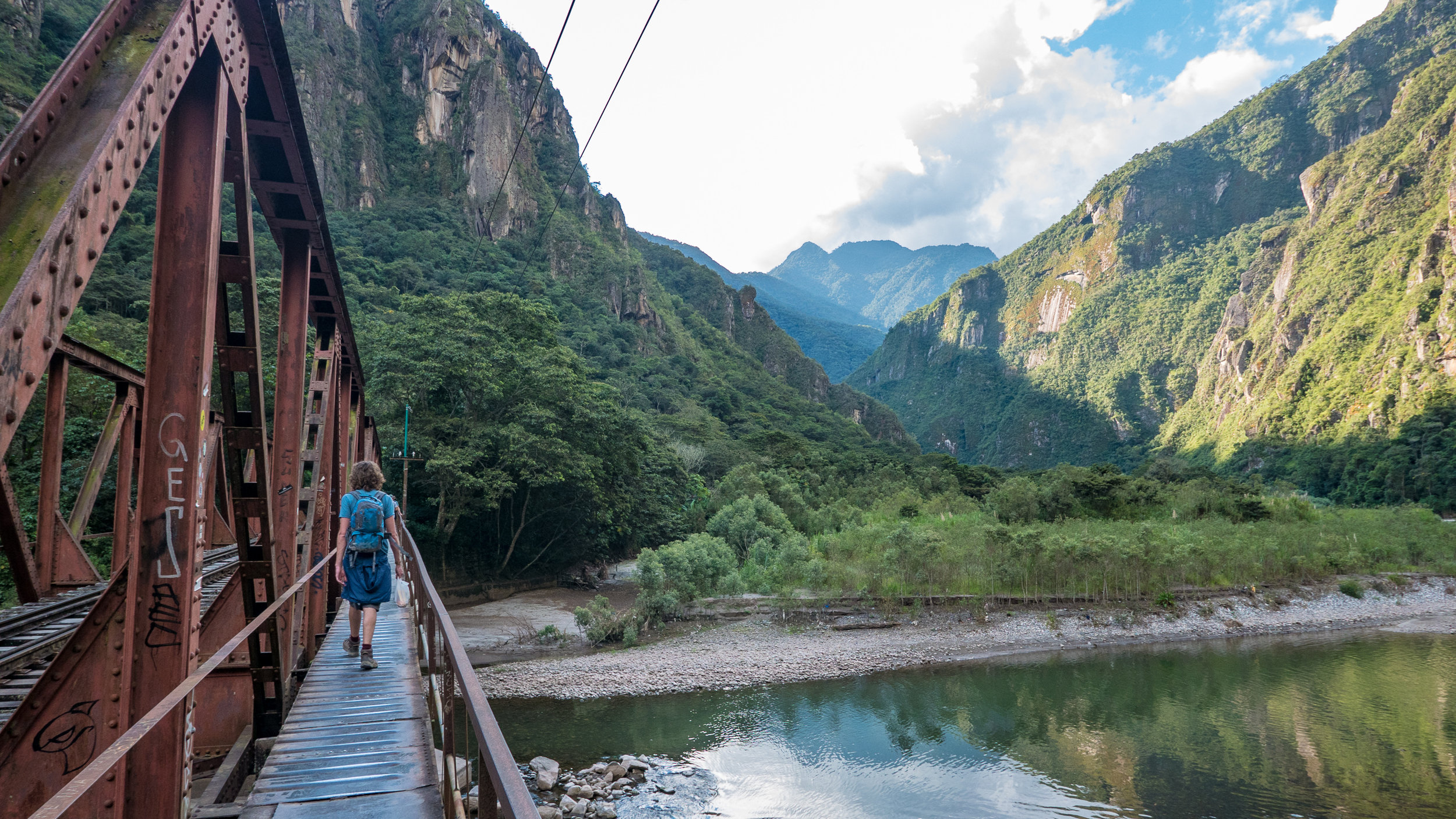
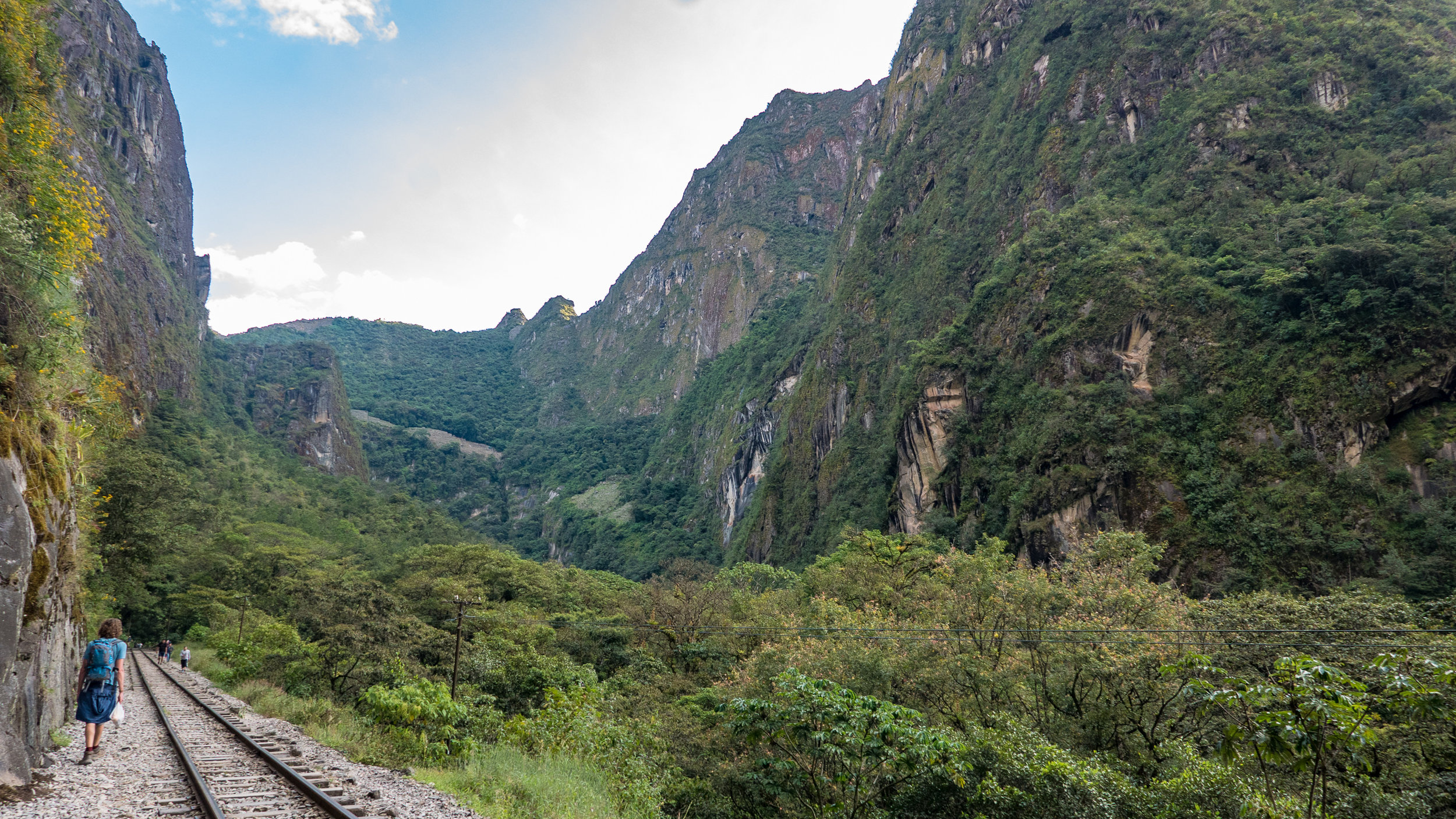
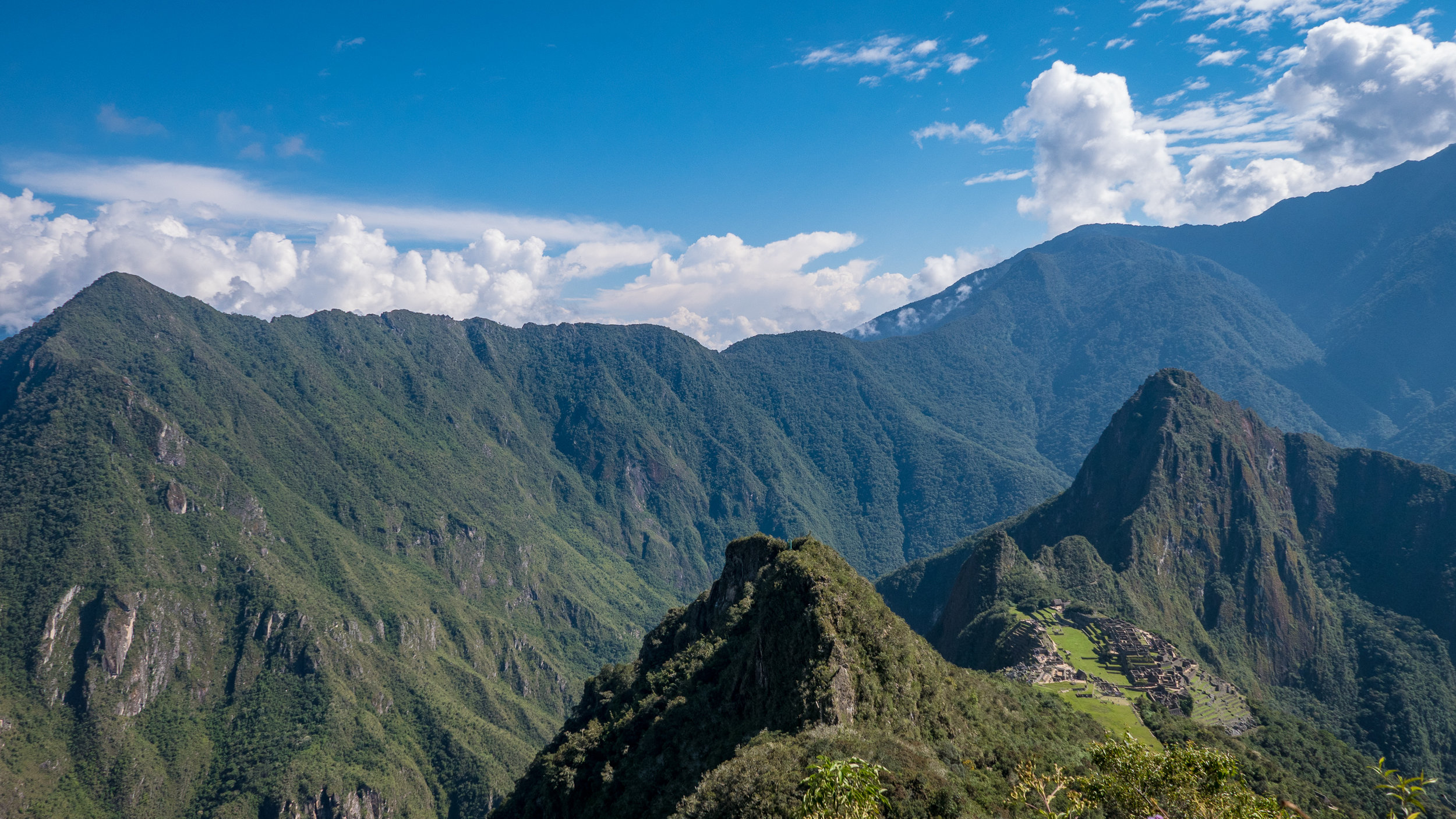
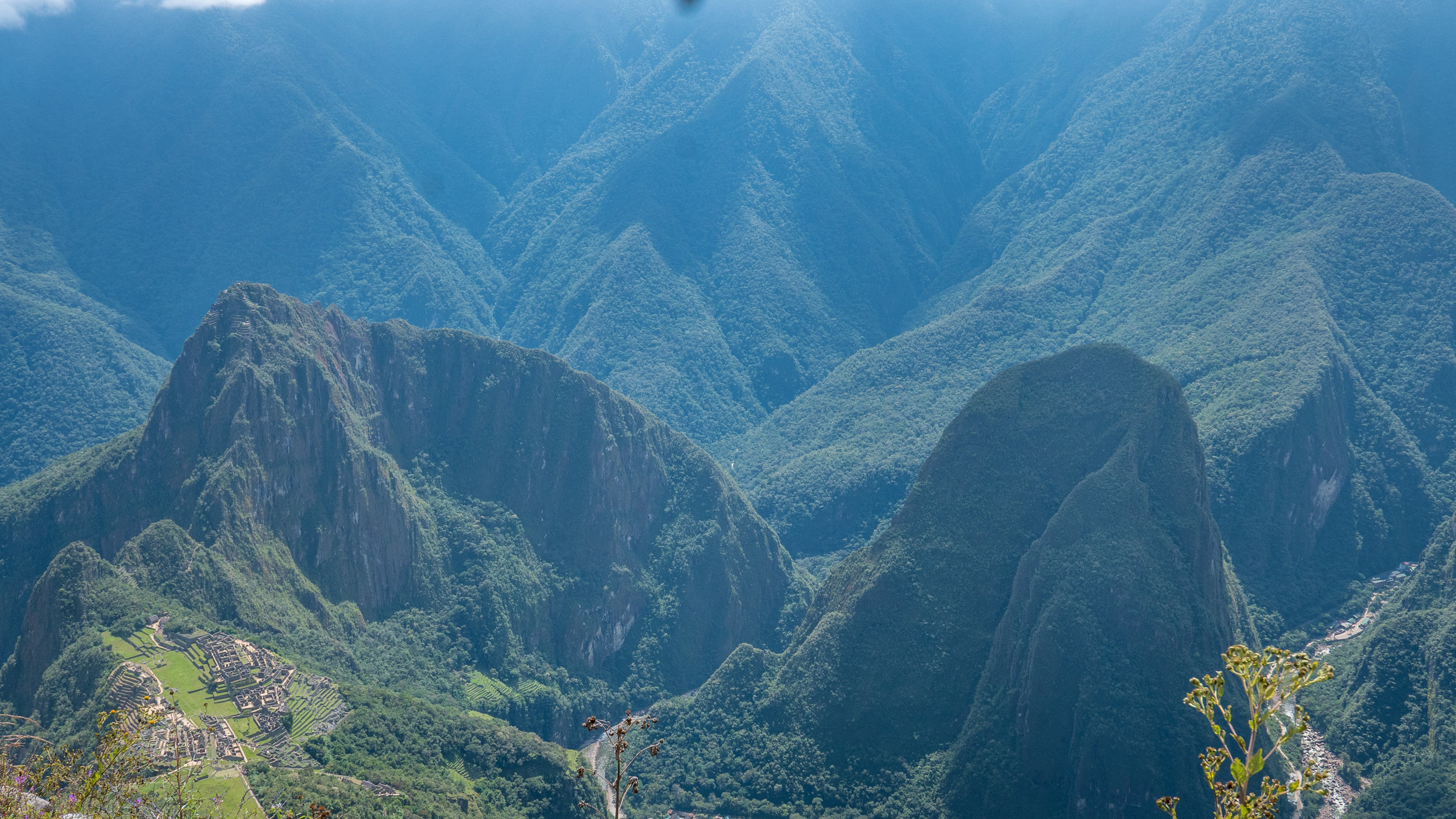
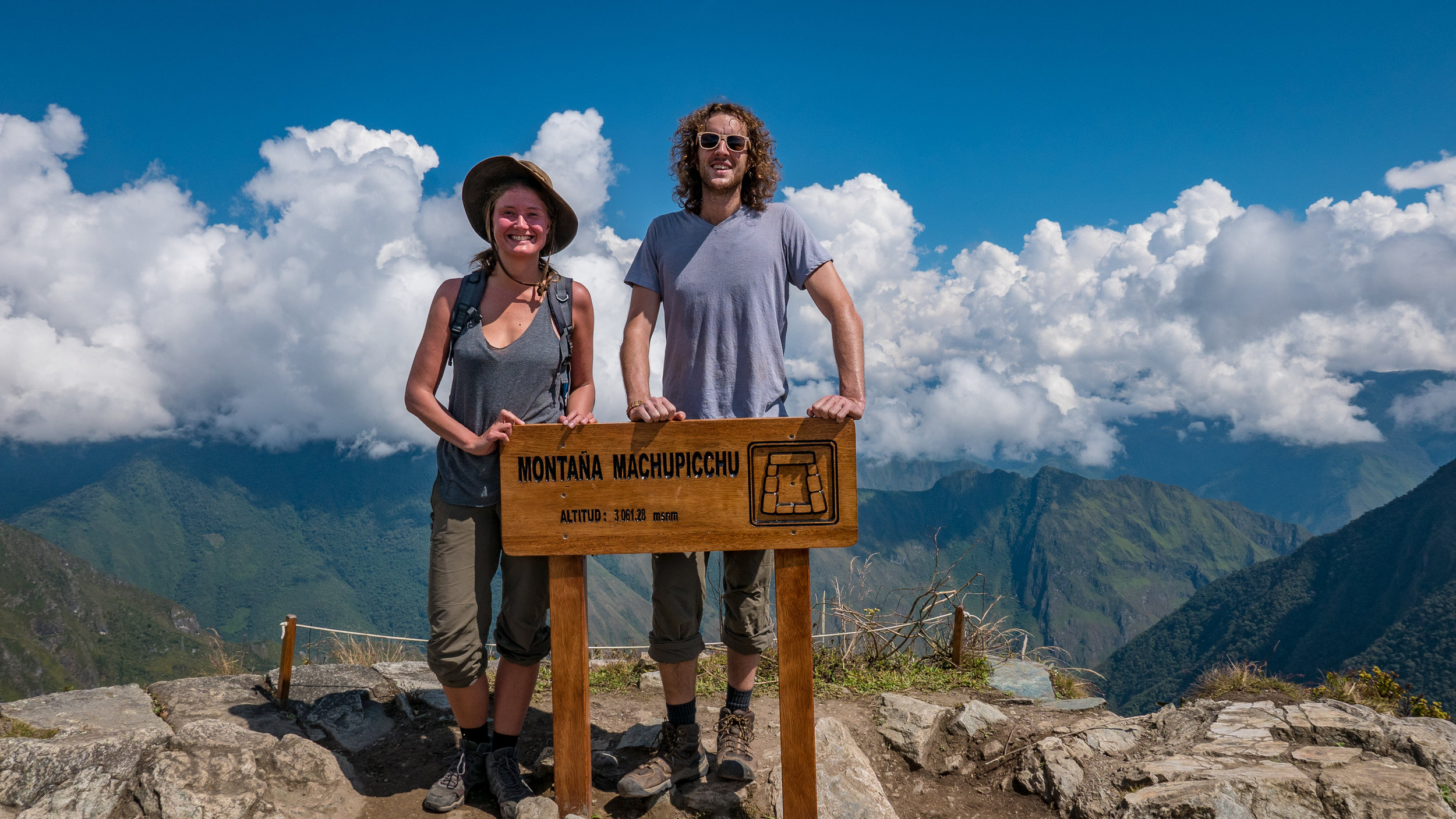
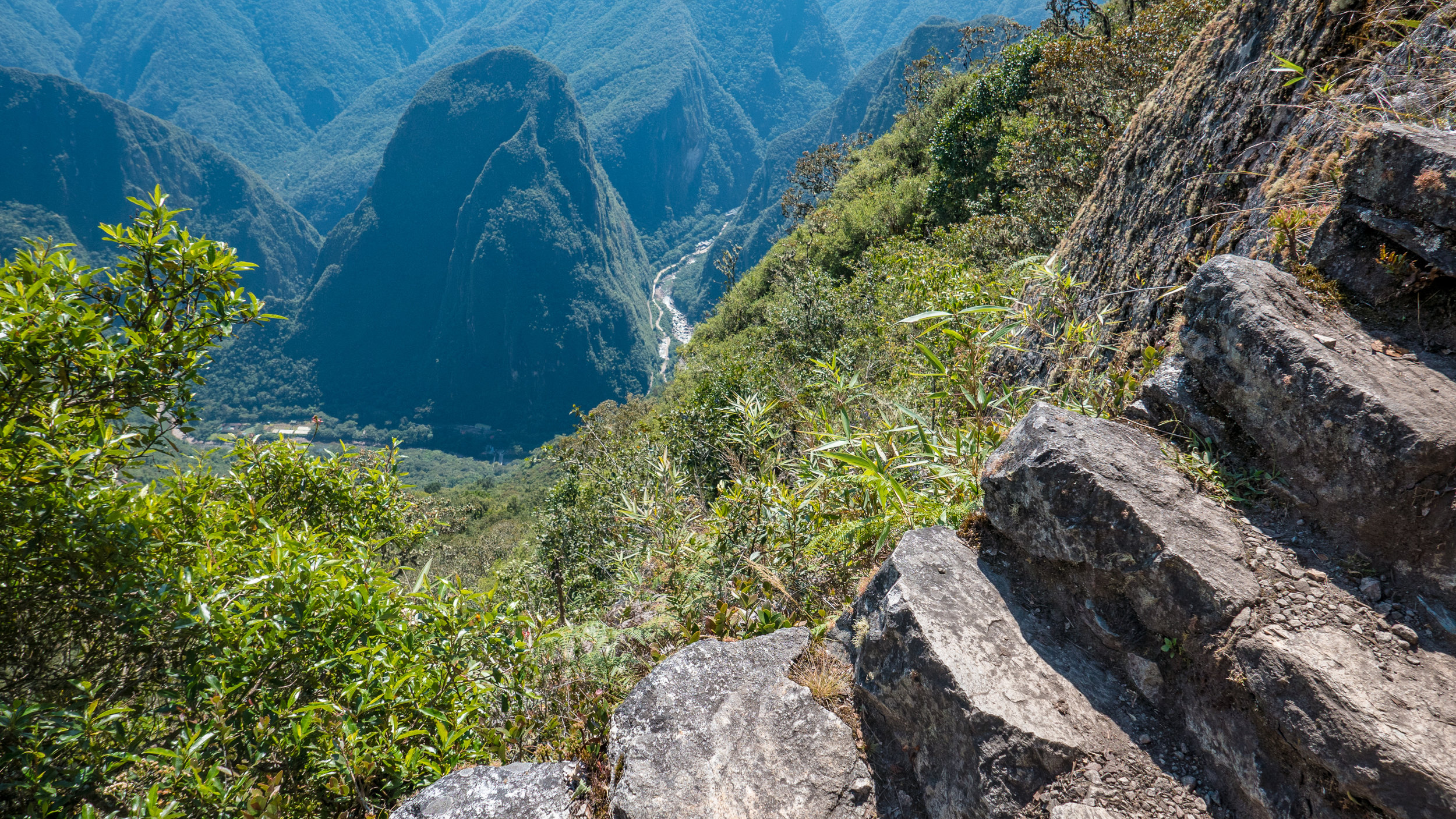
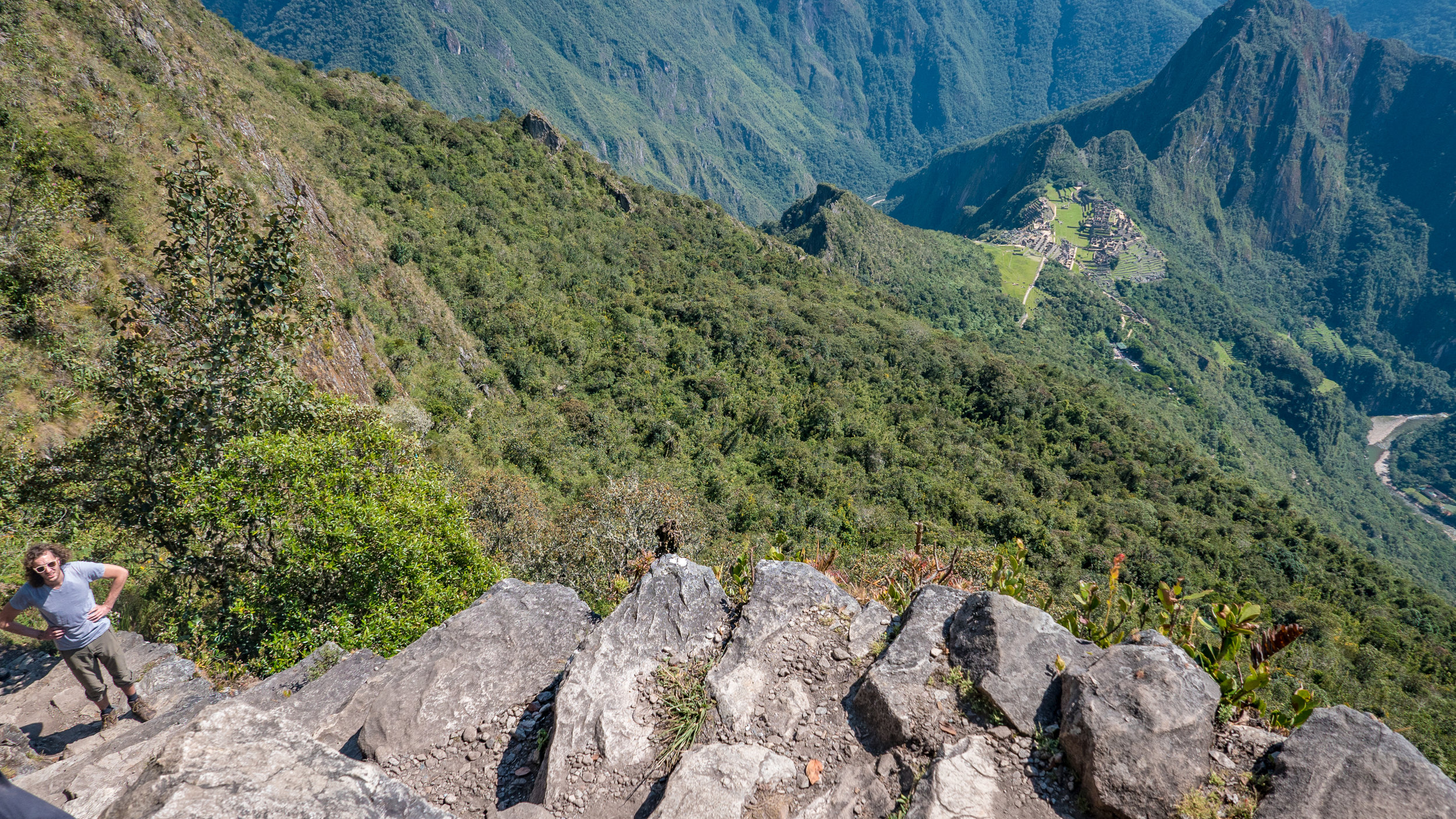
We wanted to get a true birds-eye view of the place and climbed the Mountain Machu Picchu where only 400 people are allowed in a day. Hell of a climb and not the safest either. Narrow, steep pathways where Richie opted for a child-like crawling style. This 2 hour climb paralyzed us for the next couple of days and we were barely able to come down stairs from our hostel.


Cusco is full of history and beautiful buildings and here I got to experience the “wtf”-face of the trip as I dragged Richie around the city searching for different points of interest. We went around and around a couple of times in this one neighbourhood and once we finally got to the place, you should have witnessed the reaction when I told him that “the place” was a 12 cornered stone. :D But when you think about it, it’s actually quite impressing. Inka’s building technique is renown for the fact that they fitted different shaped rocks together and this specific rock has 12 corners in it. He still wasn’t that happy.
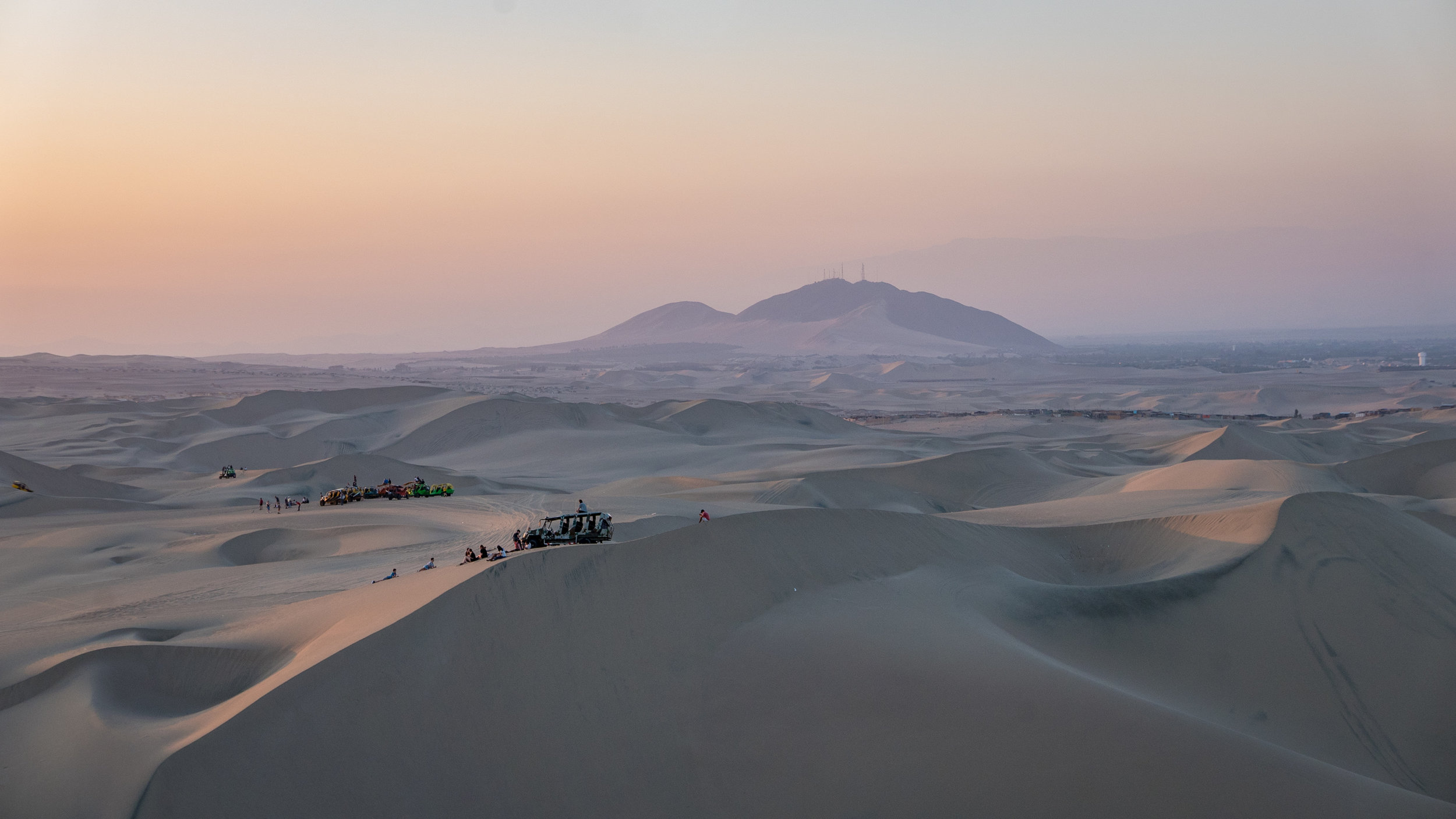
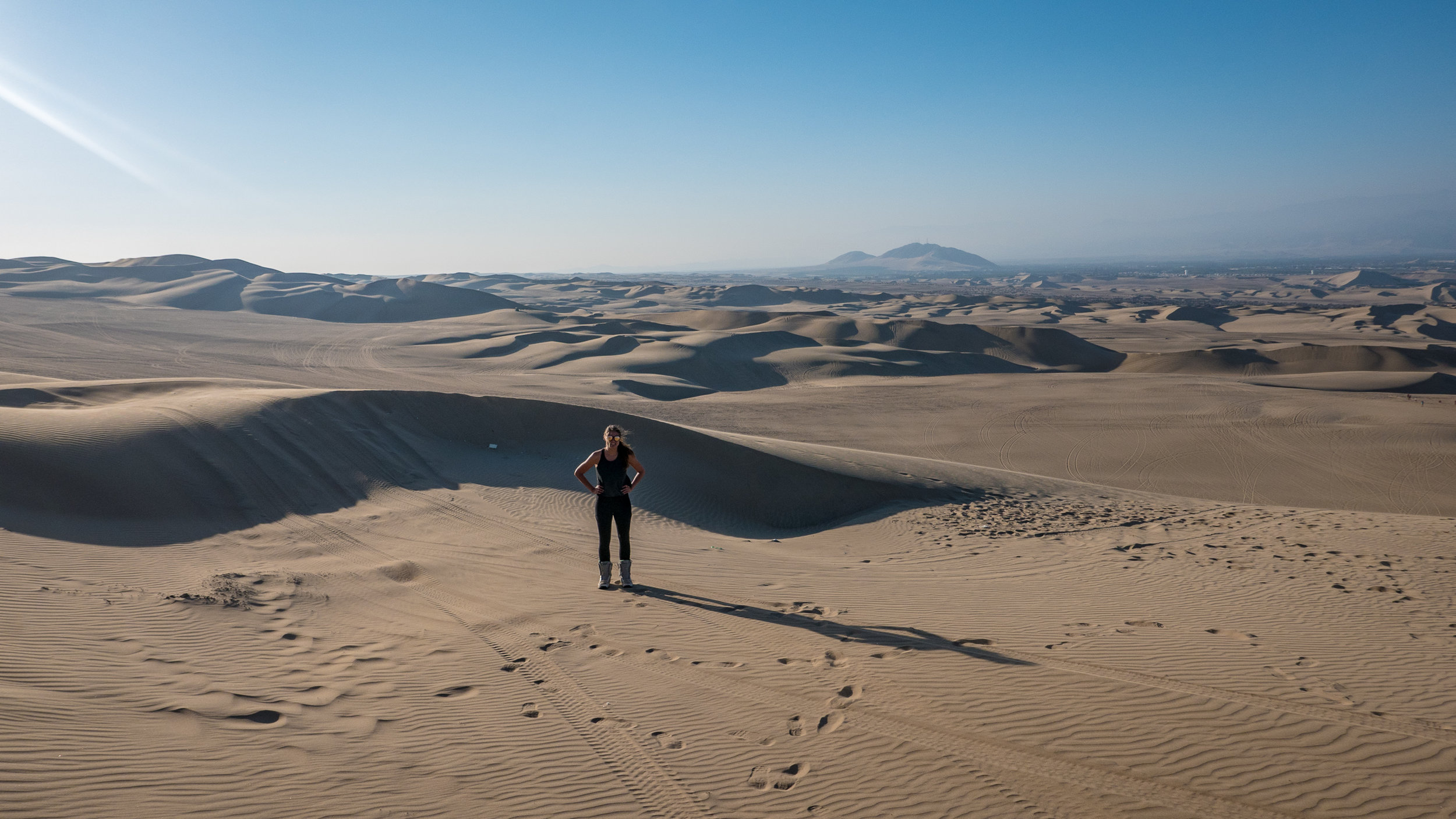
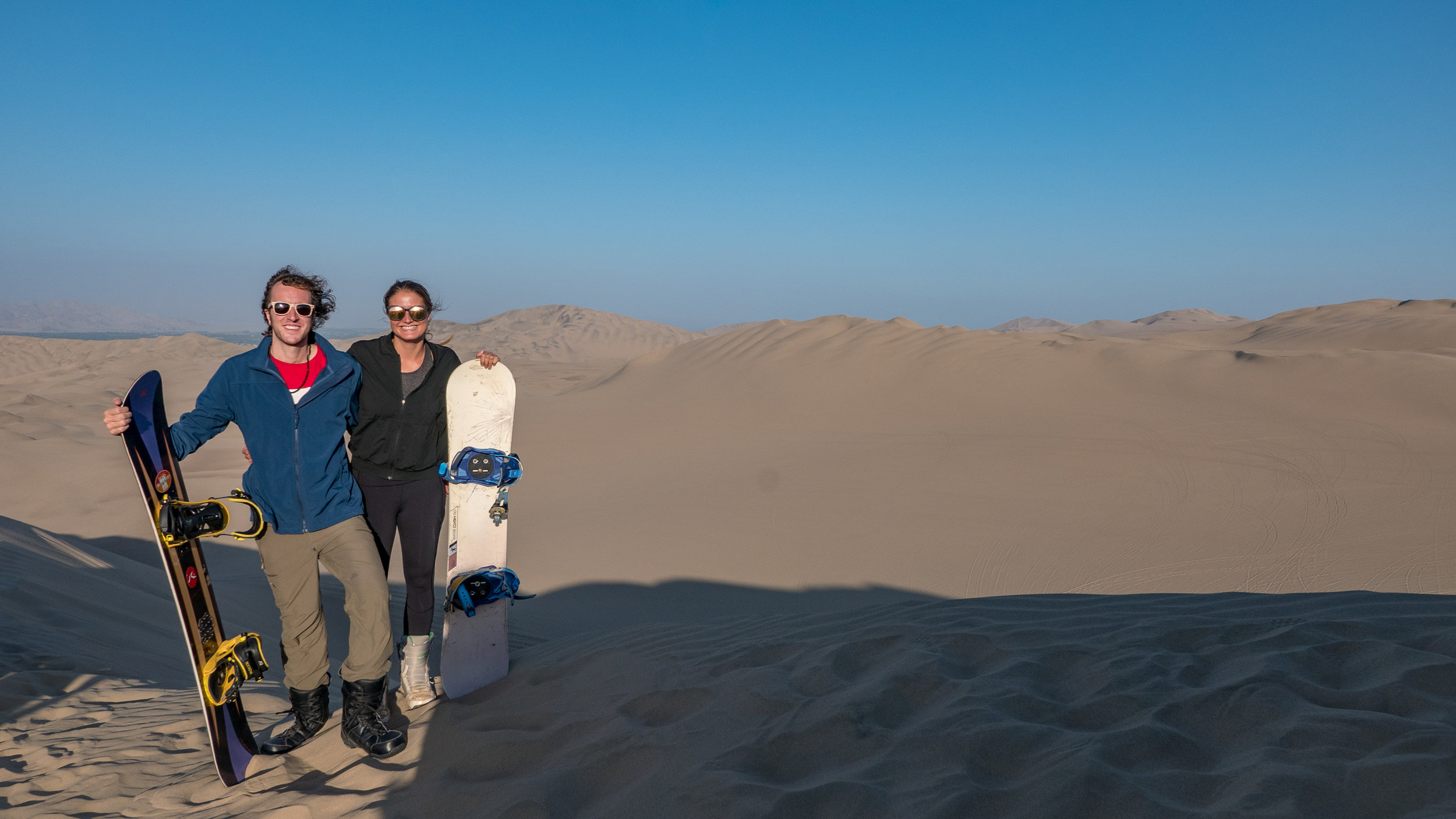
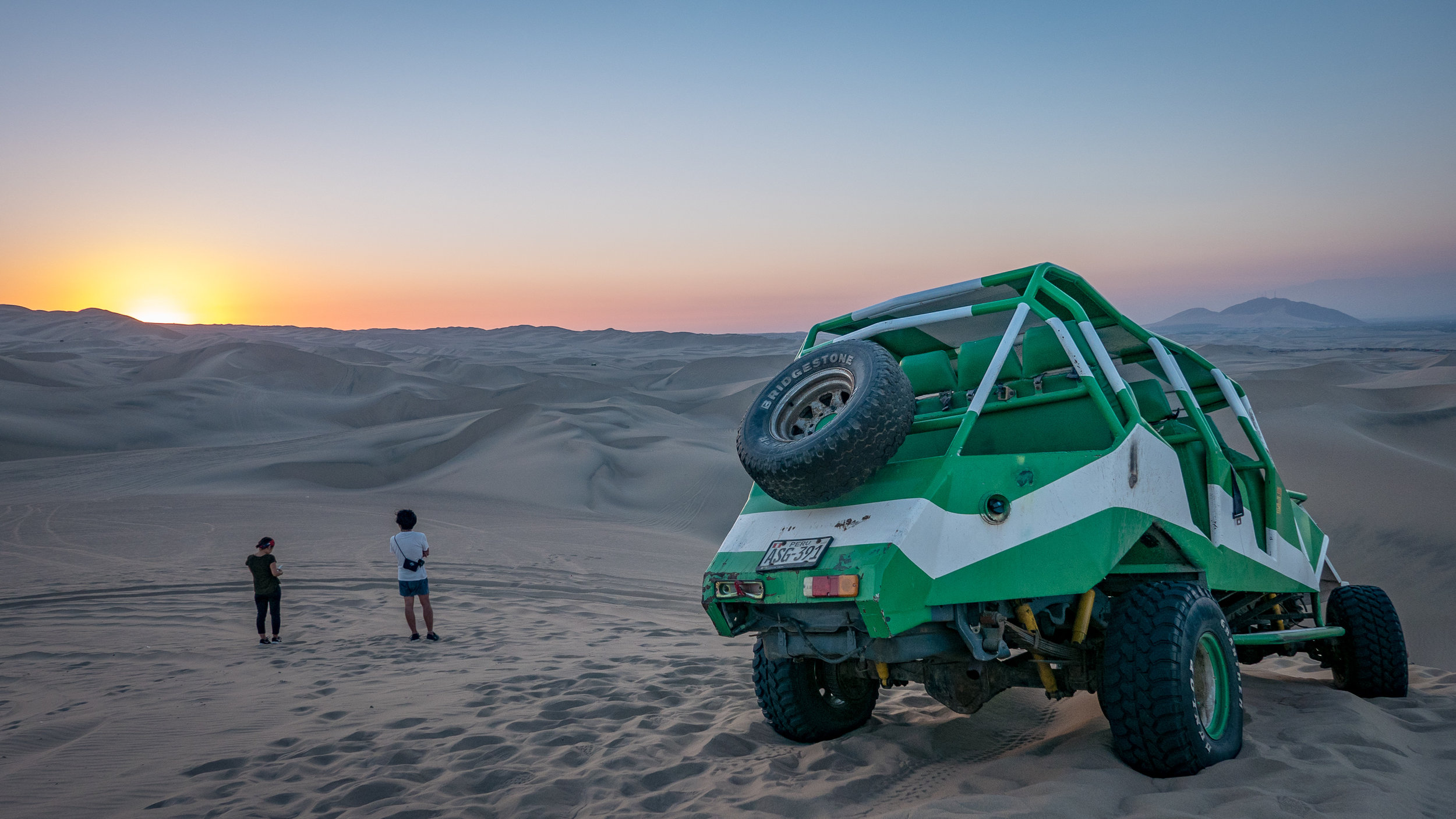
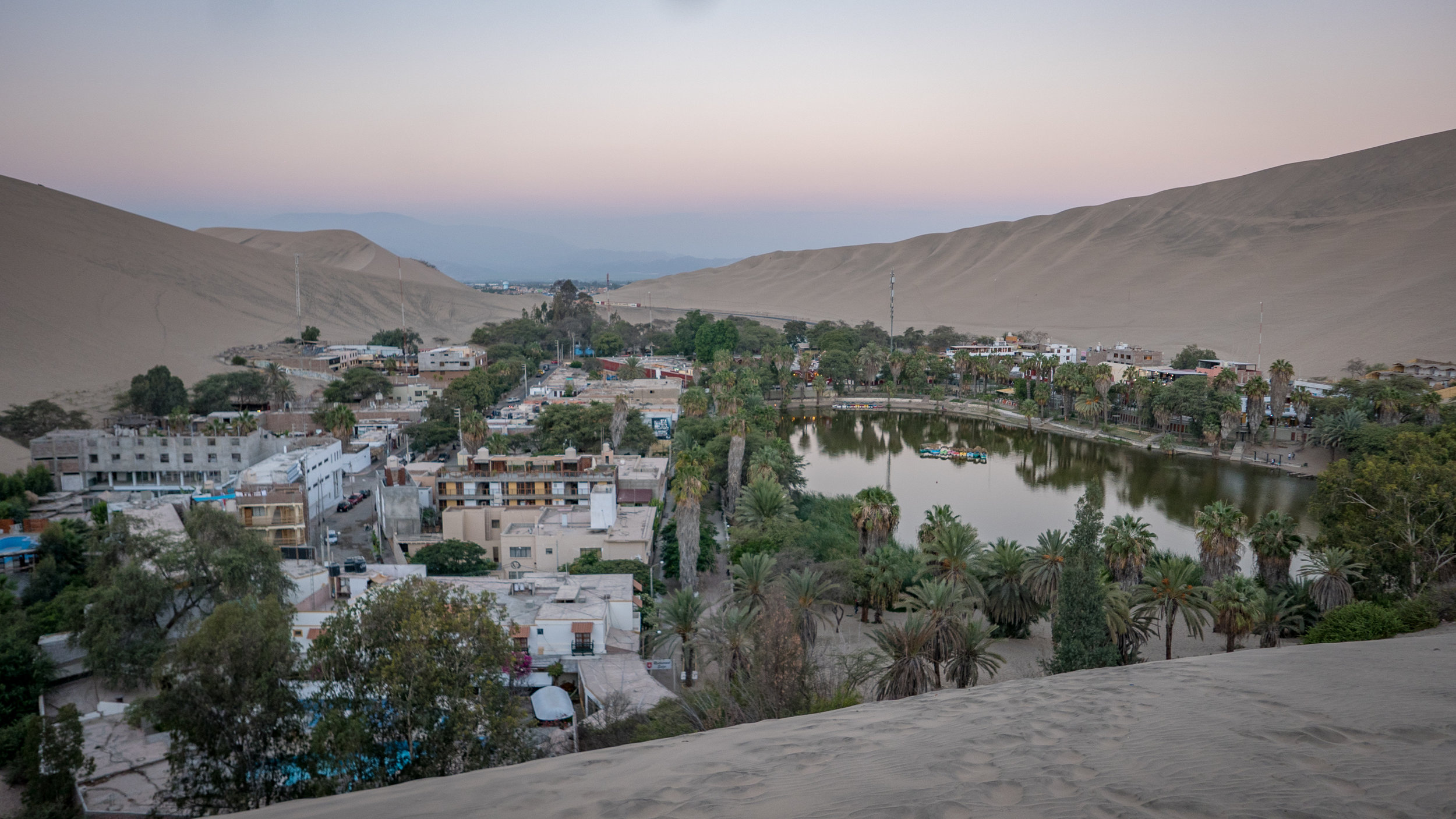
From Cusco we finally started to go towards a warmer climate. Huacachina is an oasis in the middle of sand dunes in the coast of Peru. Normally you come here for a day to do buggy driving and sandboarding in the dunes. The cheap way is to get a “board” (really a slice of wood) which you lie on and speed down the dunes OR you can pay more and get an actual snowboard. As an ex-professional snowboarder I chose the latter and as a “man who thinks he can do anything” Richie did the same. He has tried snowboarding once before. Ten years ago.
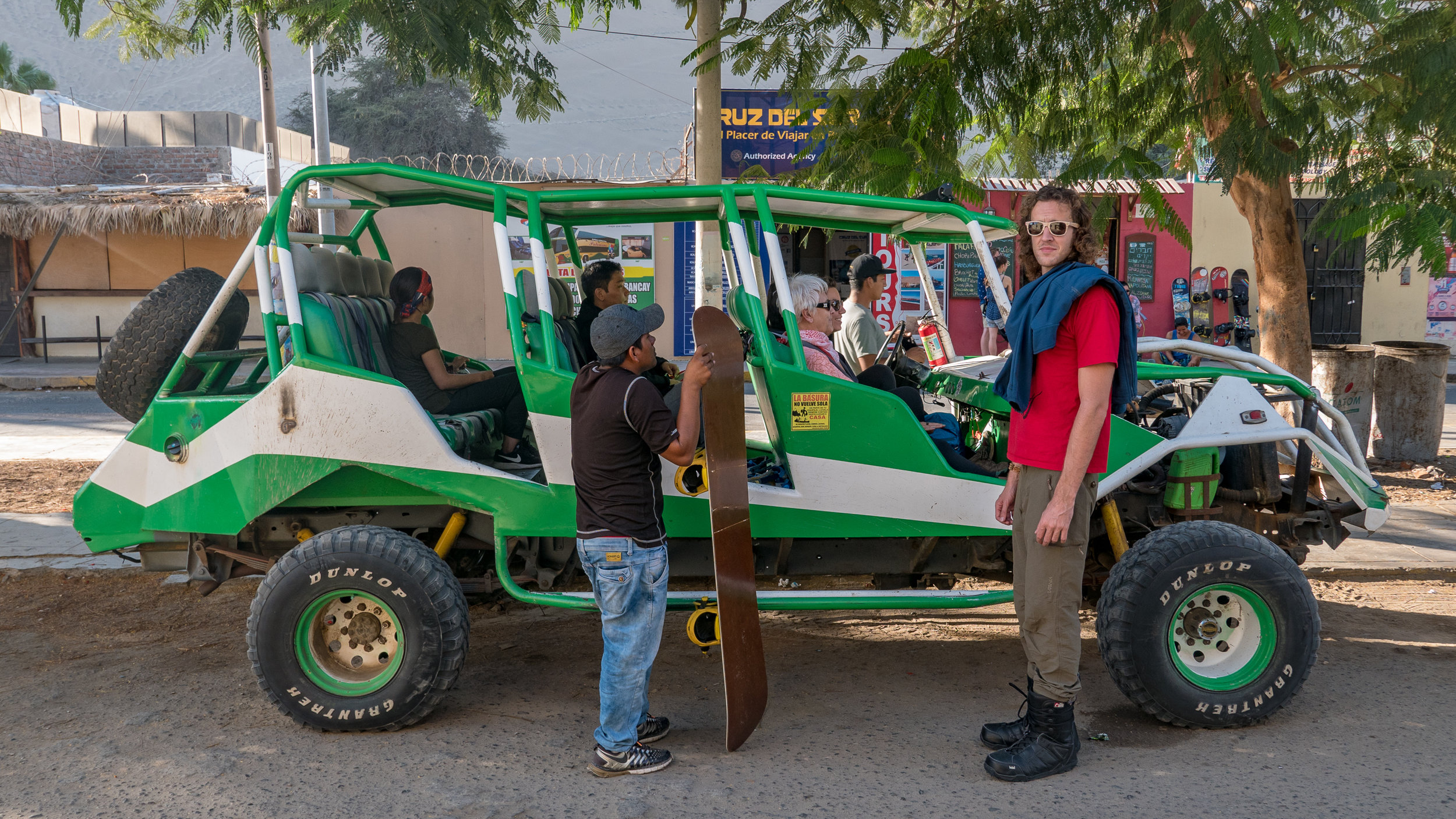
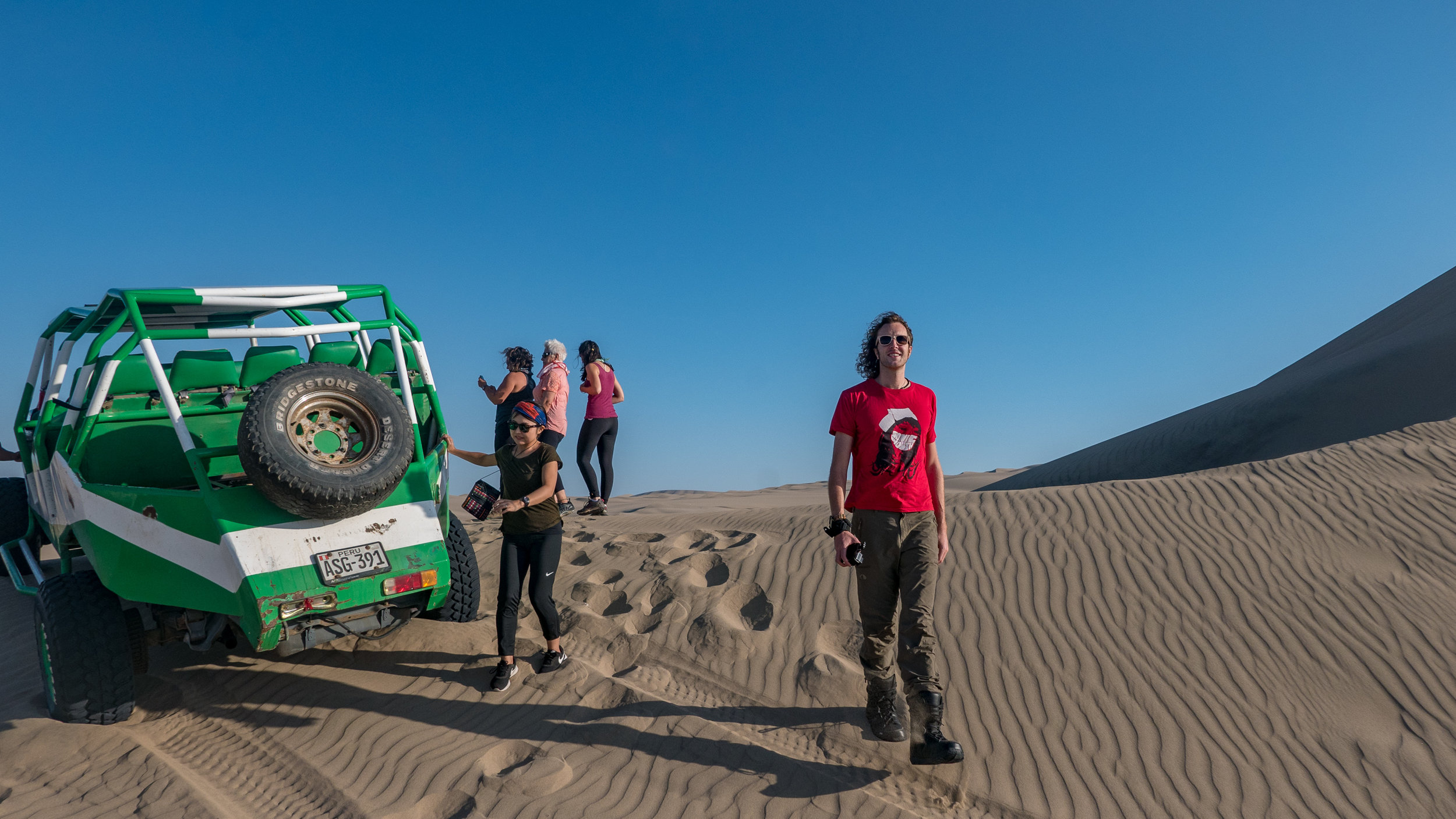
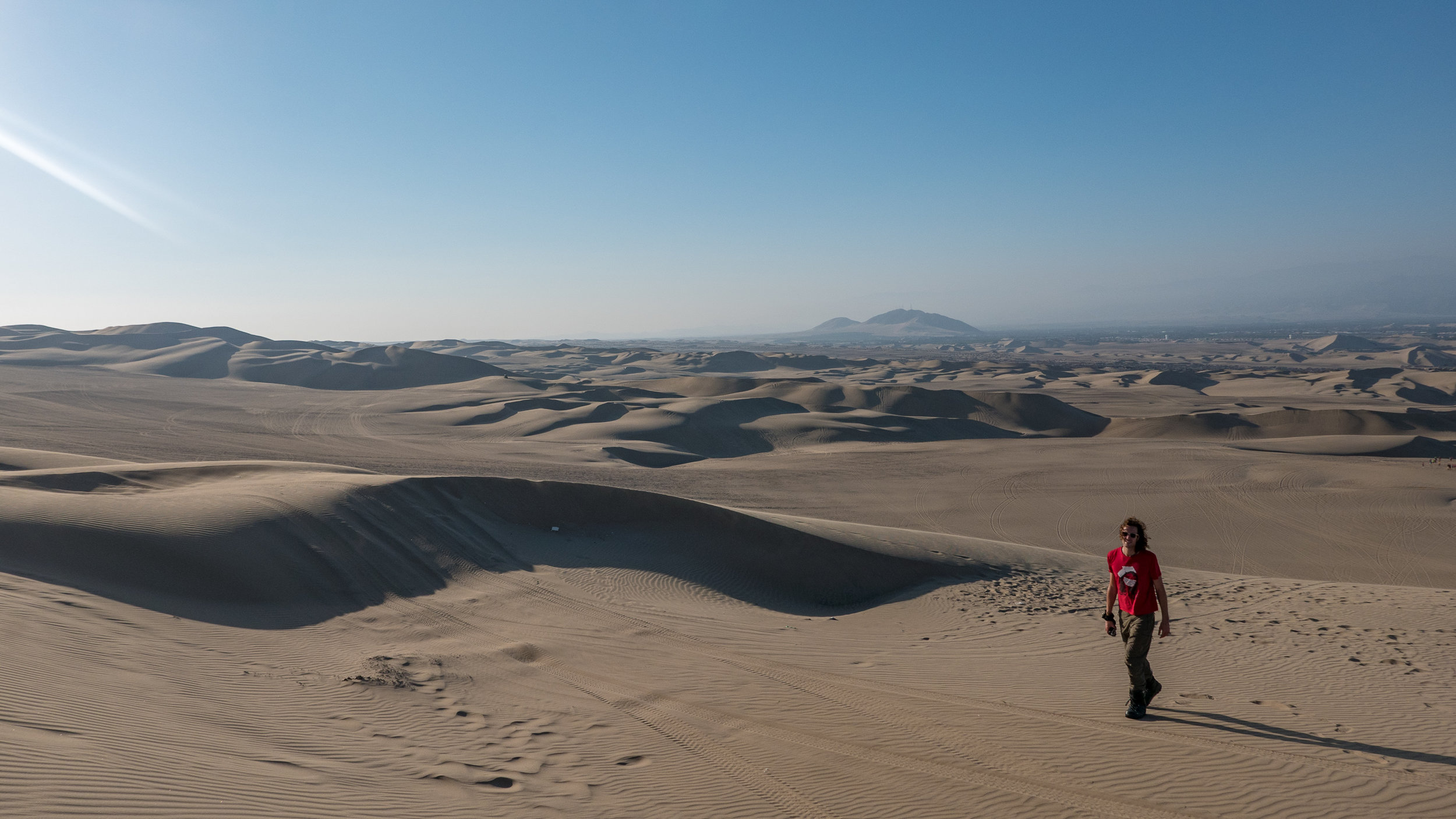
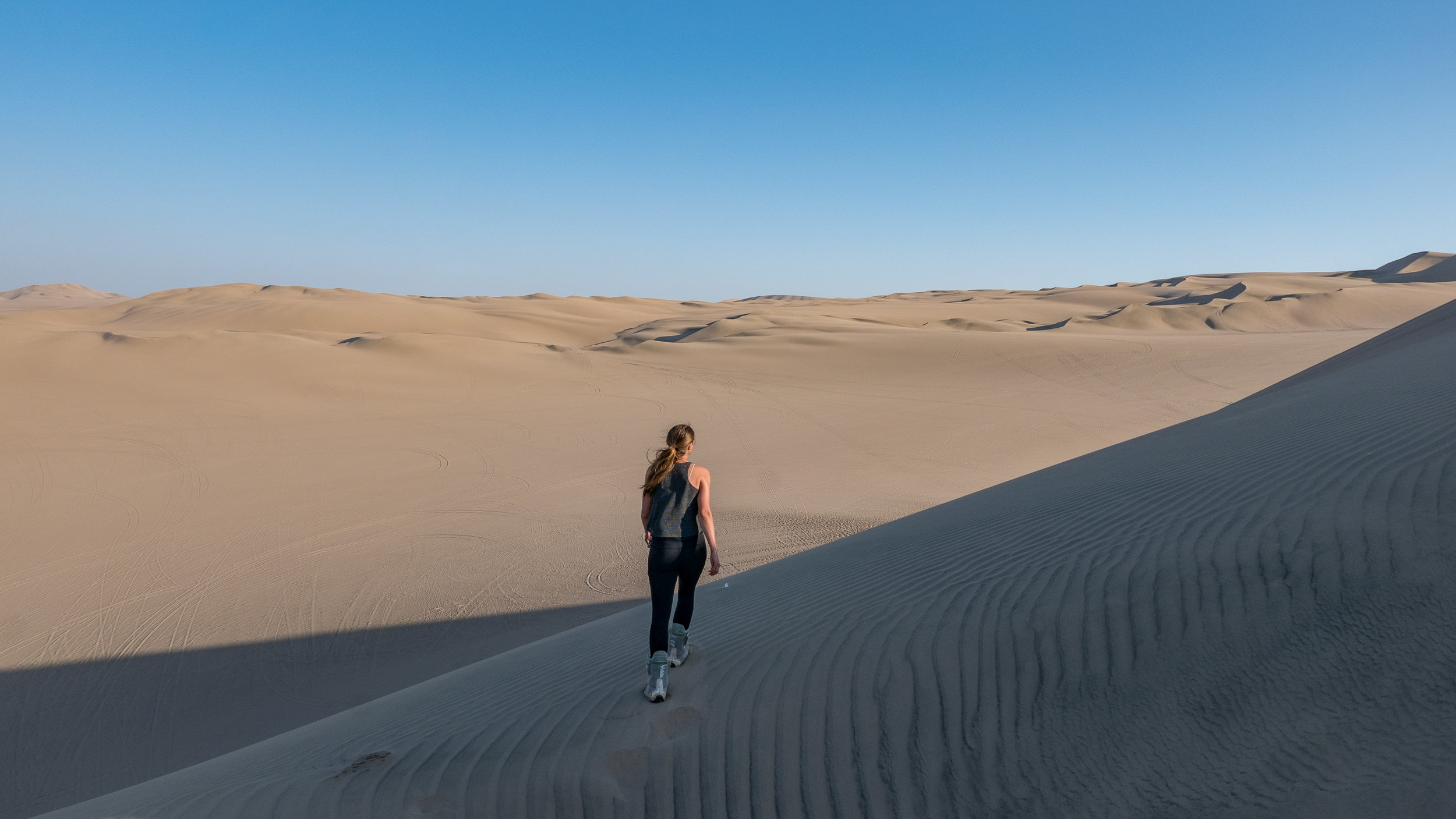
And it wasn’t easy. Sandboarding is like snowboarding on a very heavy, slushy spring snow. The kind where you get stuck right away. First try was quite shit, second ok and the third one went well (apparently I made a nice little jump in the beginning that got the crowds gasping). For Richie first try was quite shit, second try was quite shit and third one not as shit. Fun times!
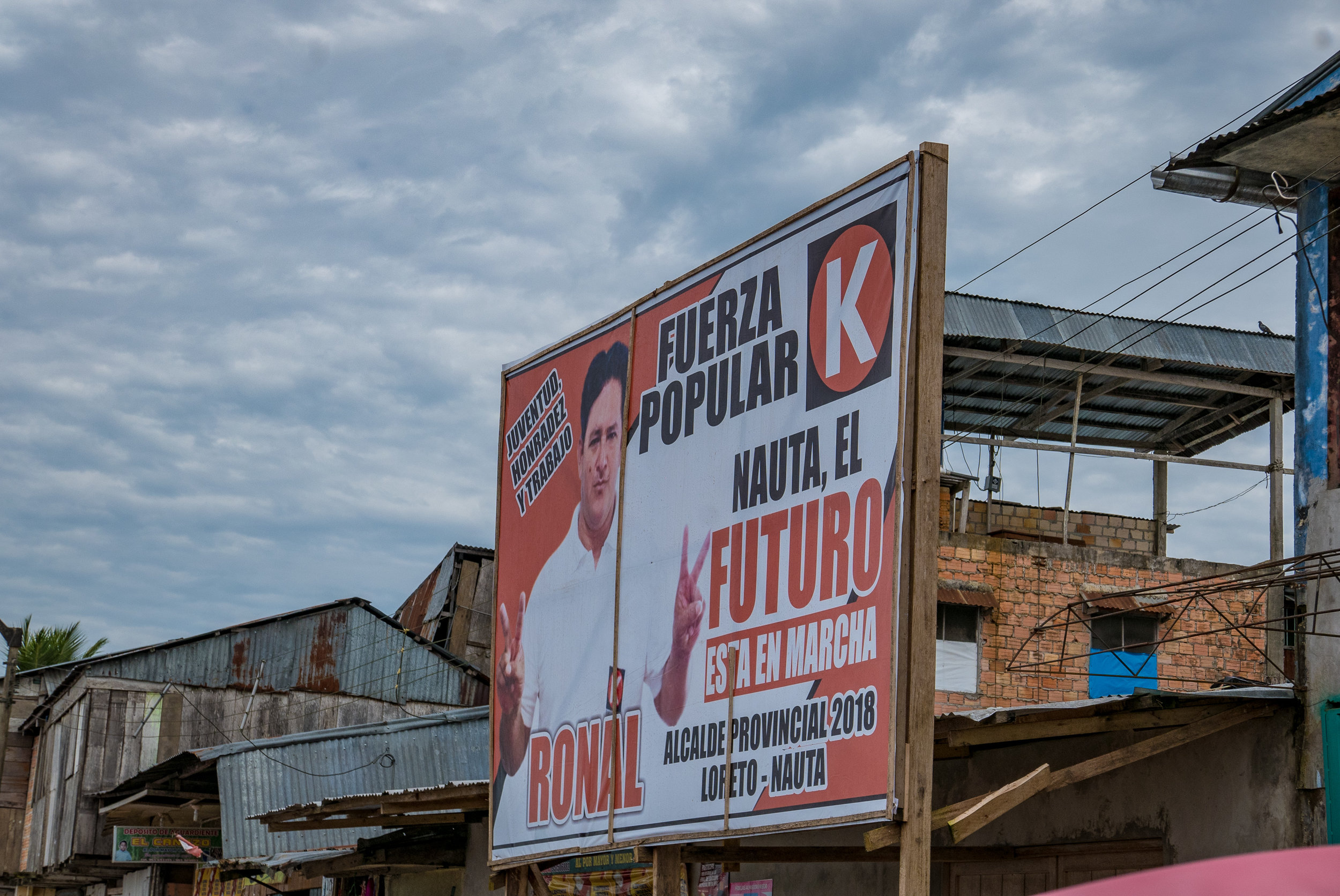
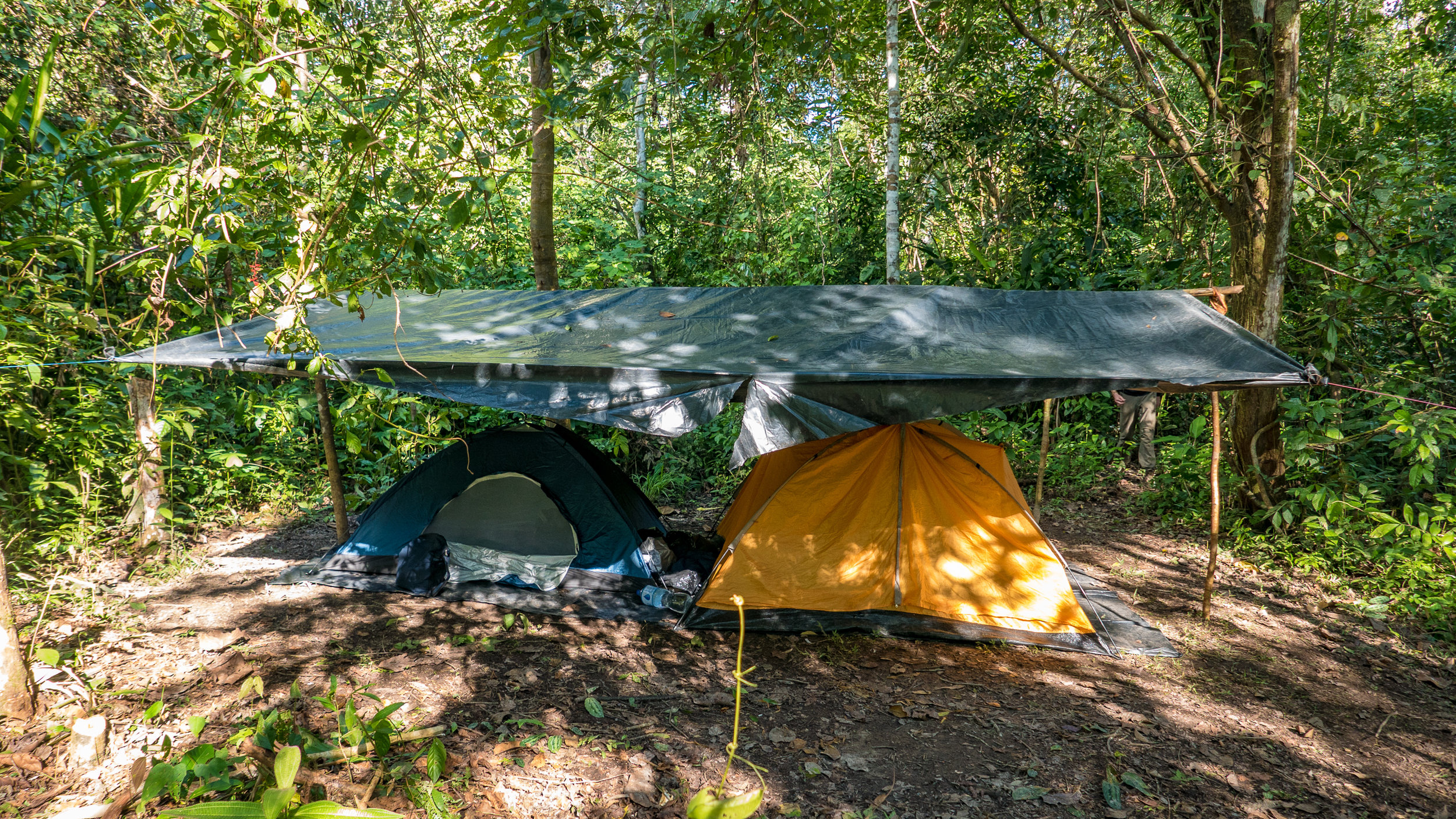
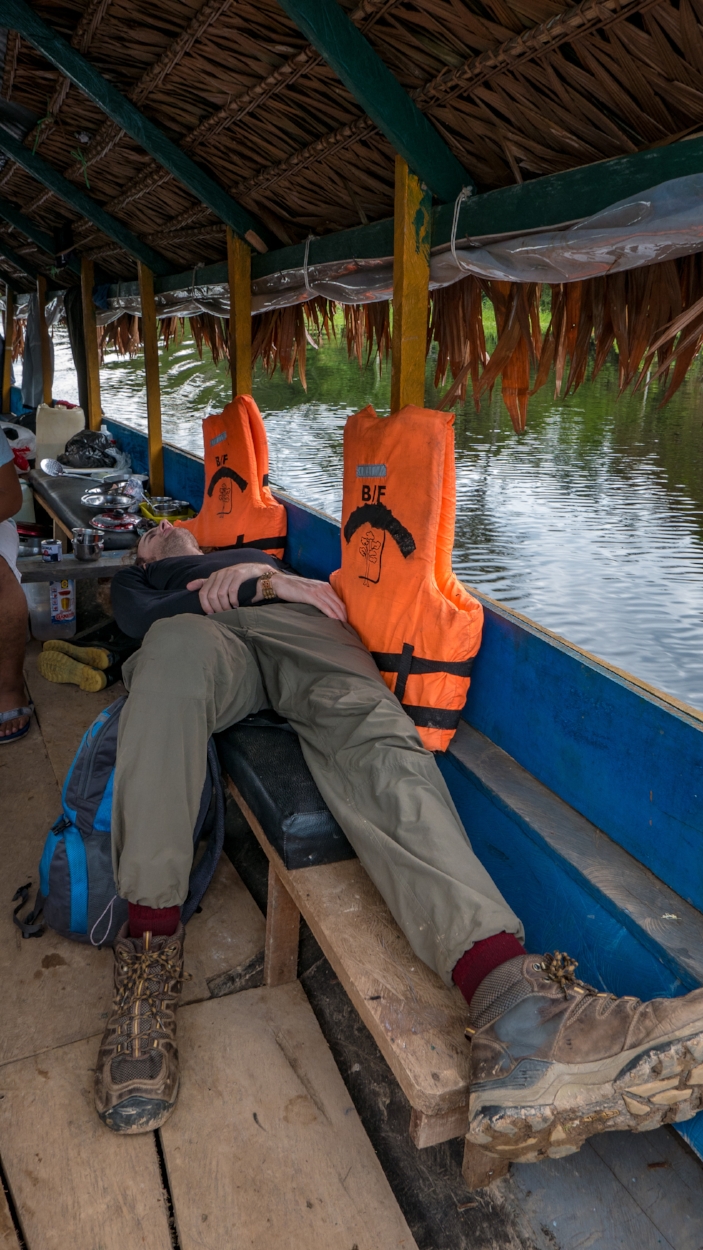
The Amazonas was a place that we were supposed to experience from Bolivia. But a combination of being very hungover + trying to use the shittest airline site ever resulted us saying “fuck that, we’ll go to the jungle in Peru”. Iquitos is in the upstream of Amazon-river and we ended up going even more upstream to the Pacaya Samiria National park where no-one is allowed to build lodges and you must sleep in local villages, tents, or if you are rich, in one of those fancy river boats.
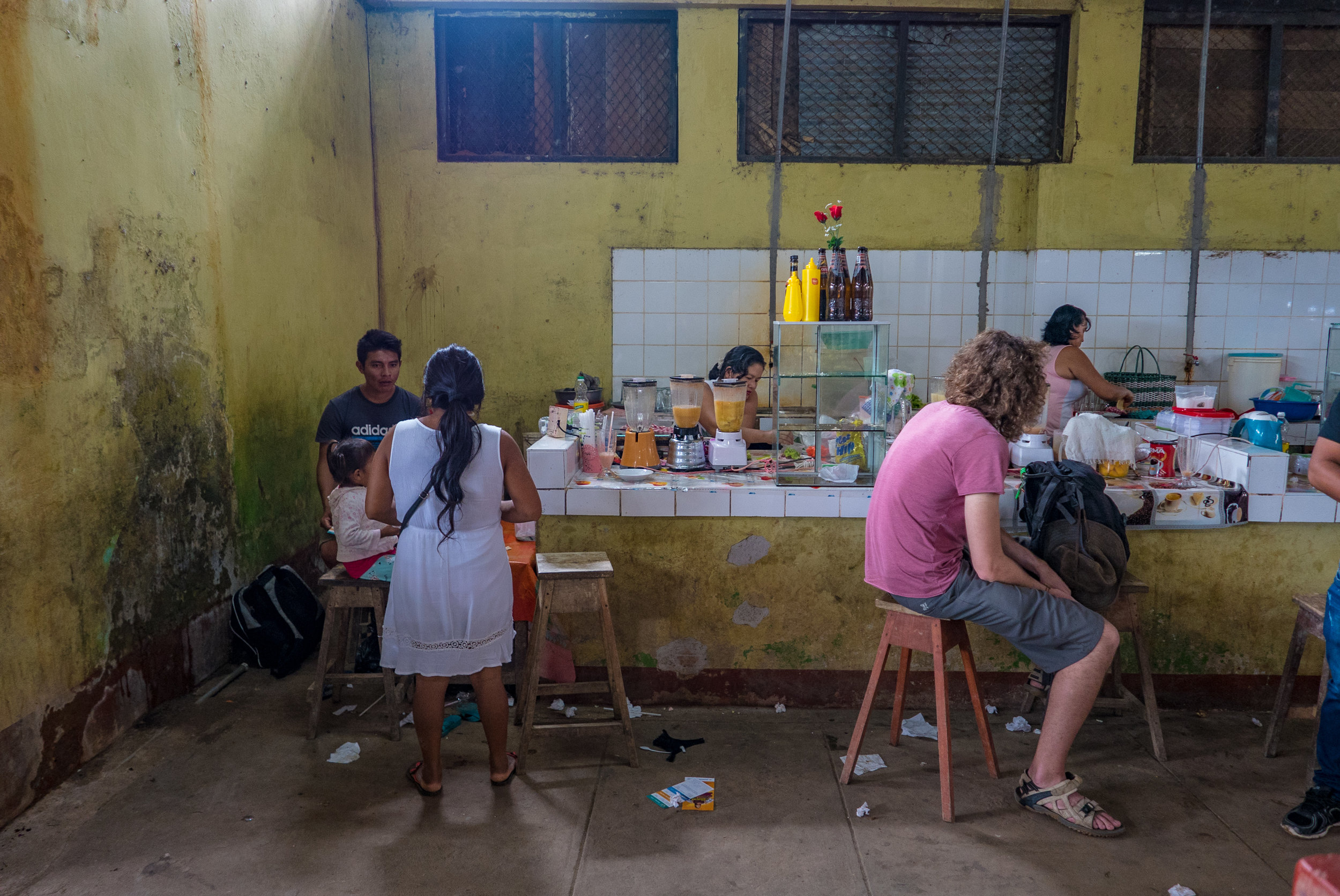
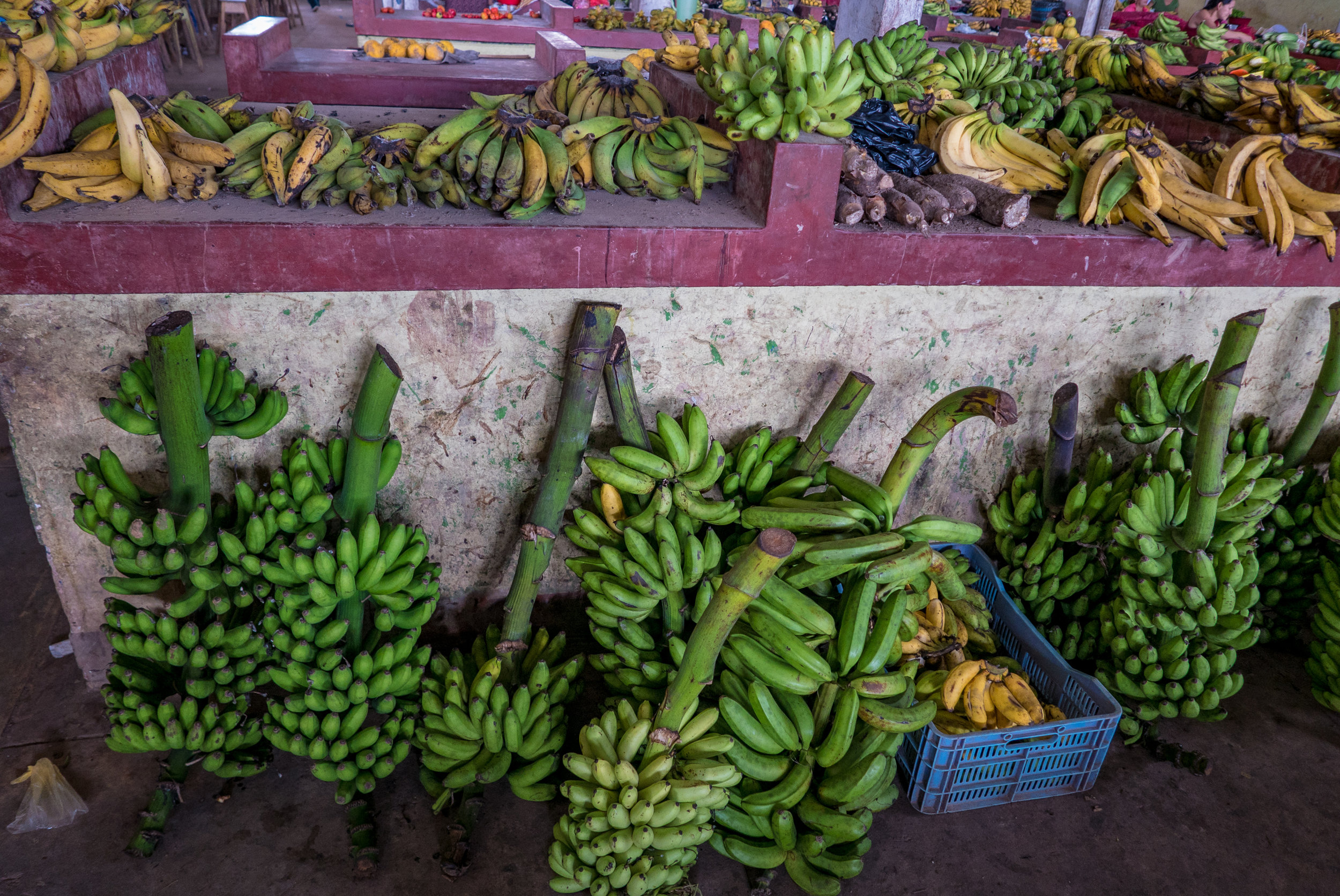
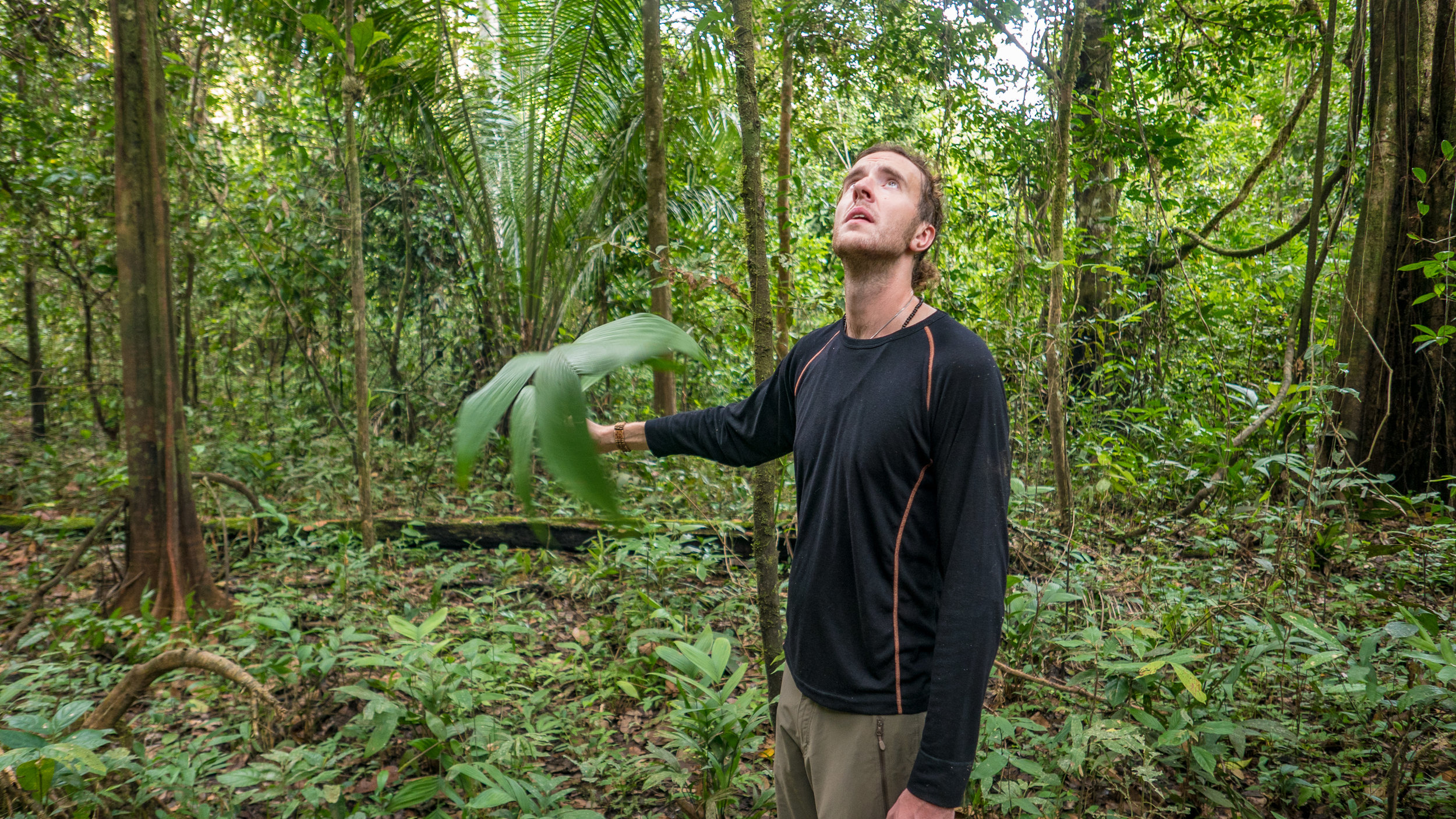
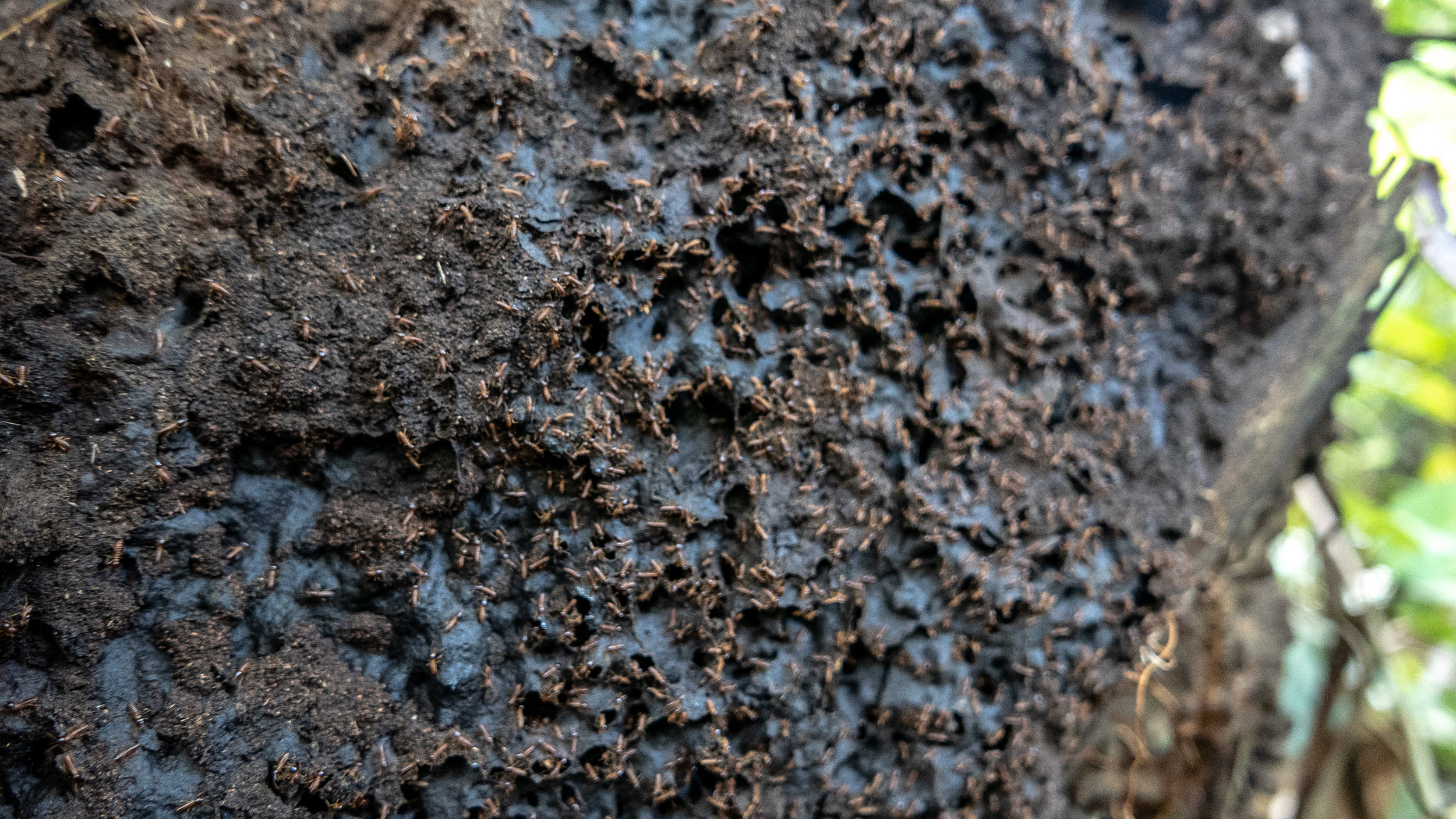
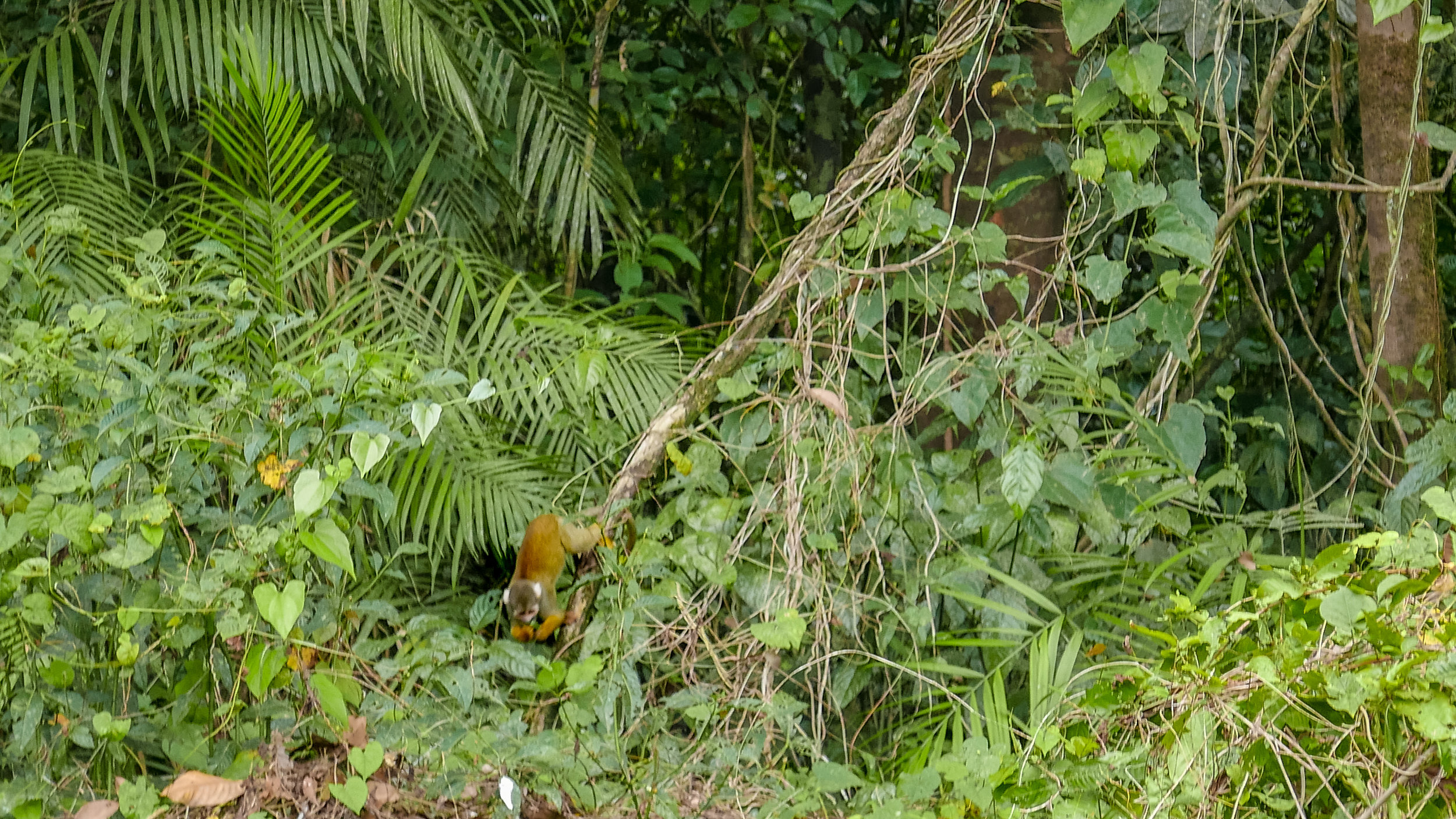
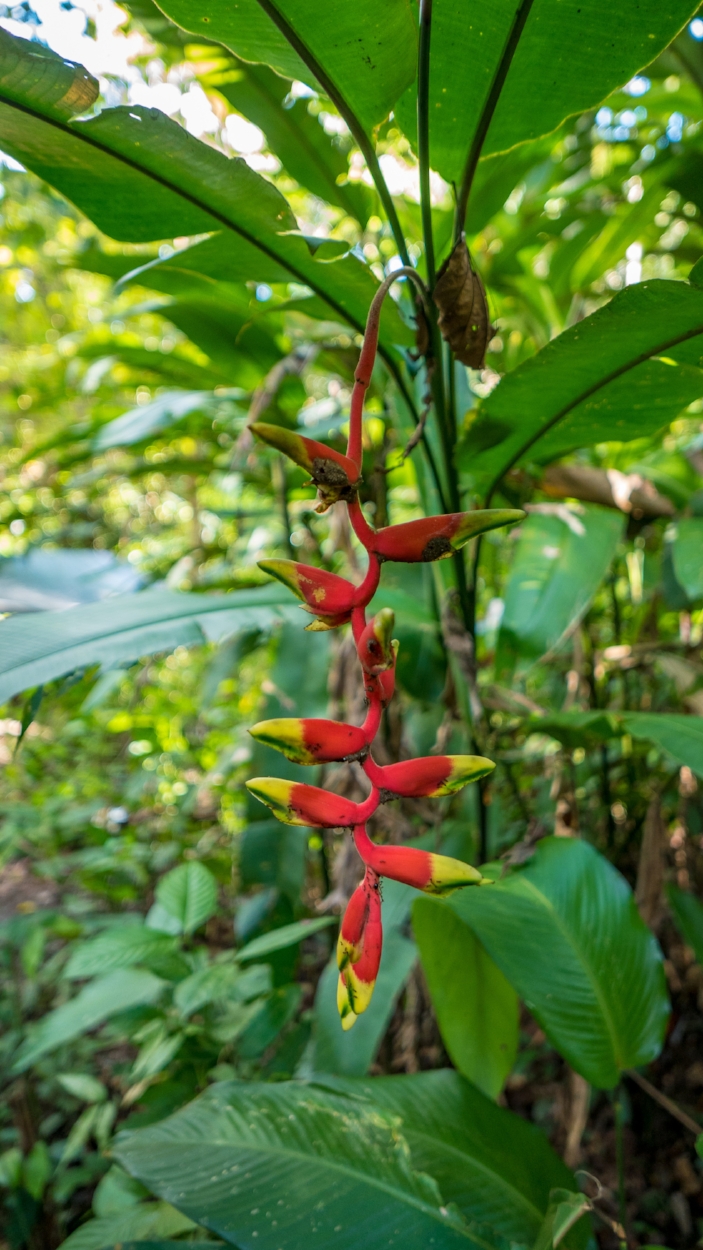
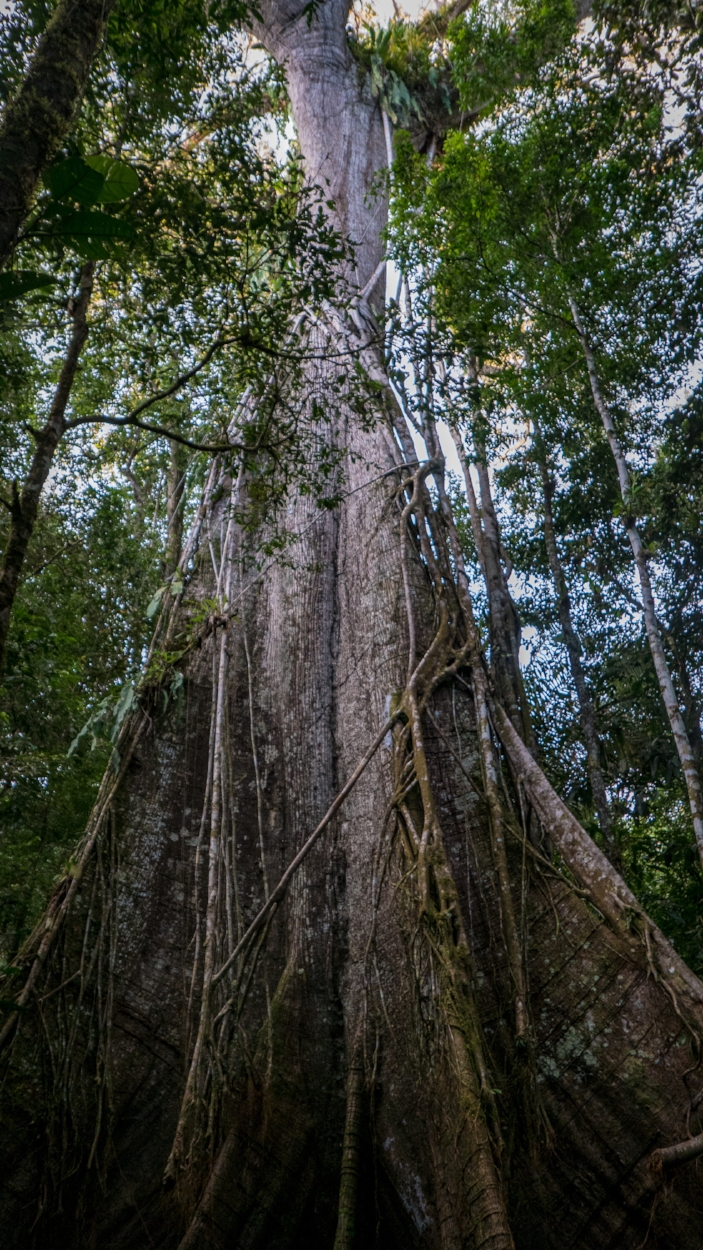
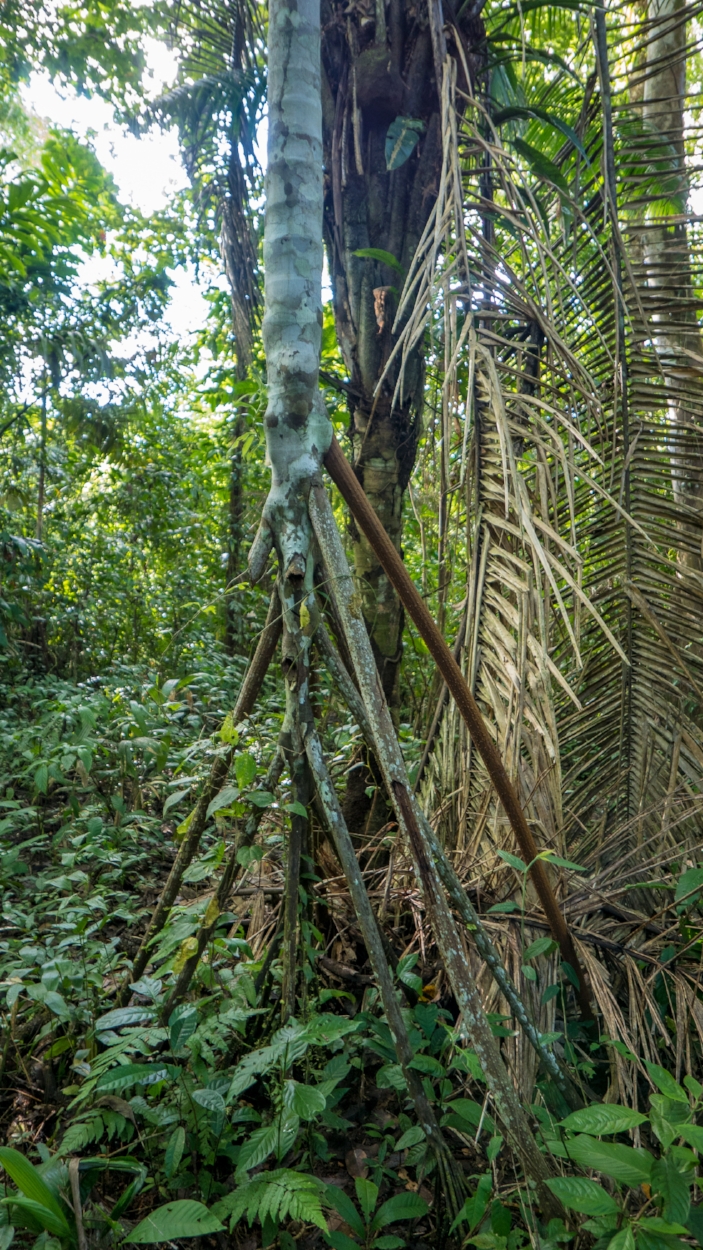
Choosing a company to go with is super difficult unless you have a lot of $$$. We went for a bit more expensive operator with mostly good reviews and got a really good experience. Our guide spoke good English and with the boat-driver they were great company. Of course being in the jungle for a short time you can’t expect to see all the animals but I got a few good shots of birds, sloths, toads, and hopefully some good video material of pink dolphins.
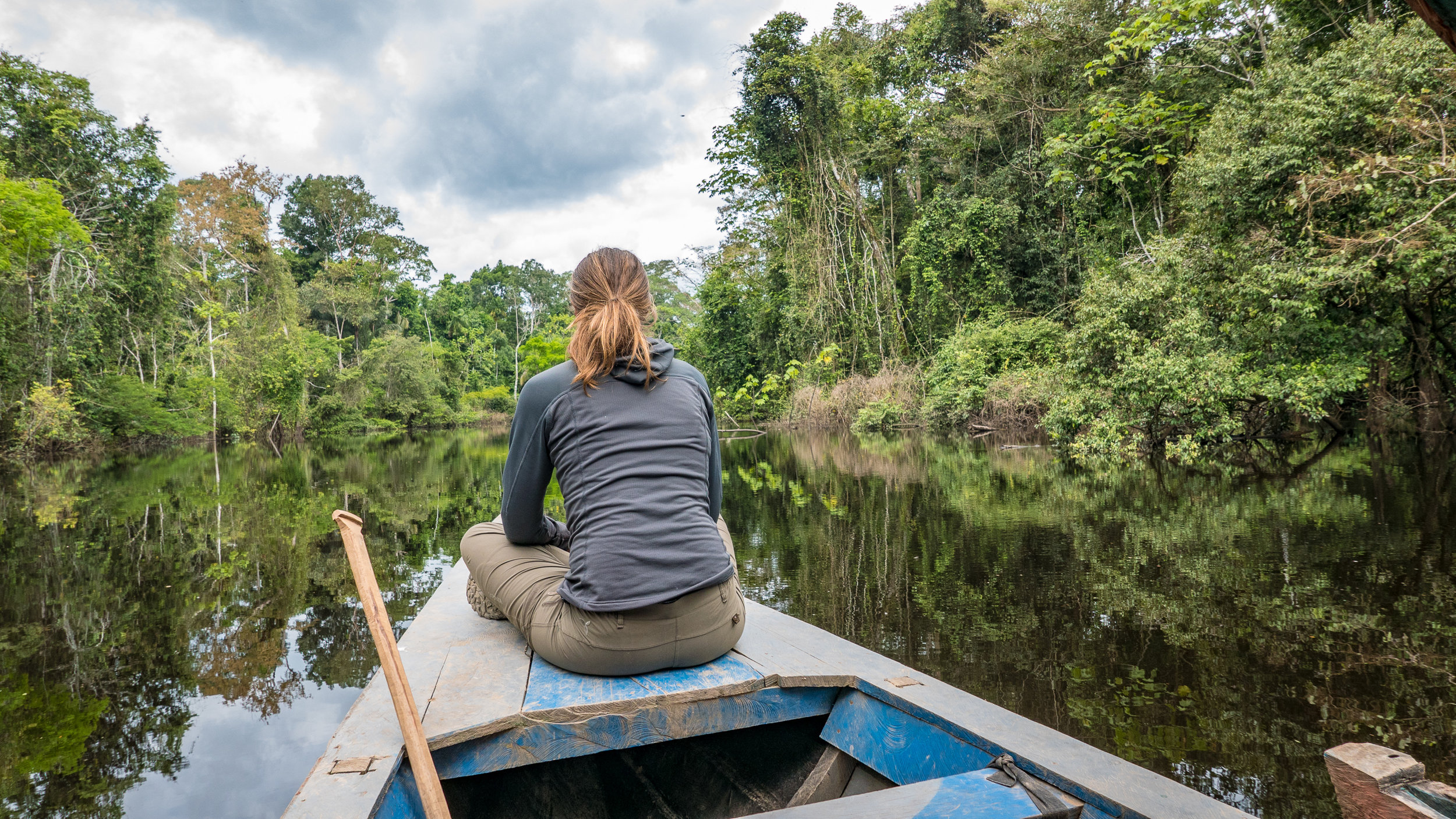
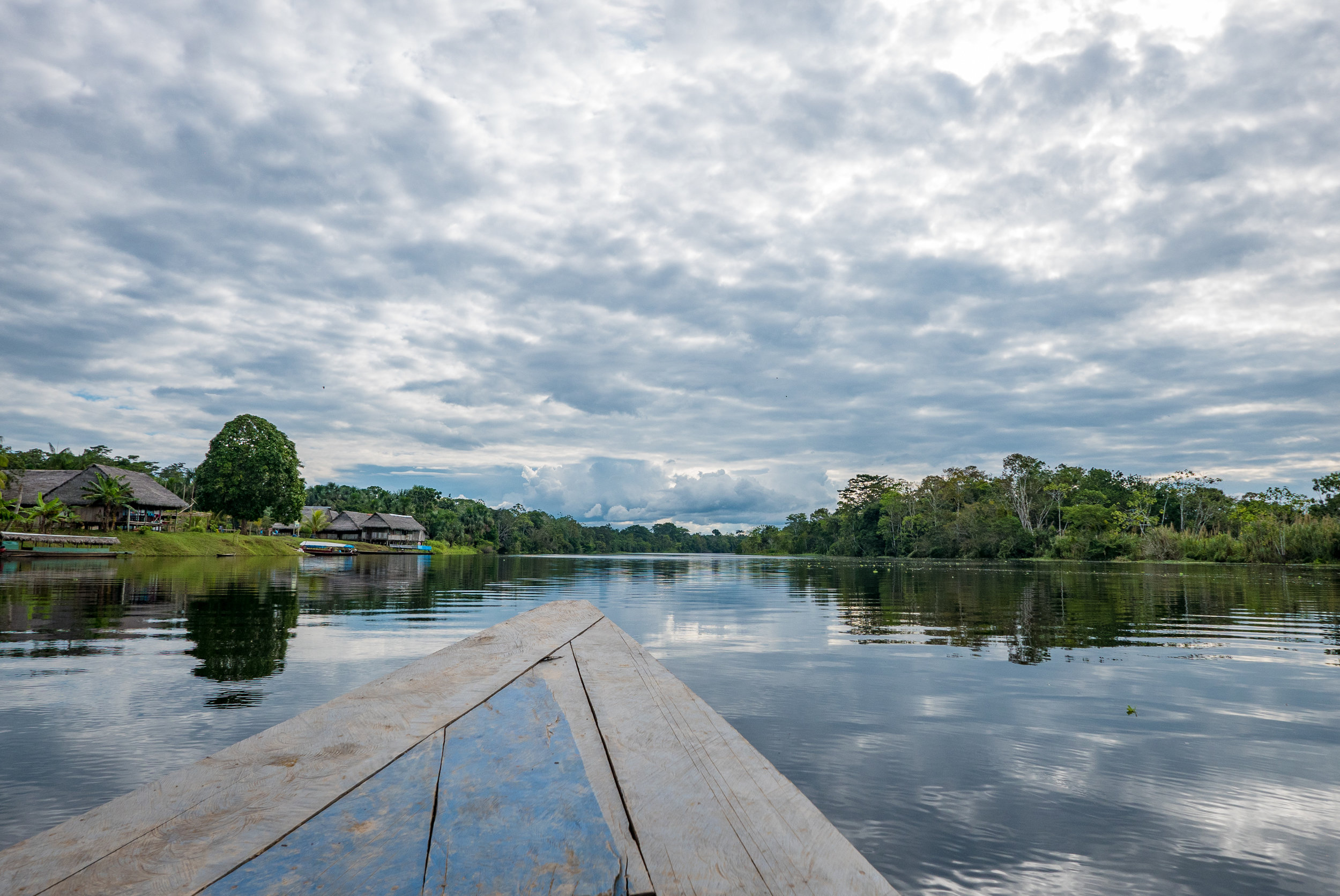
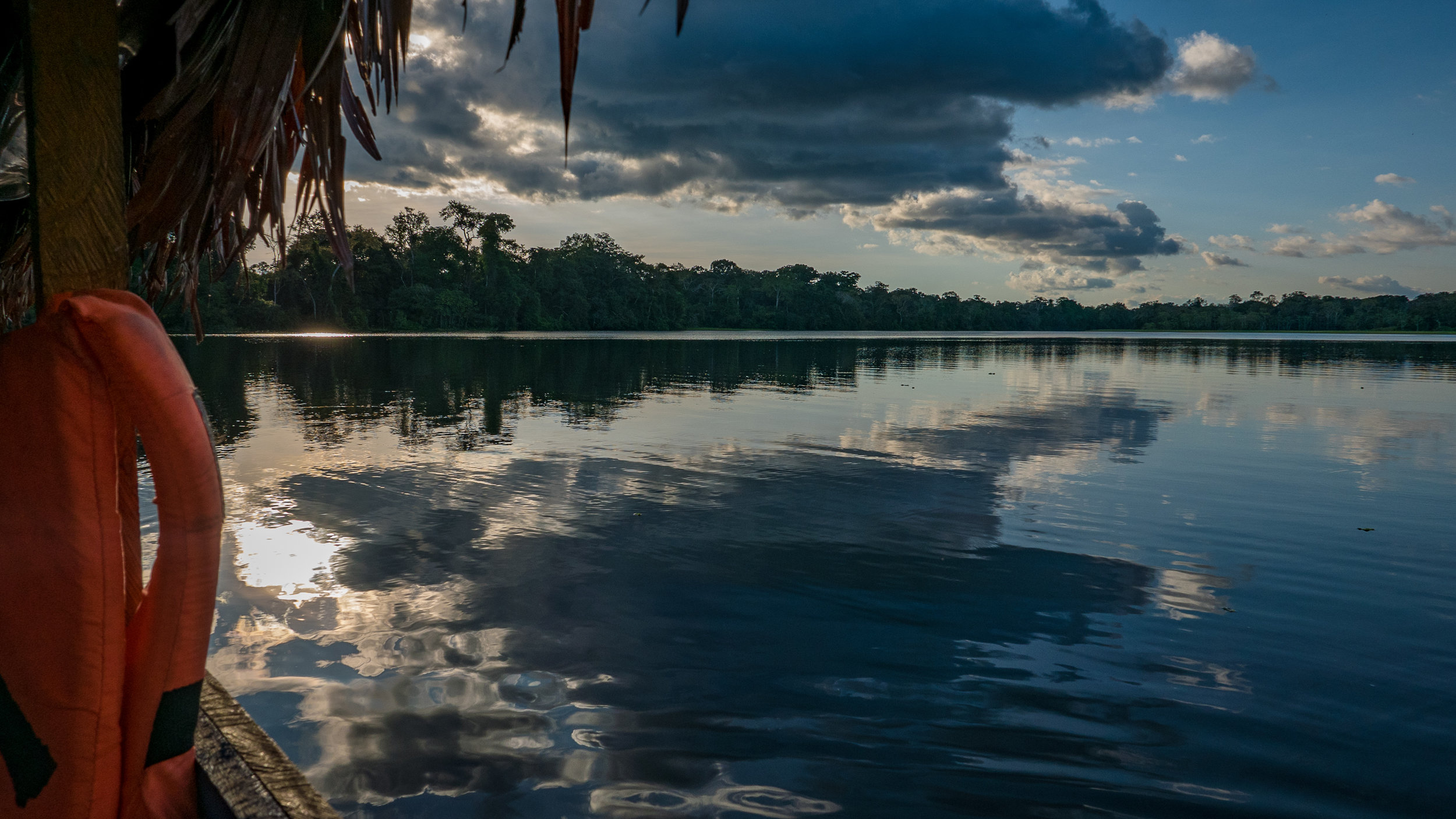
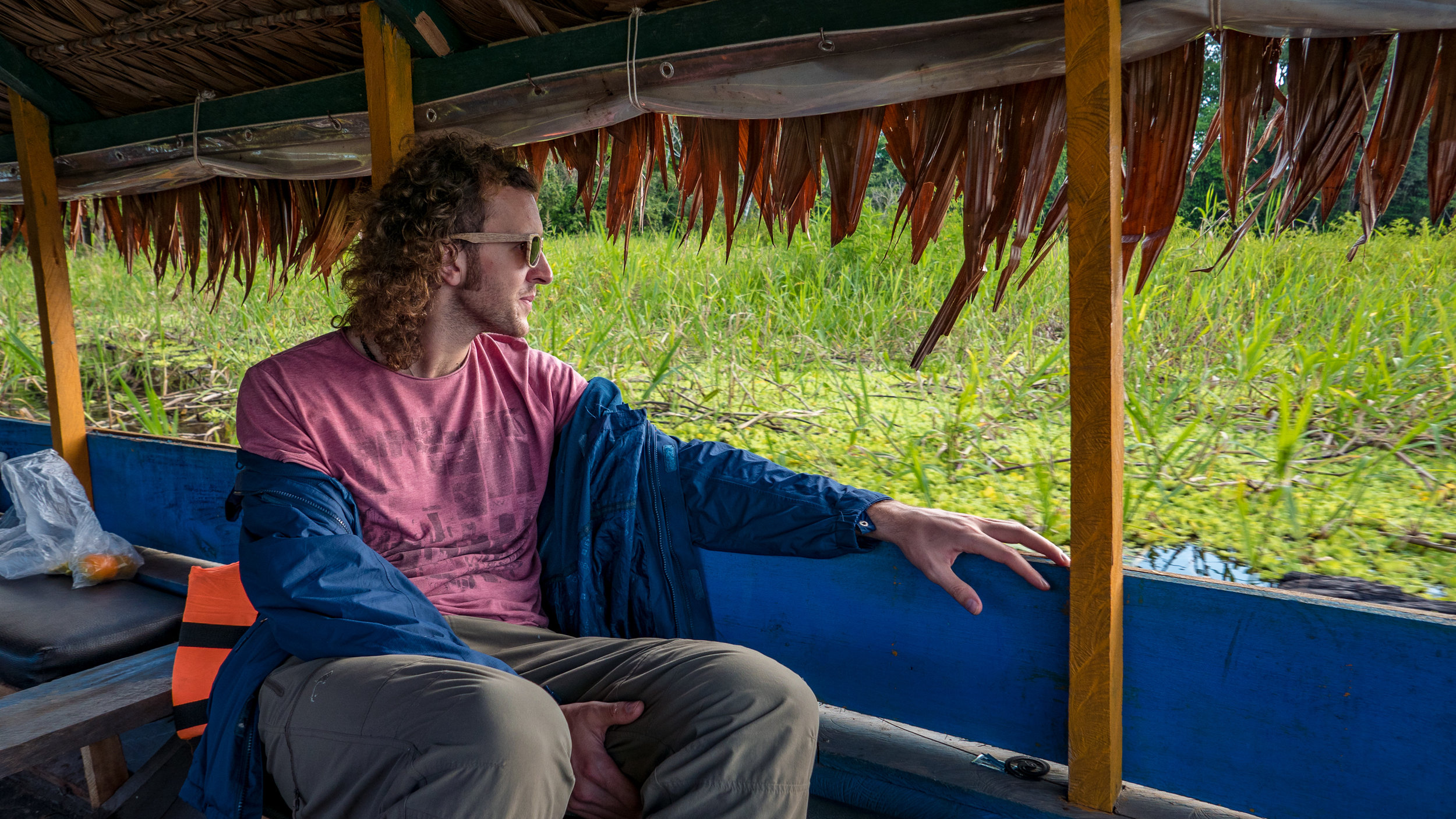
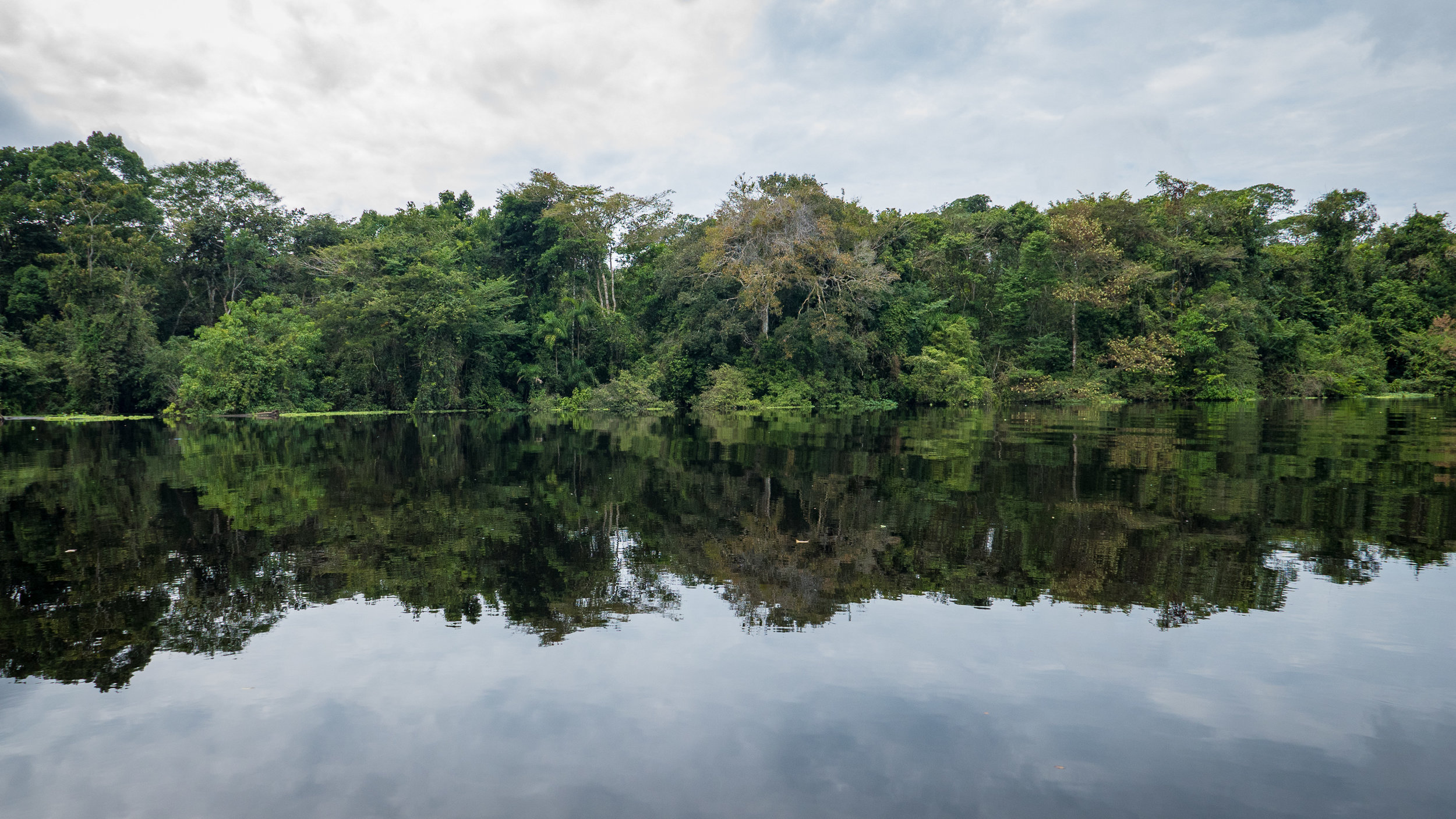
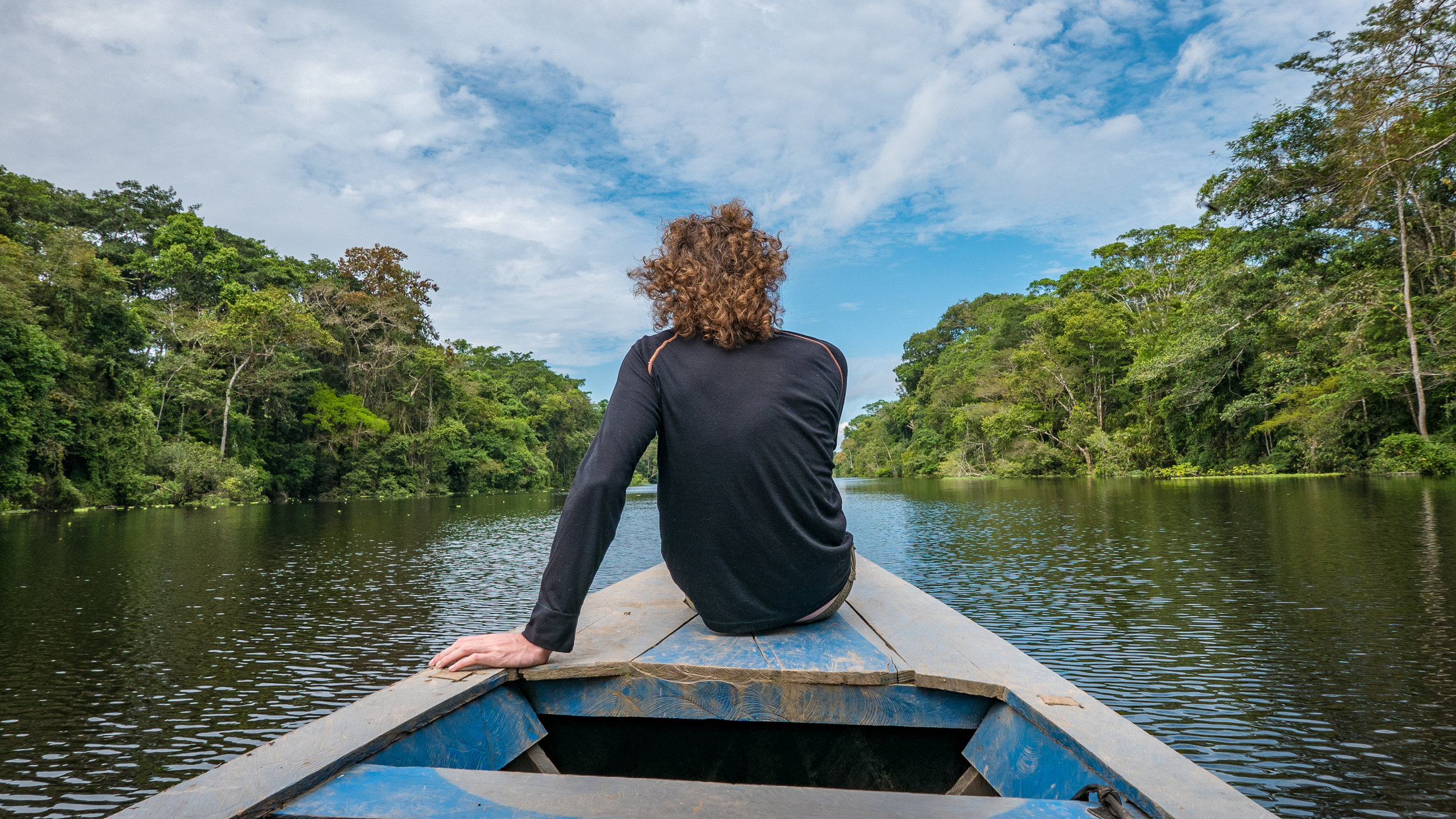
The pink dolphins look actually quite freaky - not like dolphins at all. Locals are also afraid of them (because they believe they take people and that dead people turn into pink dolphins) and won’t swim in the rivers. We heard the dolphins swimming under our boat and banging against it and I was sure this was our time.
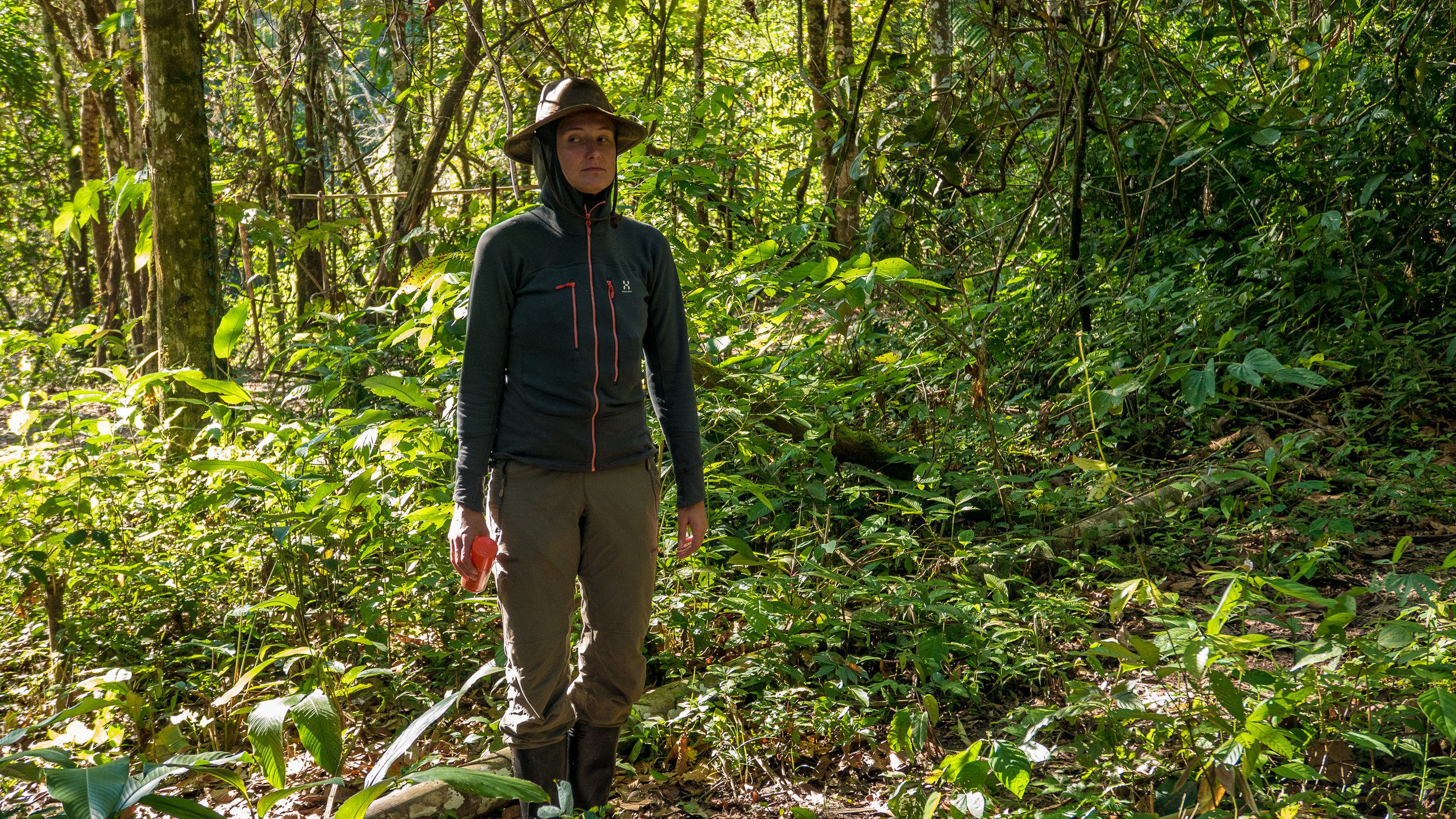
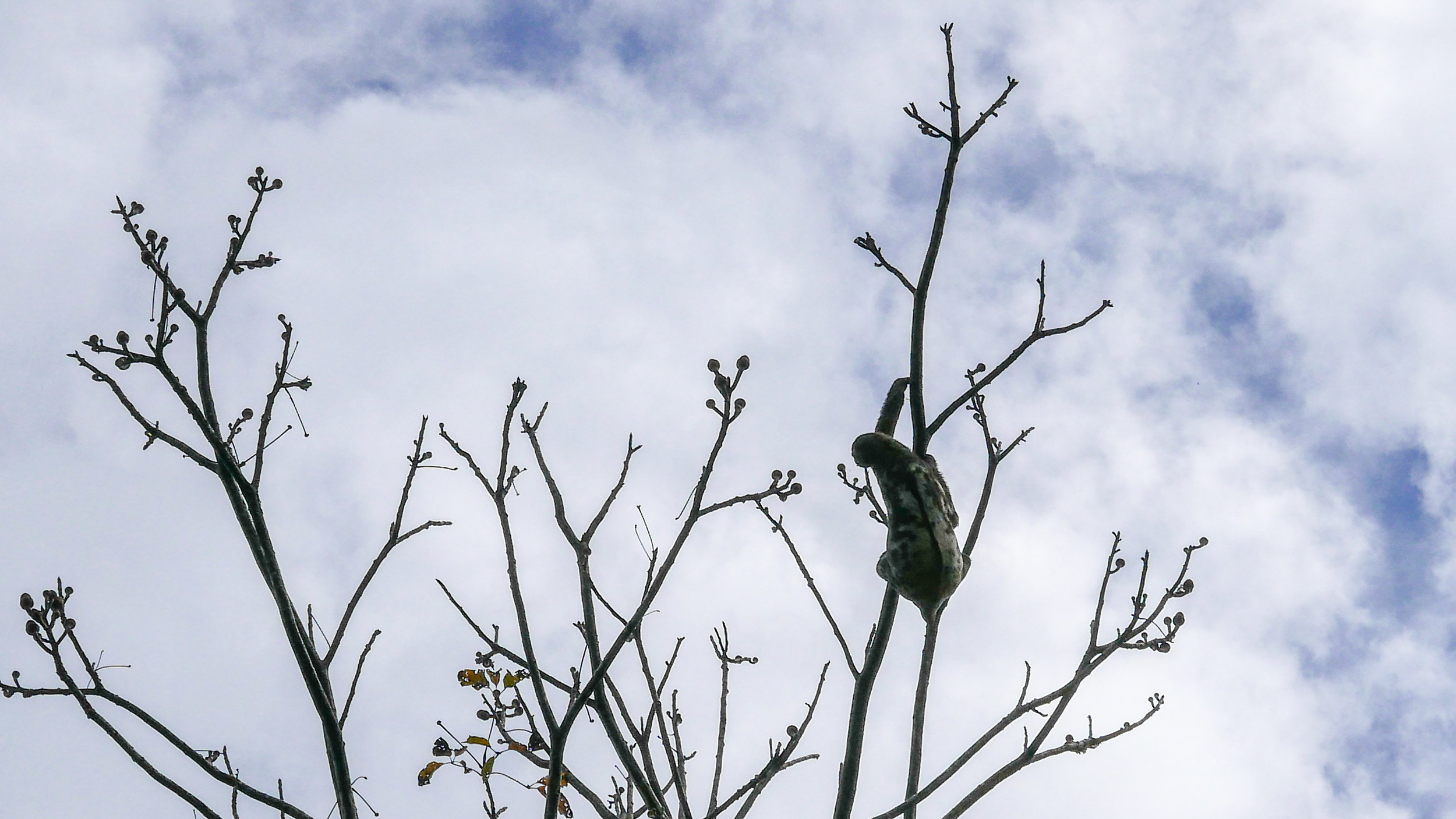
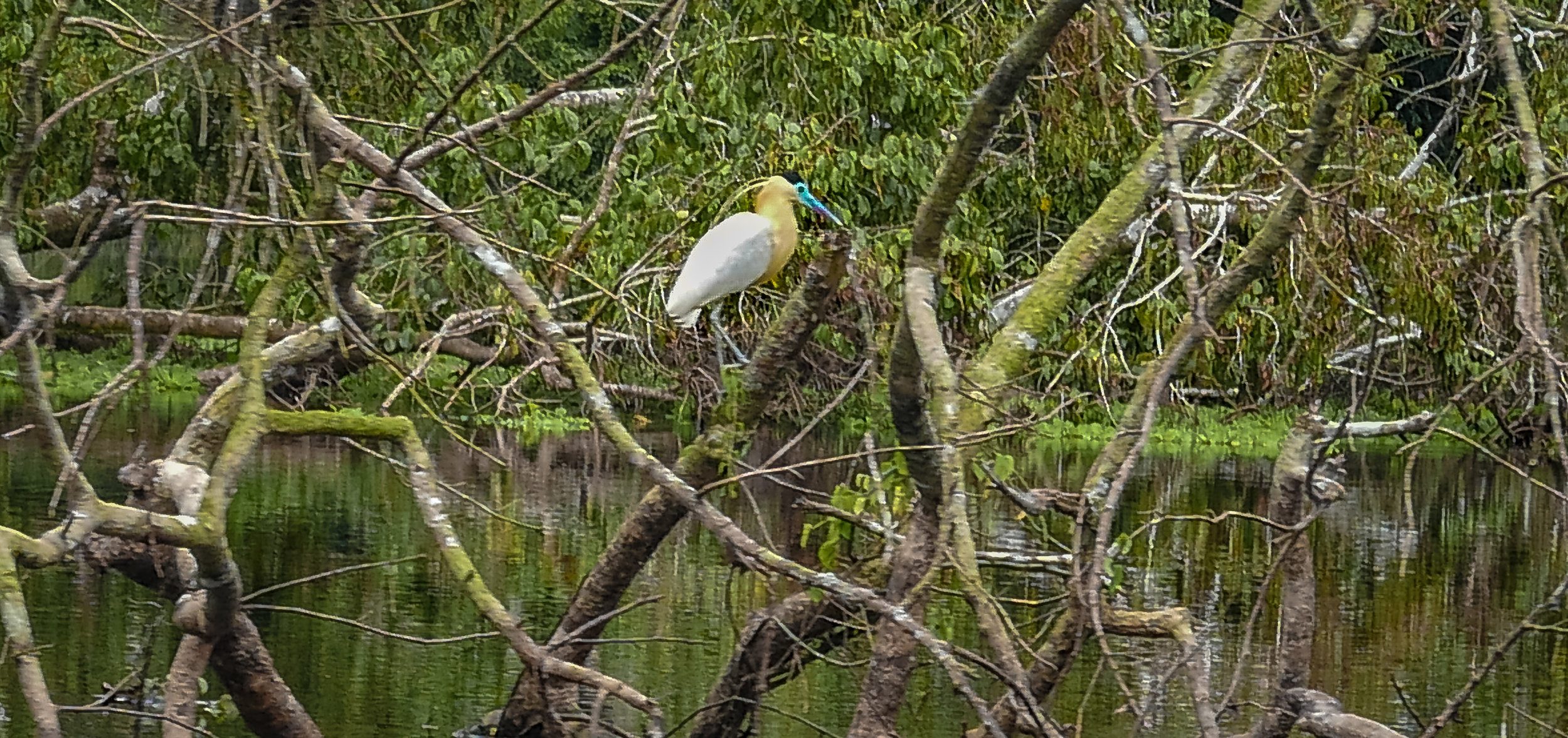
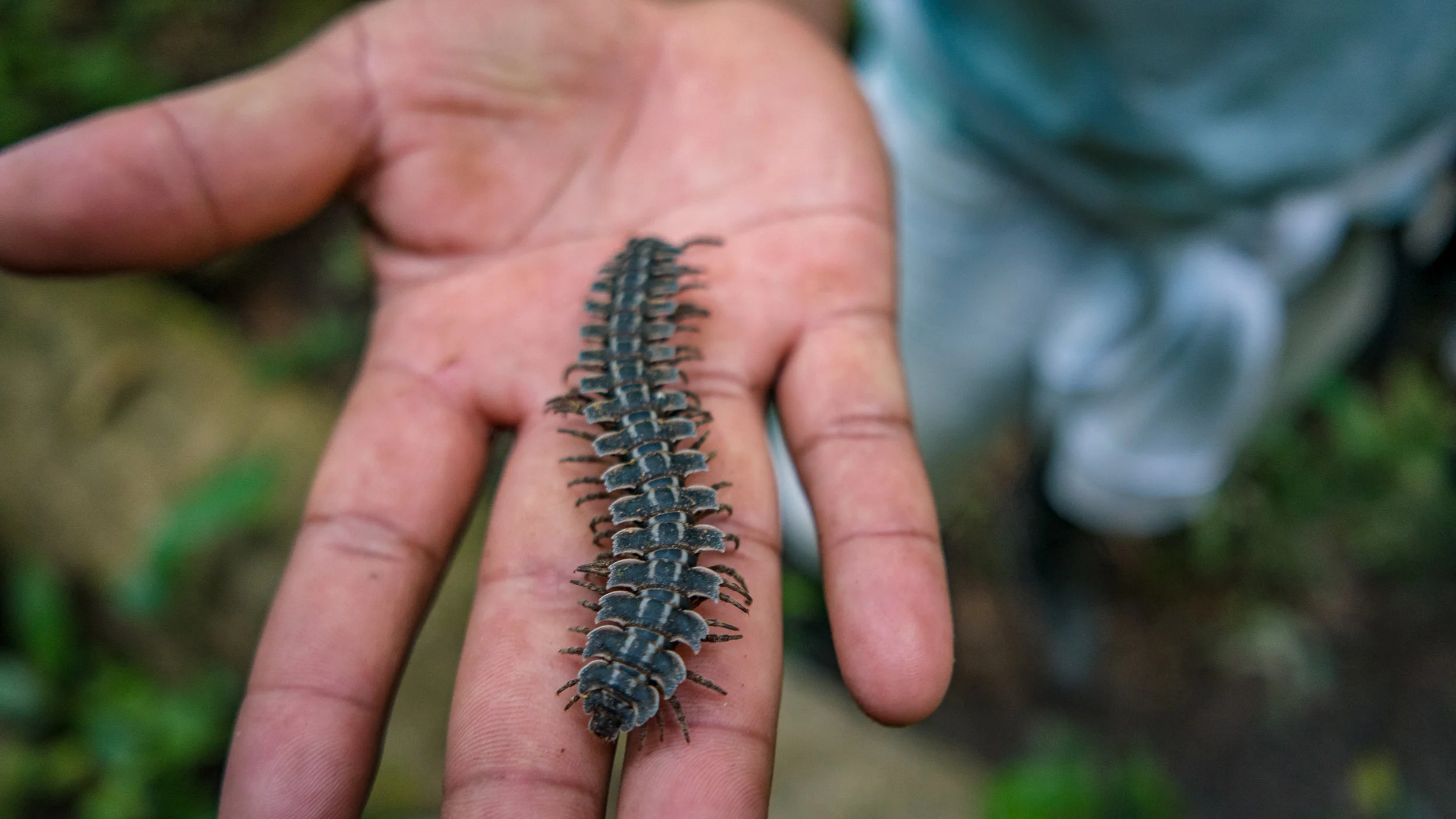
I don’t have that much photo material from our last stops. Mancora was a place to have breakfast, go to the beach, tan, read, have dinner, sleep and then repeat this for seven days. Richie also tried surfing and as a very wise man (as he likes to call himself) paid for all five days in advance. He caught waves maybe during two days. As I said, a wise man.
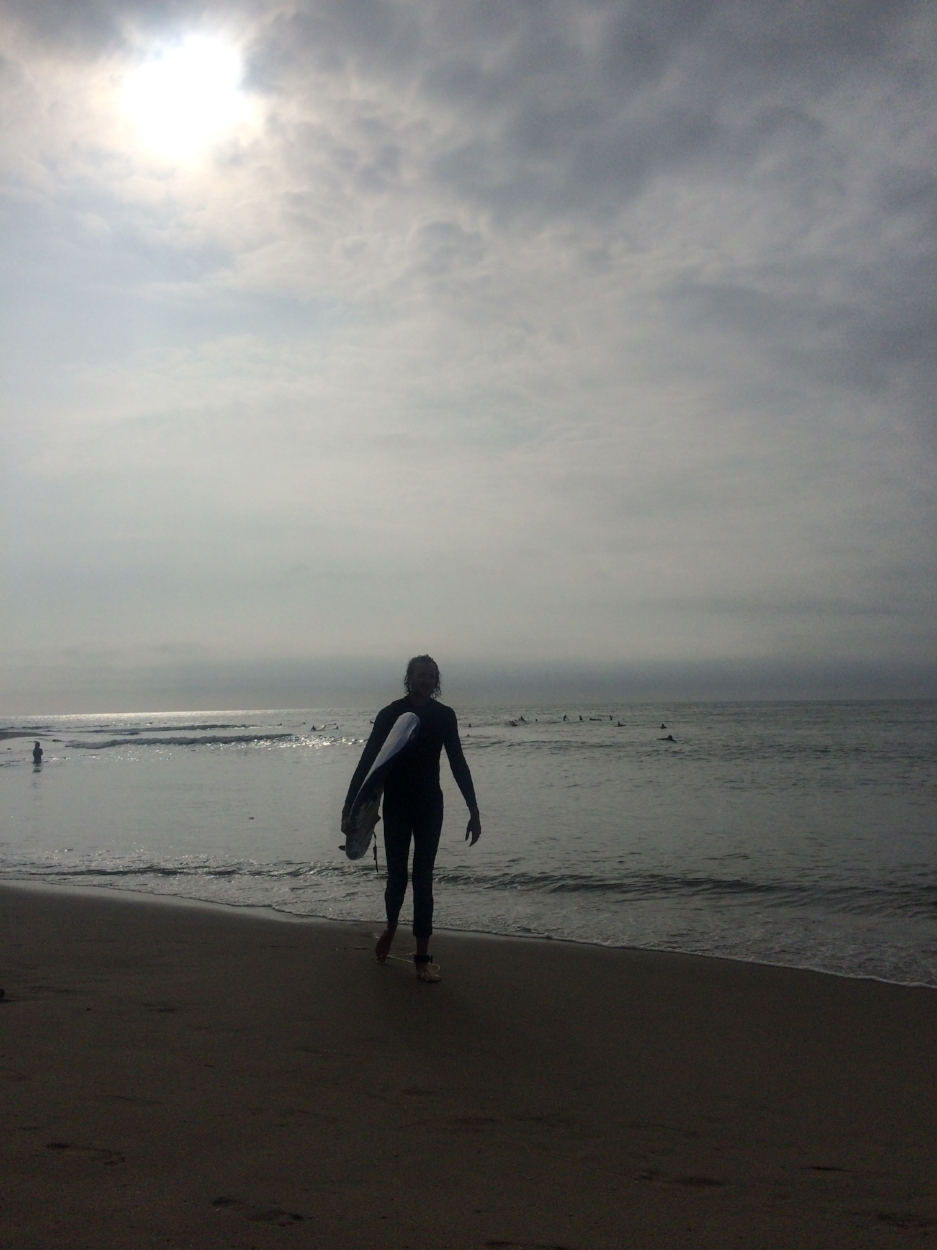

Everything must come to an end and while I bet some of you have felt like our wonders around the world would never end, for us it felt like a brief second. Now that I am lying in bed back in Dublin I can’t believe how many places we went to and how much we experienced. “Luckily” I have hundreds of minutes of video material to be edited into another ten-minute mini-documentary, maybe that will take us back to the road for another short moment.

The End - thanks for following along the journey!
That’s all folks for now - future posts will be about how to become a best-selling author (without actually being one yet so that should be entertaining!) and how to live in a cramped studio in Amsterdam without strangling each other so: Stay tuned.

Bolivia in a nutshell
When you travel for a long, long, long time, you can’t avoid of burning out. And unfortunately some countries that are in the beginning of your journey receive a lot of attention and enthusiasm, and some countries towards the end just won’t get all the love they deserve.
After getting f****d money-wise in Argentina and Chile, Bolivia was a welcomed change. Dinner for $2? A massive fruit salad with ice cream for $1? Softest jumpers in the world for $10? Yes thank you.
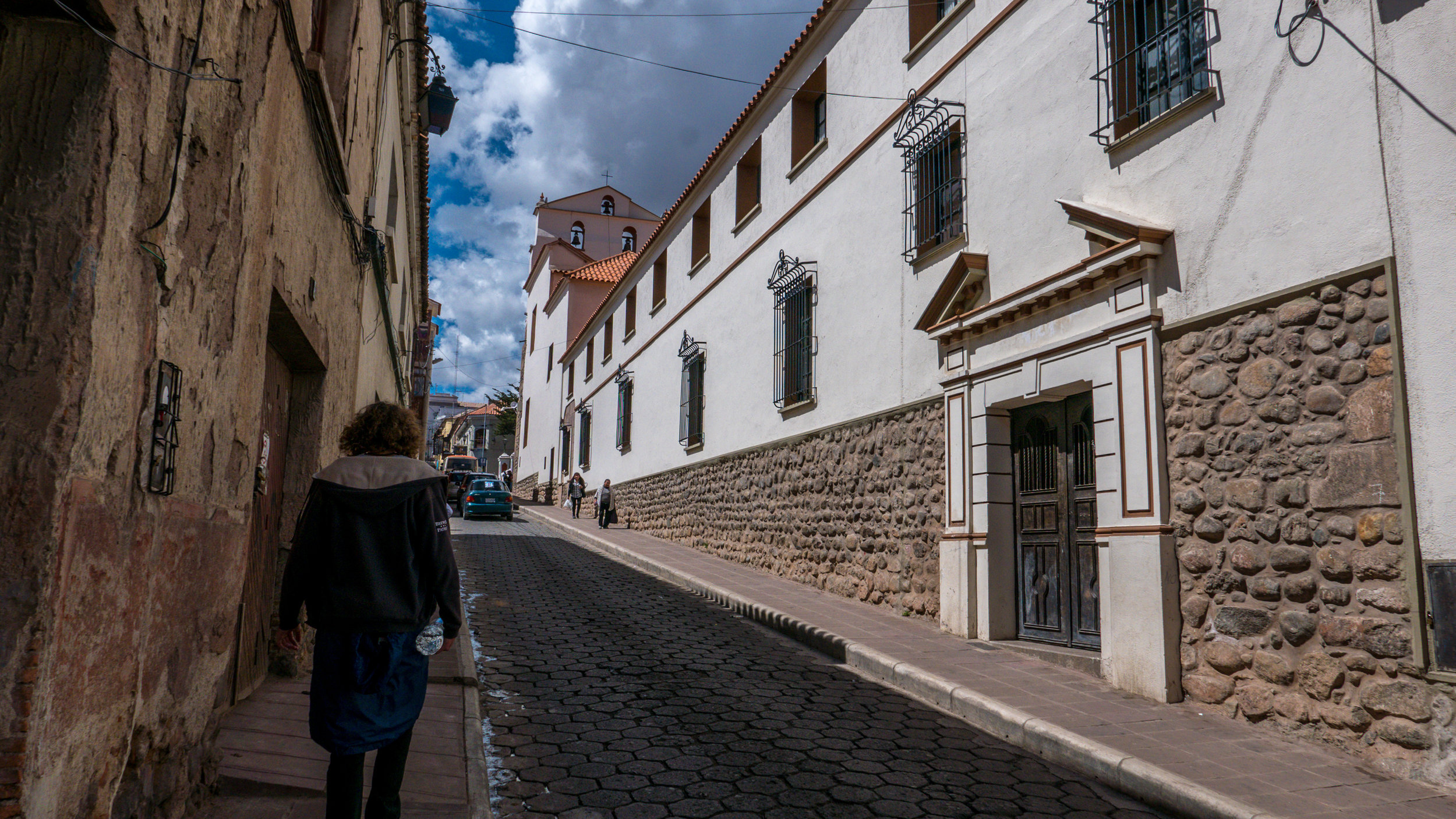
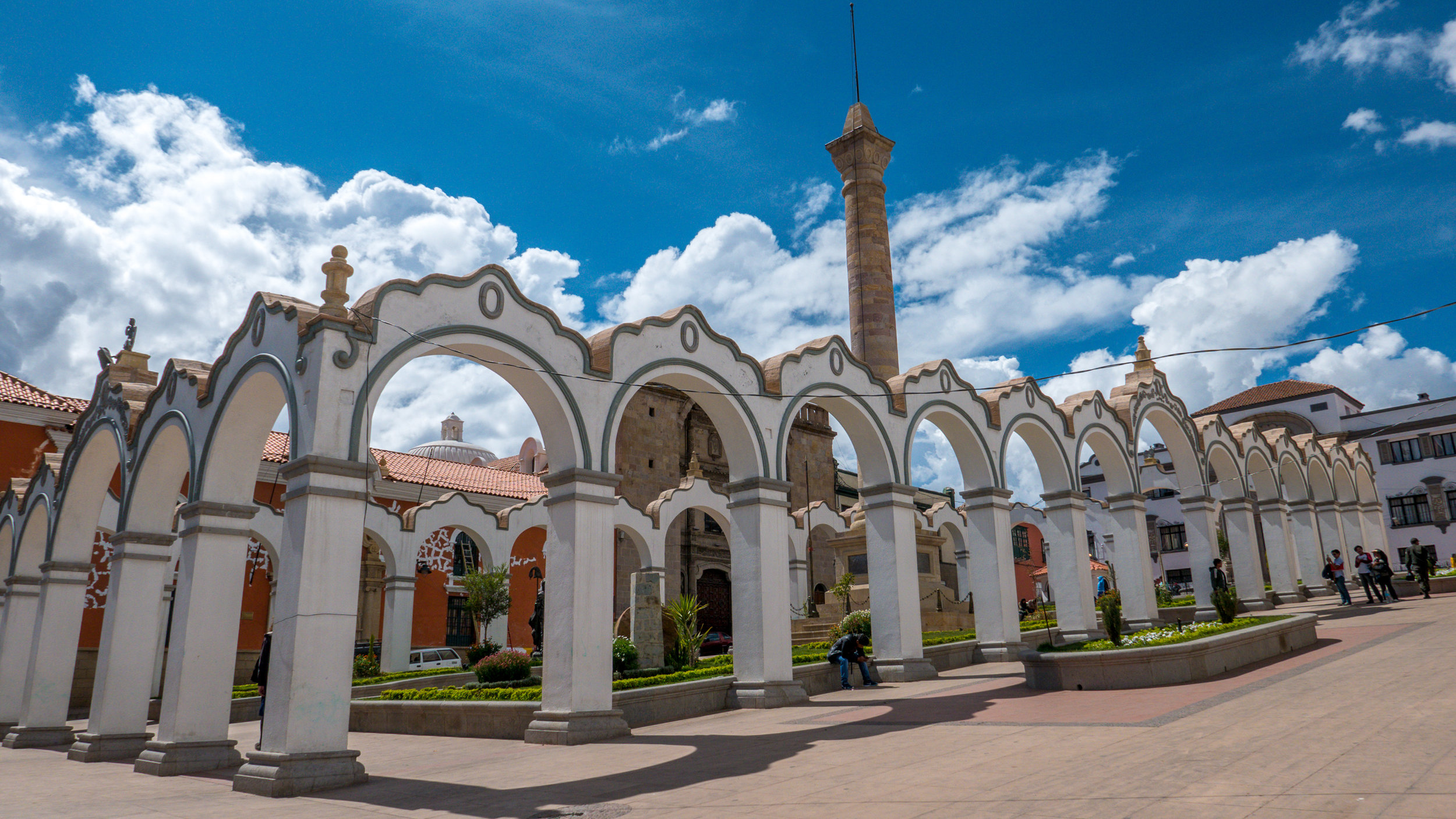
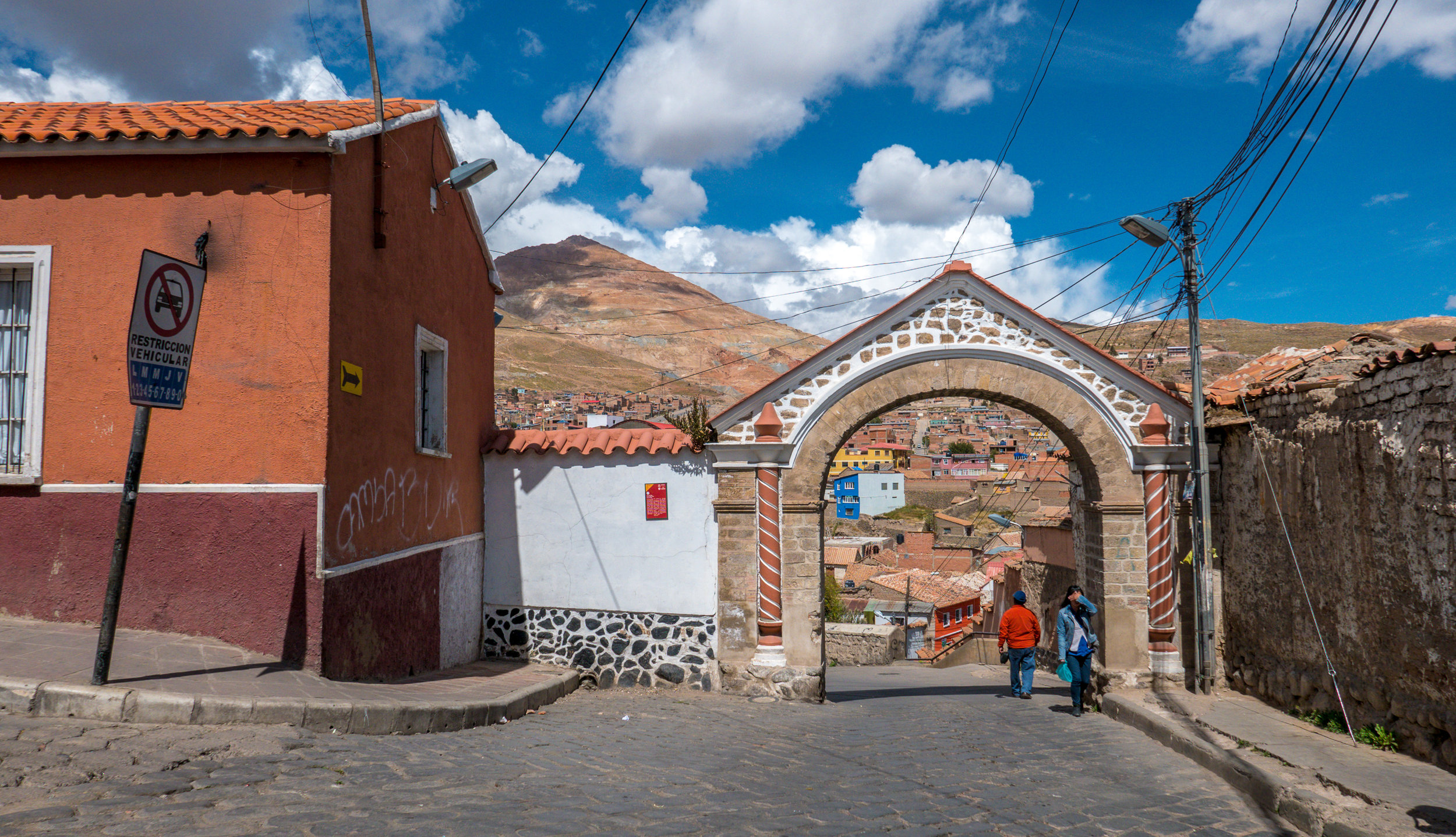
Our stops in Bolivia included the infamous silver-city Potosí where every step was a challenge due to the city being located in the altitude of 4,067m over sea level. This is also where I spent my birthday. Not drinking or eating cake but shivering on the very cold toilet floor, suffering from yet another Latin American food poisoning. Now I’ll at least remember forever the day I turned 32.
The most famous tourist activity in Potosí is the tour the “Mountain who eats men” that looms over the city, still ingesting thousands of workers every day looking for the last traces of copper, zink and lesser metals since silver has been long gone. I have lately developed a slight claustrophobia and since the tour happens in very small and narrow pathways far inside the mountain, wearing protective gear while being in a sauna-like environment, I didn’t think I was able to it without panicking. And since Richie can barely stand straight in normal houses, he wasn’t too keen on it either. Thus we did not get to witness the conditions the workers are forced to face every day. This mountain is one of the most prominent pieces of “evidence” of the exploitation and plundering the conquistadors and their followers brought upon Latin America.

City of Potosí and Cerro Rico
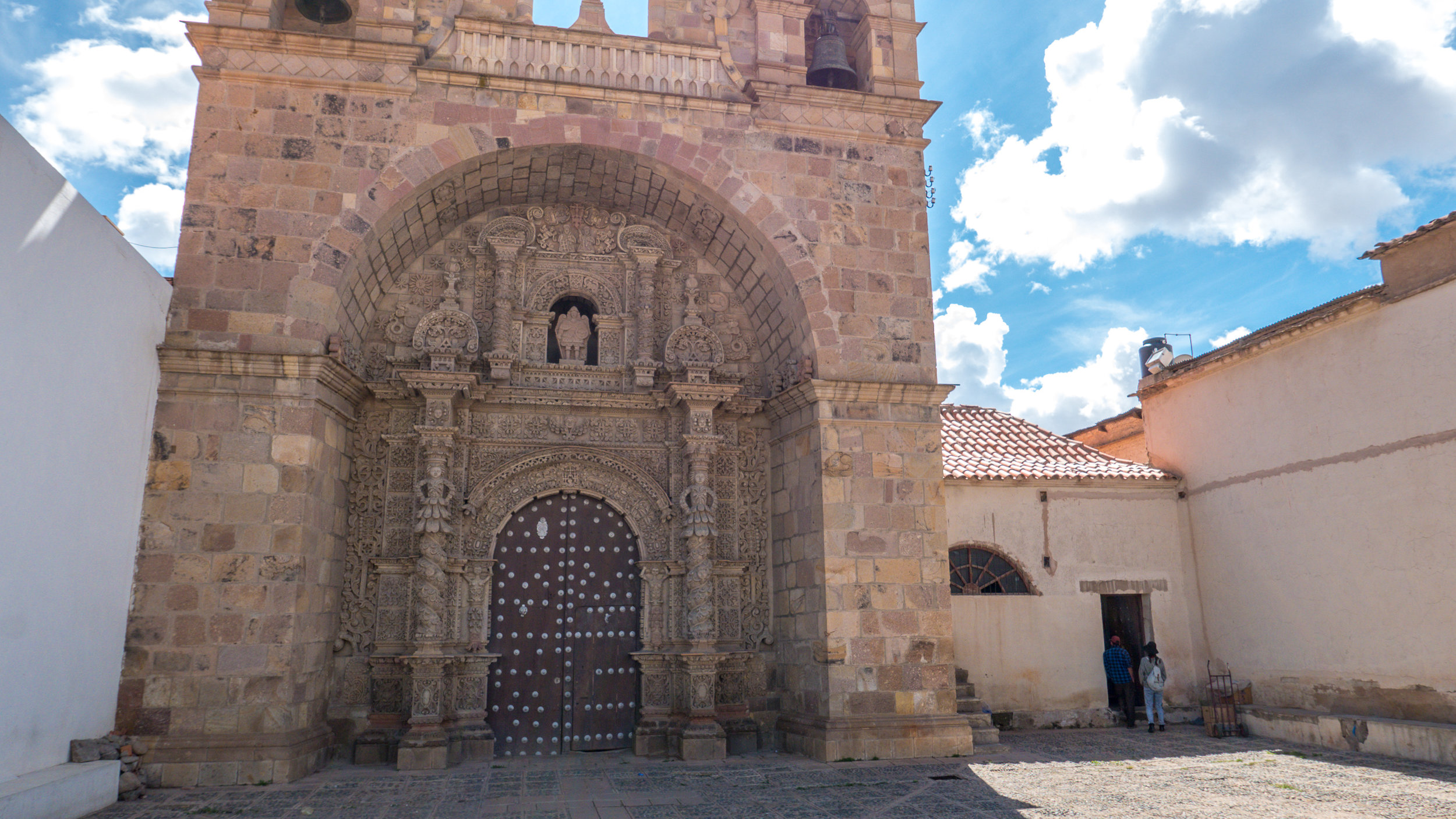
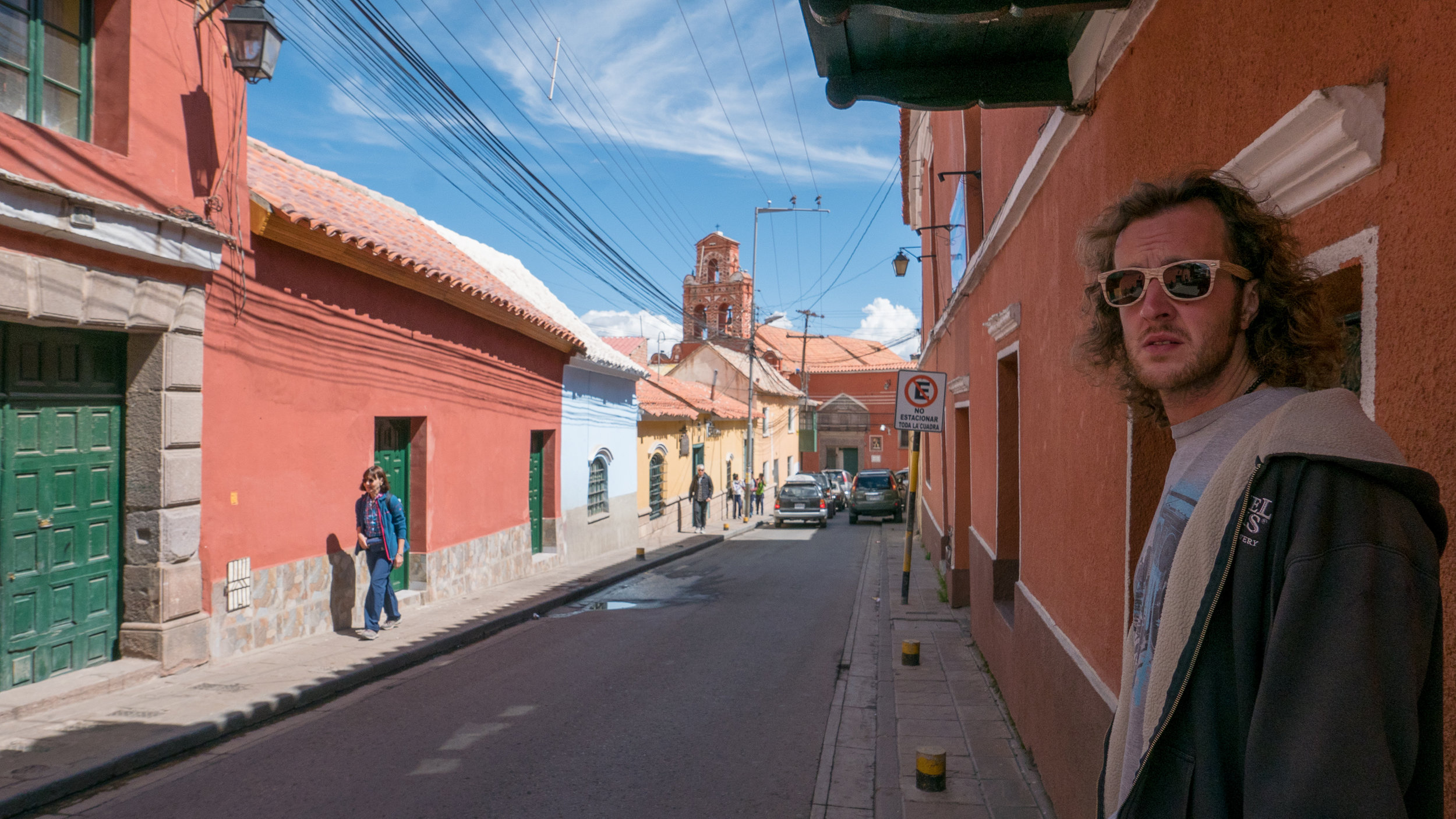
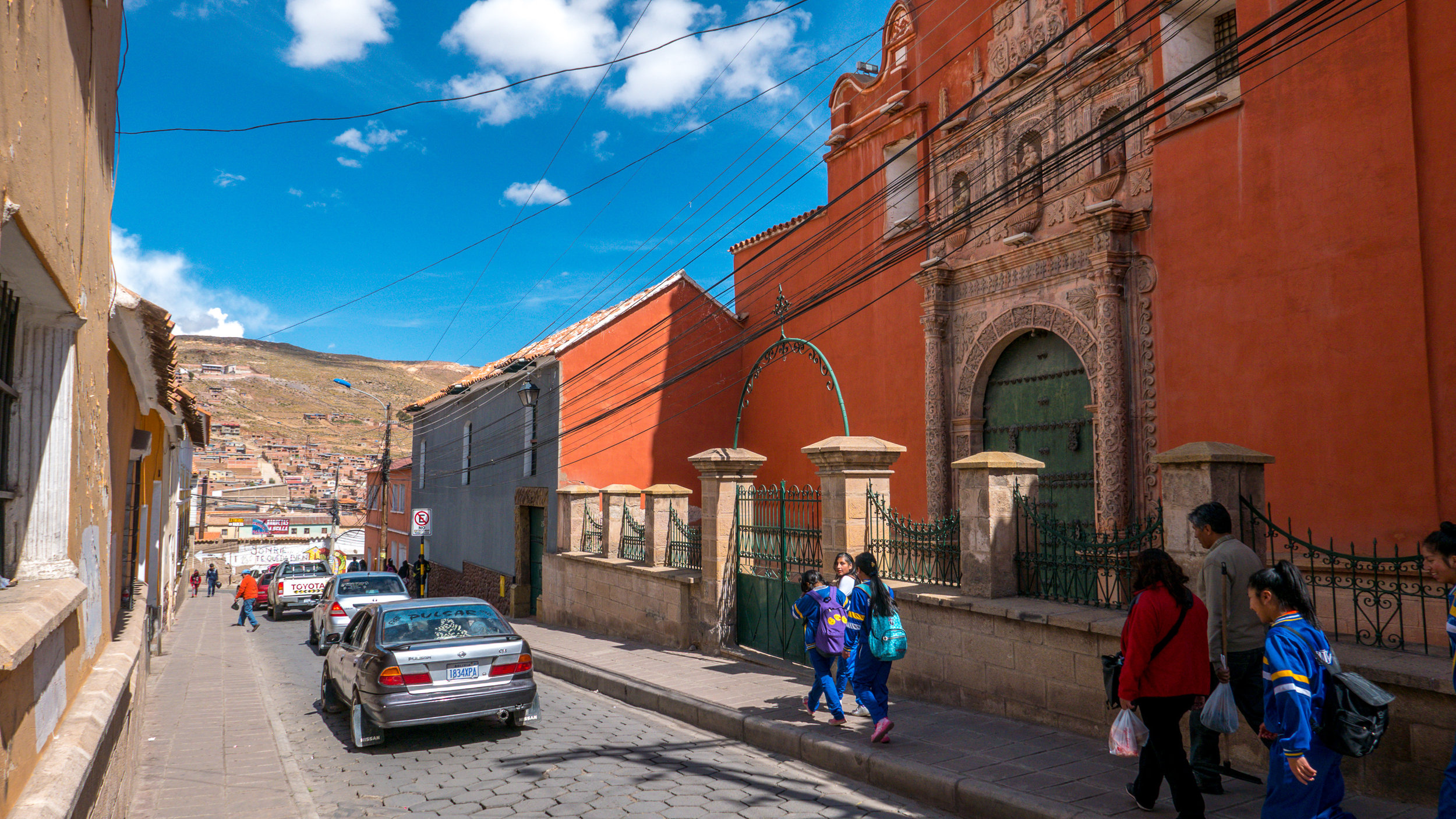

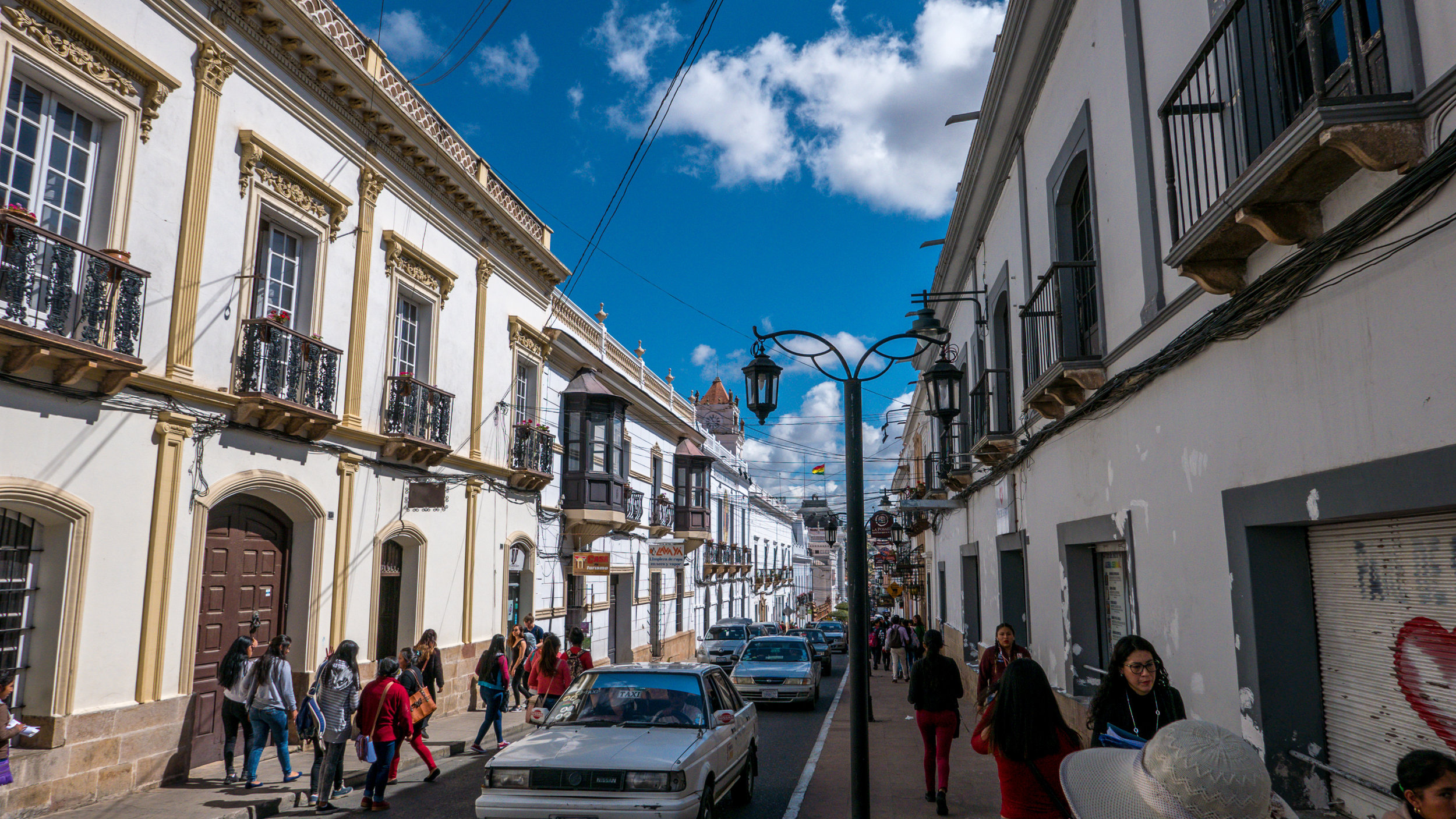
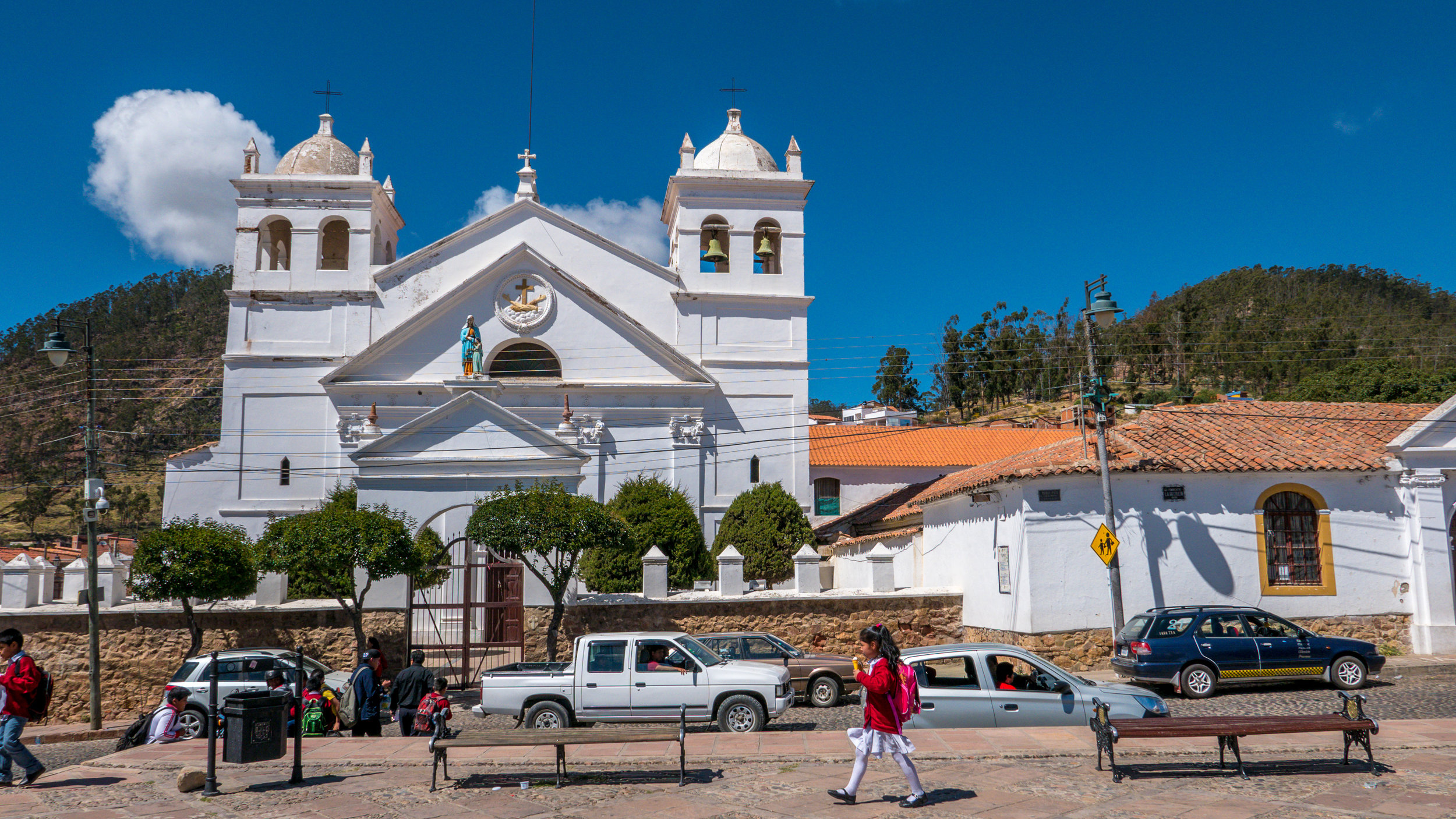
In Sucre we mostly slept. And slept some more. Walked around the beautiful, white city. Tried to go to the dinosaur park but of course everything was closed the first of May Thus we had some naps. Also for once our timing and decision to fly instead of a 12hrs bus was spot on: The day we left, people had started blocking the streets and the following days no-one could leave Sucre (nor come in). On our way to the airport we passed one blockade but luckily our taxi driver was able to drive pass it.

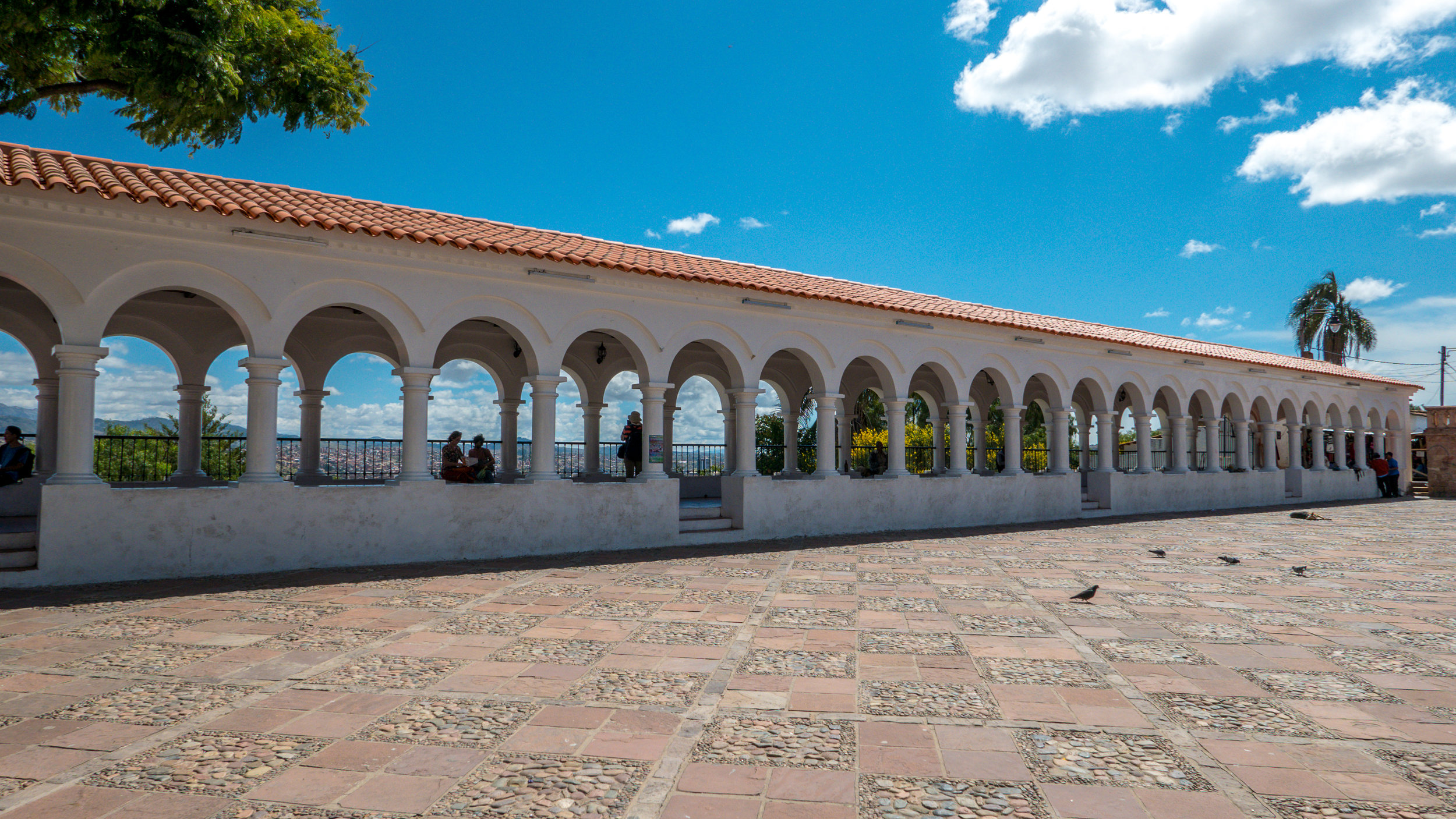
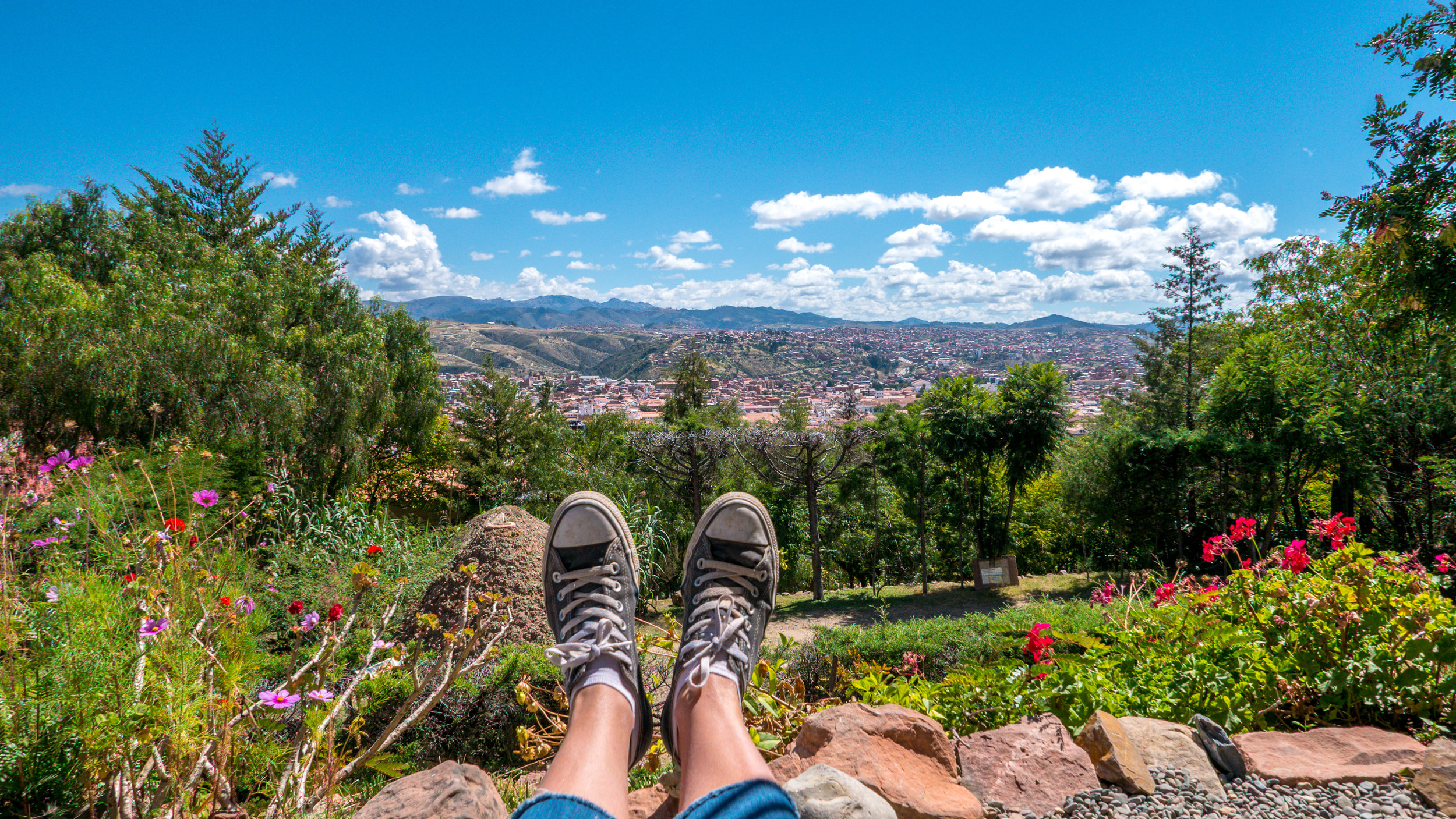
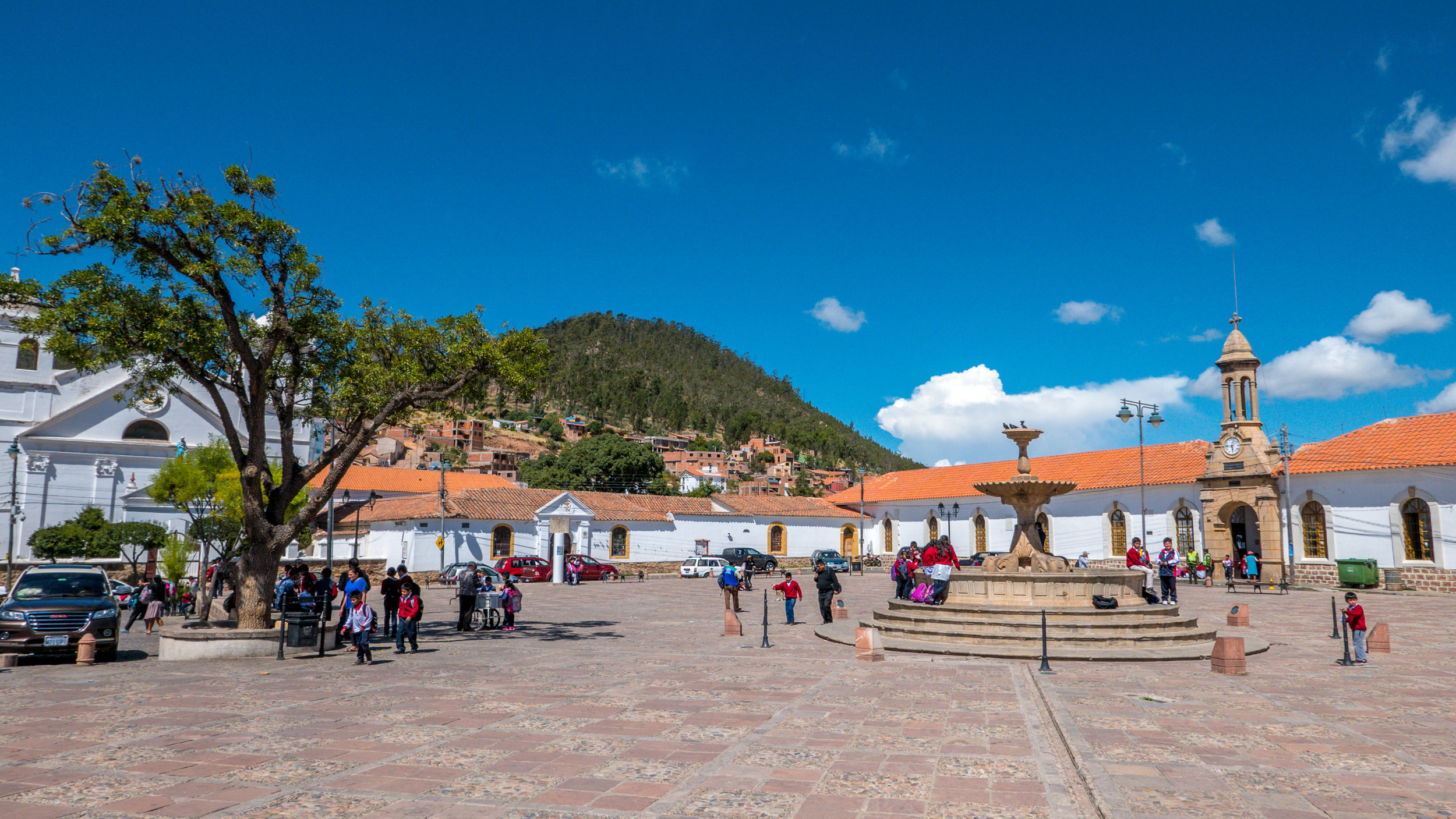
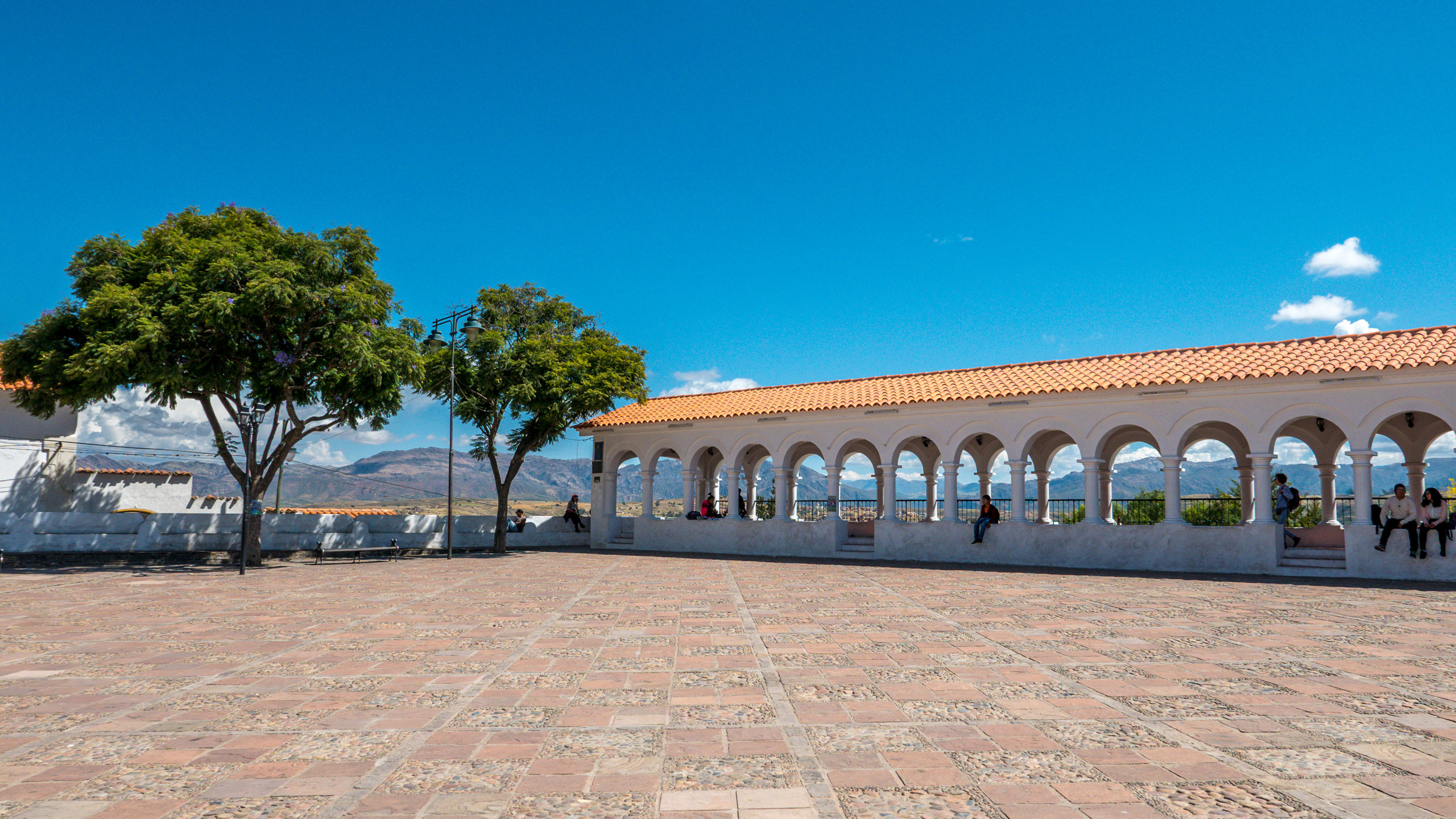
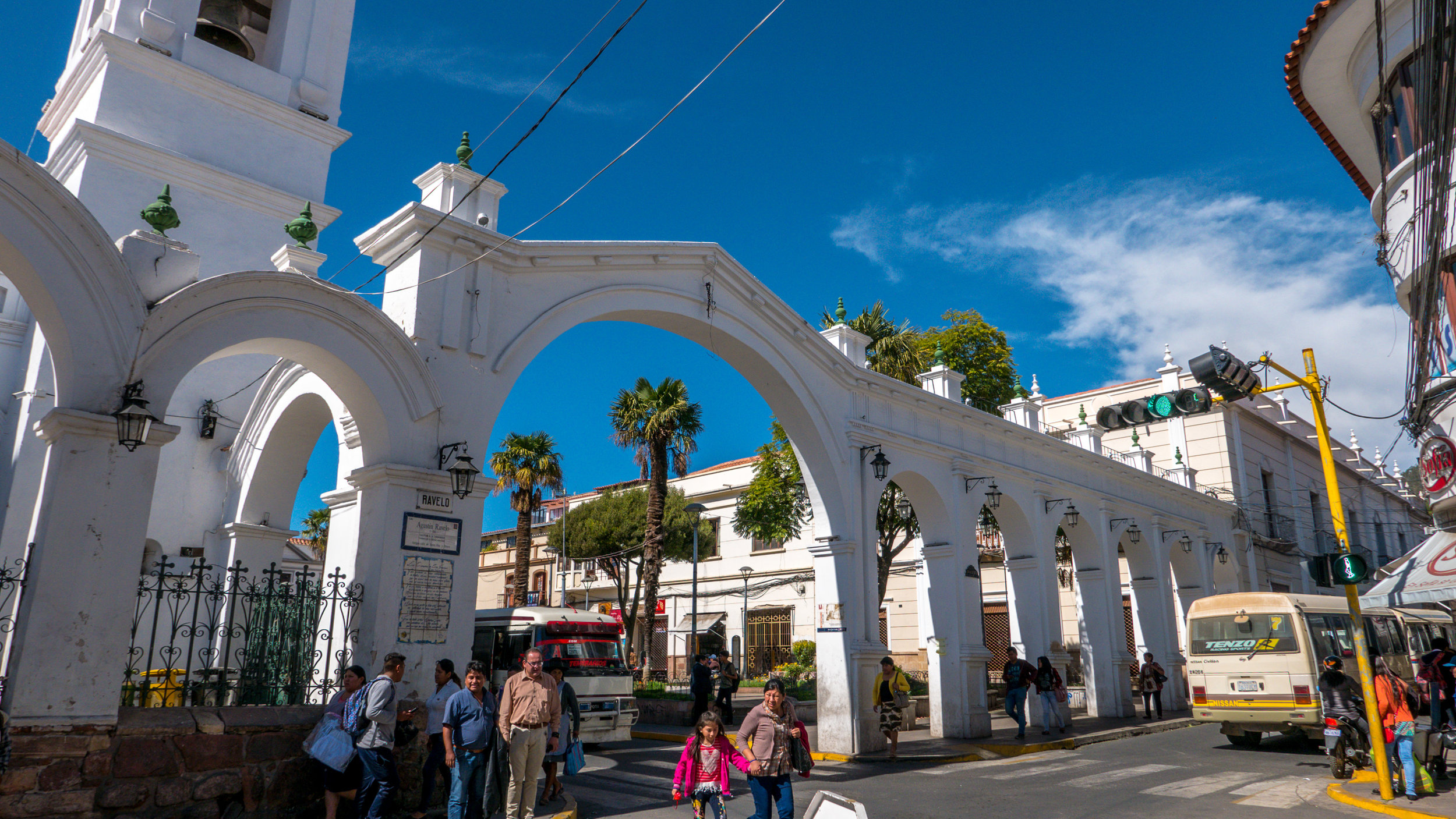
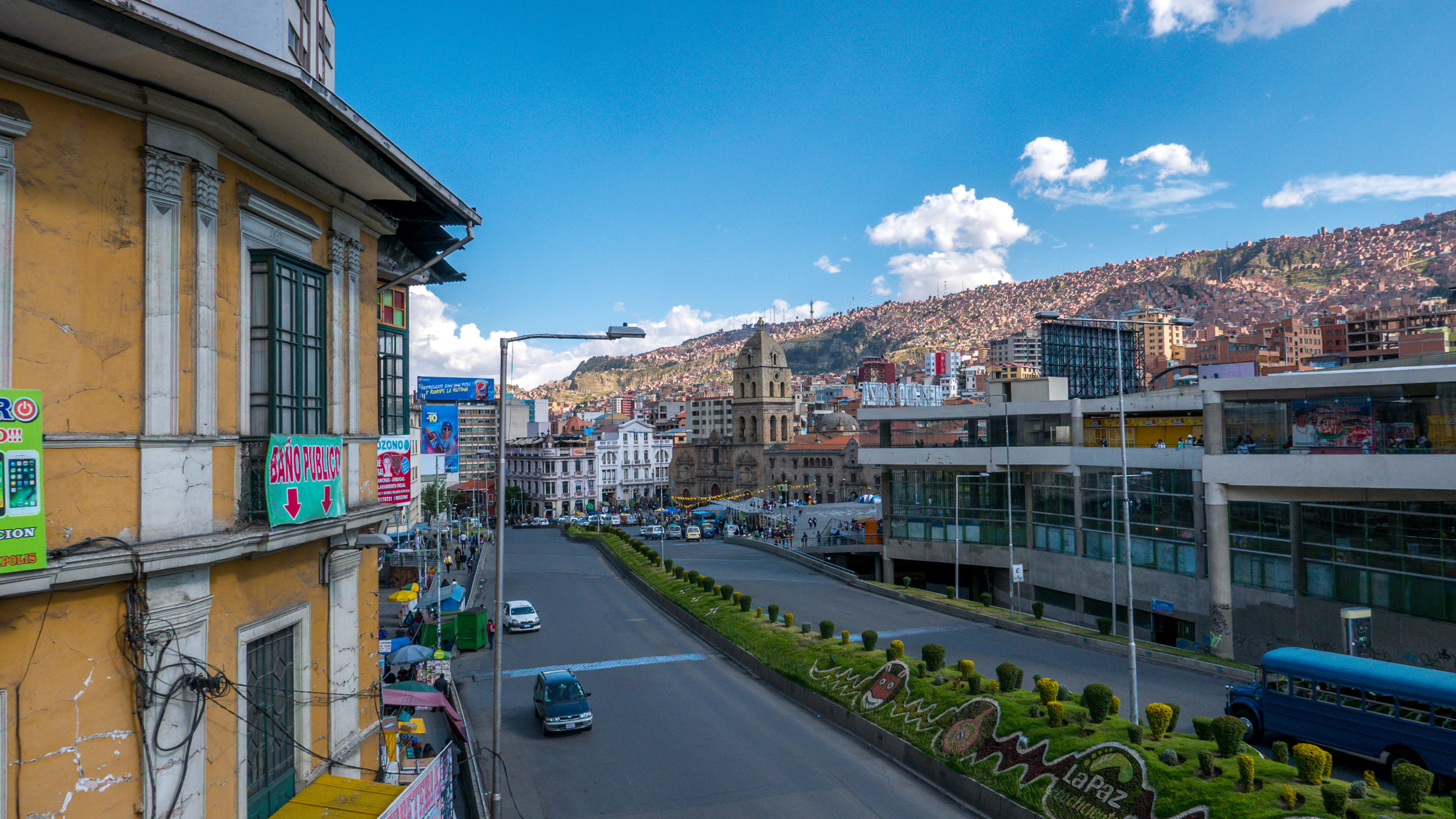
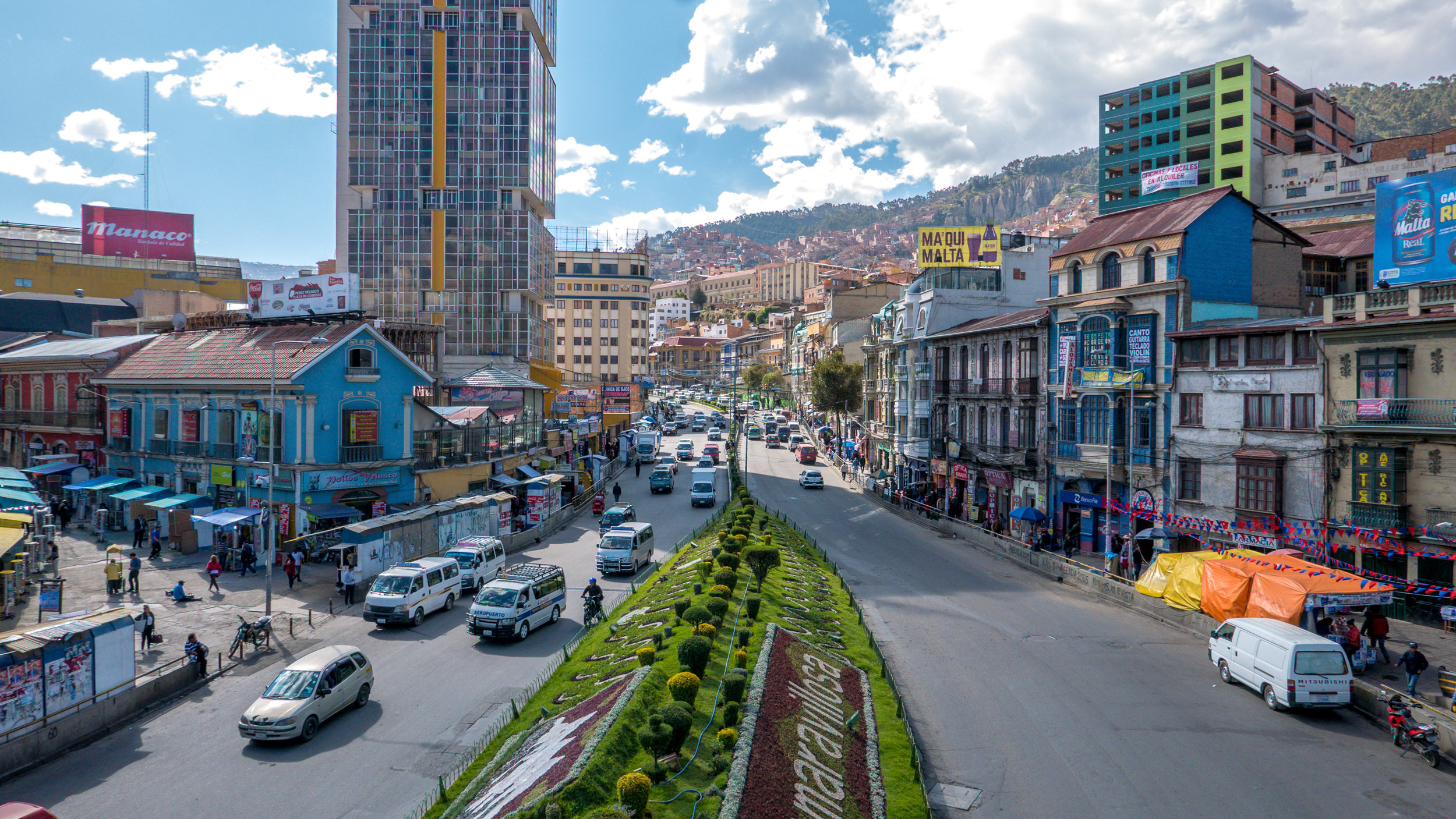
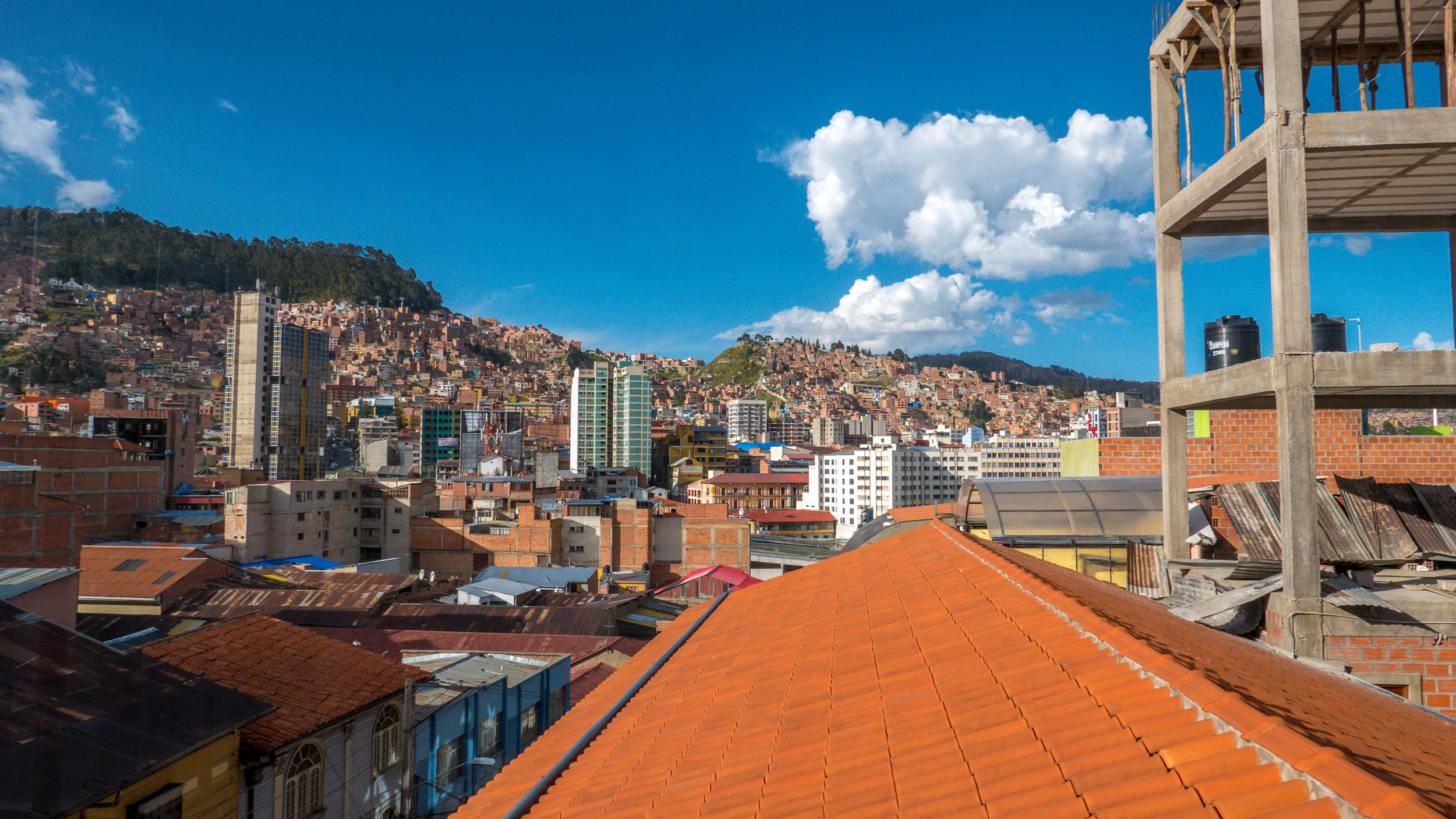
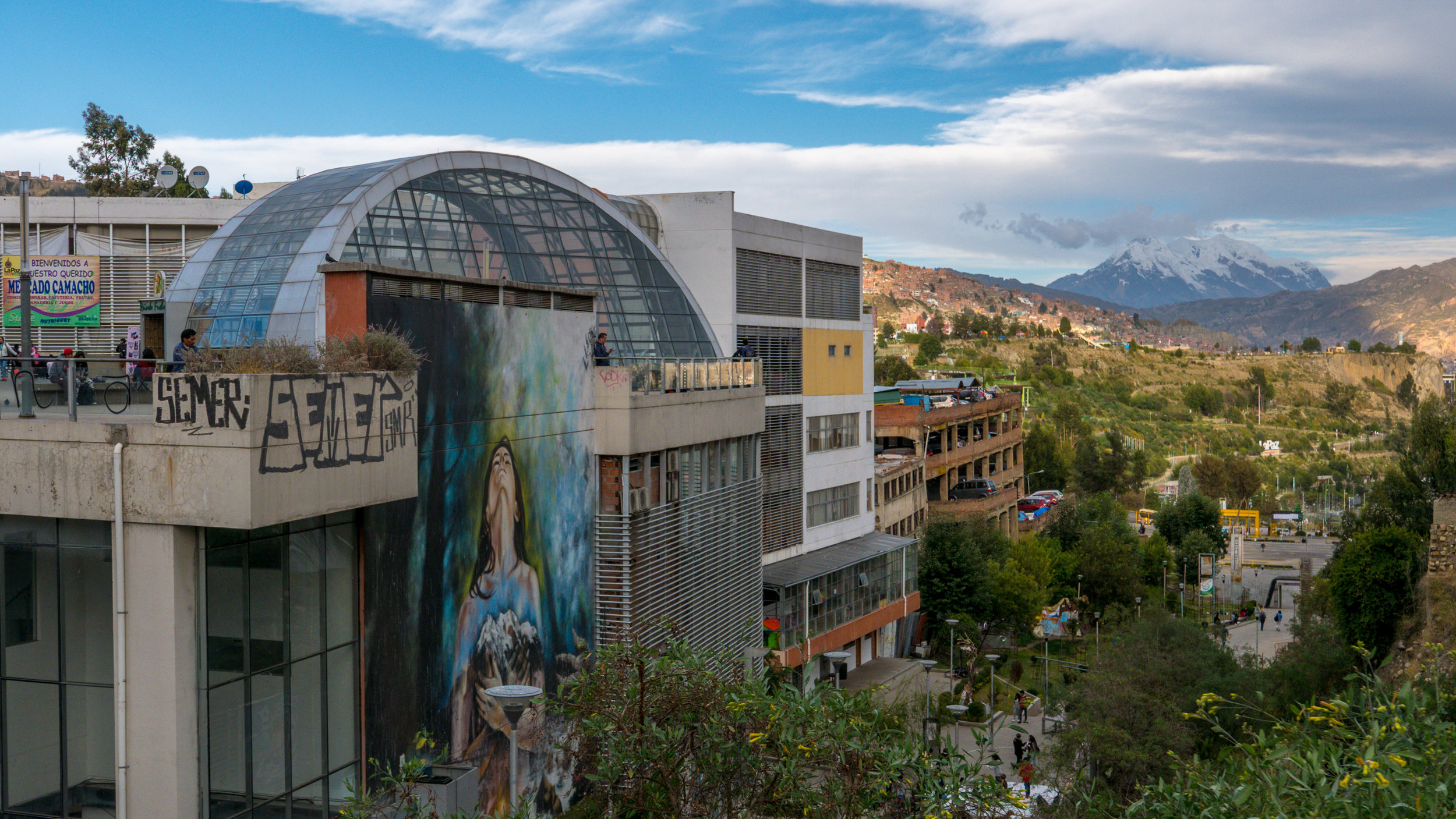
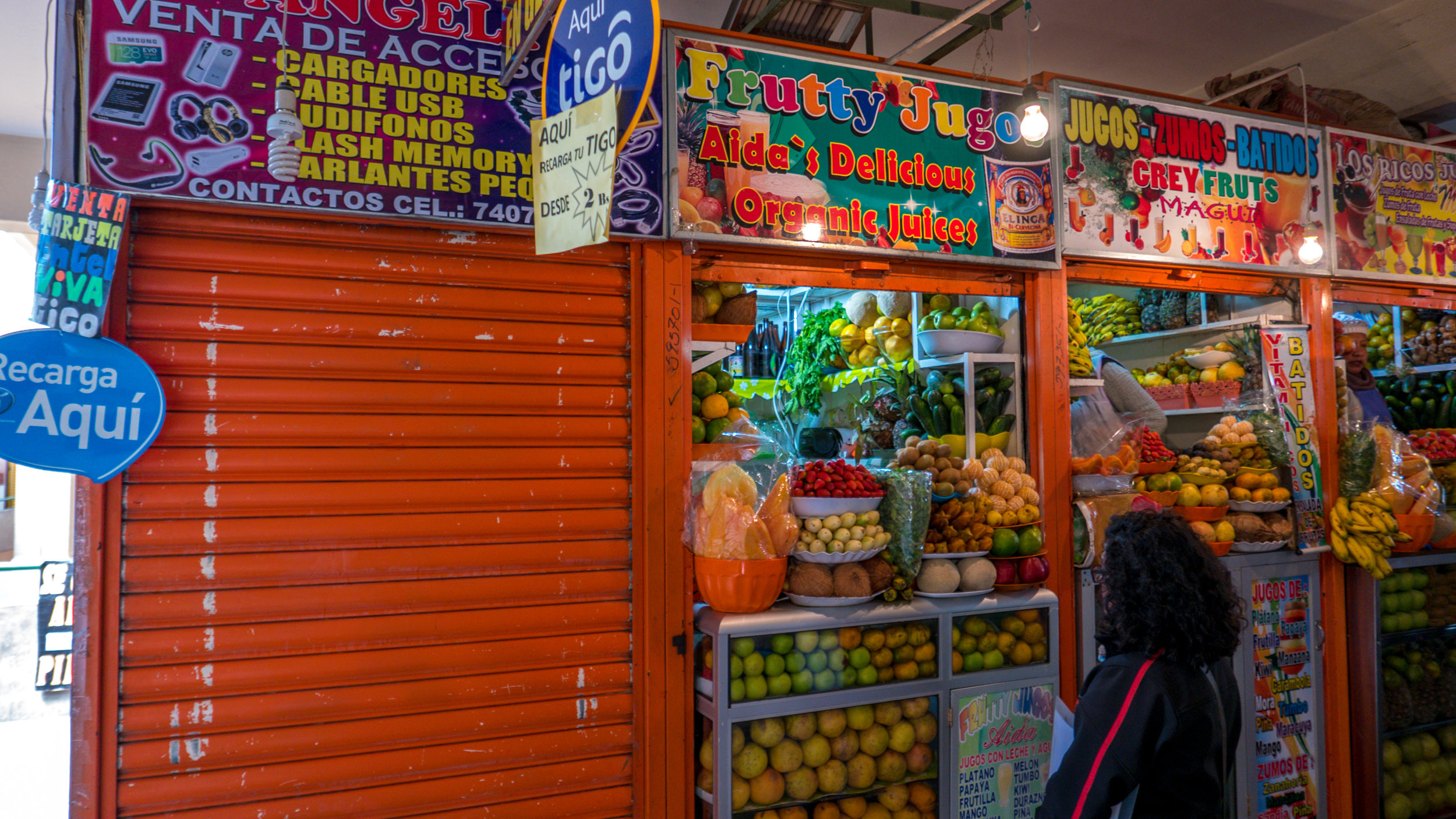
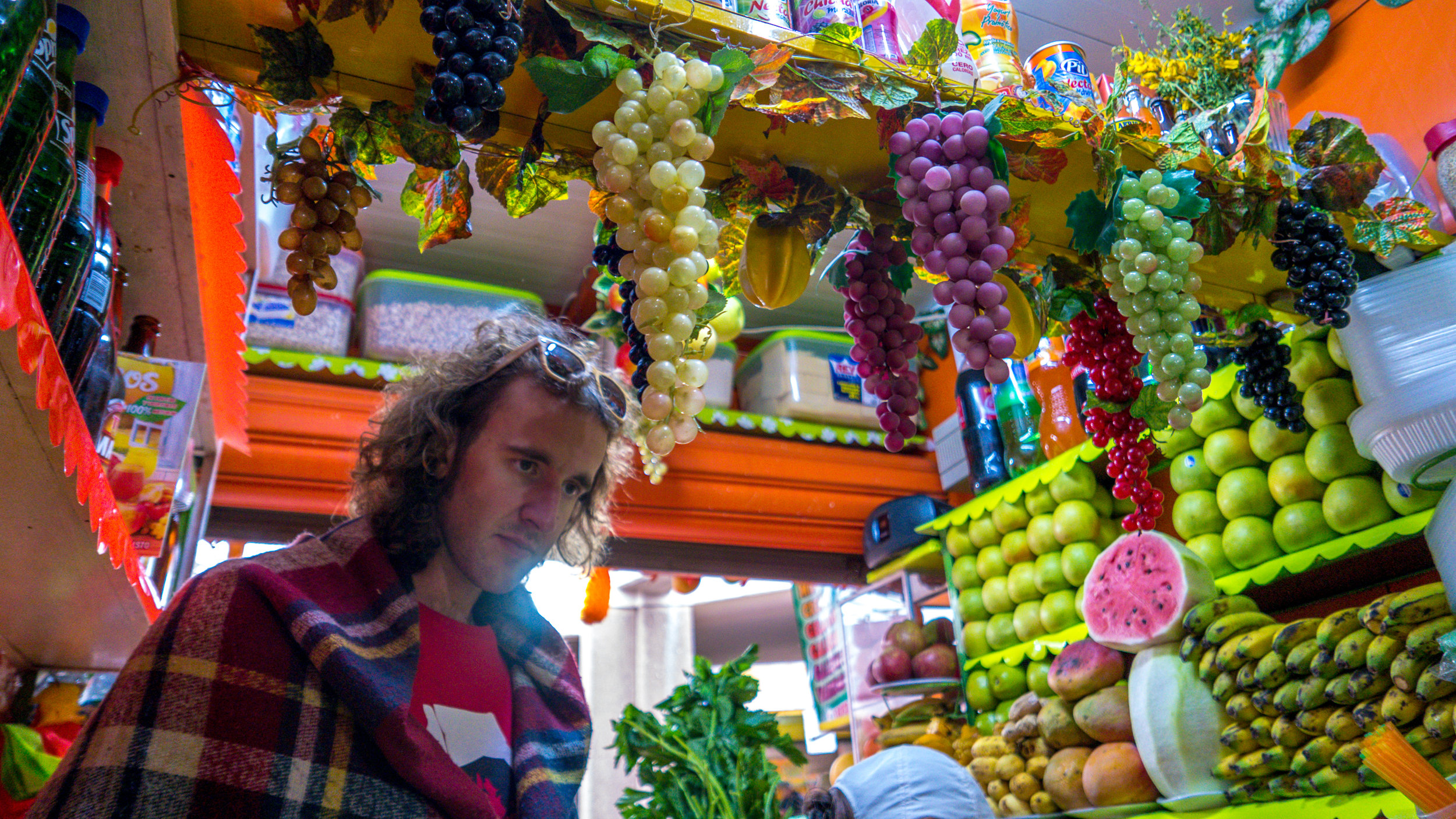
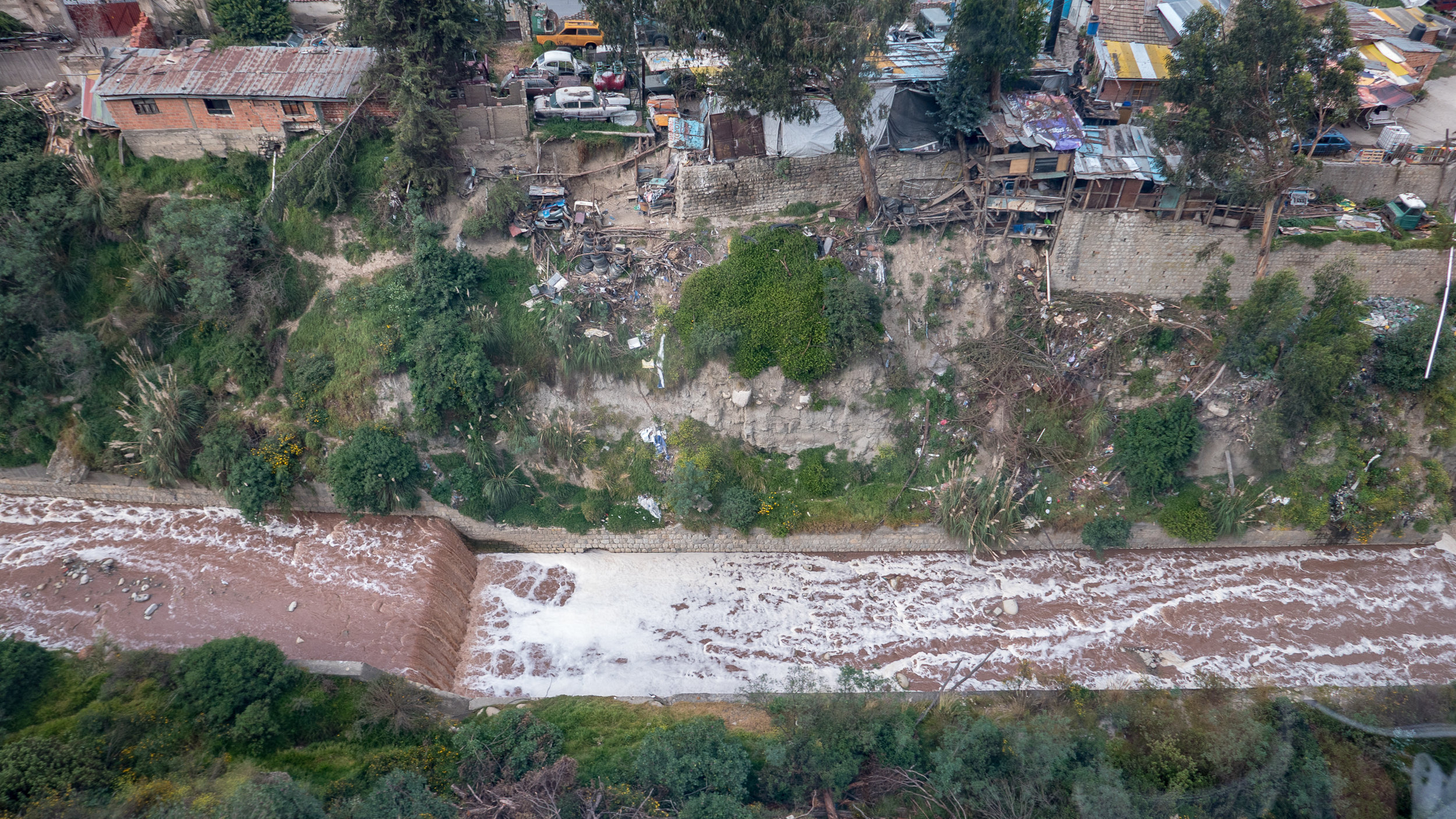
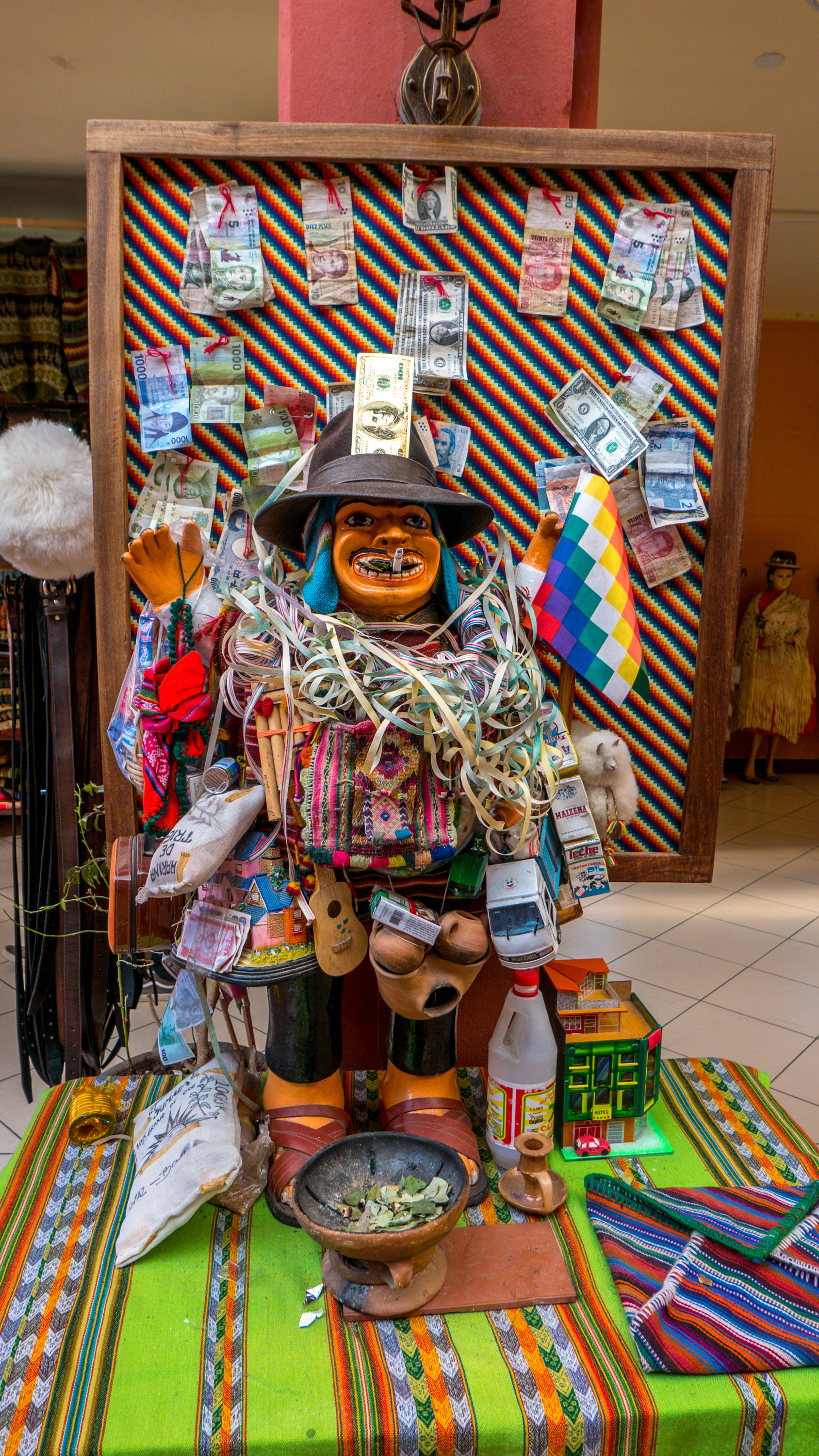
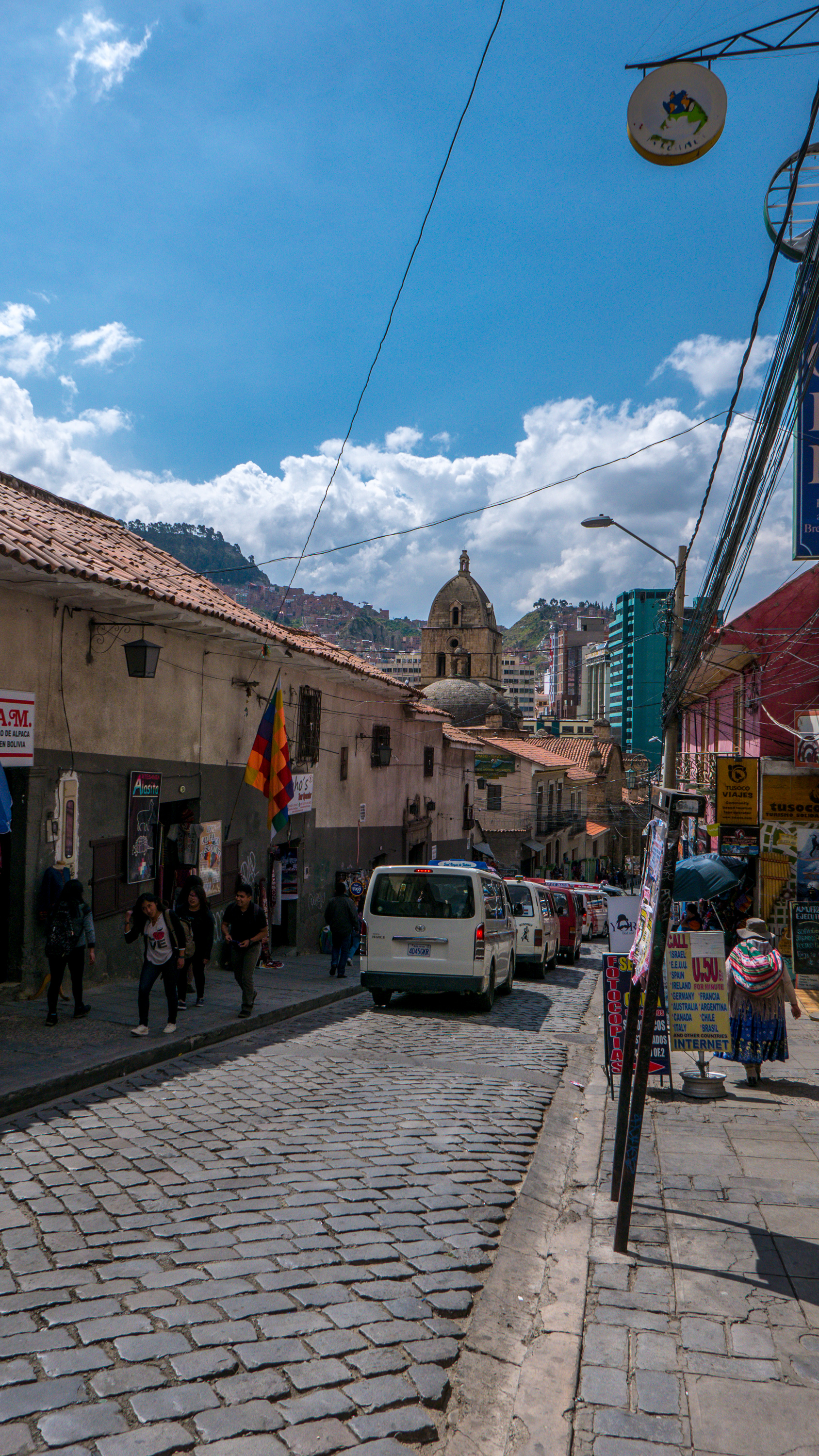
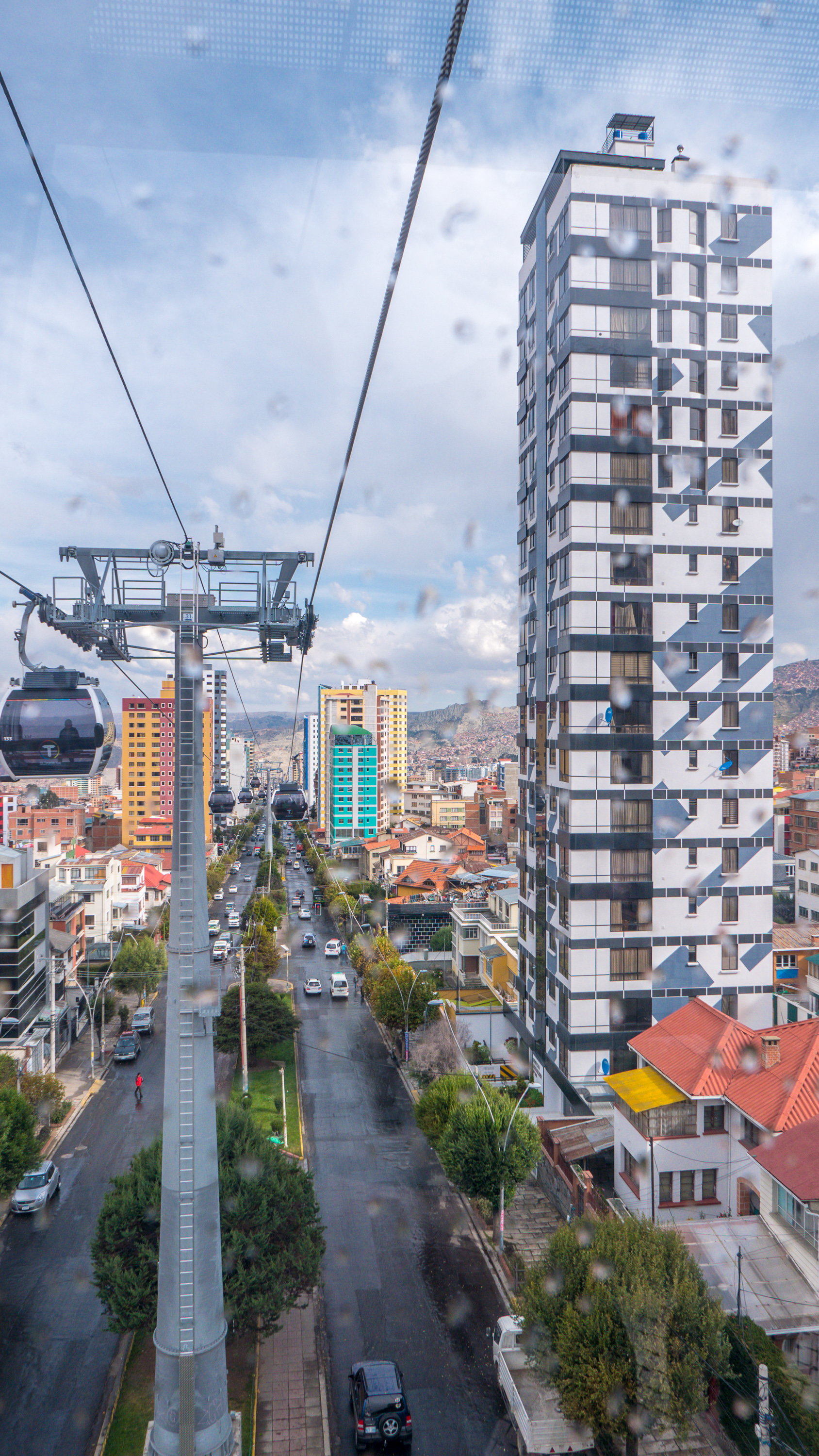
La Paz quickly became one of our favourite cities in Latin America. Reminds me of Medellín and that’s a very good thing. Our walking tour guide showed us the local markets the first day and thus begun our avocado sandwich & fruit juice diet for the next seven days.
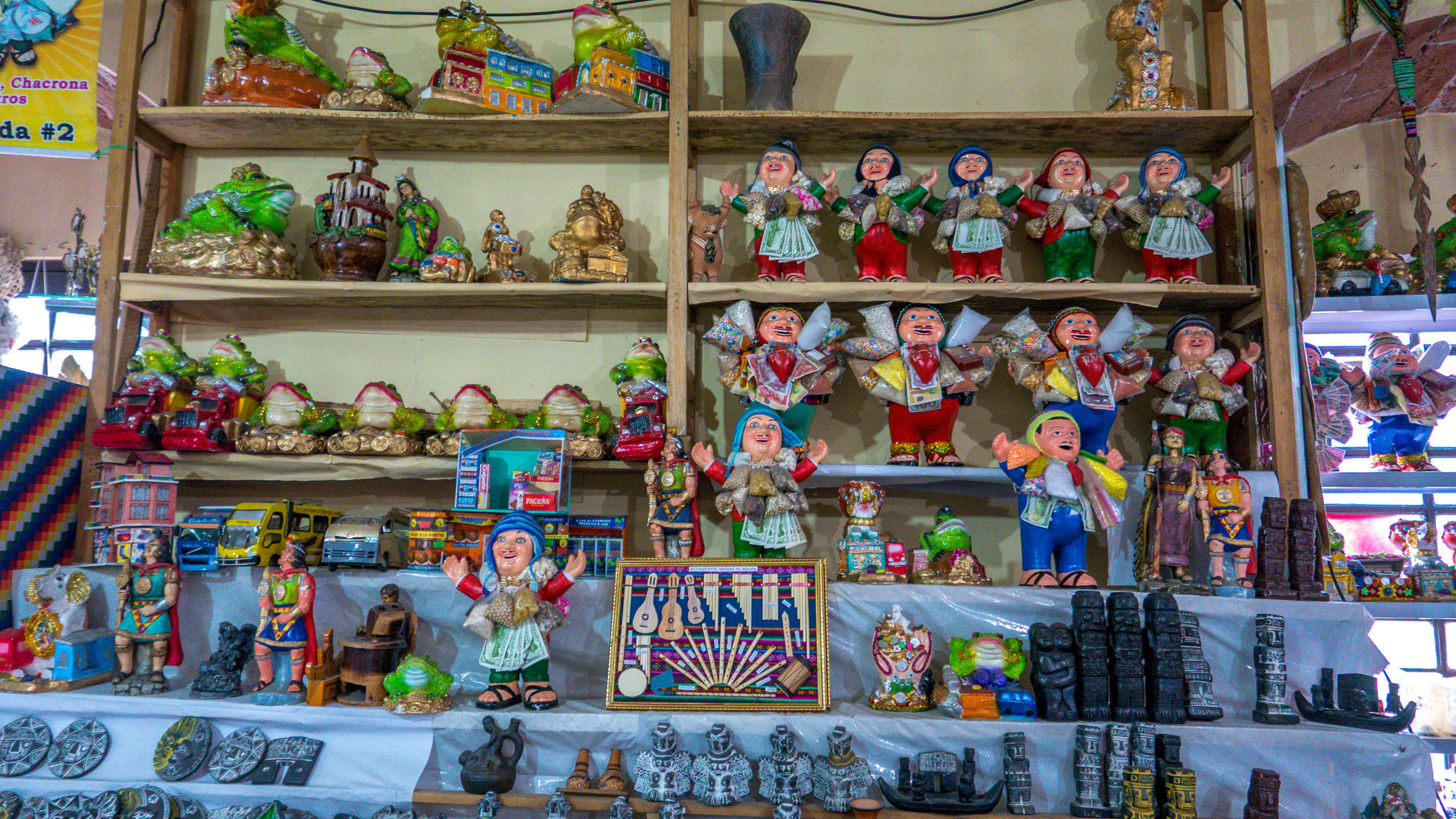
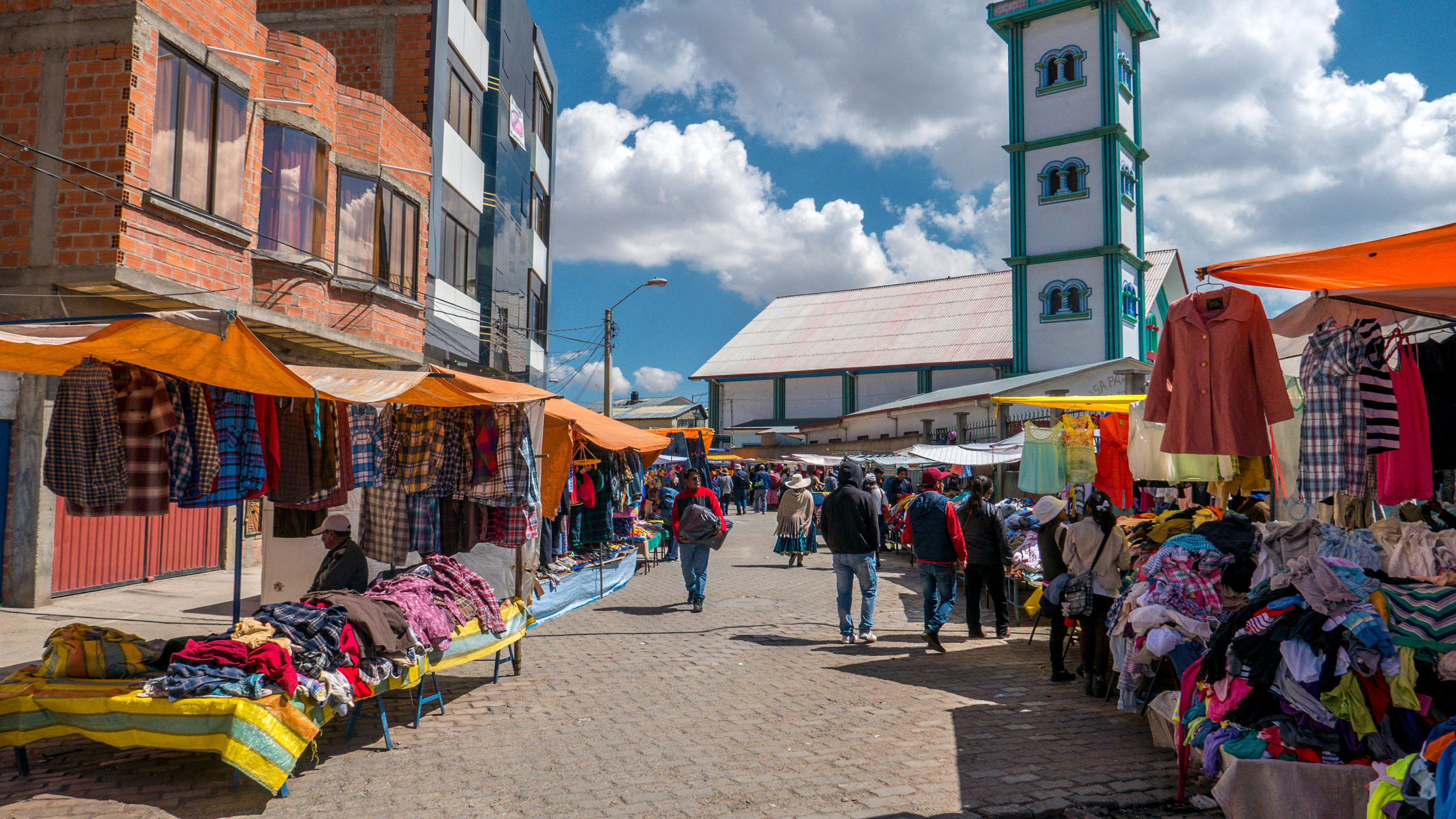
We visited “the biggest market in South America” (a lot of the cities claim that but this was massive) where I found the perfect captain hat for Burning Man for $5 (eat it US online stores selling the same for $200) and discovered a stand selling classic 80’s and 90’s jumpers. Walking around for 2,5 hours was not enough to cover all and I can just imagine all the awesome stuff we missed out on..


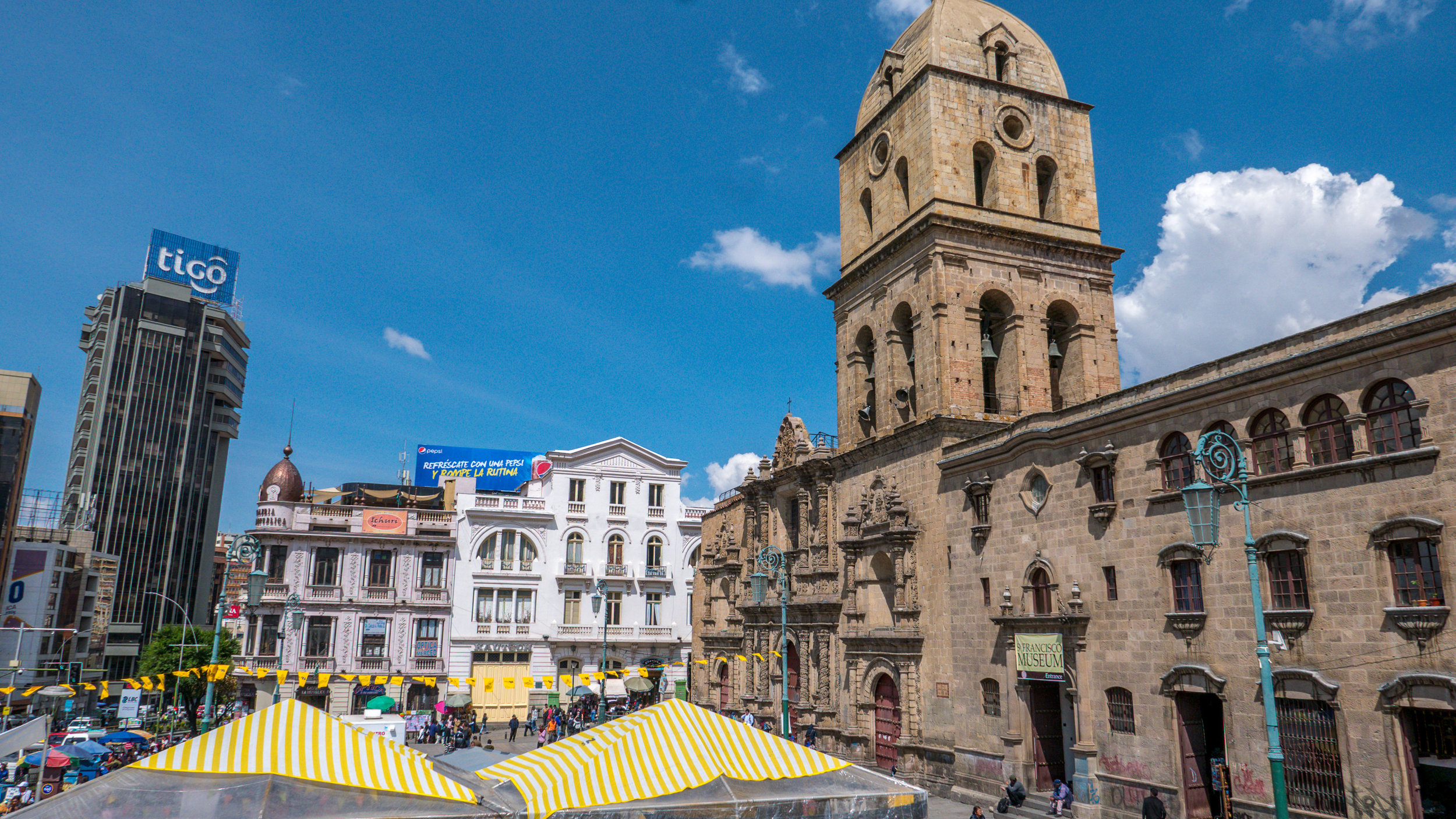
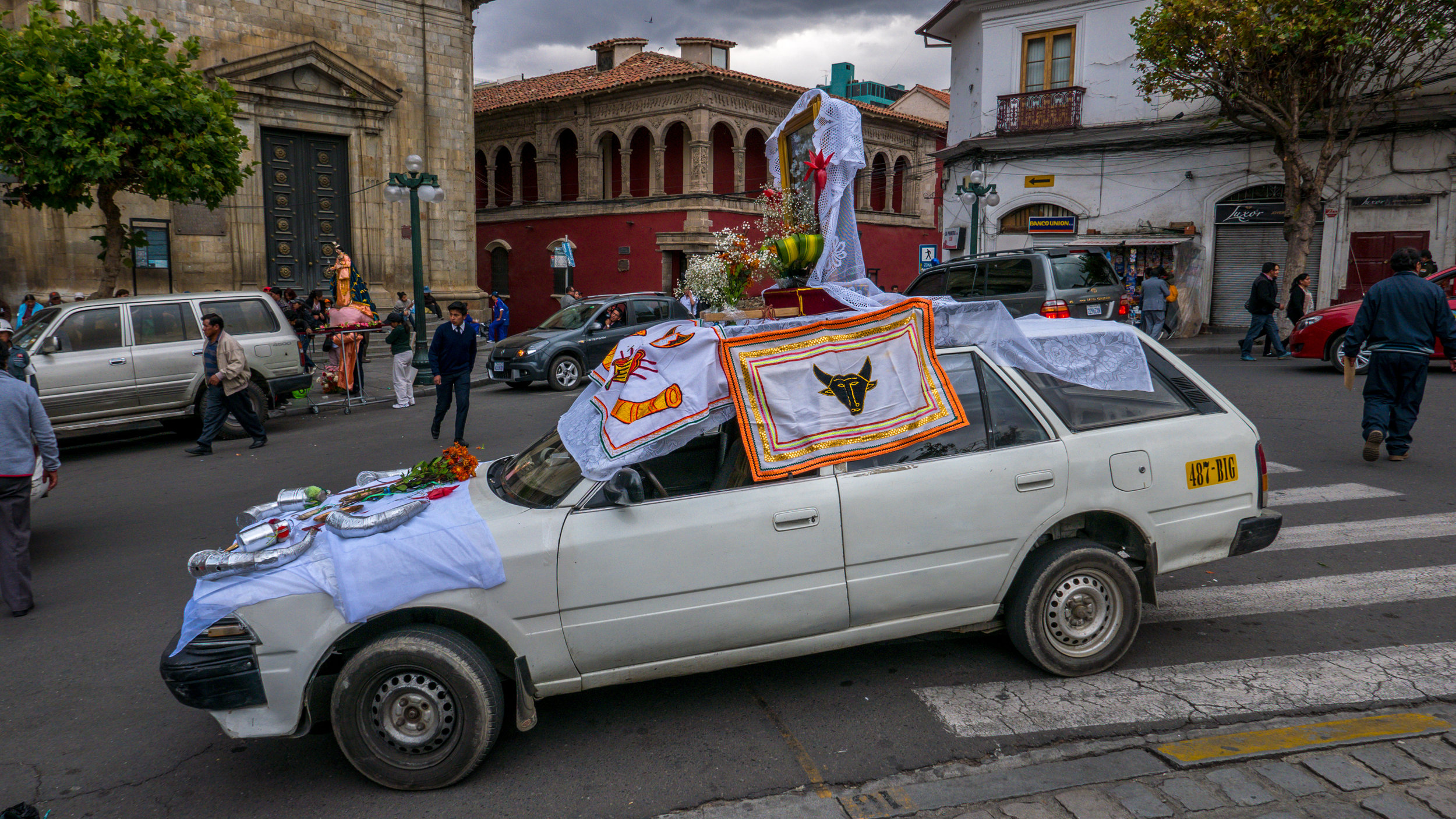
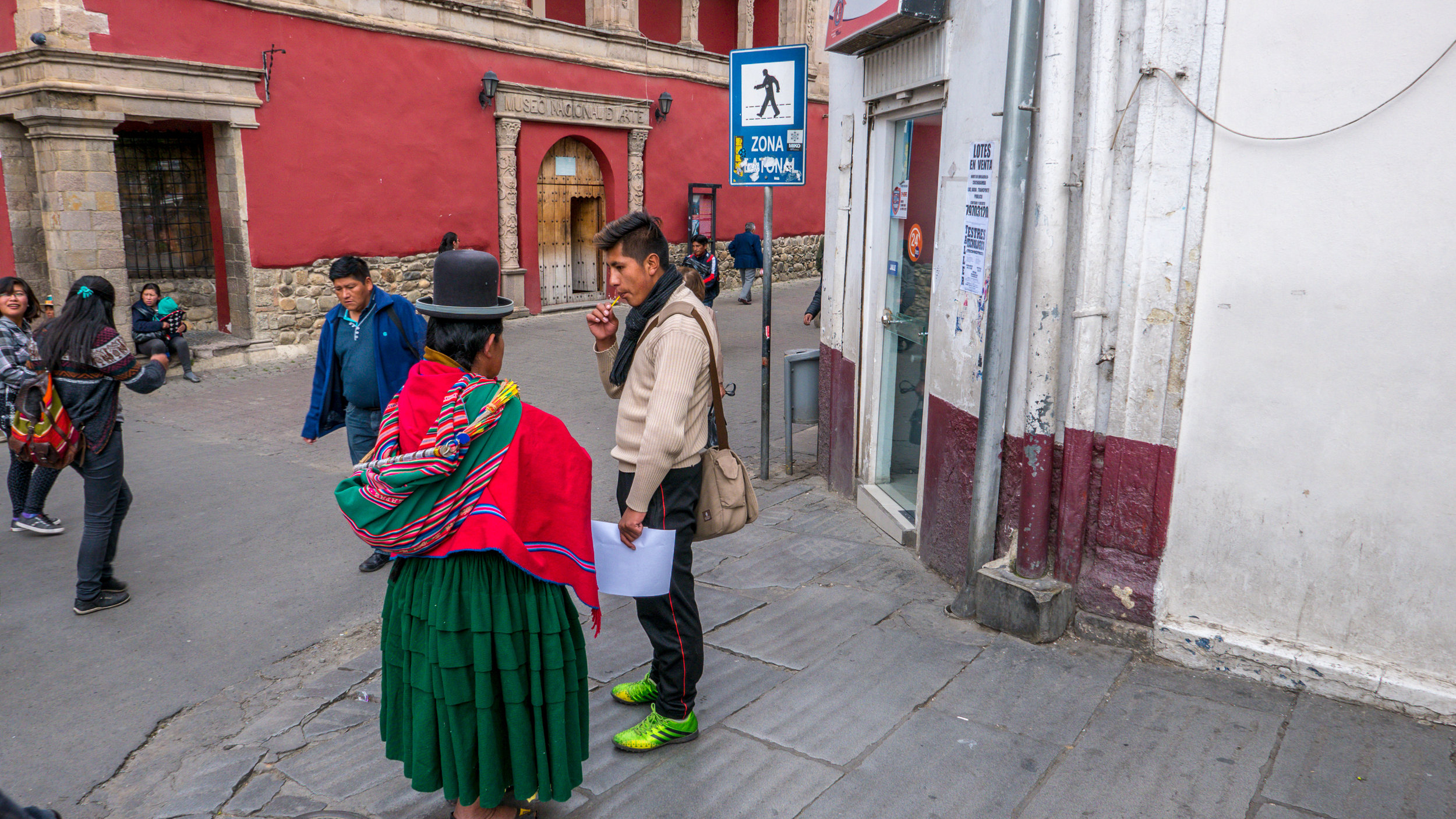
La Paz is also famous for Cholita’s wrestling. Ladies in traditional wear showing of their WWF skills. Sounds strange and is even more strange live. It starts early, you can’t buy beer, and you sit in a gym hall with other 50 awkardly shuffling tourists waiting for the show to begin. Surprisingly it was highly entertaining and they had clearly practised their moves!

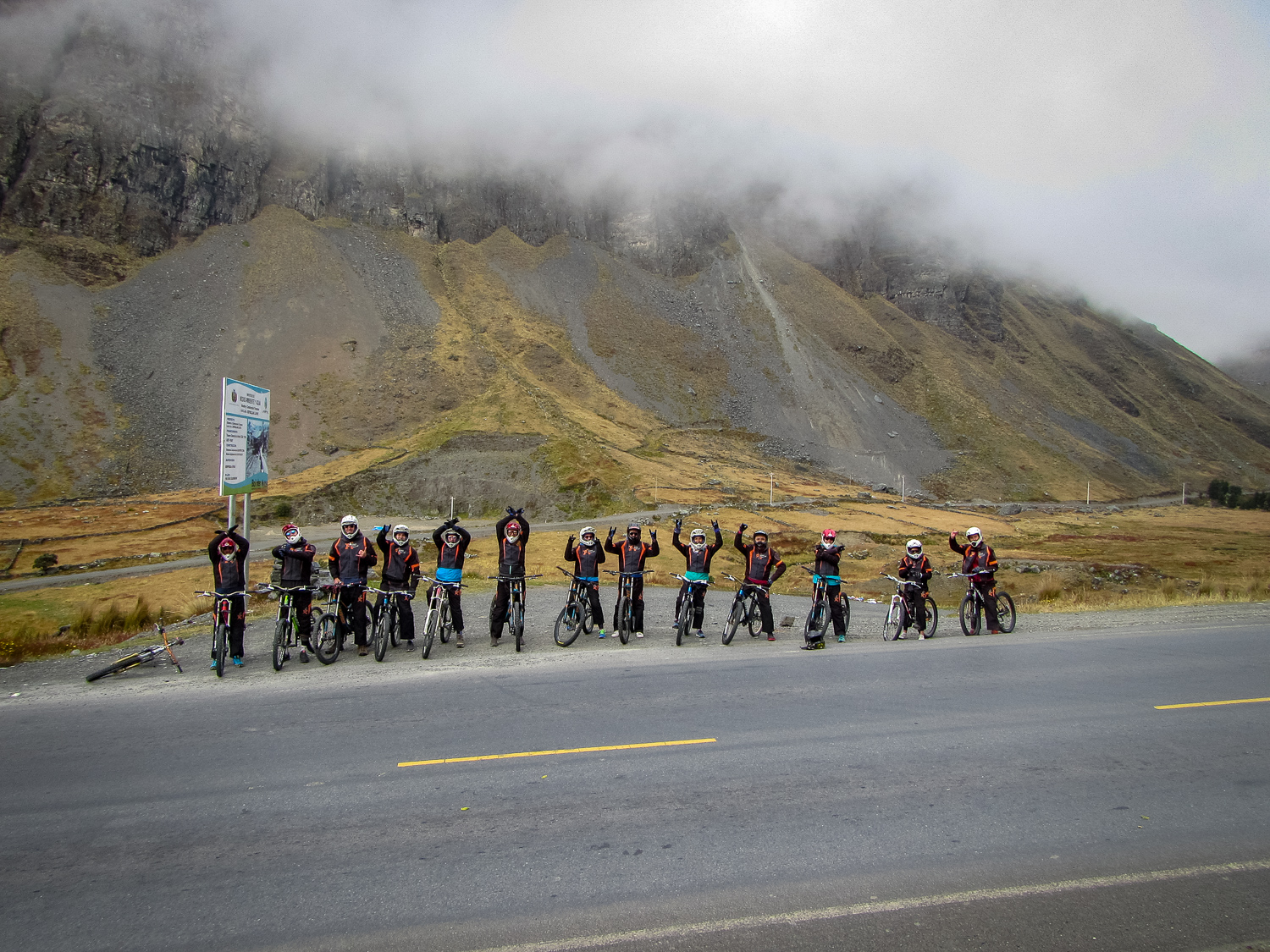
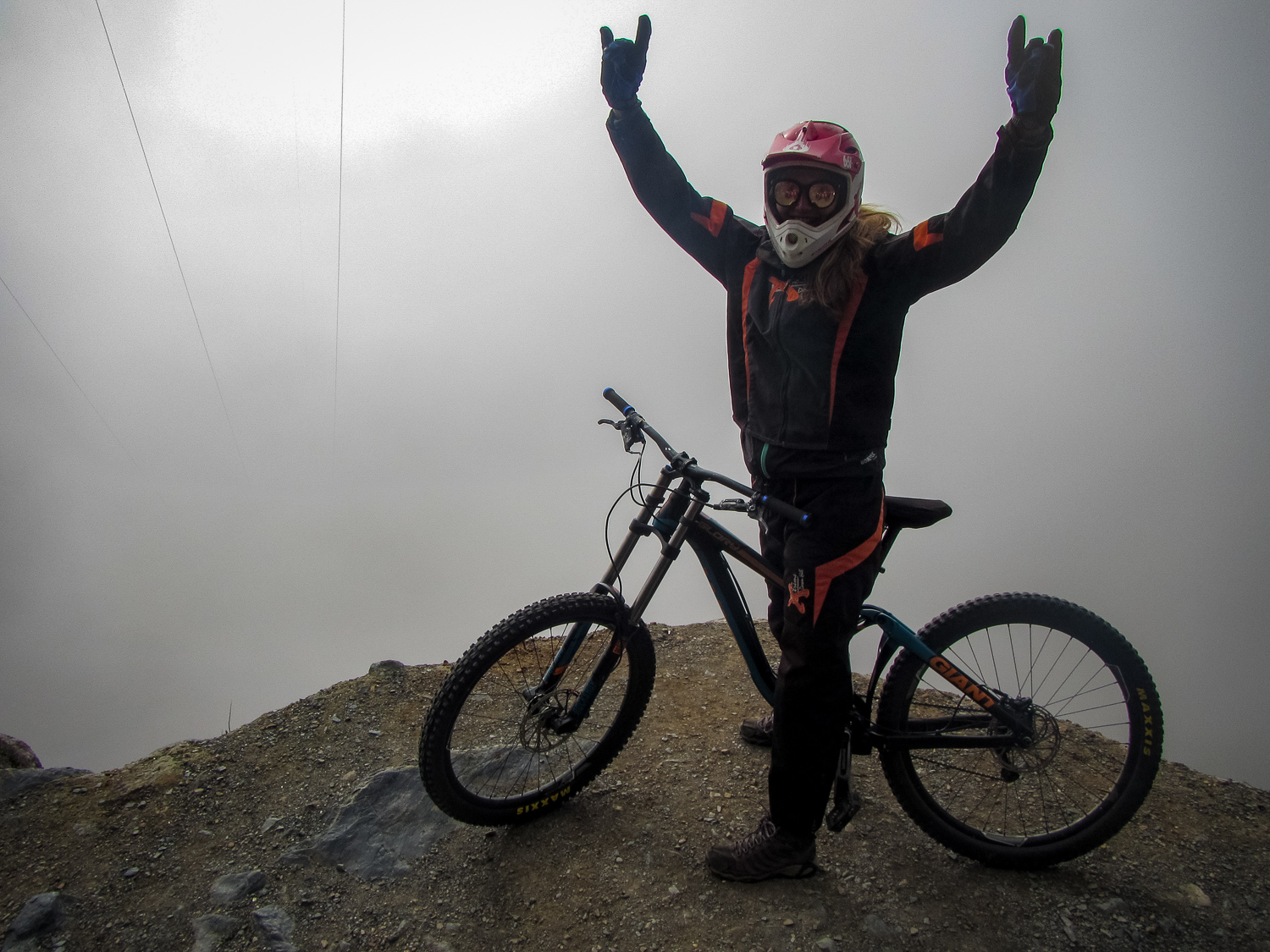
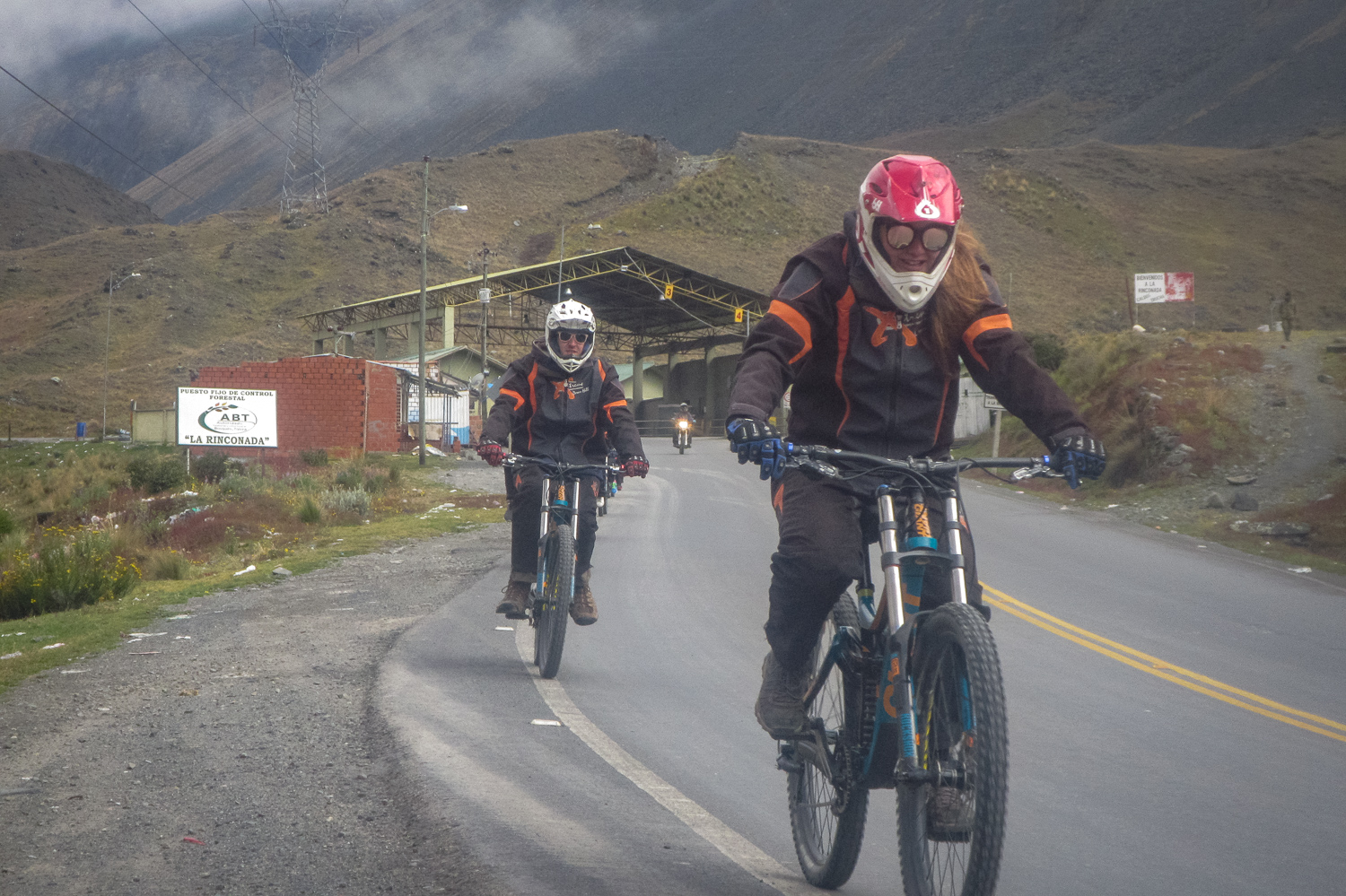
And then the main attraction of La Paz and its surroundings: Biking down the Death Road. I was vary about this first, thinking that I’d somehow tip myself over the narrow paths but oh buy am I glad I joined Richie for the full day trip. Because I beat him! (And did not fall off a cliff so I’d call this a great success.)

When the clouds parted for a second
First you get used to the bike riding down some paved roads for an hour but the fun only begins on the actual death road. It would have been even more fun in a smaller group where you don’t have to wait for everyone (there was a lot of waiting…) but even this way it was super fun! I think we’ll change our hiking boots to mountain bikes. Although we did not pick the best location to live in for this new hobby.. Netherlands will offer only flat grounds where you actually will have to pedal around :(
Too little time in Bolivia was finished at Lake Titicaca and Island of the Sun. I think the first time I have ever heard of Lake Titicaca was from Donald Duck magazines where Uncle Scrooge et al. were looking for El Dorado. And since then it has held a mystical image in my head.
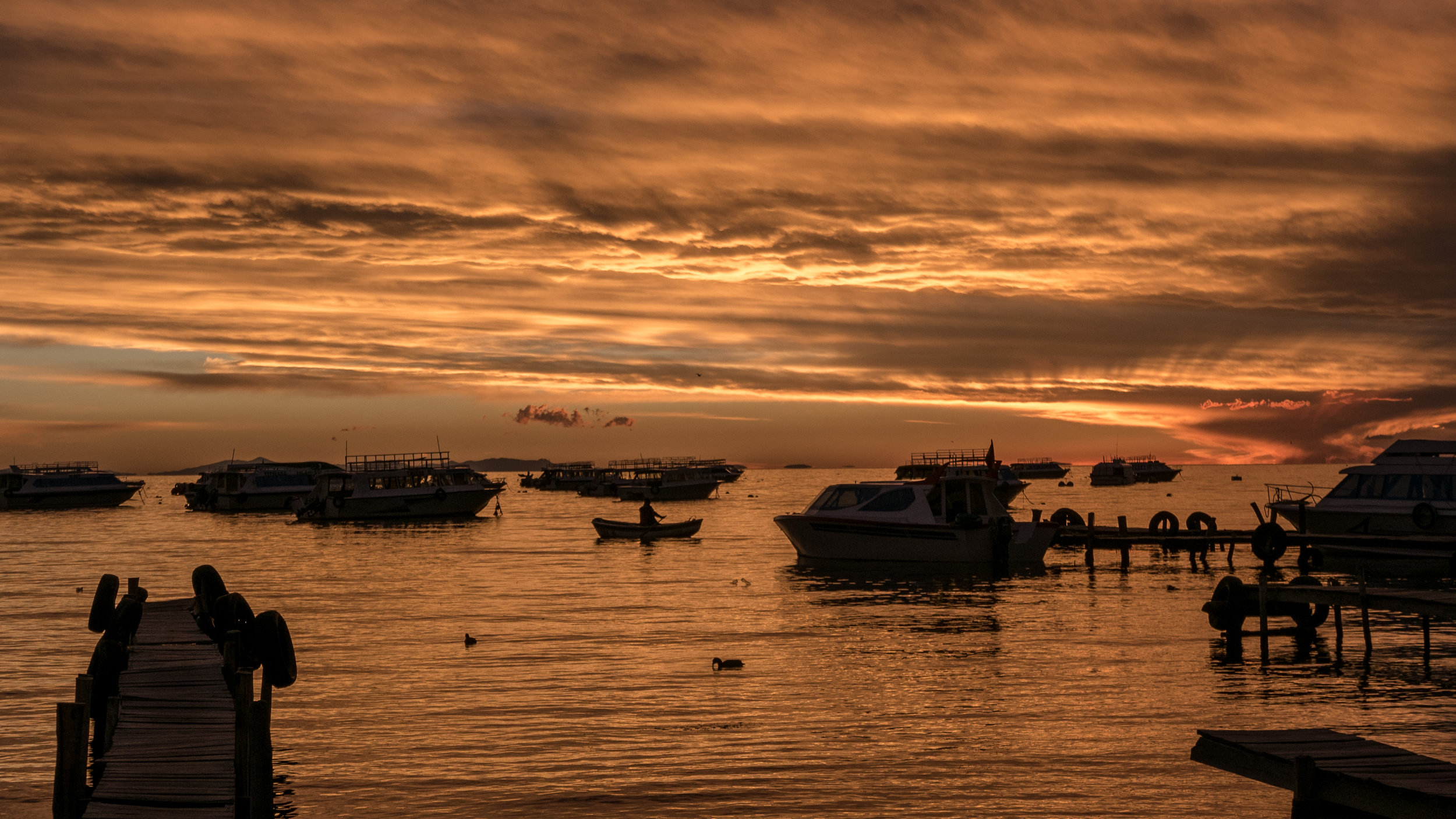
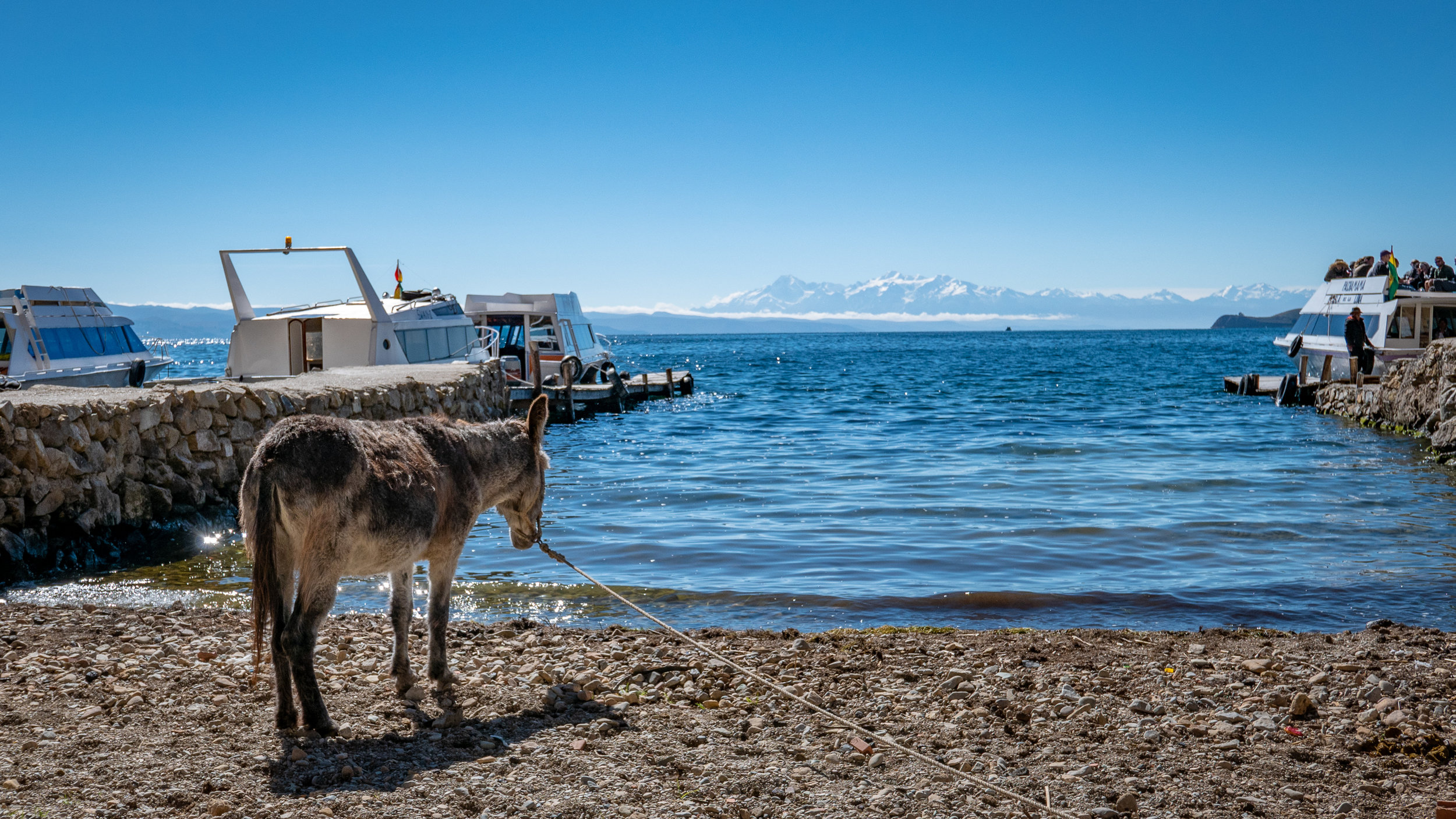
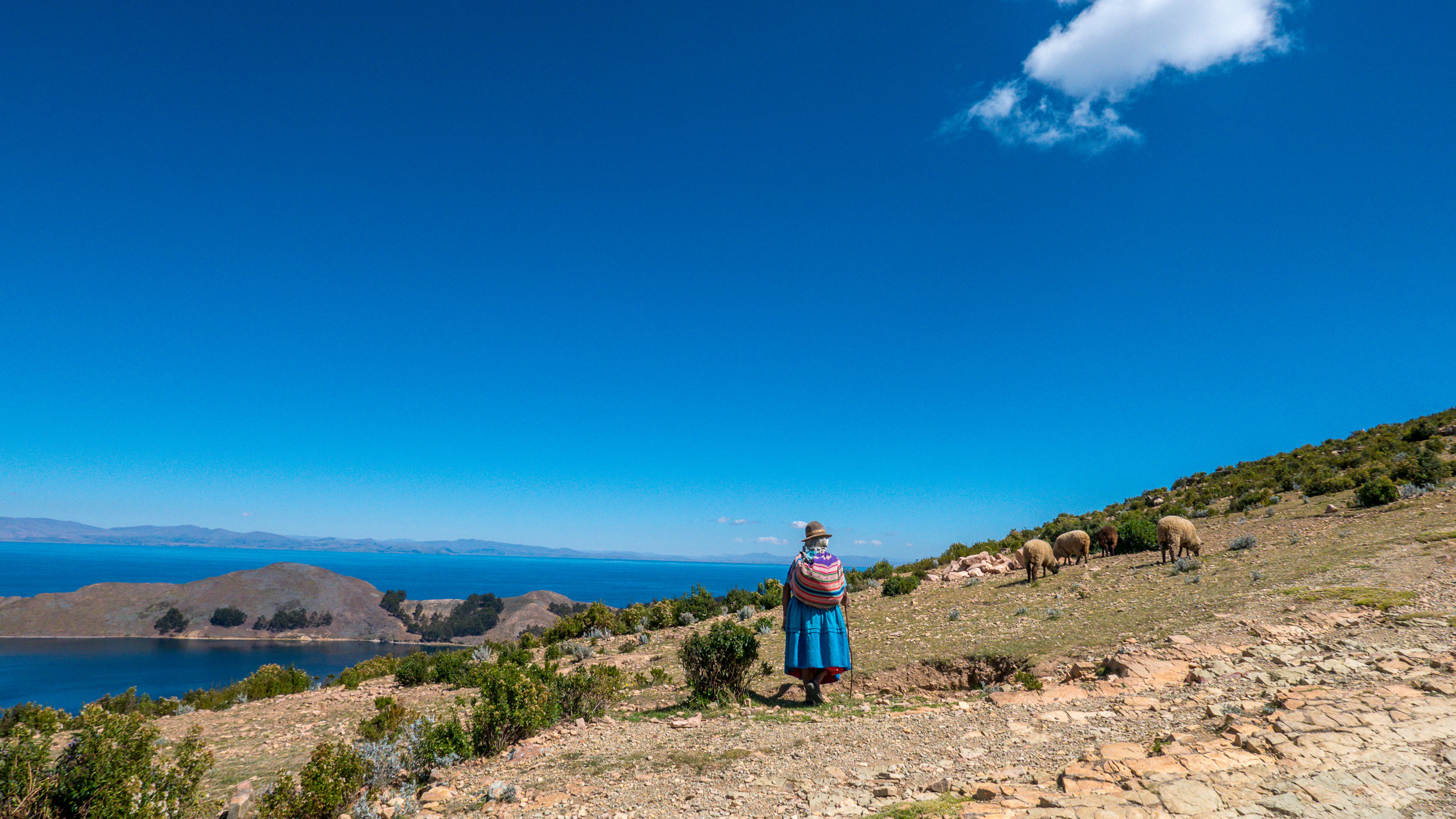
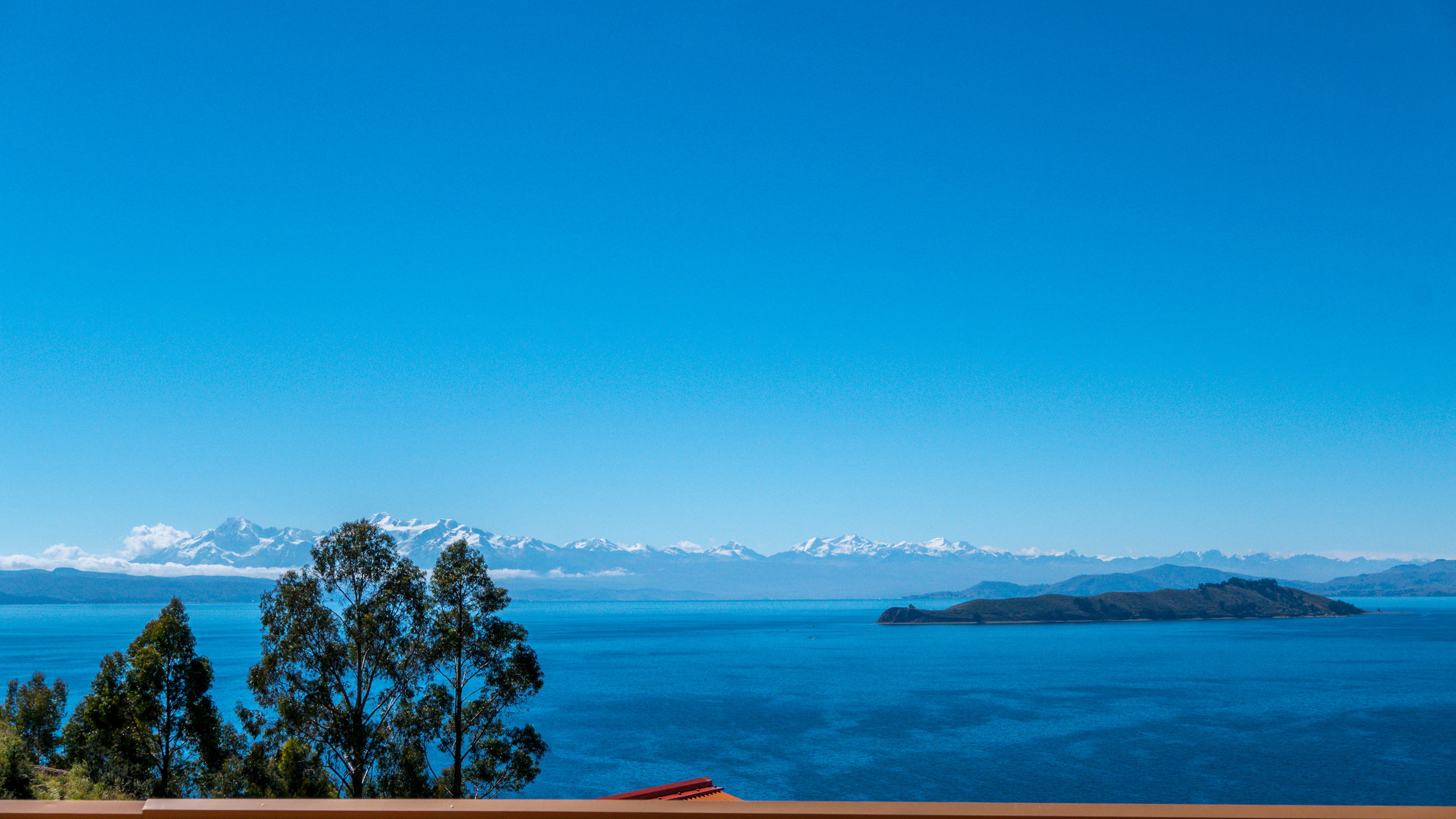

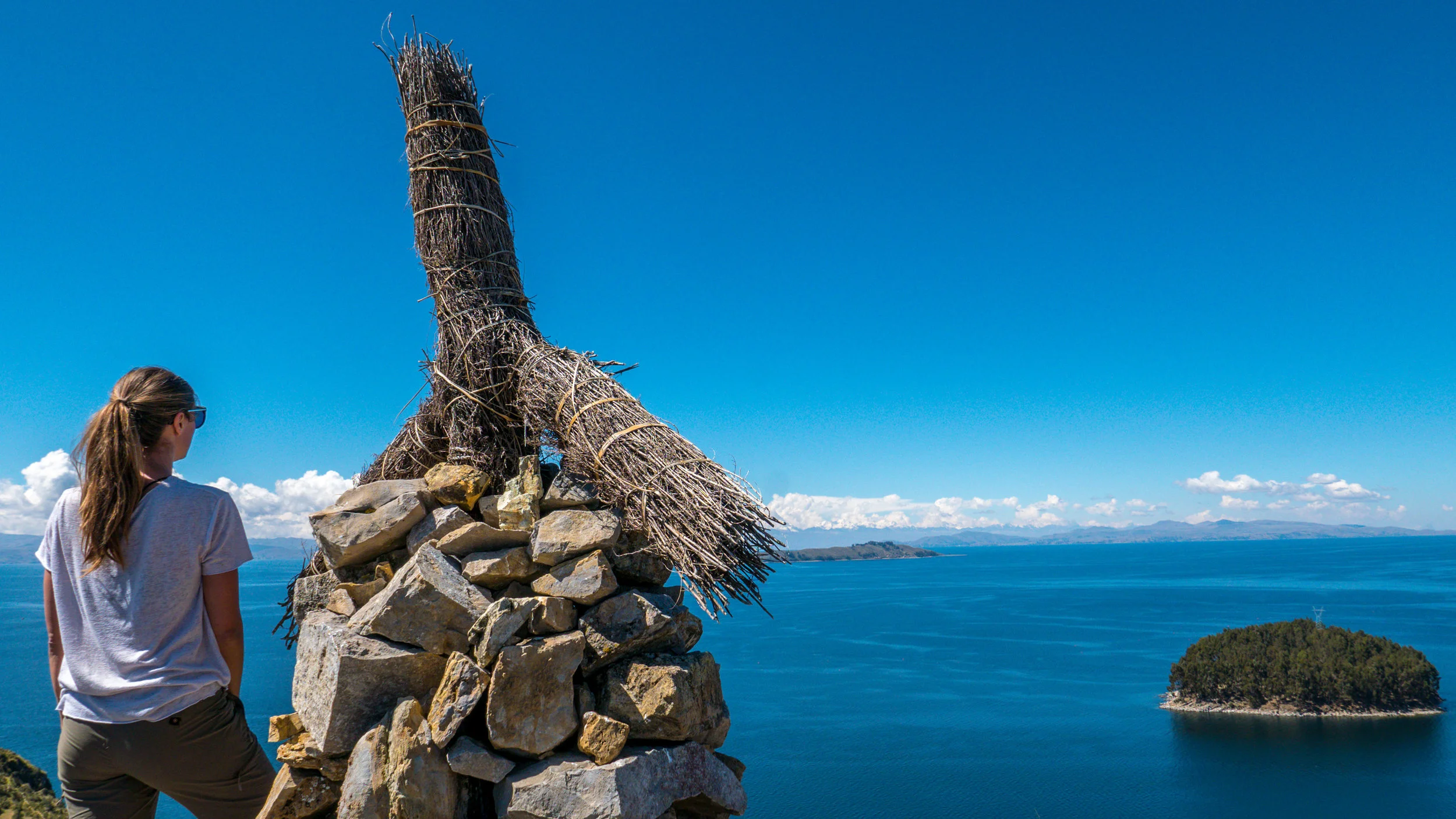
Thank you Bolivia, the second-last country on our travels. The end is near..

"Have you licked the walls yet?"
One of the must-stops on a backpackers itinerary is a tour to the Salar de Uyuni - world's biggest salt flats. The popularity of this tour has not (weirdly) raised the standard of tour operators, it's almost the opposite. As everyone wants a piece of the lucrative business, there are a plethora of operators to choose from and you can get very lucky or very unlucky. Even the highest rated operators on Tripadvisor have the occasional hiccups - depending on the driver and your company - so it was quite the nightmare to try to pick which one we would go with.
Long story short - we got lucky in a sense that the driver was not drinking, drove well, accommodation was better than expected and the weather was awesome.
What really makes the experience are the views. During 1+ year traveling we've seen quite a bit but the scenery on these Bolivian highlands was something else entirely.
Enjoy a photo-diary of our three days adventure.
(And did you know that these salt flats hold majority of the world's lithium reserves? I bet Elon Musk is interested in this place!)


FIRST DAY - Laguna Blanca, Laguna Verde, Salvador Dali Desert, Thermal Springs, Sol de Mañana geothermal field (not geysirs, Wikipedia tells me), Laguna Colorada


SECOND DAY: Valle de Las Rocas (a lot of cool rocks)


Scene at the salt hotel:
One of our travel mates: "Have you licked the walls yet?"
Richie: "No mate, how was it?"
Him: "Salty!"
THIRD DAY: The unreal views of the salt flats and many unsuccessful perspective photos (should have done our research before the trip)


That's all folks!

"Hiking is like flogging yourself" - Stewie, 5.4.2018
It was time. Time to test everything we have learned during the past year of traveling and camping. And hiking.
This time we would not be bringing our newly acquired Target duvet or pillows to fight the cold. This time we would not be kneeling down to cook our morning oats.
Both of us would be wearing our matching (yes, matching, but only by accident) hiking pants that have seen it all from New Zealand to Guatemalan highlands and to Colombian mountain ranges. Richie’s walking sticks were up for a true test - would the other one finally break? Would he fall into mud in slow-motion when the sticks would fail him? (Almost but more of that later.)
Patagonia so far had been a beautiful, albeit a bit chilly, and a very, very expensive stint. Hiking to Mt. Fitzroy in El Chalten is by far the best and most beautiful hike we have ever done. It was going to be hard to top that one but Torres Del Paine national park in Chile would try its best.


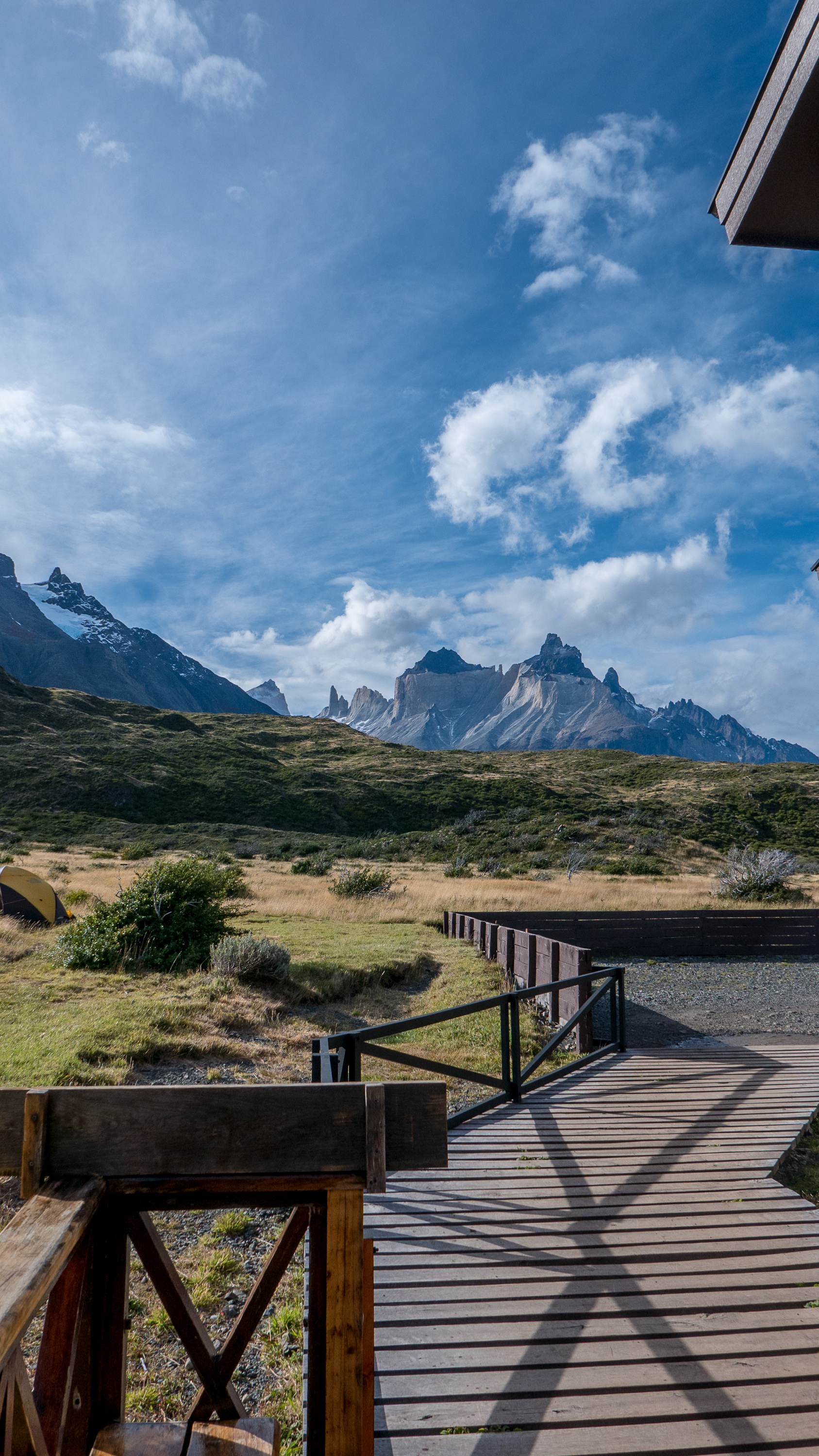
Torres Del Paine is quite a popular place. By “quite” I mean thousands of tourists walking the trails every year and the park sure knows how to do business. You could pick your lodgings from sleeping in your own tent to a tent that is waiting for you there, or sleeping inside the refugios on a bed (bed $30 USD, if you want to add sheets it’s another $30 USD!) to luxury accommodations.
You can choose to do day-hikes, the W-Circuit (4-5 days) or the full O-circuit (7-8 days, although some moutain goat we met was doing it in 4). Luckily I wasn’t having one of my moments where I think we can do anything, I mean anything, and didn’t try to talk Richie into doing the O. The W-Circuit with 5 days would be quite enough for us.
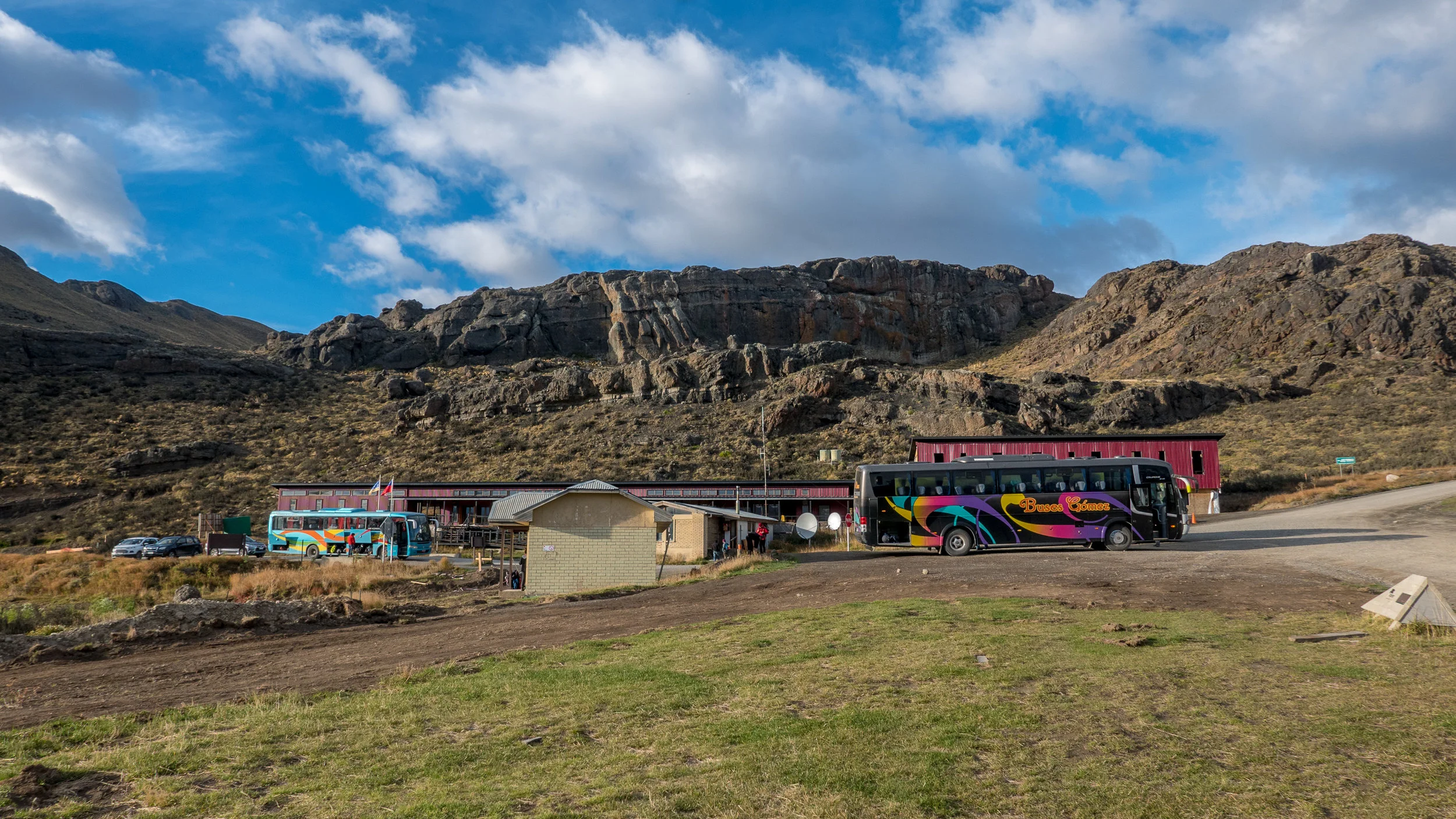
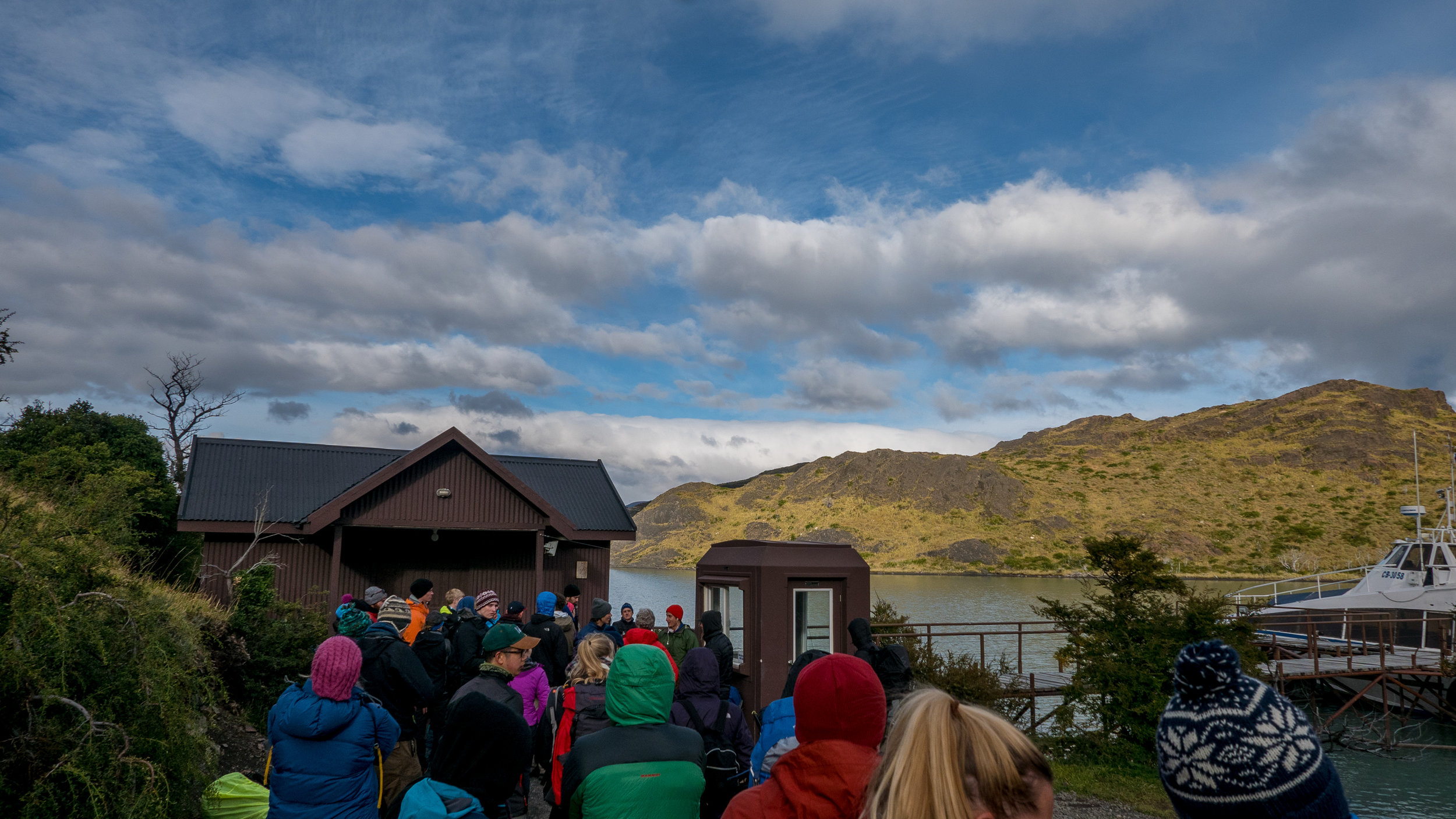
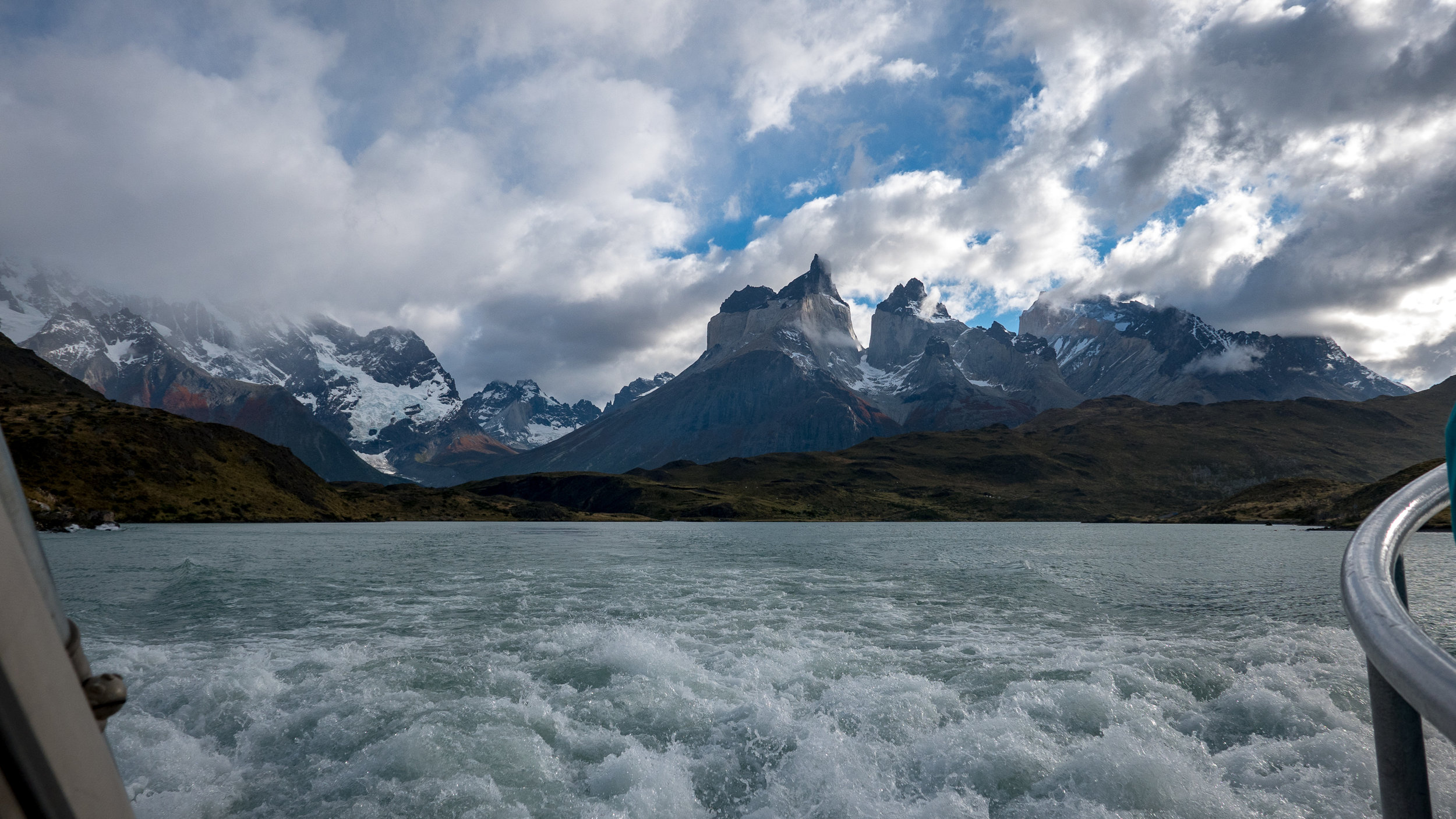
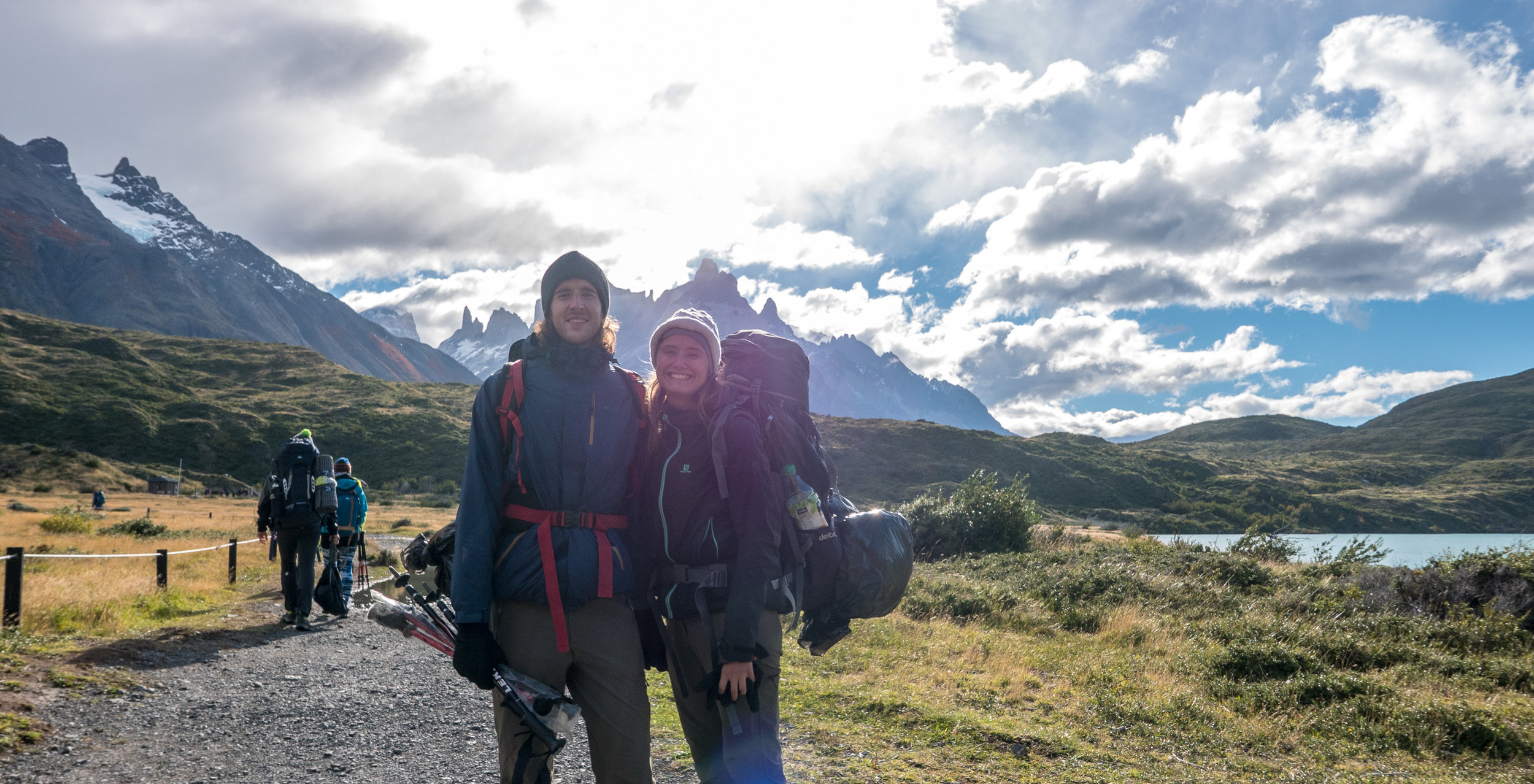
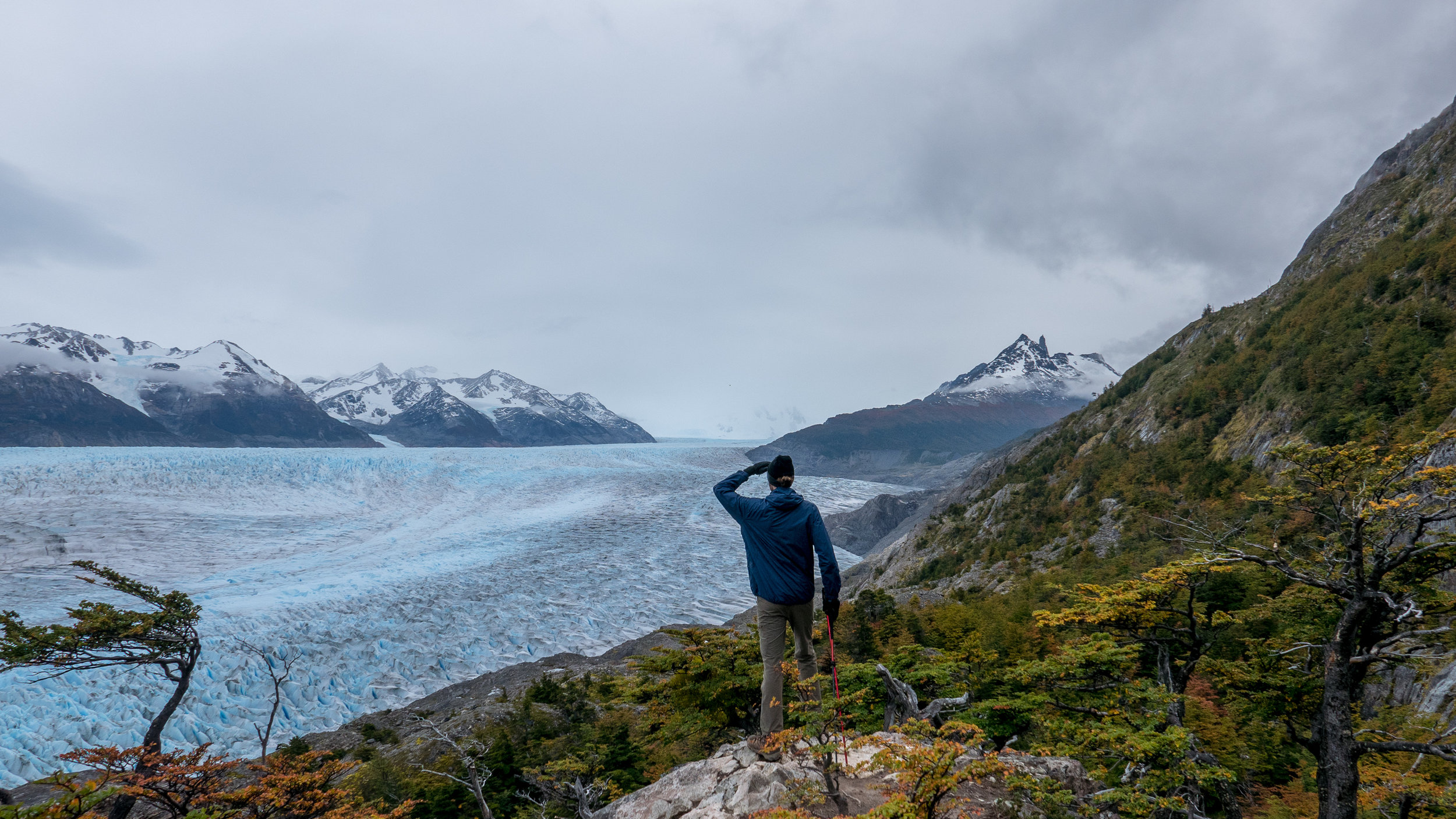
Of course we’d be doing it the cheap way which means carrying your tent, food and cooking equipment. You want to know how much the cheapest way cost us?
$560 USD for five days.
As I said they know how to do business. Just pitching your tent on the first two camping sites cost $8 USD each and $16 USD each at the last two stops. Add renting the gear, getting to the park and back by bus and catching a 30 minute catamaran for $30 USD each. And buying a lot of nuts and stuff to make your own trailmix. We are still eating that trailmix a week after finishing the hike.
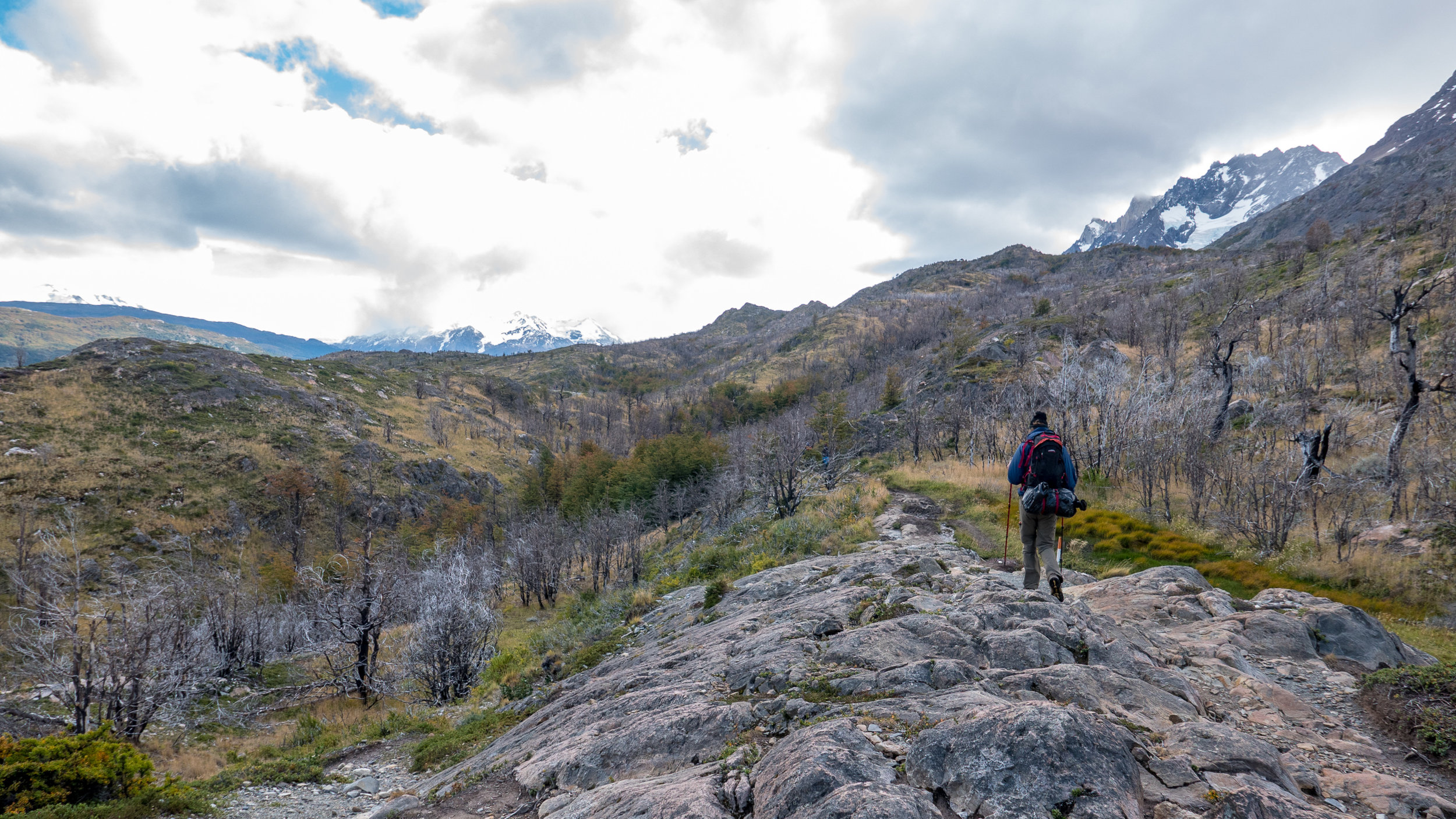
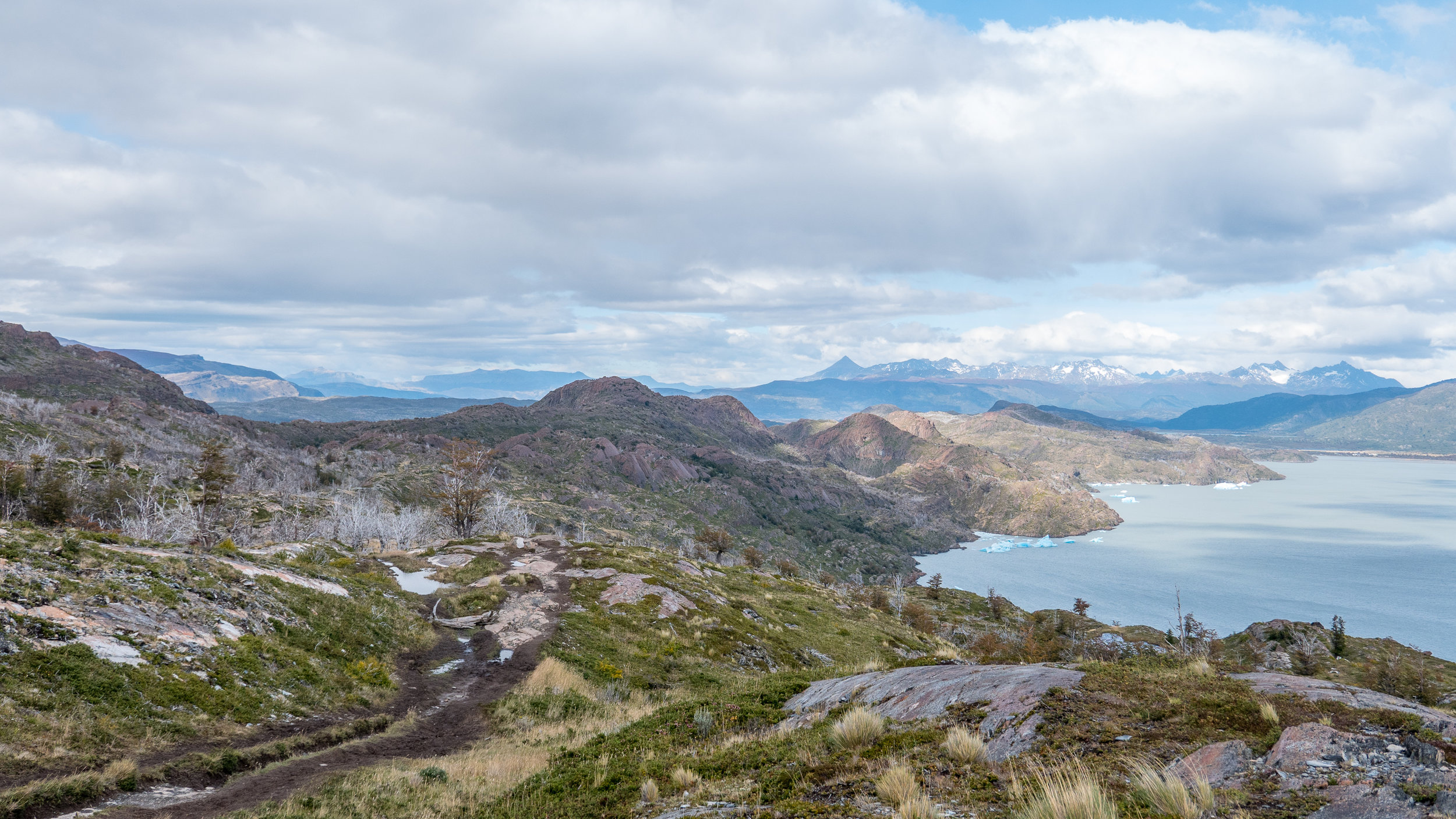
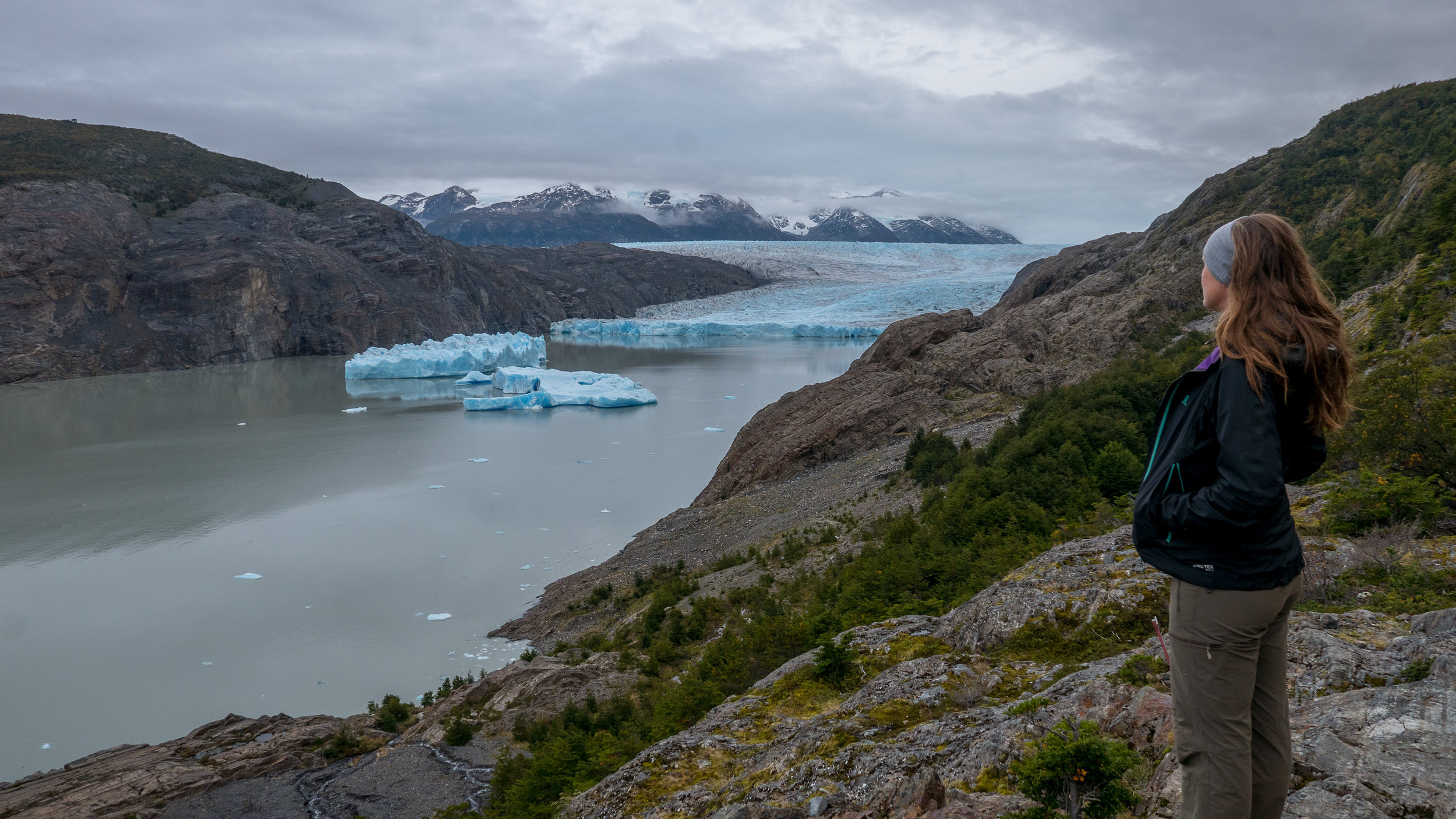
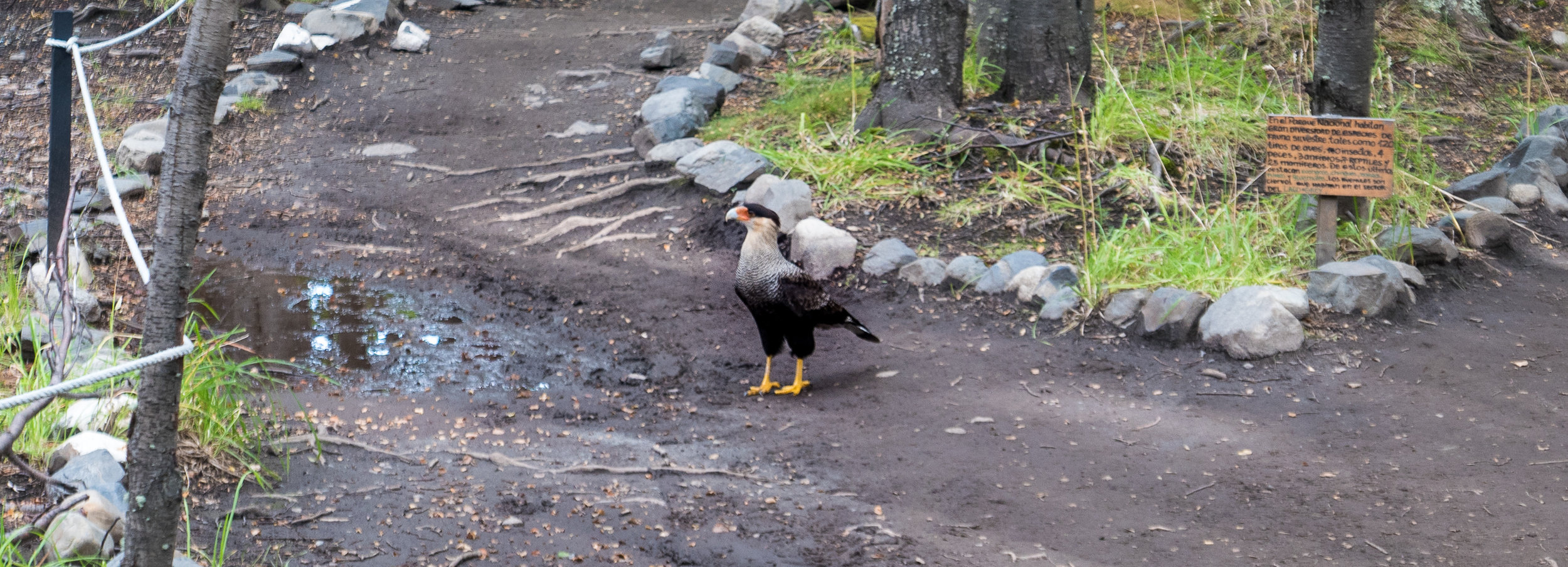
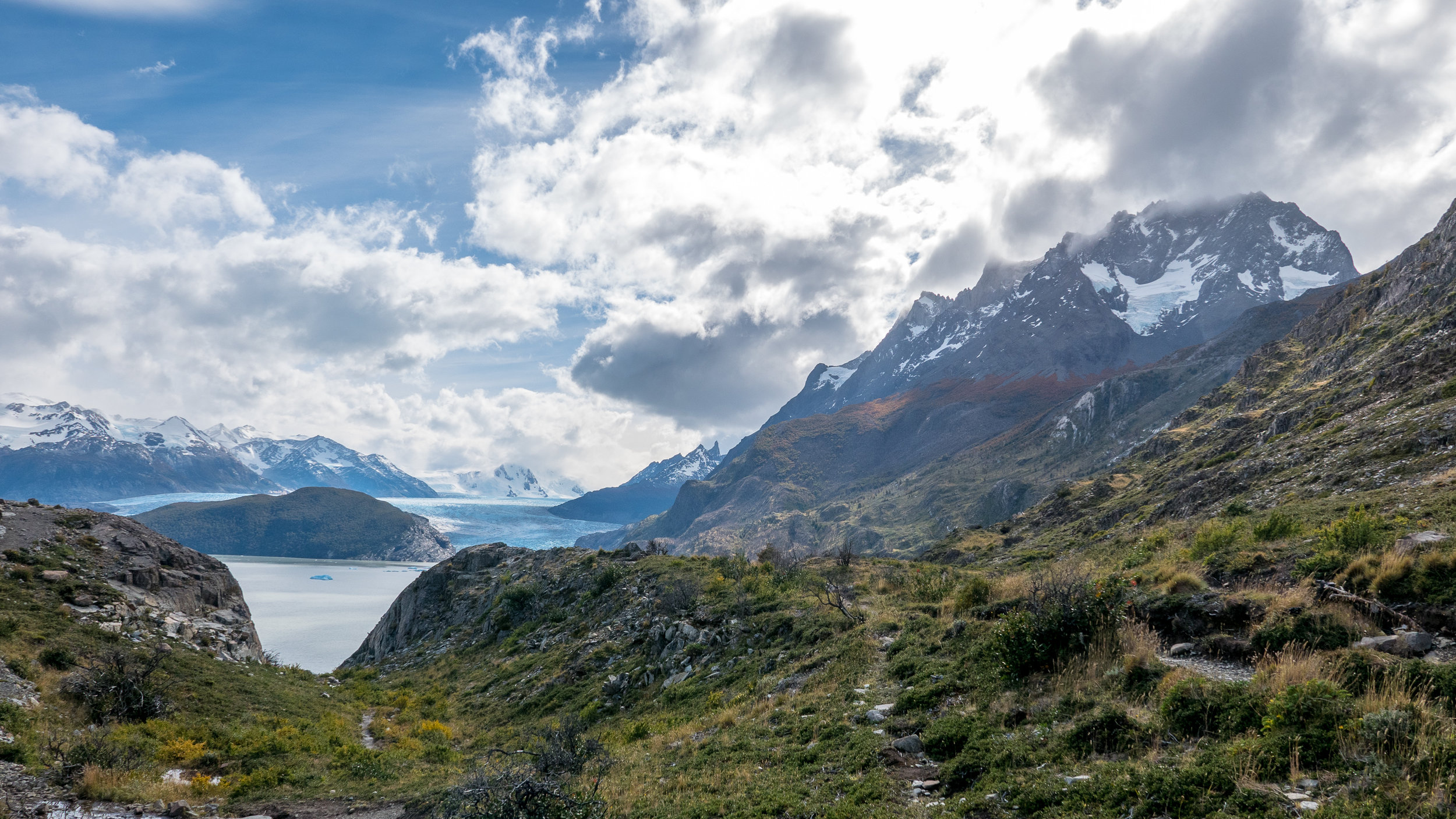
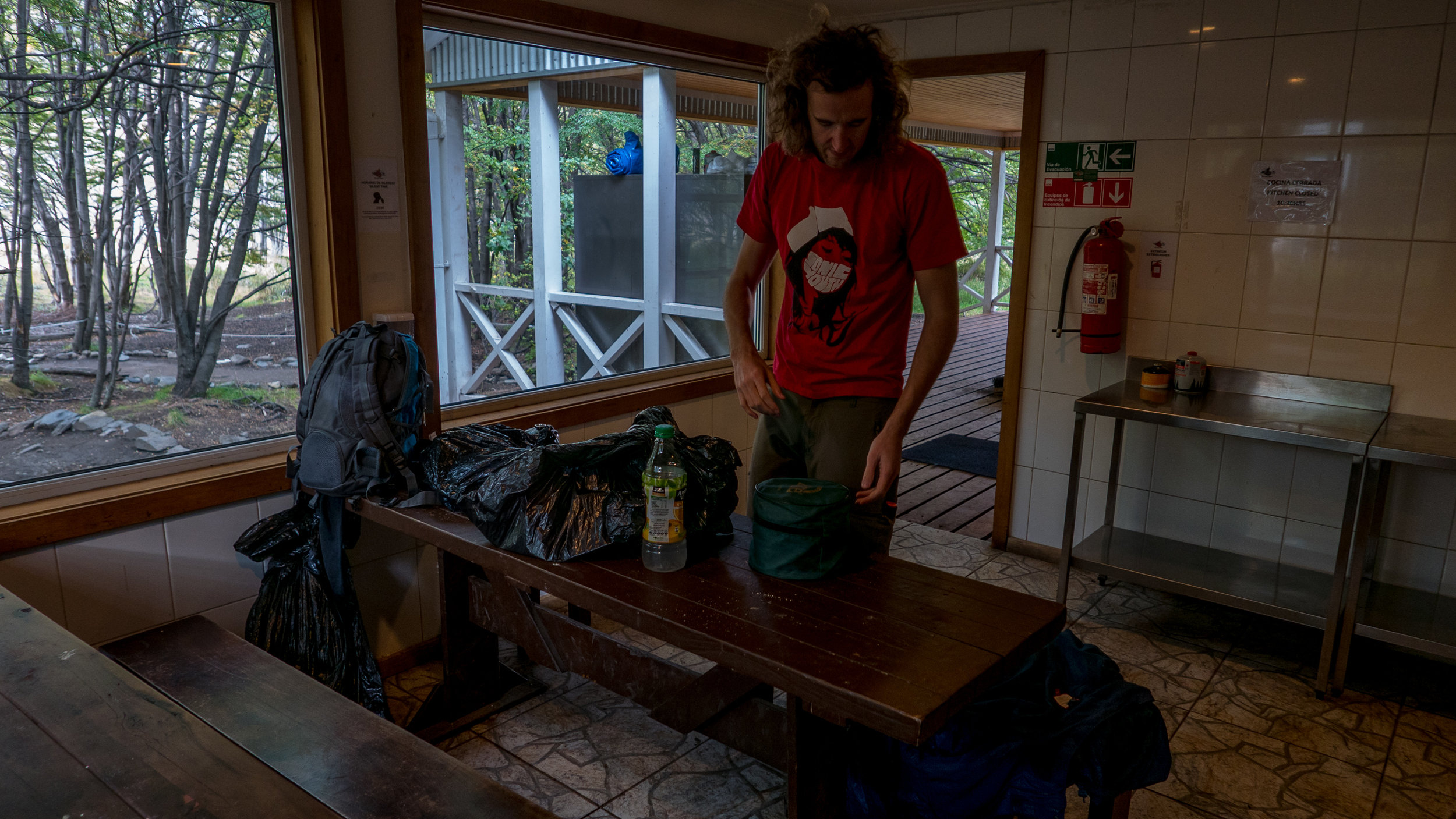
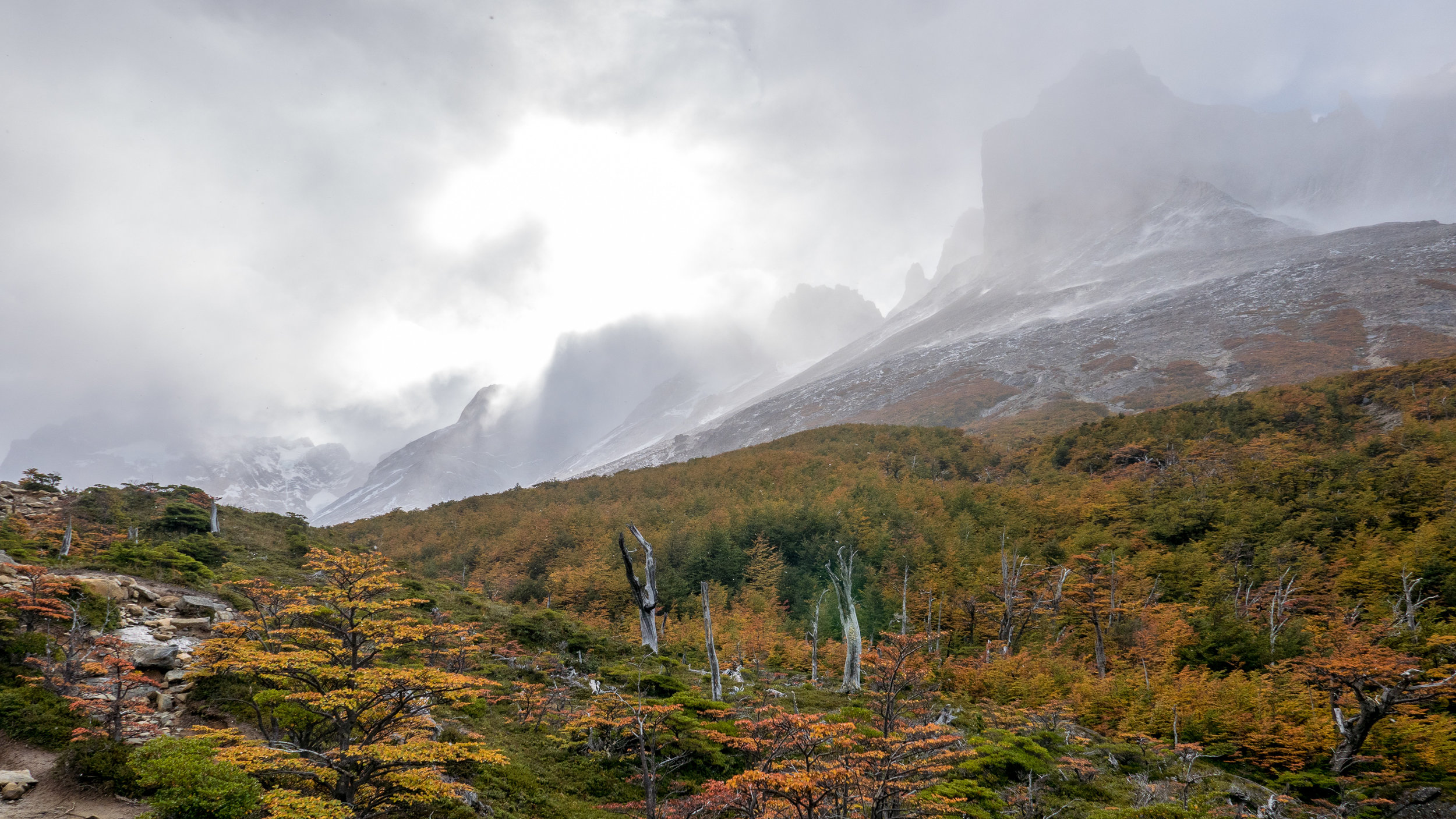
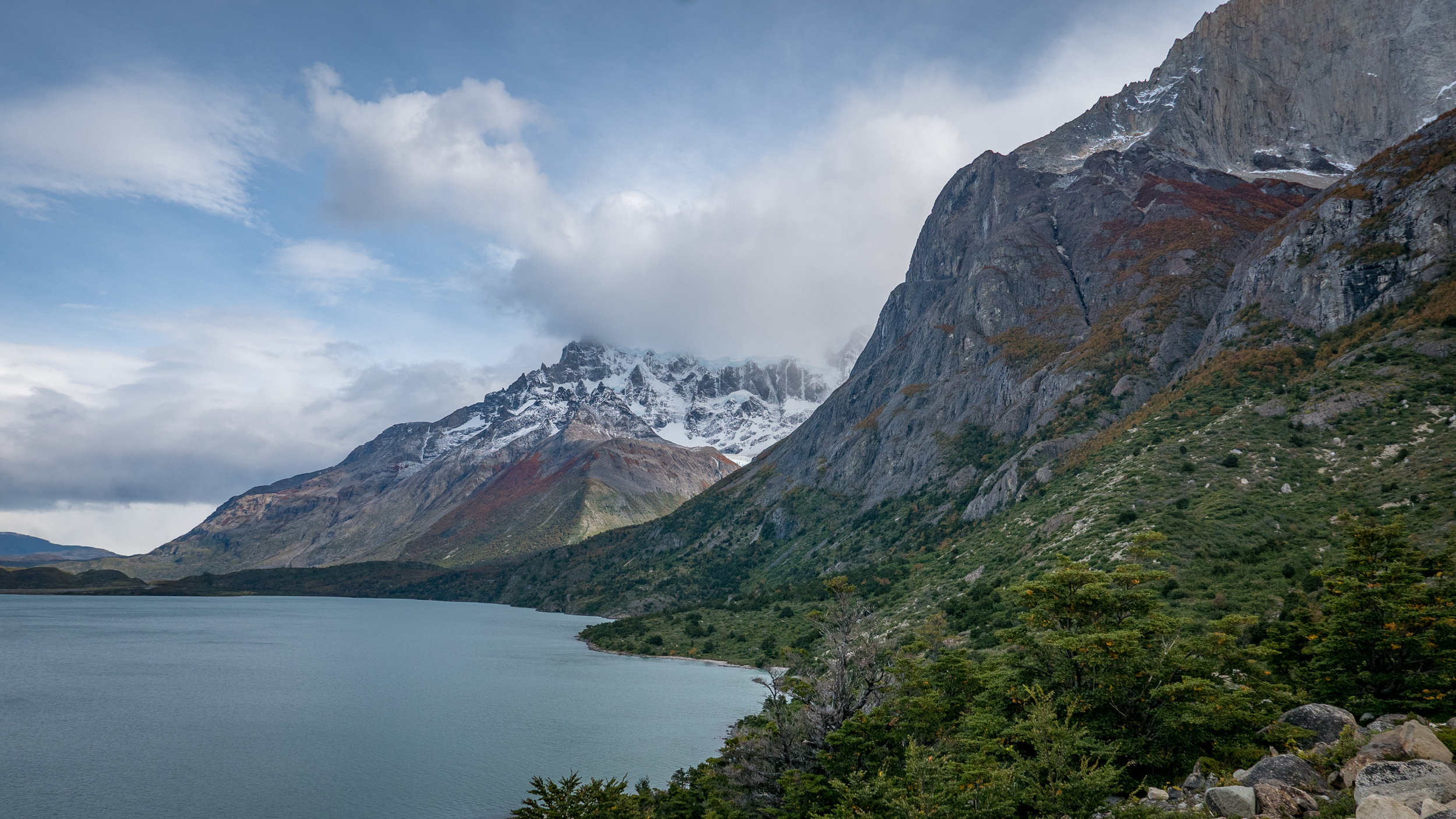
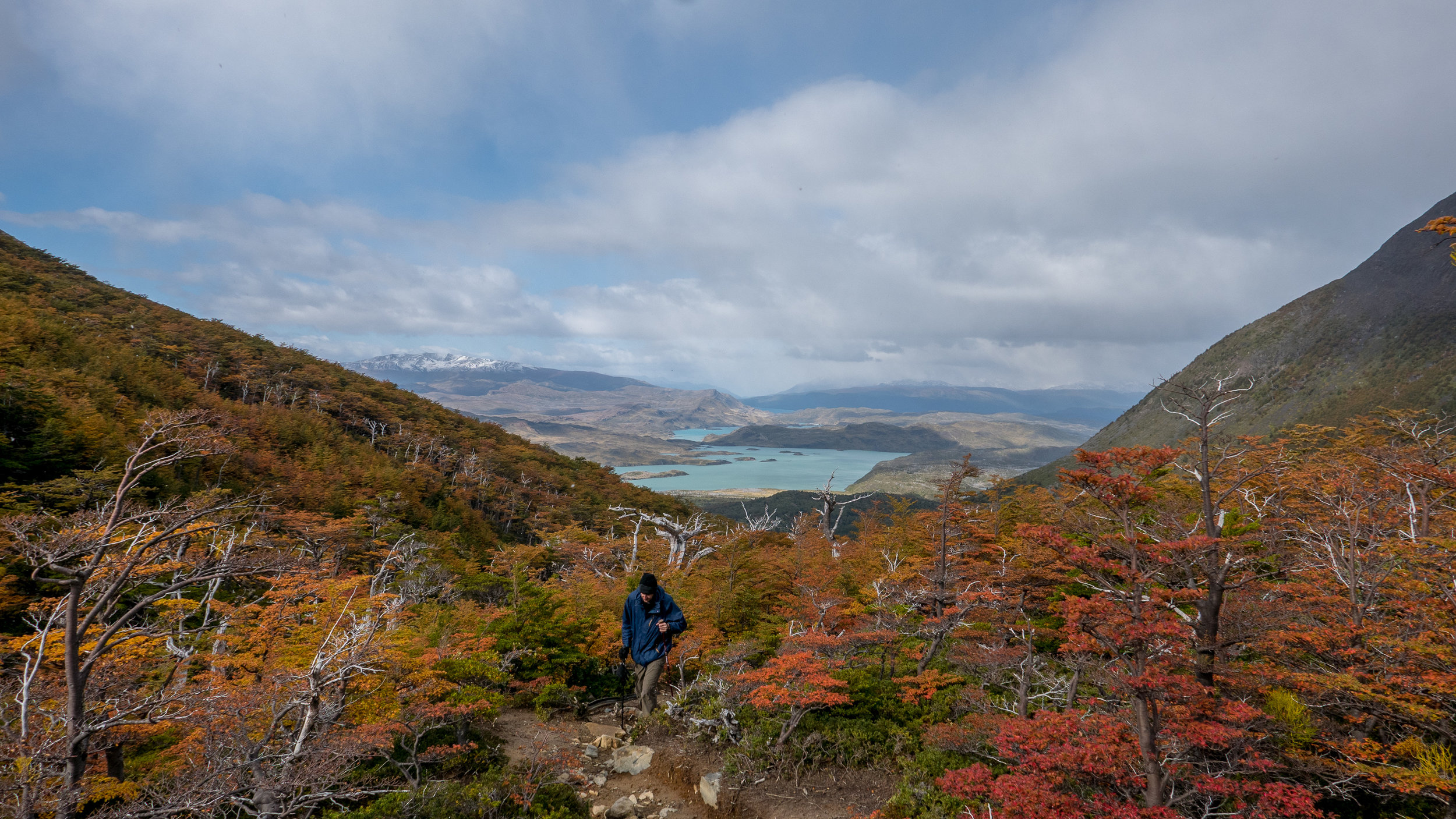
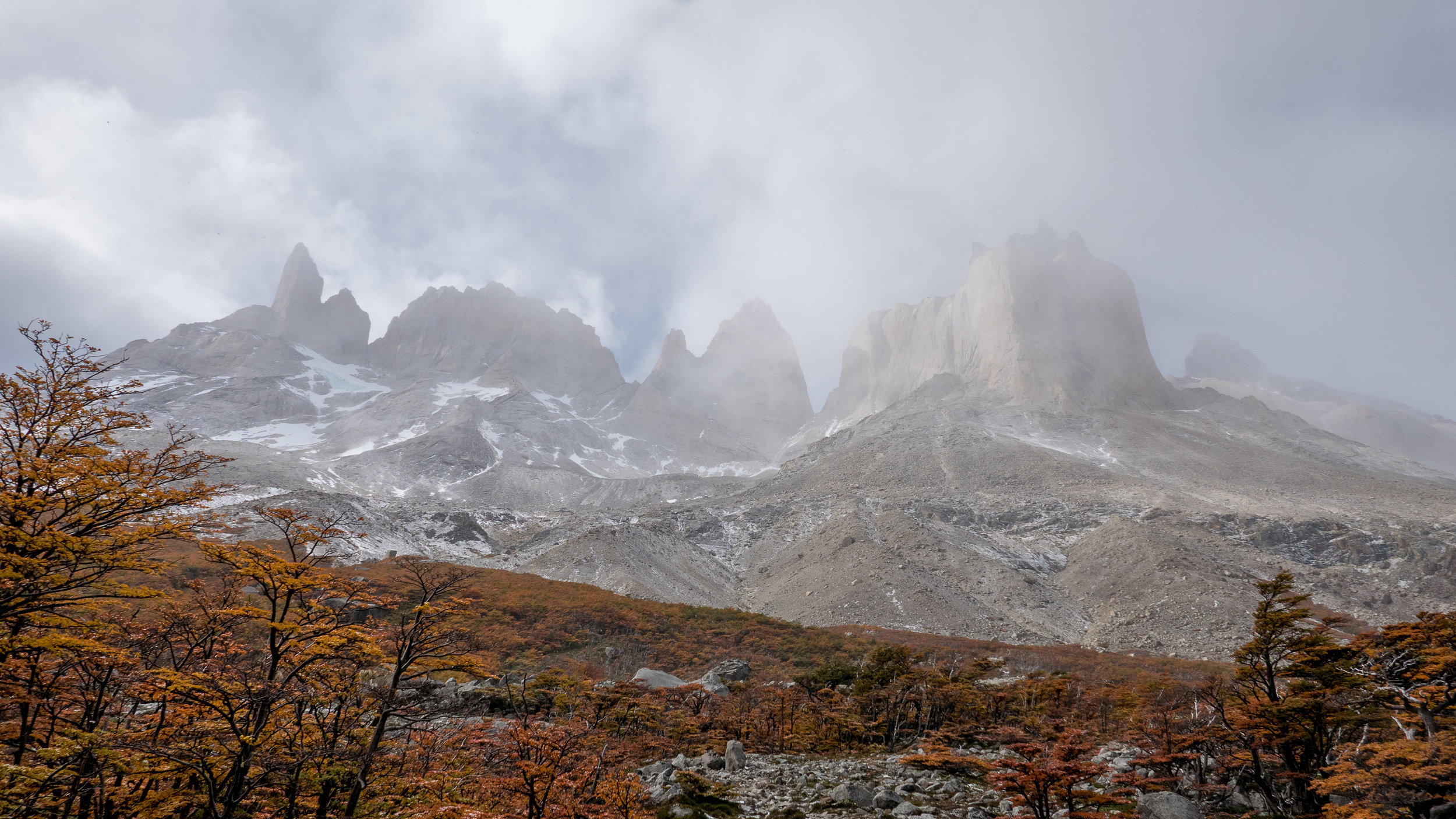
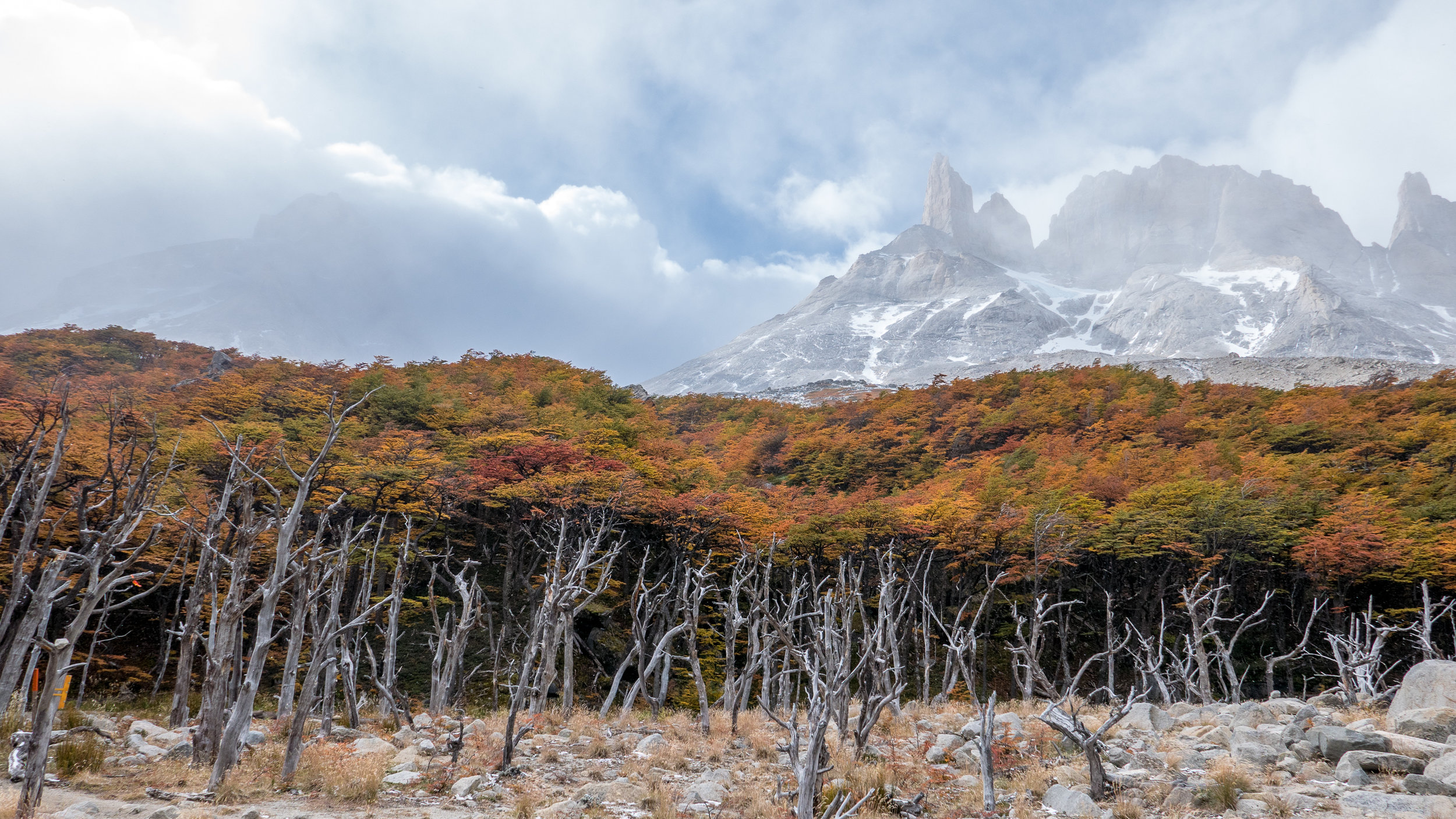
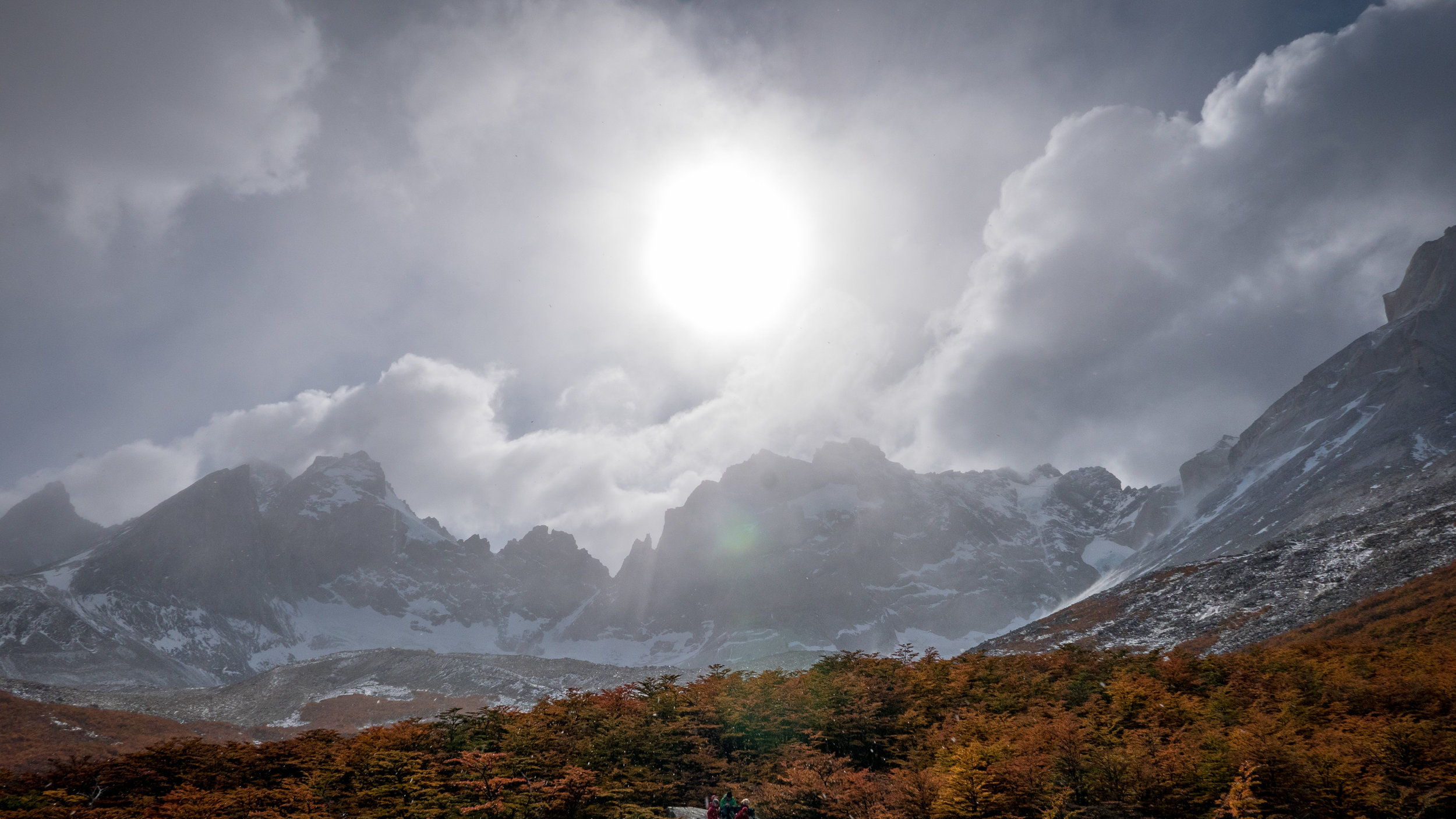
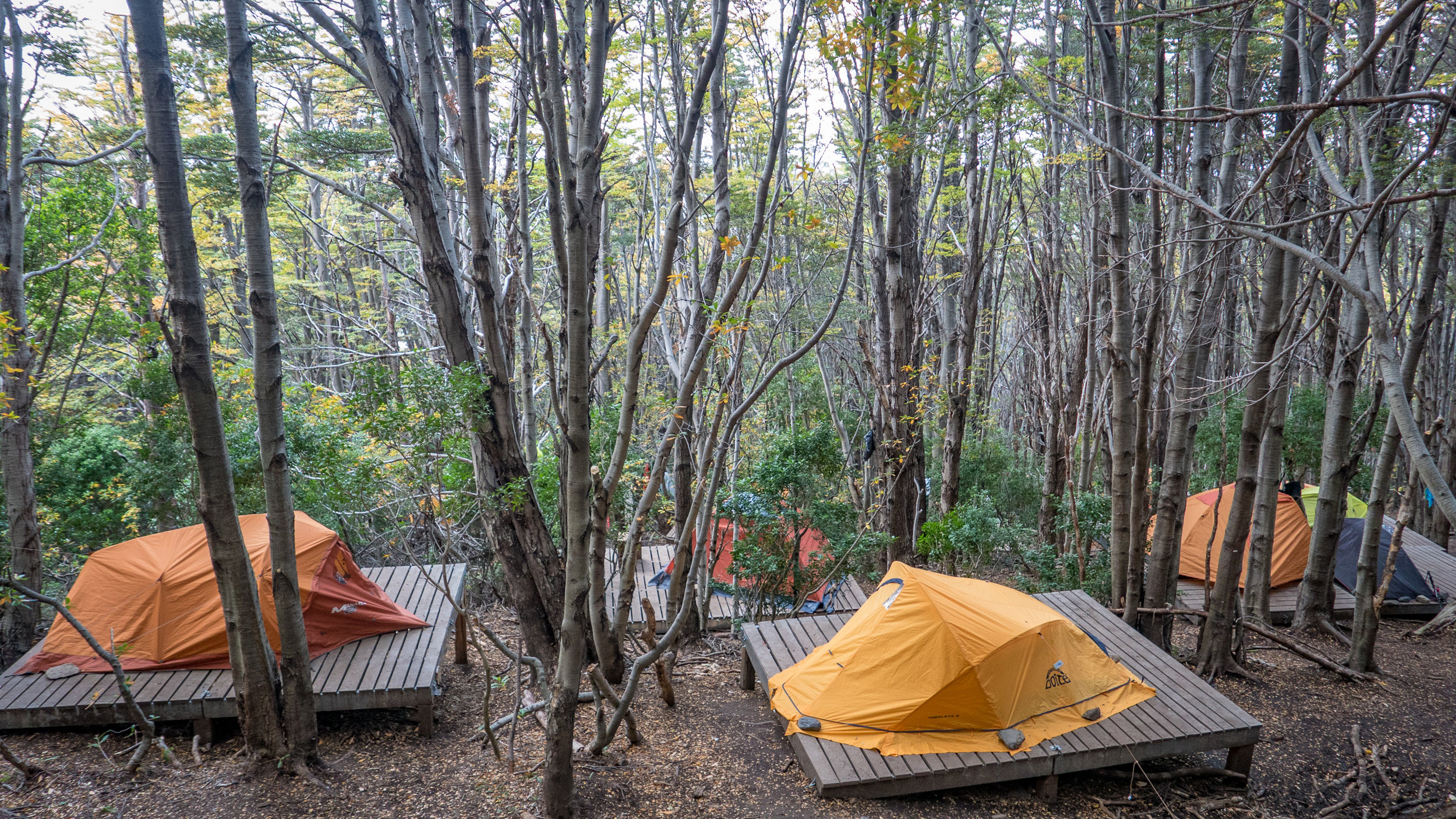
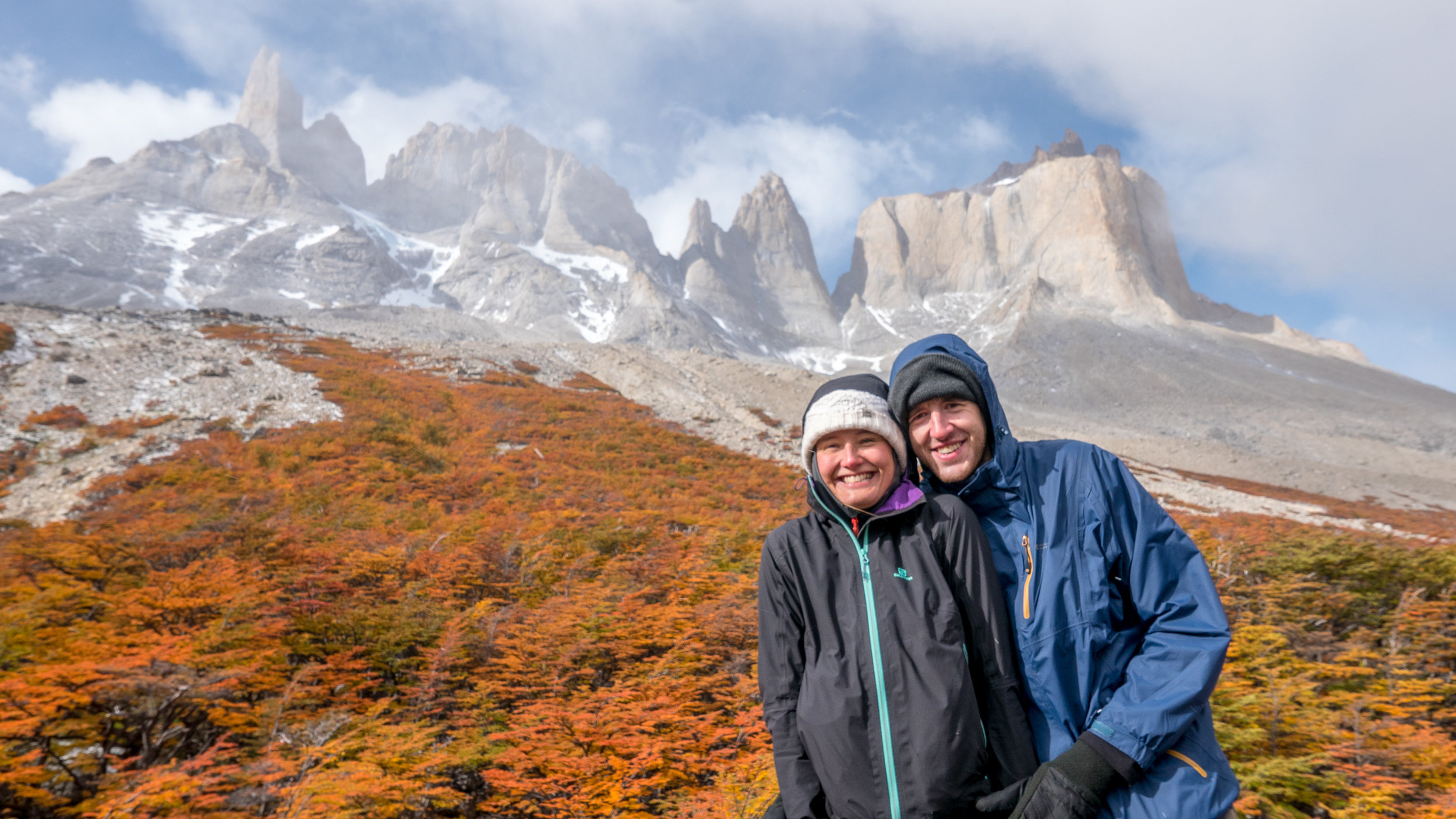
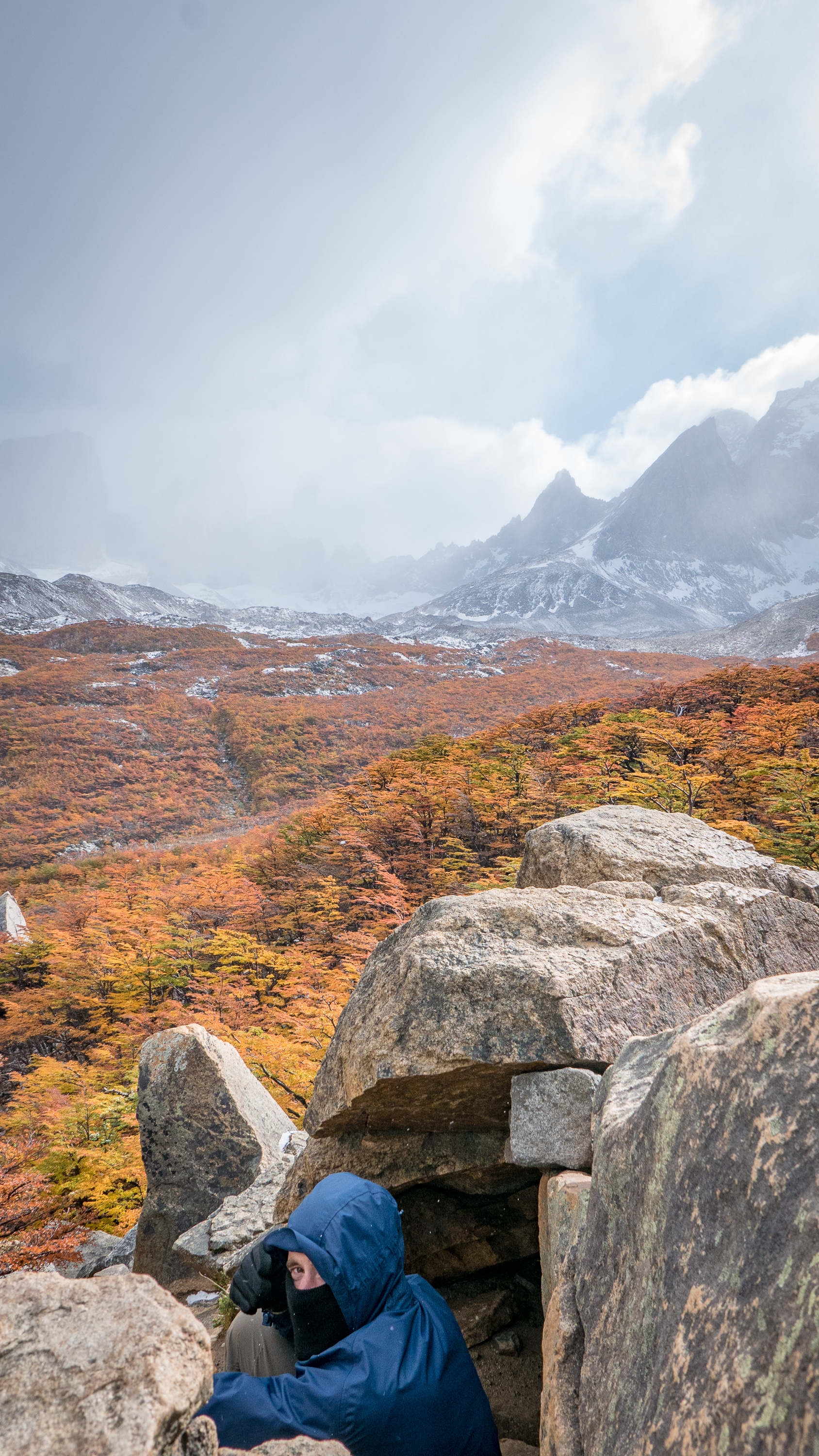
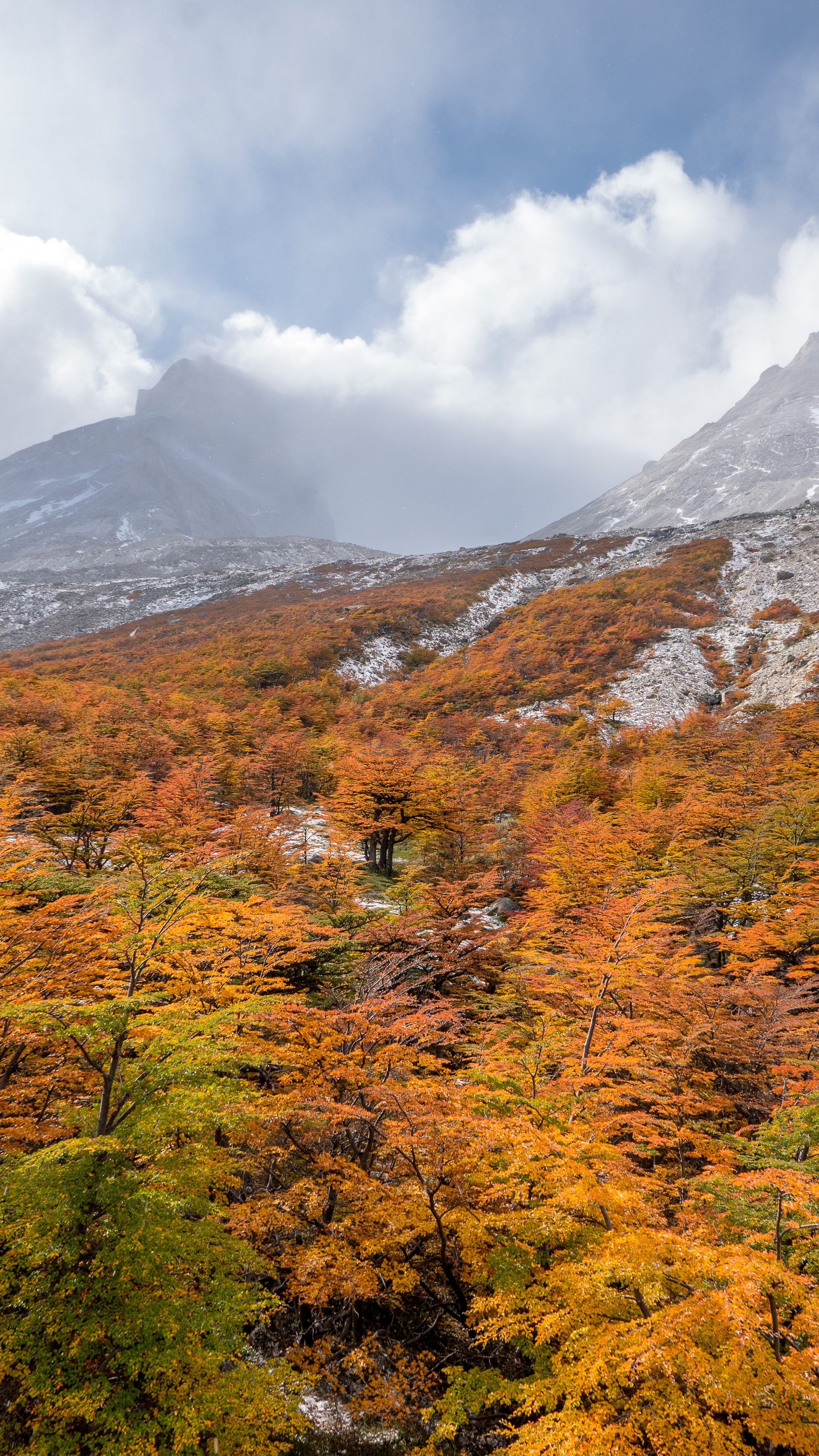
Most popular time to visit Torres Del Paine is during the summer months. April is definitely the shoulder season as it is getting colder. But also it means less people and awesome autumn colors! And a giant -15 degrees celcius sleeping bag you have to carry on your back for five days. The weather forecast really loomed over us, promising rain and/or snow for every day with lovely temperatures ranging from -7 to +4 celcius degrees. Can’t wait!
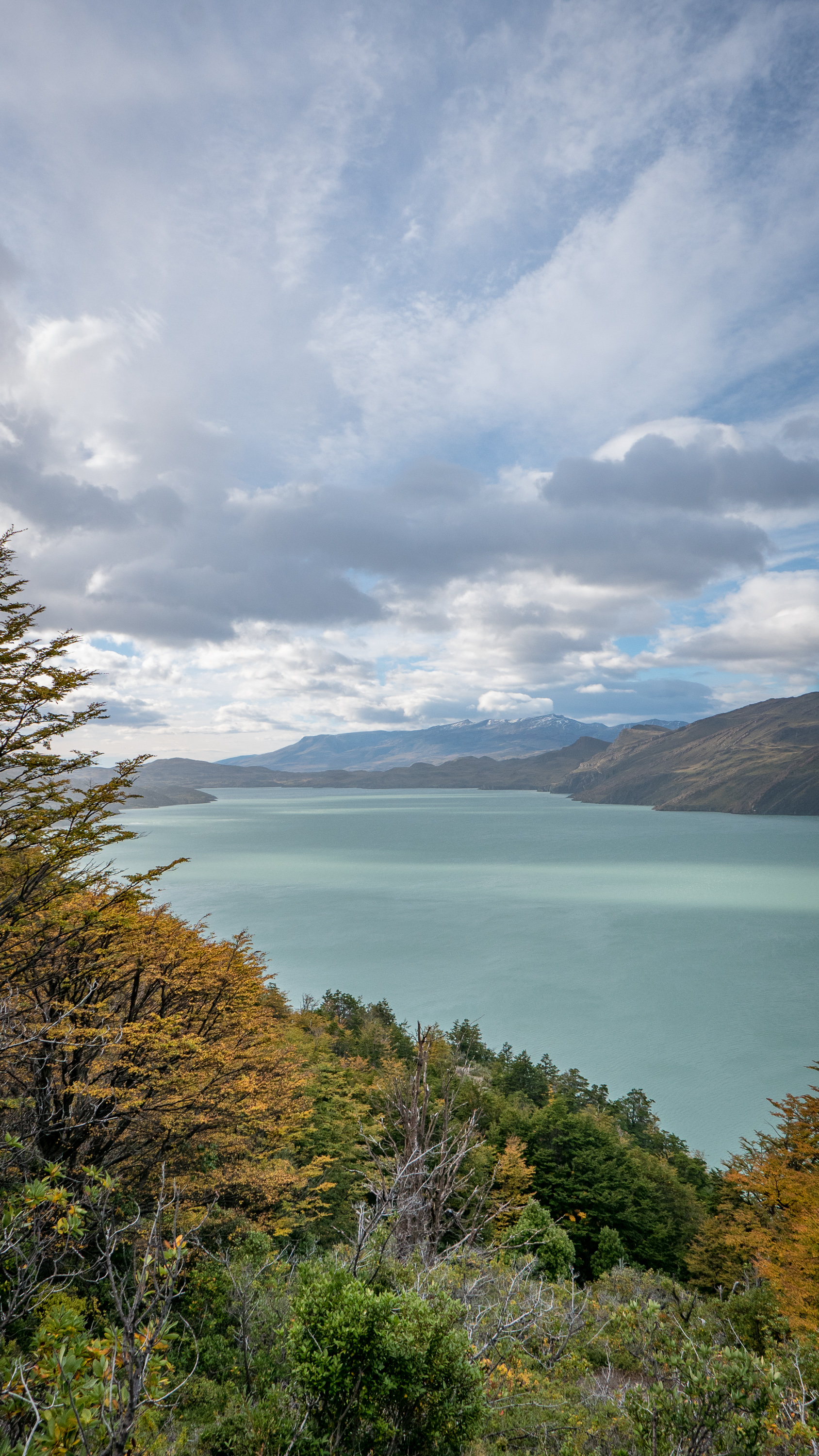
During the five days we visited countless lookout points, got seriously bored of eating nuts for lunch every day, got to experience the true Patagonian weather with horizontal rain that maked us soaking wet (but only on our left side), laughed, witnessed pro-hikers throw bad looks and pitiful comments to people who they think have never camped before, threw someone’s food away as it was hanging from a tree where we wanted to pitch our tent (amateur campers…), battled a challenging swamp that almost claimed Richie and half-claimed our friend Stewie, swore never ever to hike again, and made it to the Torres lookout just when the clouds went away for couple of seconds! You might think hiking is a solitary thing but it was actually quite the social experience since you see the same people every day and this ended up being one of the most fun things we have done thanks to the company.
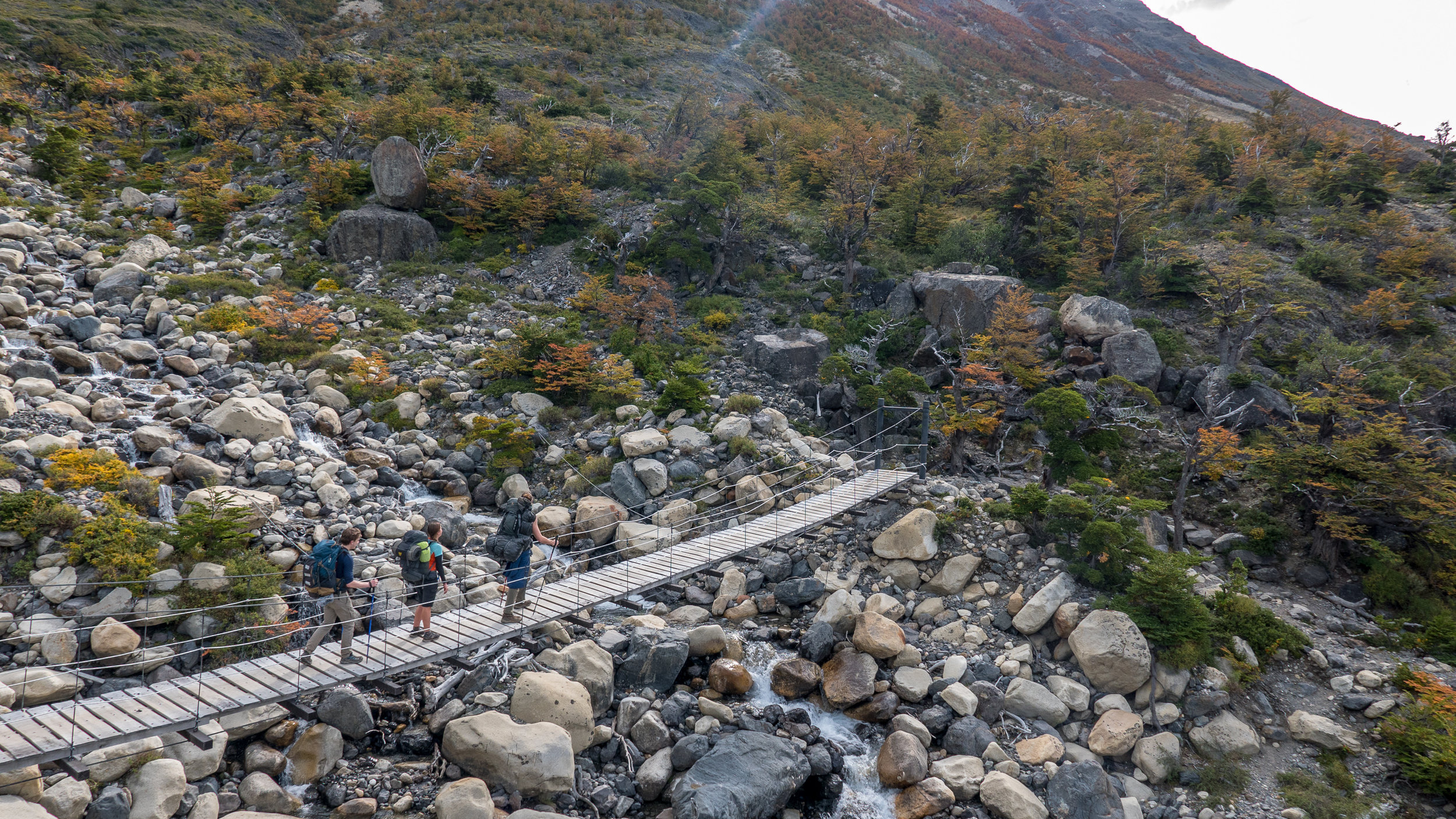
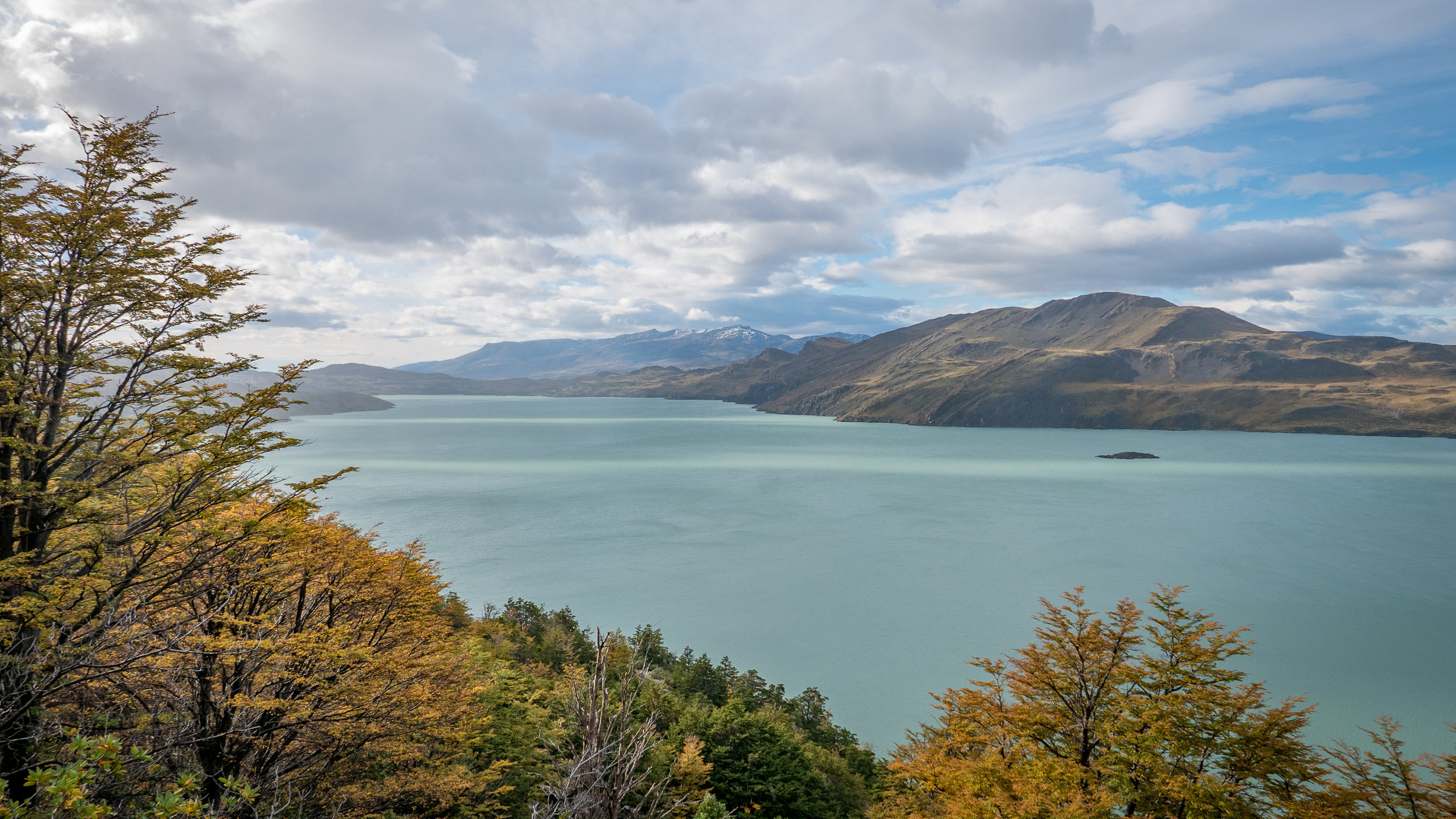
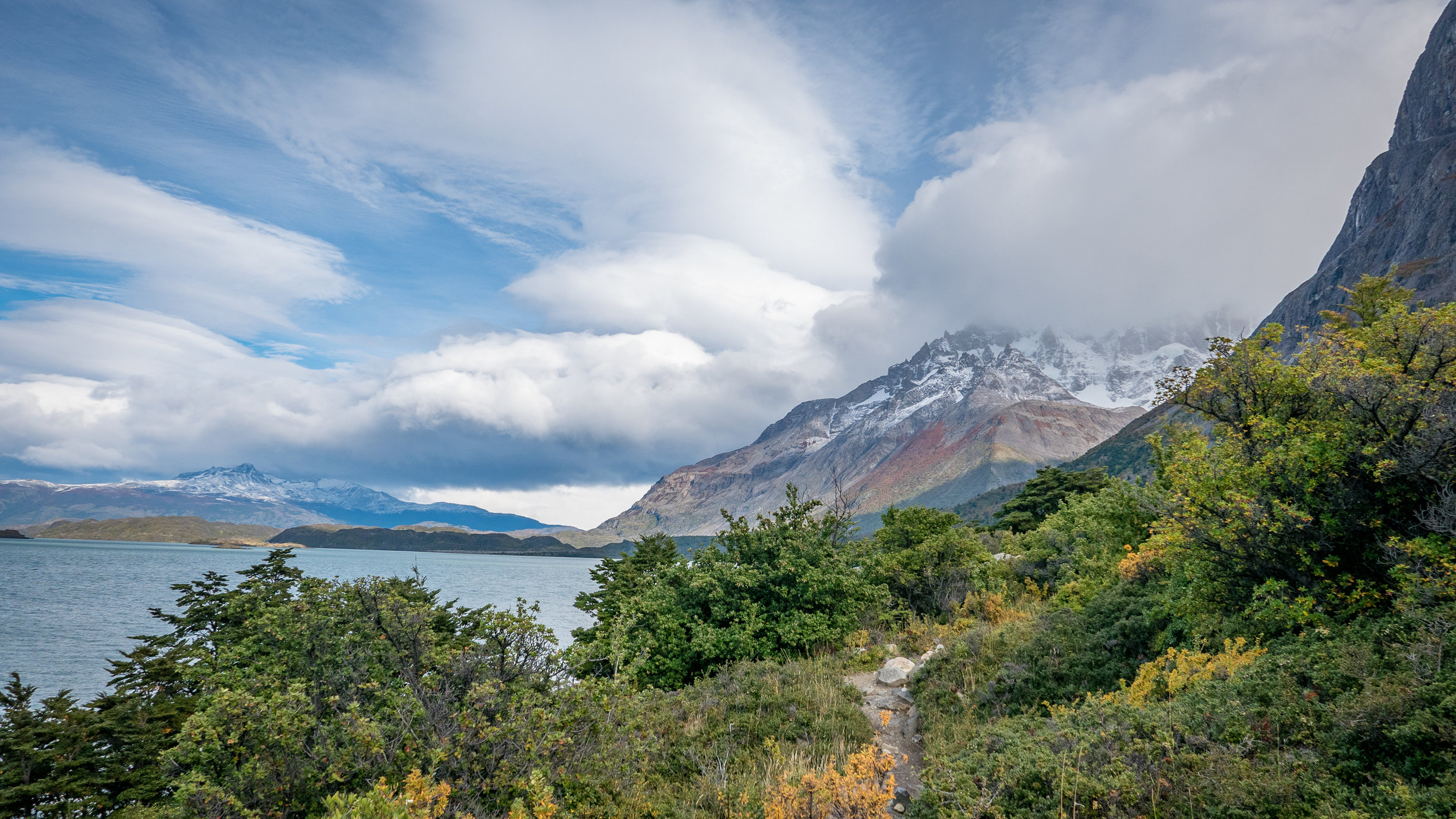
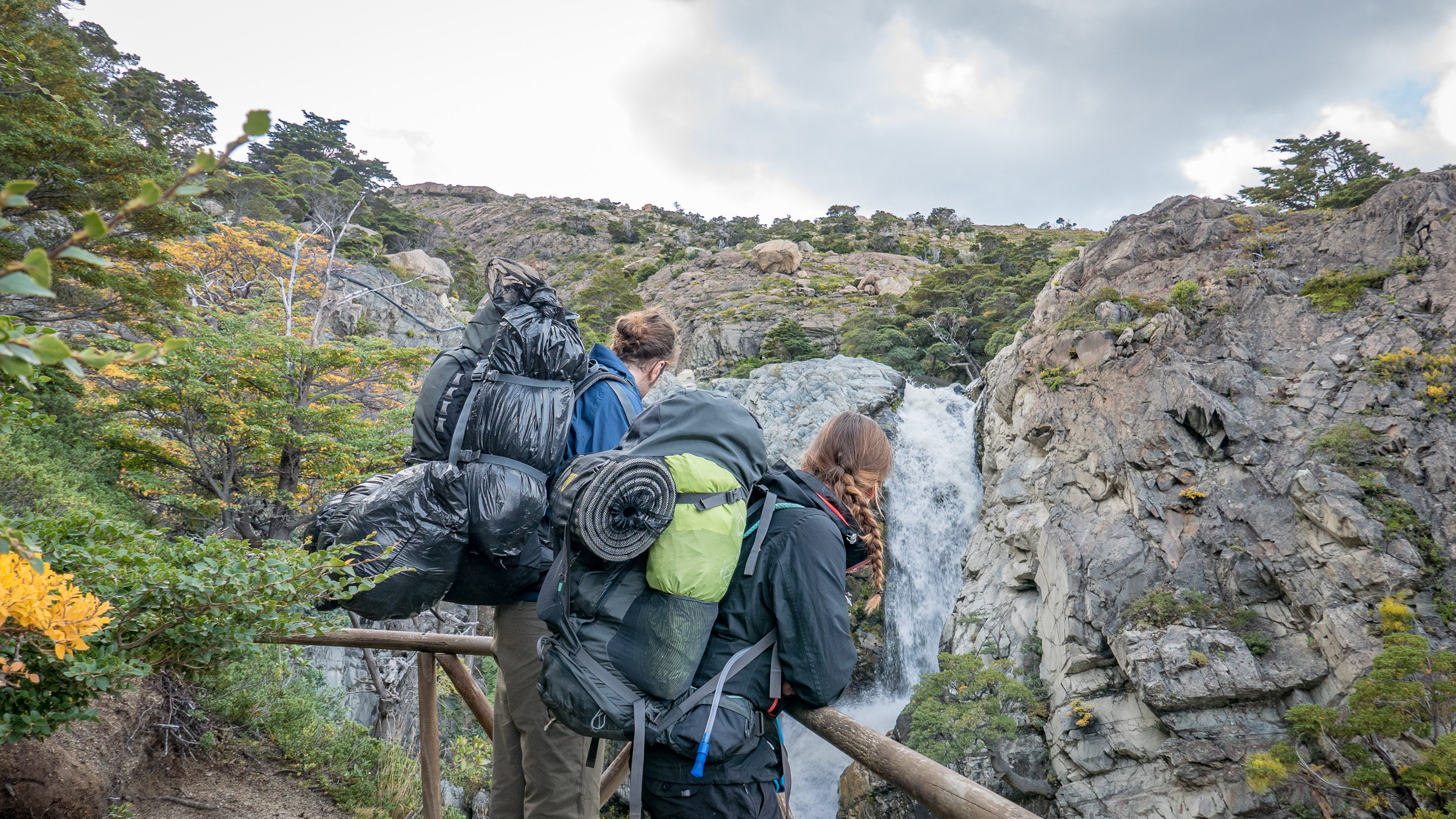
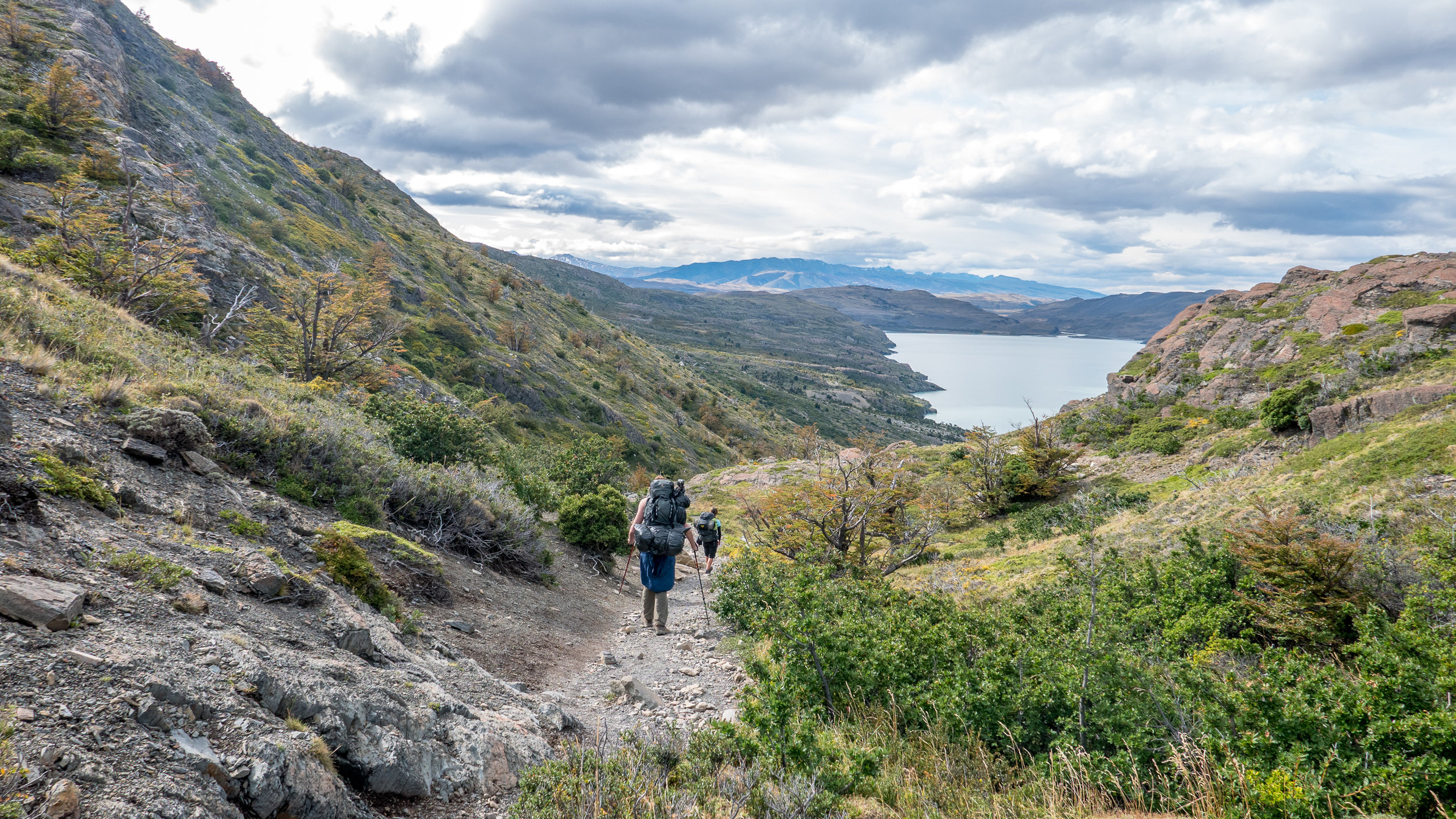
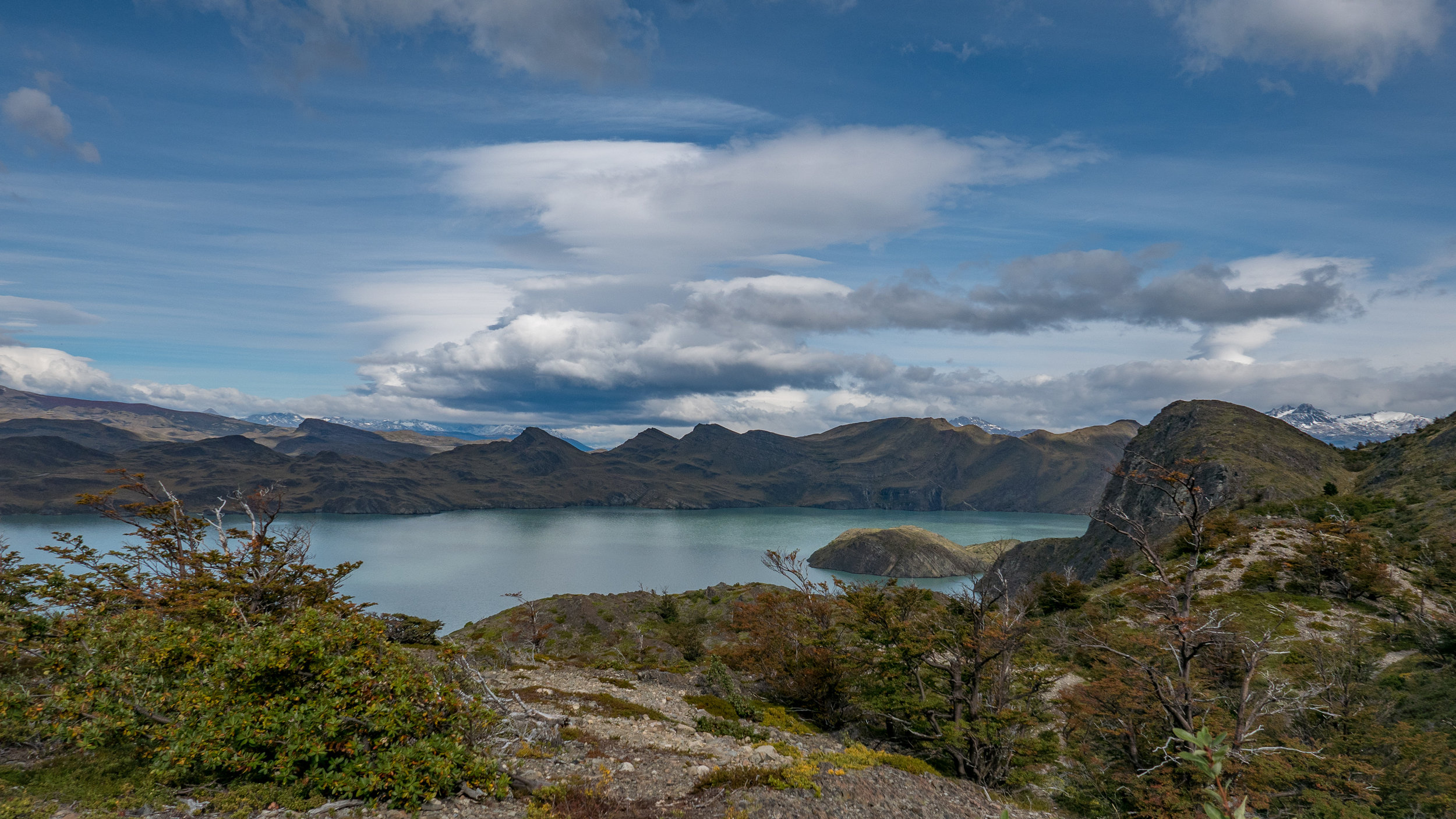
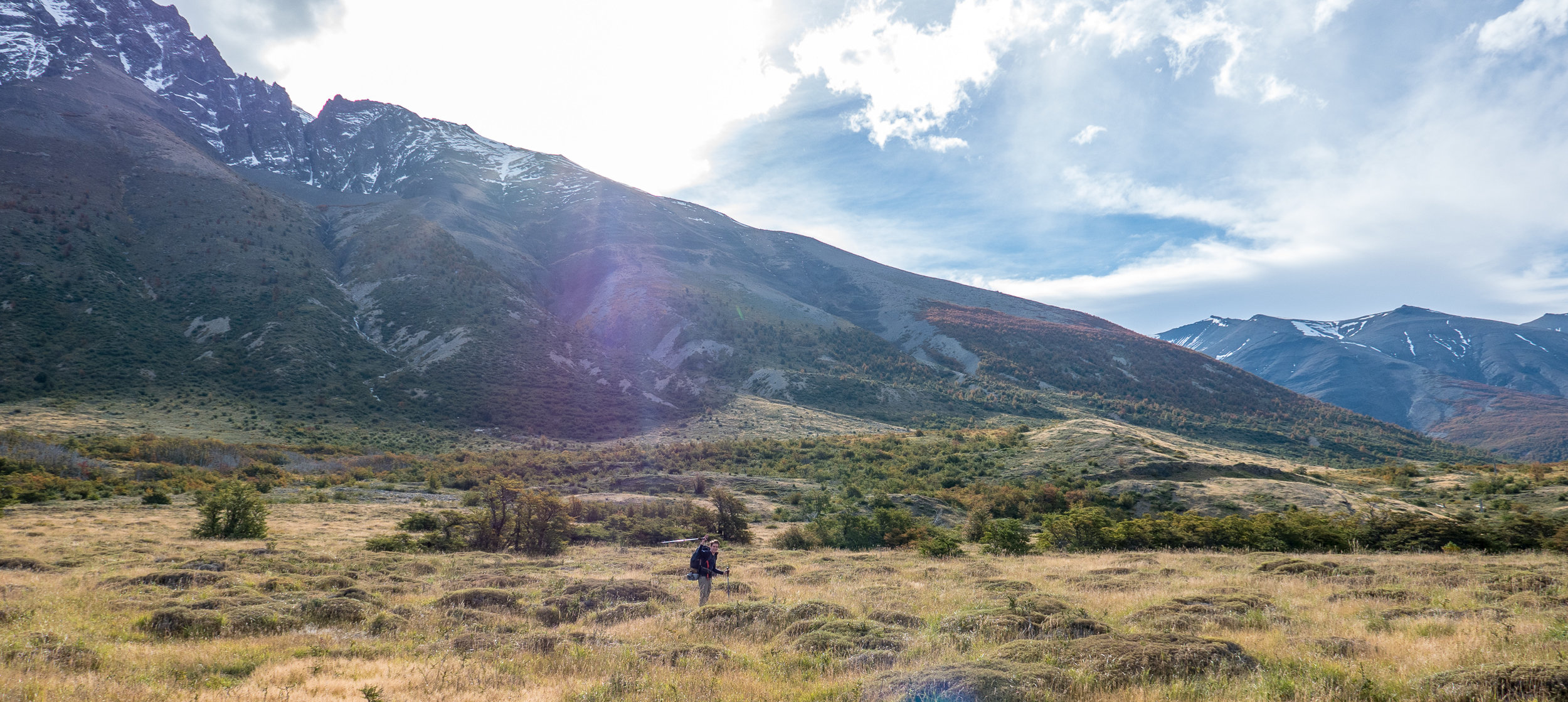
We are not quite sure how much we walked at the end because apparently no-one at the parks deparment knows how to count. Each map displayed different distances and even the markers on the trail were telling vastly different stories on how long it would take to get somewhere. I counted 76km, maps.me says 96km. I’ll take the latter as we can round it up to hundred and that’s something!
We can sum up the experience with Stewie’s words from the fourth day: “Hiking is like flogging yourself.” It sucks but afterwards you feel kinda good. You’ll never do it again until you have forgotten the pain the last time caused you. It’s been a week now and I find myself thinking about the mountains in Peru. Maybe once more…

How much can you spend on chocolate?
Hikey days were ahead of us. Better to forget partying in Buenos Aires or playing the waiting game at Peninsula Valdes. Now it was time to get active again and for Richie to dust those (walking) hiking sticks as we started to wander deeper into the legendary outdoor opportunities of Patagonia.
If you have ever looked at Argentina on the map you probably know it is huge. I do not know what had happened to my geography knowledge when I uttered the words “it’s kinda like Finland”. Yeah, times four.
Thus we embarked to another 20 hour bus to get to the Switzerland of Argentina - Bariloche! We had been spoiled by our first longhaul bus from Iguazu Falls to Buenos Aires that included blanket, pillow, and a proper dinner with wine. The wine was quite shite as the Irish would put it but it was the type we like - free - so of course we finished the tiny bottles. The buses to Puerto Madryn and now to Bariloche were disappointments after that, you had to bring your sleeping bag inside to get some cover from the blasting AC and prepare your own foods in order to avoid starving.


Bariloche looks like a little mountain village in the Alps or at least tries hard. And as a good Switzerland- wannabe, they offer chocolate on each corner and each shop between the corners. Not thinking about the fact that we were already about $1,200 over budget, I happily spent exactly $52 USD on chocolate during seven days. Breaking my own chocolate eating records here.

Sad thing about recording every expense on Splitwise-app is that you can't escape the facts about your spending habits
Bariloche is about chocolate, microbreweries, hiking, snow activities and lakes. Exactly seven lakes. One of the most popular activities is to rent a car and drive the route of the seven lakes, stopping on each “mirador” (viewpoint) to look at these aformentioned lakes.
Can I tell a secret? They all look pretty much the same.
Also we discovered an Argentinian recipe for how to construct a mirador:
1) Find the spot for the most beautiful views towards the lake
2) Now move about 100m -200m to the left or same to the right and find a spot with tall trees and bushes
3) Voilá, you have a mirador!

Nice views right?
It was challenging to peek through the obstacles at some places to get a glimpse of that blue water reservoir but then we just ditched the car and walked to the better unmarked places.

The hiker-thief


All that driving for a full day made us (me) grave for a day out walking. Bariloche is not short of hikes and one could do amazing multi-day treks over the mountains. The refugio (hut) - network is good and it’s free to spend the night there. The only problem can be the fast-changing weather, all the walks in the National Park were closed on the day we arrived due to high winds and falling trees.
Out of the two hikes we did, Refugio Frey was a perfect one, not only because of the clear blue sky weather we got. There’s two ways to reach the hut; the adventurous way of scrambling on rocks and over mountain tops or through peaceful strolling in the woods with a moderate climb at the end. Adventorous one was the one I wanted to do but to begin it you need to take a skiing chairlift up (or add extra 4 hours of walking - no thanks). And guess what they charge for this chairlift?
$25 USD. One ticket. One person. One way.
No thanks.
Easy forest-route then.


At the top we encountered some seventy army men and we learned they were there for the yearly climbing training. Apparently the area around Refugio Frey is bursting with routes and during summer time you have a hundred people pitching their tent around the premises. I have to say I’ve become more and more happy about our timing in Patagonia. Even now when it’s the shoulder season (fall), there are a lot of people everywhere - in hostels, trails, viewpoints.. I can’t even think how crowded it is during summer time!


Look at that view!

I can think of only one more thing worth mentioning of; we ate spaghetti bolognese for dinner seven days in a row. Welcome to budget-traveling.

Animal adventures in Argentina: Puerto Madryn
Those who have been reading this blog since we started our travels (almost a year ago!) know we had some disappointments on the way concerning animal encounters.
- Arrived to a town in Tasmania called Penguin just after all the penguins had left.
- Drove to a small town in New Zealand just for penguins – who weren’t there.
- Paid $400 AUD each to snorkel with whale sharks in Coral Bay, Western Australia. You guessed right – they were nowhere to be seen. Or actually just couple hundred kilometres North in Exmouth where we were couple of days earlier. Duh.
On a positive note, on that snorkel trip we did see everything else from manta & sting rays to whales, dugongs, more whales and dolphins.
And the greatest comeback was me fixing Richie up to get picked “randomly” from the audience of over a hundred people to feed dolphins in Monkey Mia in Western Australia. You should have seen the looks on the faces of all the kids and their parents when an almost two-meter tall twenty-something gets chosen for this cute activity!
Thus the stakes were quite high for our next Argentina stop. Puerto Madryn was always looming on the planning list but as it added a diversion to our route to Patagonia, we almost considered dropping it until we found out it was ORCA SEASON!
And not just any orca season, ORCAS SNATCHING SEA LION BABIES FROM THE BEACH season. You just don’t see this shit anywhere else in the world.
Could we be so lucky? Could the stars be aligned to make all this happen? For once being at the right place at the right time?
Well, no.
But I’ll come back to that later.
Puerto Madryn is the “base camp” for wildlife exploration in this area. You can see penguins (second biggest colony in the world, maybe now third as they found a new one in Antarctica), elephant seals, sea lions, Southern Ballena-whales, black-and-white dolphins (that look like mini orcas), regular dolphins, orcas, armadillos, local camels as we still call them (official name is guanaco), local emus, rabbits, pumas.. you name it.
You’ll need to either join quite expensive tours totalling $75-$100 USD / day or rent a car and drive and drive and drive to reach the animal spots. As we wanted more opportunities to spot the orcas, we rented a car and stayed inside the Peninsula Valdes National Park area to avoid paying the park entrance fee every day. On the first day though we drove to the opposite direction to Punta Tomba to check out the penguins, finally! During the drive there we joked half-heartedly about the possibility of no penguins. We figured that’d be our luck. Second biggest penguin colony without penguins.
Luckily we were wrong! It’s not exactly the advertised 400,000-500,000 penguins but enough to make us very, very happy. Until you have seen a penguin swim and bathe (they were clearly washing themselves by doing barrel rolls) you haven’t really experienced joy!


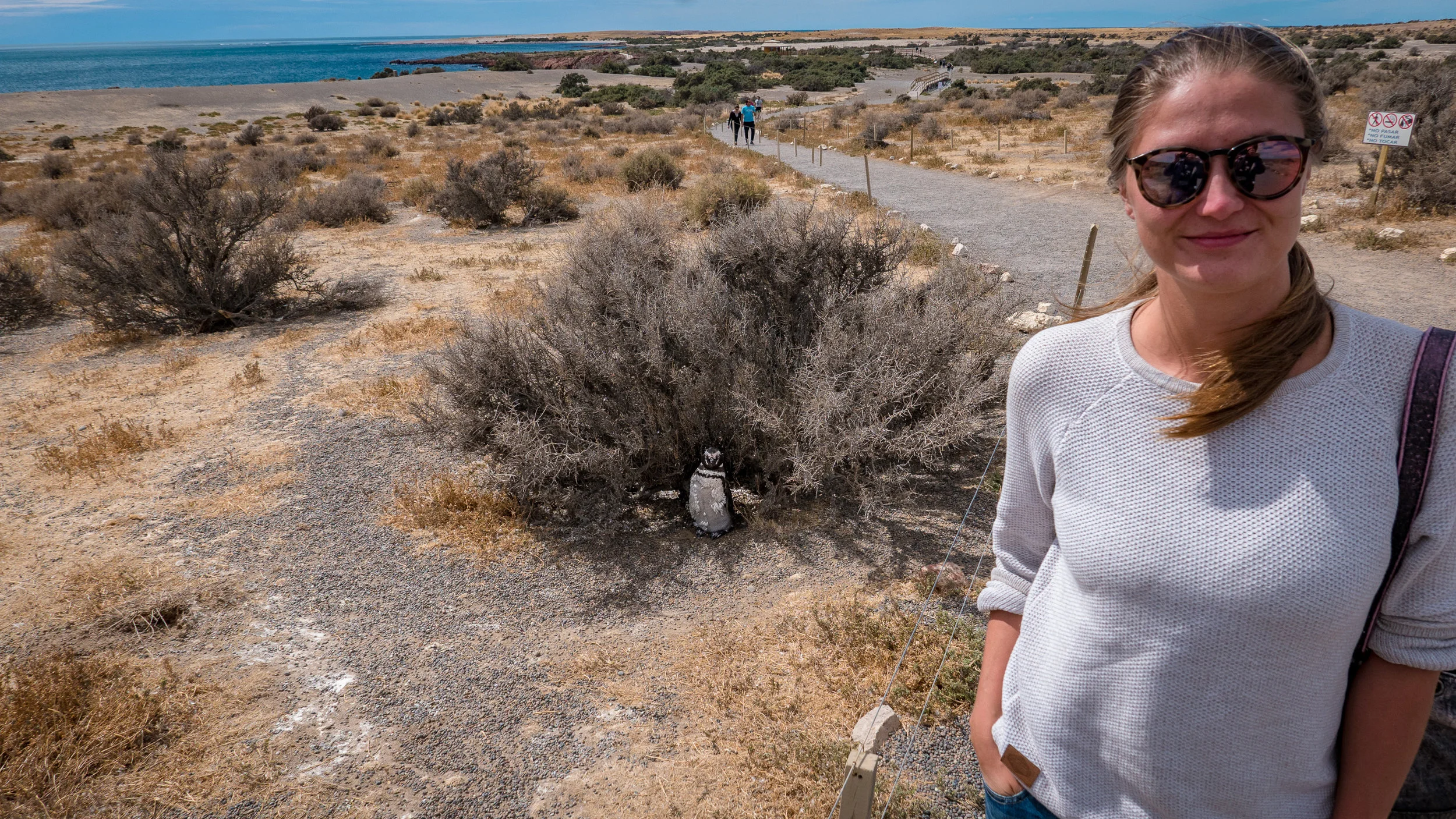


This successful first encounter made us hopeful for what was to come. Checking the National Park and Punta Norte Orca Research- Facebook pages, confirming high tide times, estimating driving times… orcas we are coming for you!
There’s two places where orcas are normally seen. Punta Norte which houses a sea lion colony and Cadeta Valdes with elephant seals, sea lions & an “attack channel” where only professional photographers and film crews can go. You are most likely to see these glorious predators during high tides and those are 1,5 hrs apart on these two places. Thus depending on the day you might get two high tides = better chances.
We spent the first day driving around and sitting in Cadeta Valdes. Talking to people who were on their third day of orca search with no results. But we also got our hopes up as a group of 15 orcas had been seen – just not at the usual spots but in a place were they haven’t been spotted in two years. So they were definitely around..


Second day’s first high tide was at 7.30 am in Punta Norte. We had to start the drive at 6am to make it through the gravel roads with our white Ford Fiesta – not exactly the same as driving with our Toyota Landcruiser 4WD in Australia…
Then we waited. And waited. Watched sea lion pups play at the water. Thinking if it’s disturbed to hope a predator would come and eat them? And really hope for that?


No orcas.
It was time to switch location back to Cadeta Valdes to wait for the 17.45pm high tide. Only 8hrs to go. We are pretty good at the waiting game when Kindles are fully charged and you have a place in the shade. Eating self-made sausage sandwiches and yesterday’s pasta cold, buying hot water to make your own coffee (did I already tell you Argentina is expensive?), gazing at the sea, hoping to see a black fin or two emerge from the water.


Eight hours later, cold and wet from sitting in the rain for the last hour, it was time to admit defeat and head back to the base camp while there was still sunlight left.


No orcas.
When I am a famous writer I’ll come back for a month to live in a hut with views to the sea. Write and wait for the intelligent black and white friends to show up. Until then the Youtube clips and documentaries are all we have.

Buenos Aires aka. "trying to be 20 again."
The writing tips I have been reading recently say "Get straight to the point. Cut the first dreamy sentences. Hell, cut the first paragraph." So here we go.
Choose Buenos Aires if you want to party. Choose a party hostel, choose sleeping until 6pm, choose cheap bad-tasting beer. Choose hostel drinks, choose boozed-up-brits-abroad as company. Choose the toilet that hasn't been puked in by 9pm. Choose a club and music of any genre, choose dancing until sunrise. Choose repeating this seven days a week until you're broke - physically and economically.
OR
Choose to be over thirty, go to bed at ten, try to have a drink one night, fail and get an Uber home. Or even better, choose to have awesome local friends, have an asado, drink wine at Palermo, walk the pretty streets, buy tickets to see Queens of Stone Age and Foo Fighters and see only latter because of an astonishing queuing system (fill up a stadium from only one entrance surely gets everyone in on time!).

Awesome book store in an old theathre
Any thoughts on which route we took? Yeah. We stayed at the party hostel which was nice for socialising but oh boy I could not do the seven days a week partying any more. And I don't enjoy an everyday toilet lottery (I wonder what someone has left there this time?!).


Buenos Aires is by far the best choice for a city we could live in in Latin America. Big, clean, safe (as long as you don't wonder somewhere you shouldn't), food, culture, night life, beautiful parks.. not the cheapest though and after two weeks in Argentina we are hundreds of dollars over budget.
Oh well. Time to eat noodles.
(Can you guess what movies we have watched recently?)


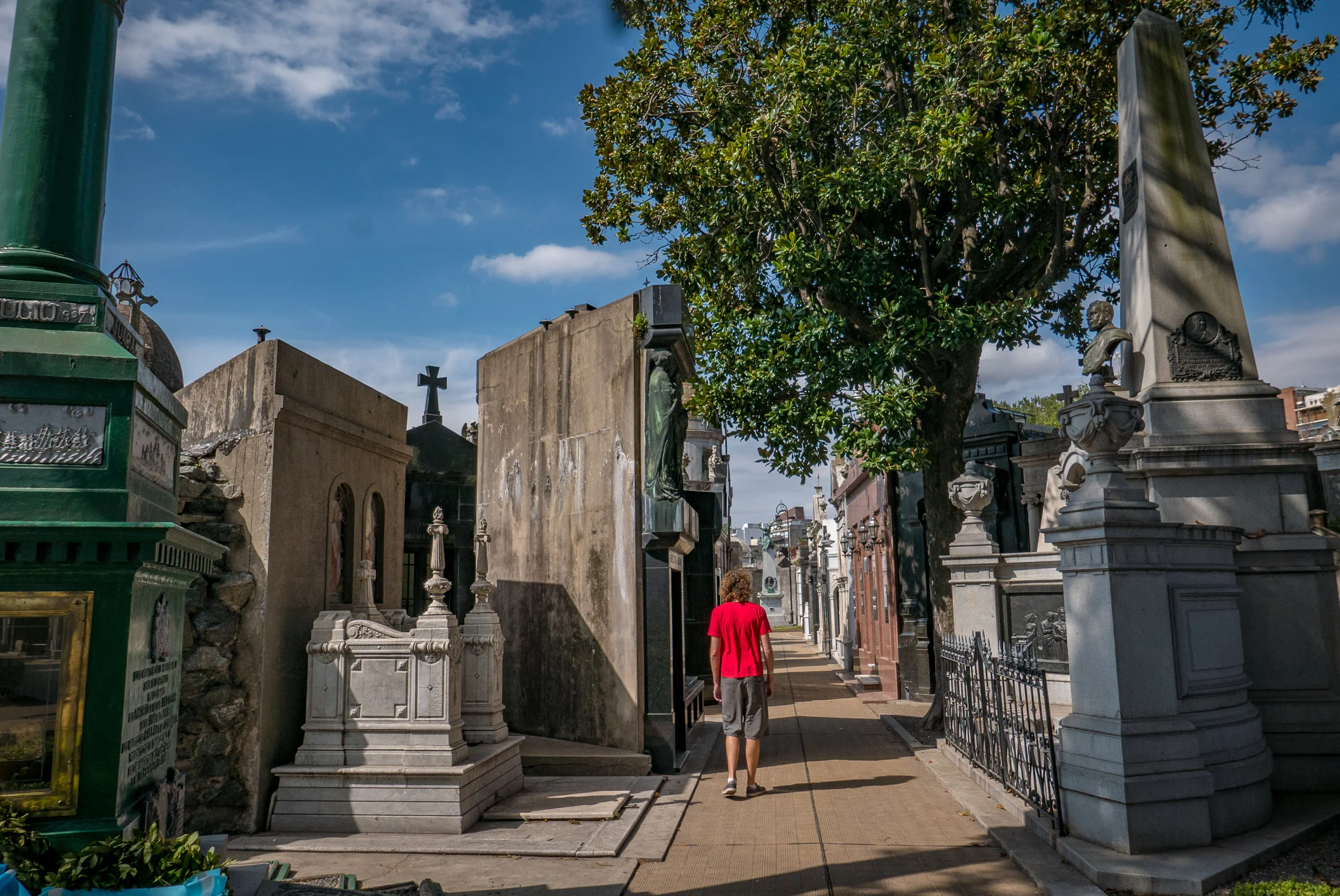
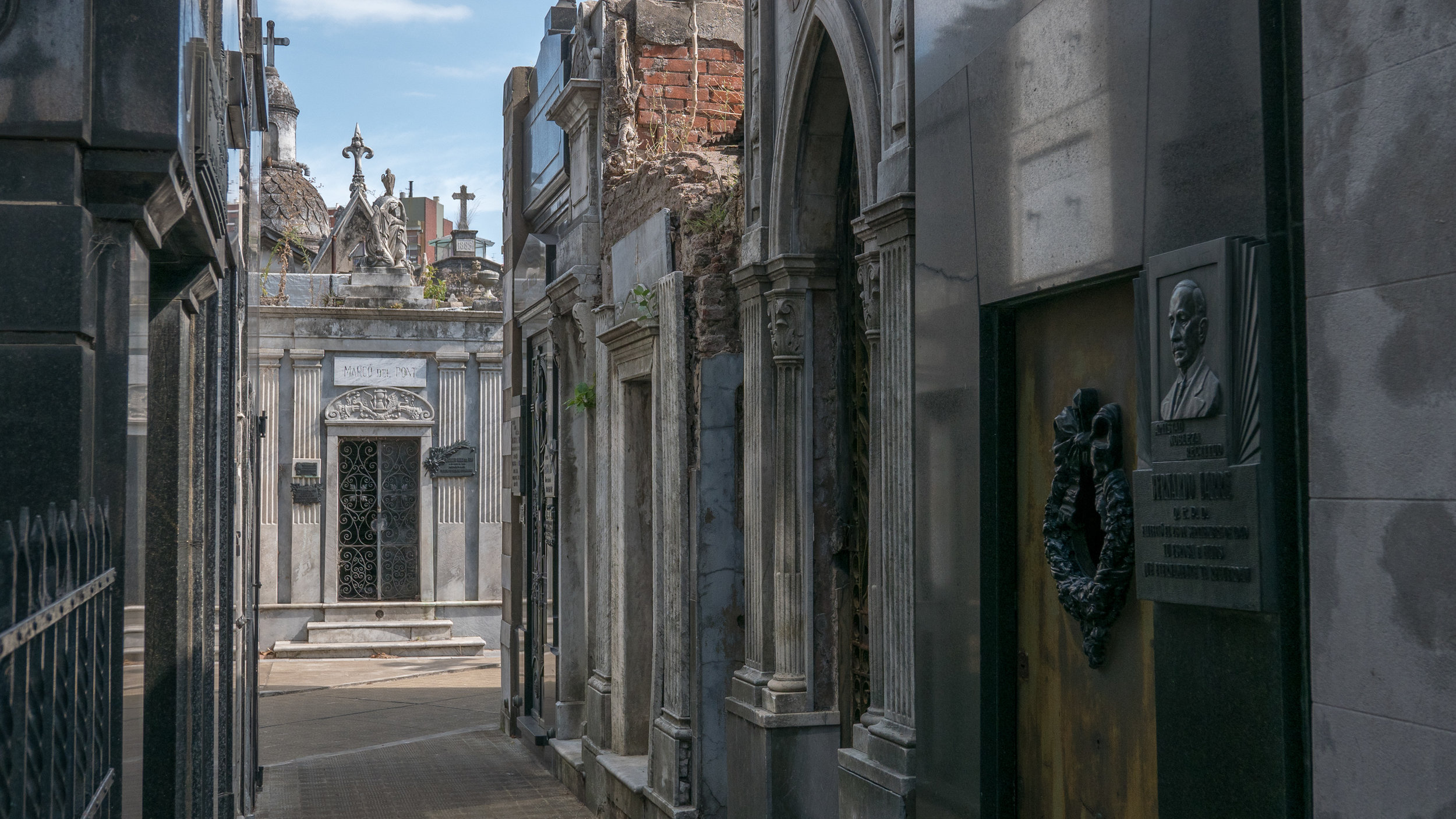
Of course Buenos Aires has the fanciest cemetery of them all. La Recoleta Cemetery:




Goodbye Colombia, hello Argentina
After two months, our time in Colombia came to an end. In order to make it to the Southern Hemisphere and Patagonia we had to book flights to Argentina instead of going to Ecuador and continuing going down by looong bus rides.
First stop in Argentina/Brazil: Iguazu Falls. And thus my camera has hundreds of photos of roaring water.
One thing all the blogs tell you is that Argentinian side is better. We visited Brazil side first and thought that it can’t get better than that. It can. Argentina’s side rules.


You had to queue for the photo spots. What a pressure, didn't see any true bloggers trying to take hundred photos while others wait.


If that looks impressive (and I am not talking about a shirtless Richie), the Argentinian side takes it up a notch.


Train to take the tourists to the falls

Random Mexican place in Argentina
I feel like that is enough waterfall photos for a while.
In our first hostel we also got to witness our second bed bug occasion. After last one (where I spotted the bugs before they got anywhere luckily) I have become an inspection-expert. Going through our bed frames I found eggs and old shells and once I lifted the top mattress, I could see the full-grown bastards crawling from the seams. Obviously the whole mattress was infested!
I have learned to listen in awe at the hostels' explanations once you confront them.
"They are the bugs that come out when it rains!" And live in the mattress?
"Oh I thought we had cleaned." Yeah sure you get rid of them by regular cleaning. Not.
"They can't travel from bed to bed." How did they get here?
"Those are mosquito bites." One hostel told a girl whose arms and back were full of nasty marks after one night at the hostel bed.
We got a private room (full of old shells as well but nothing alive) but of course they sold our beds to other people the next day. Luckily the people in the dorm told the girls and they complained as well. And only then they took the mattresses out!
I did inspections for couple other people in the dorm, should really start charging for this...
With warm regards,
Bed bug free Heini & Richie

Is this one salsa?
Colombia! Here we are. Or to put it more precisely, have been for three weeks, doing next to nothing. We hit a major pause in our travels, just getting stuck places and seeing the bare minimum of our surroundings. And when you don’t do that much (read: be active and go see that church, that sunset, that night market) you get depressed and don’t want to do anything. A vicious circle has emerged.
Luckily we finally showed the circle our middle finger and have been like newborn backpackers going around with excitement and wonder in their eyes. Something that might have caused it is the city of Cartagena. Easily one of the most beautiful cities I have visited. You could spend countless evenings either in the Old Town (Walled City) or Getsemani eating street food, drinking corner store beers and follow different performances.


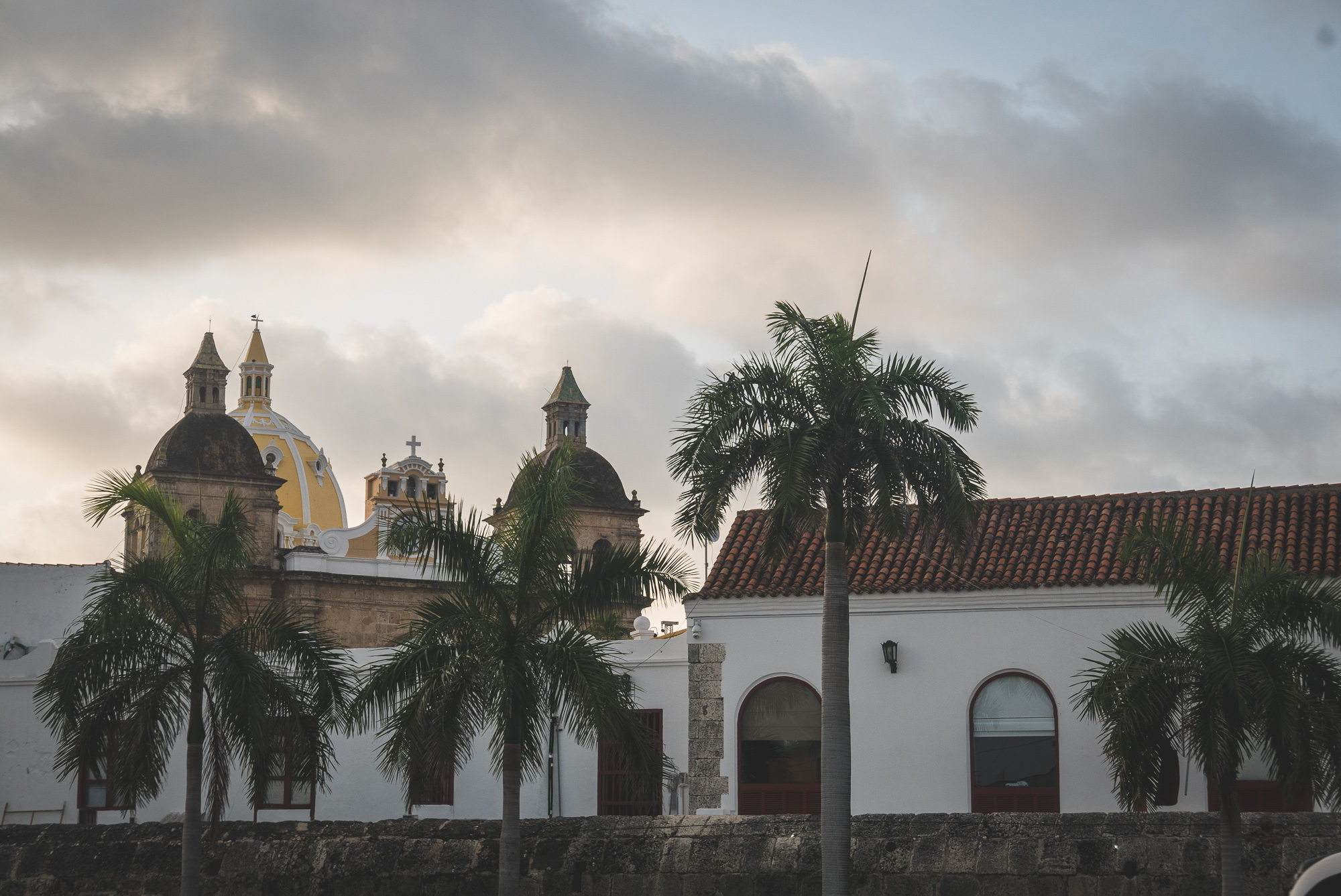


And since we were back in action doing stuff, we did all the stuff tourists do minus beaches. We are done with beaches.
Visiting the Castillo San Felipe de Barajas (on a day when we all melted in the heat) that overlooks the city, taking a free walking tour around the Walled City (free in a sense that you give a tip at the end), and the last day was spent mud-bathing with strangers and getting washed by middle aged Colombian ladies.


And of course on our last night in Cartagena, we went to a salsa club. Not the expensive Café Havana every article mentions but a cheaper, I’d assume more local one, just a couple of blocks away from the hostel.

I did say earlier that we took two salsa classes and became quite good quite quickly. Also it has been two months from those classes with zero practice. Thus our salsa relied mostly on the basic back-and-forth step and it gets boring after couple of songs.. I got lucky as the place was filled with older Colombian men showing off their skills and I got to dance with a gentleman who made me feel like I knew how to dance! He also did a moonwalk-type-of-a-thing but sideways, dressed in fine white shoes and airy white cotton pants, topped up with a vest and Cuban hat.

Little did the gentleman know that just moment ago downstairs I had to ask in the beginning of every song “Is this one salsa?” before I went to practice the same back-and-forth step. Maybe you understand this better if you know that my music teacher laughed out loud in a singing exam at the number of notes I could sing without going off tune (the number is two and I was in good terms with the teacher so laughing was fine). I’m not exactly the musical person of the family and thus I think I’ll be asking the salsa-question a few more times..
If you are still unsure about your next city/beach-destination, choose Cartagena!


Photo diary - Costa Rica
December was a month of rushed through countries, experiencing cold and word expensive again, sliding through jungle in Costa Rica, hunting (not actual hunting...) sloths along the Caribbean coast-line and finally leaving Central America through San Blas paradise islands and arrive in Colombia which I already feel will be one of the best countries we will visit.
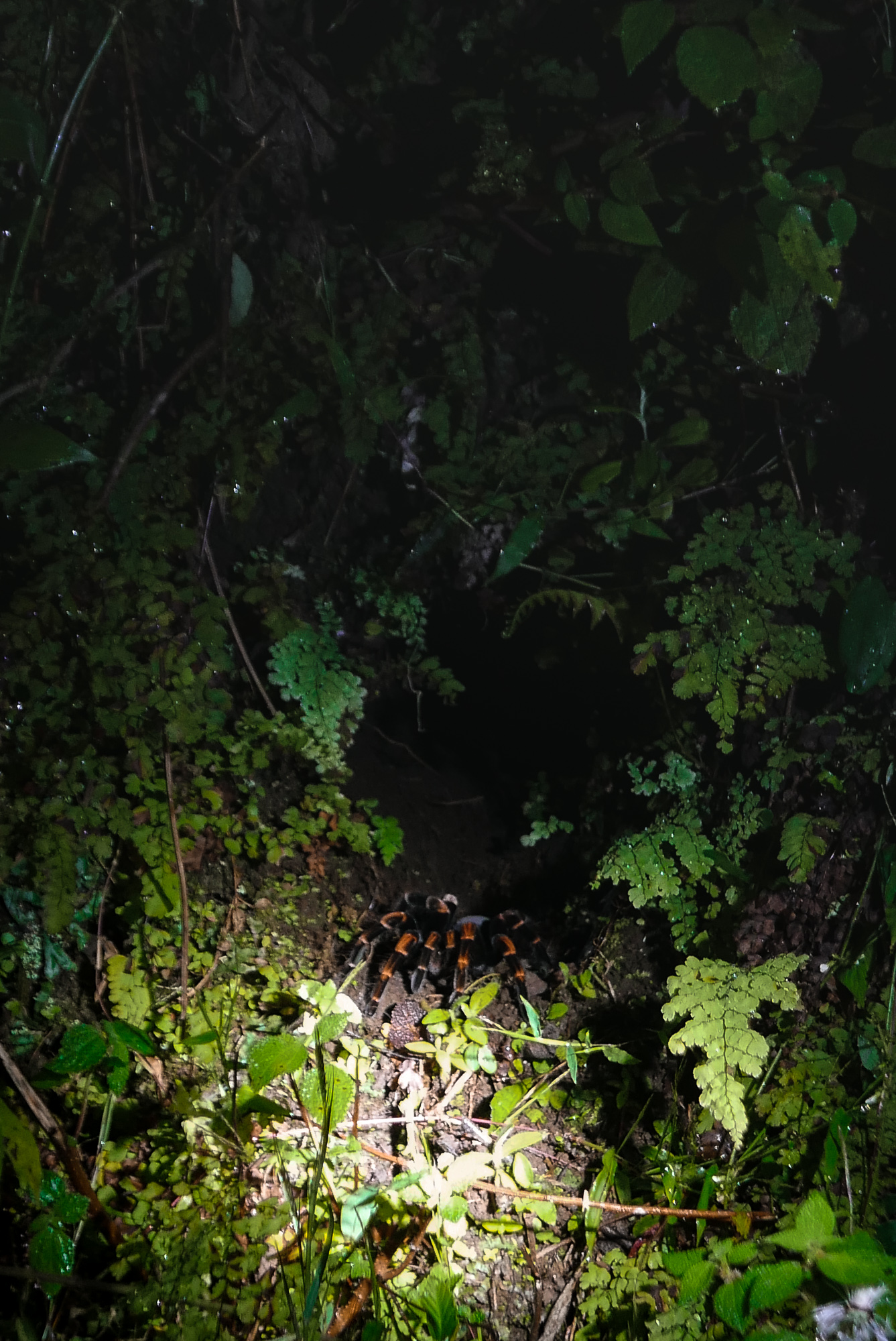
Here are memories from a quick visit in Costa Rica. Monteverde is the place everyone goes to and we are not that keen to be different and followed the crowds. Zip-lining, Tarzan swings, night tours in the jungle, day tours in the jungle bridges and a lot of home-cooked pasta (thanks Nadine for being the sauce-master!) because eating out was just out of the budget. It's called a cloud forest for a reason - you could just watch clouds rolling in and out in minutes. Wake up an you can see hundreds of meters away and ten minutes later the whole town of Santa Elena is covered in clouds.
We also did a quick pit-stop at the Capital San Jose and at this point I was getting a fever.. made the bus rides to Puerto Viejo so much more enjoyable! 4 days at Puerto Viejo were spent inside, sick, but luckily the weather was bad so we did not miss a lot.

Bridge walking in Monteverde, Costa Rica
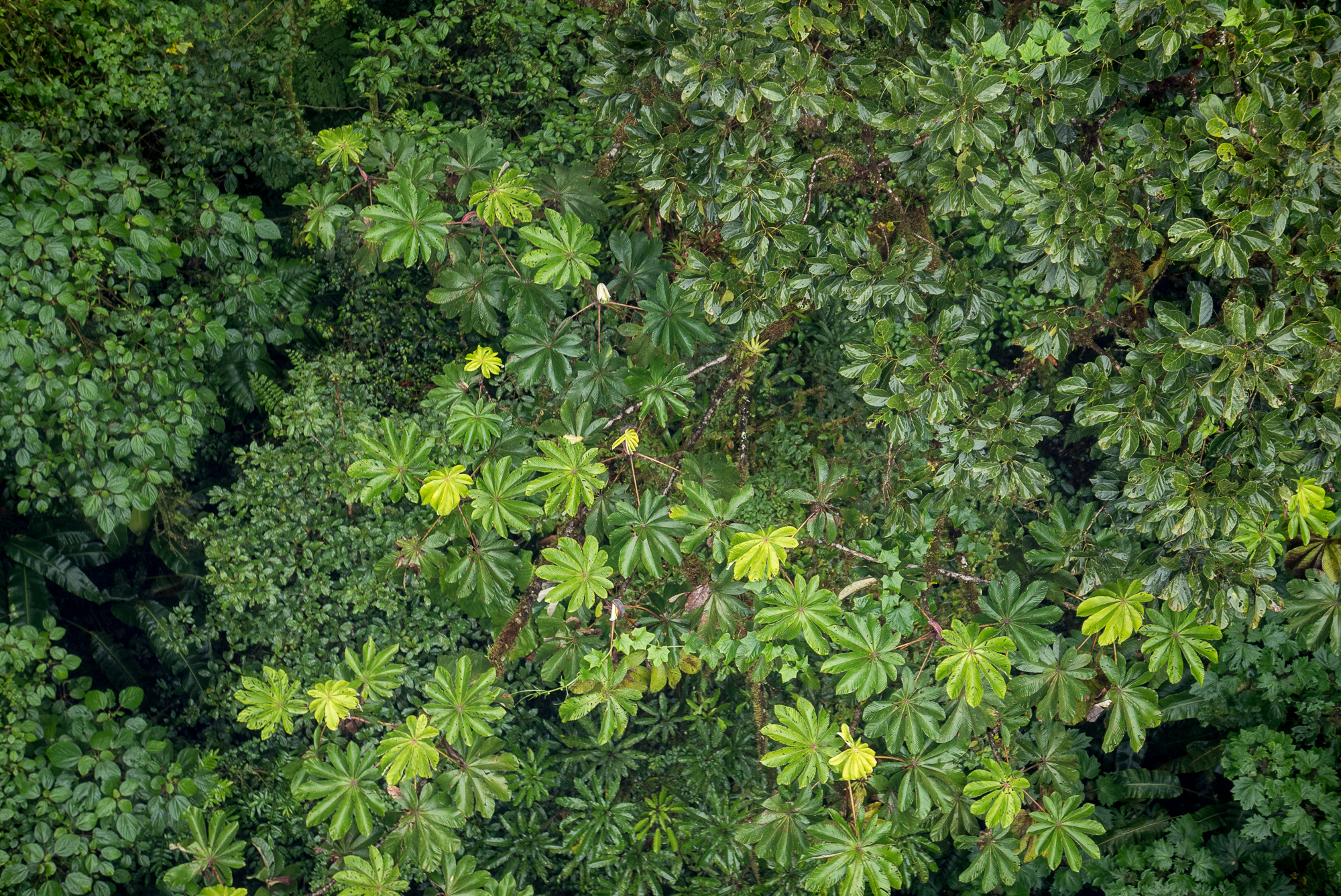
Jungle layers

Monteverde, Costa Rica

And then we have Richie on a bridge

aaand Heini on a bridge (We held out a massive crowd of German tourists taking these "oh I'm so alone" photos. We were not alone.)

Casually walking in the jungle.

Richie and a ficus tree

Happy climber

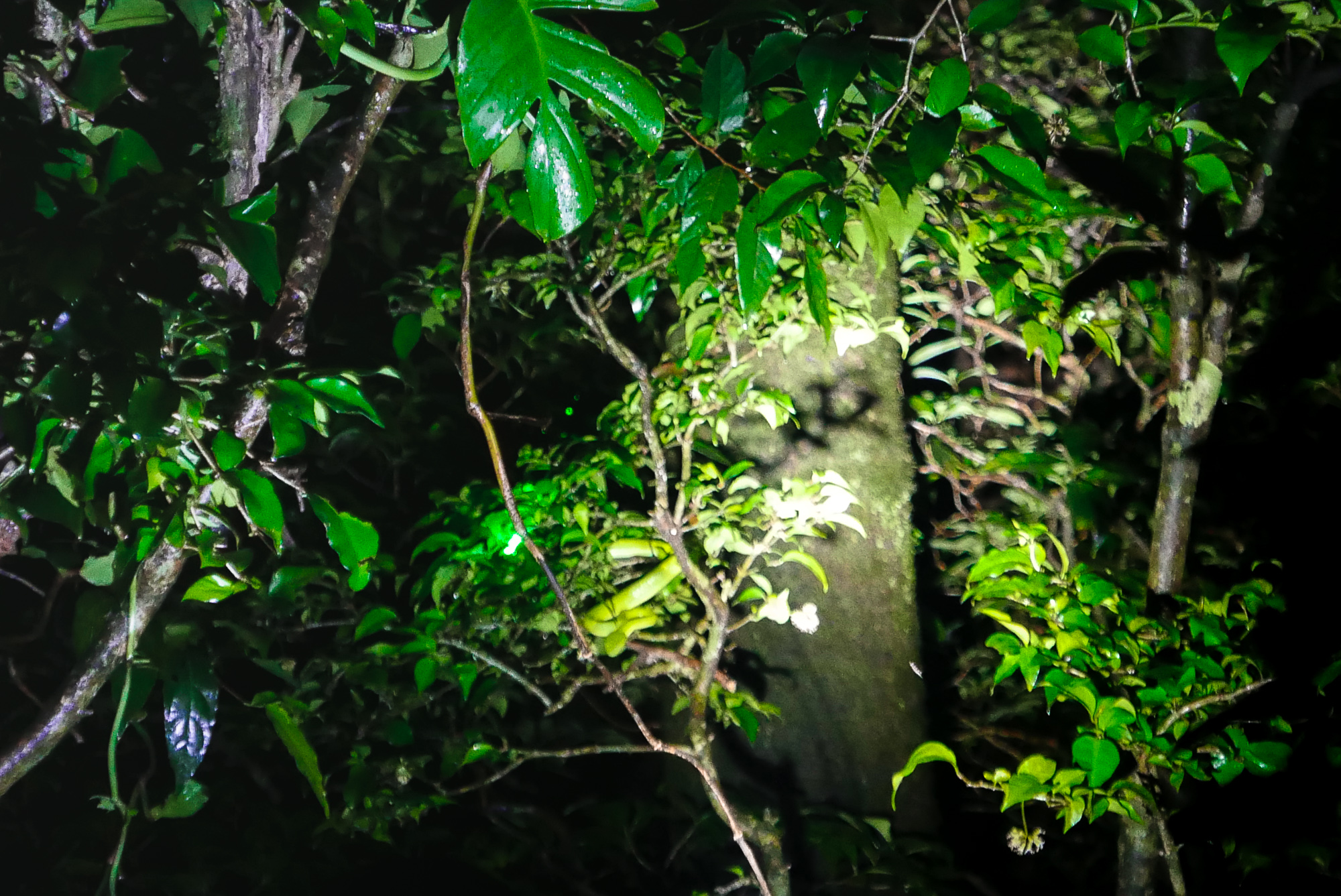
As we just went through the second season of Stranger Things, this really reminded me of the Upside Down..


Hiking essentials: Kindle and Valium
Hello, it’s us, the hiking couple again. Only that from know we should come up with new attributes to define us because we are done with hiking. For a while. Or at least hiking volcanoes. “Temples in Asia”- limit has been reached and we need to look for new ways to spend our days.
The laziness (or total lack of) planning our steps further than next day has led to some inefficiencies during our travels. Now this meant four nights in León. León is a nice enough place but after you have toured all the cathedrals, done tens of takes on the popular blogger-pose known as “look what I dropped” and ate all the bagels at El Desayunazo- restaurant there is not that much to do. In order to kill a Sunday we opted in getting a hungover from Saturday’s drinking and watched way too many Game of Thrones-episodes.


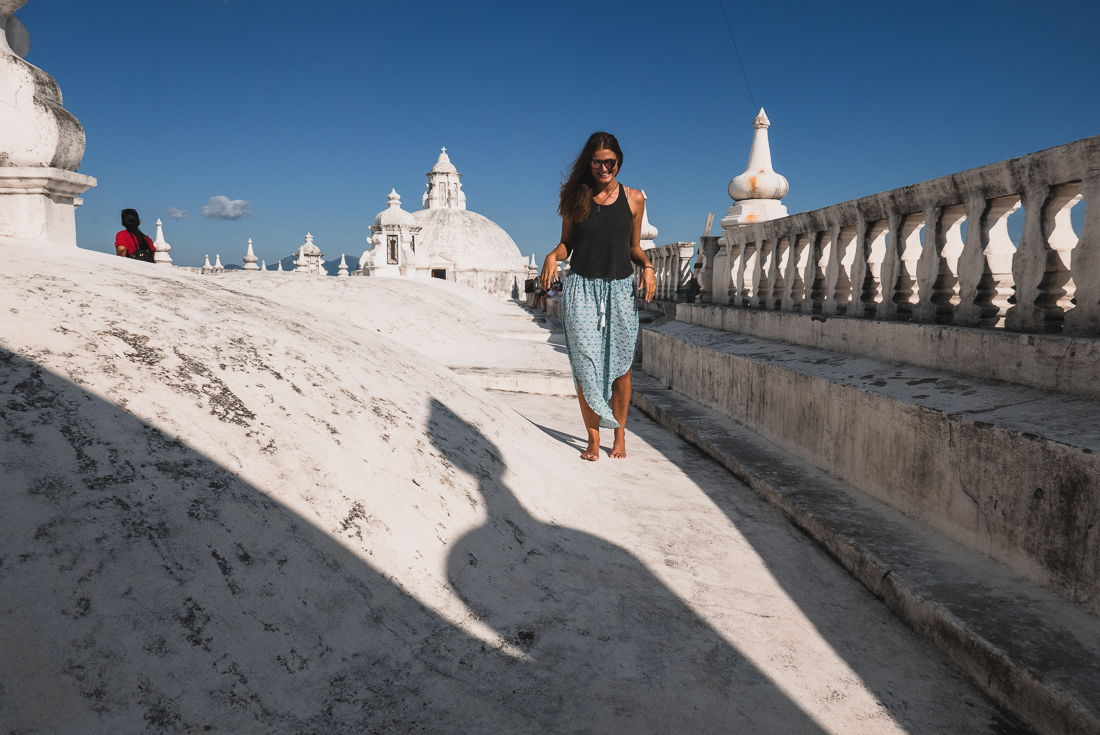


Most people come to León for the volcano boarding adrenaline experience. Our minds still thought also that we love hiking and thus we signed up for an overnight trek to El Hoyo, “The Hole” which included the volcano boarding, climbing up another volcano and camping there and swimming in a crater lake. Sounds like a piece of cake after all the kilometers and climbing we have done so far, let’s go!
Volcano boarding was something I almost did not want to do with my injured shoulder. I’d rather not roll down a rocky volcano slope with a dislocated shoulder, it’s just not something I would call fun. But after talking to a lot of people it became obvious that you can come down really, really, really slow. If you want to (and sometimes even if you didn’t).
And now I can say it’s not scary or dangerous at all! Unless you clock 70km/h. When you get to the bottom of the slope, you just want to go again, and faster.
When all the other groups headed back to León to start drinking, we picked up our backbags carrying 10 litres of water and food (which included a massive pumpkin, damn that thing must have weighed tons!) and set off for our second volcano climb. Hiking in Nicaragua is quite different to Guatemala in one aspect – heat. When it’s at least 30 degrees it’s not that fun to climb up carrying all your water for the next days. Luckily I was the one carrying Day 1 lunch so I got rid of couple of kilos right away!


Best part about this hike was our camping location. Beautiful area with beautiful views. If you don’t mind couple of horses and cows who might come in to your tent or even being trampled by cows (as had happened to one British teens group earlier) it’s a perfect setting.


Our spot for the night

Sunrise at the top

Company at the top
Since we are already somewhat experienced trekkers and have accumulated some equipment in terms of boots, pants and poles, it’s time to move on to some expert recommendations on what to bring with you on a hike. For us the first tips are a Kindle and Valium if your body does not think waking up at 6am and hiking all day is enough reasons to go to sleep. Not in every man’s backpack you say? Well, there’s a lot of free time during these hikes, especially if you are fast and reach the campsites early. Instead of being social and getting to know your fellow hikers, a Kindle will always offer something to do. And help you (me) to reach your reading goal for the year. And where wouldn’t you bring Valium really? Just joking, maybe.

Dinner preparations
The next day we woke up to some delighting sounds of nature – 18-year-old British girls screaming “wake up, wake up” at 4am – and watched the sunrise over the Lake Xolotlán.


Not bad
Descent and walk to the crater lake for a swim wasn’t as easy as I thought and running into the lake was a welcomed break after 3 sweaty hours in the jungle and sun.

On our way down, lake waiting for us

Finally here!
In summary, this was a nice hike but nothing I would call a “must-do” and hiking in the heat is just not something I like very much. We have packed our hiking gear to the bottom or our bags and doubt it’ll be taken out in a while. Time to do what I do best which is:
A) Reading at the beach
B) Reading in a hammock
C) Reading at the pool side
D) Checking our budget (we are under budget, yay!)

Hiking saga continues
The hikey people are back! We were almost lost roaming empty Western Australia beaches and flat-bottomed gorges where hiking boots, not to mention hiking pants, became obsolete and turned into space-wasting items I did not wish to carry anymore.
After a devastating realisation (panting during salsa classes) of how out of shape we truly were the hiking adventures started to scare me. What if climbing Acatenango is a repeat try from 8 years ago in Bali where we set out to climb Gunung Agung during the rainy season and I was not exactly fit for it after weeks of partying in Kuta? Me and my friends still refer to this adventure with disgust and resentment because after climbing three hours in pitch black dark, heavy rain, holding onto a torch while trying to climb vertical rocks we had to turn back. Because it was dangerous. Because “we don’t really recommend doing this during the rainy season” (after they took our money). Screw you Agung.
Luckily Acatenango could not have been more different. Good paths, sunny weather and professional hiking gear got us to the base camp in about 4 hours. Steep climb and definitely not an easy one, not sure if the Bali-me would have made it so effortlessly.


Approaching our base camp
The only thing left to do at the base camp is to look at the Volcano Fuego and take photos. Sometimes I wish I’d have more patience to figure things out well before I have an actual need for it and this time it was my precious camera. I sat on our hostel googling “how to take volcano photos” and a staff member was happy to show me couple of things. And only this way, 7 months after buying the camera, did I found out that my camera actually has shutter speeds up to 60 seconds (I thought 1 second was the longest..). Now I mourn for all the amazing starry sky photos I could have taken in Western Australia!


So, considering I just learned this and never actually experimented with longer exposure times I’d say couple of these volcano photos turned up quite nicely. Of course I missed at least five massive eruptions that would have made even greater photos but then again I heard some people going up there multiple times and before getting the money-shot. I don’t think I have the patience to become an actual photographer, too much waiting around with your thumb on the launcher. Although this part got much comfier when I discovered I can actually use my phone to take the pics remotely. No more sitting on the ground finger placed on the shutter! Downside was that campfire chats distracted me from the volcano and thus I missed many of the opportunities Fuego offered us that night.


The moneyshot!
Second part of the Acatenango-trip is to wake up around 3.30am to hike to the top (3,973 m) to watch the sunrise. Climbing volcanic sand should be familiar to us after Mt. Doom excursion but doing it in the dark without snow adds some excitement to it.

We were able to see Lake Atitlan from the top (for 2 seconds before the clouds rolled in)
When you finally make it to the top, you freeze your balls of. I brought all the warm clothes I have with me and got a proper jacket from the hostel and I was still struggling at the top. Wind makes -2 C feel like – 15 and taking photos is another type of challenge when you don’t want to take your gloves off. The views are definitely worth all of the suffering and I am just glad we got to see so much as some groups only see clouds or even worse, they get rained on for two full days in addition to not seeing anything..

Walking cinnamon bun at the top wearing everything she owns

Let's talk about ruins
Enough about food poisonings for now (even though we have suffered a couple more), time to focus on serious stuff – ruins. Pyramids, temples, houses, ancient privy systems and did Mayans really disappear into space?
Each continent or country offers one or two typical activities for travelers and after a while you feel like you have seen them all. "Them" being:
- Waterfalls (South-East Asia)
- Temples (South-East Asia)
- Gorges (Western Australia)
- Ruins (Mexico, Central America)
But to my surprise, I got more excited the more ruins we saw and could have continued forever. I even considered booking a 6 day trek through the jungle to see the biggest Mayan city, El Mirador, that is mostly still uncovered. It’s not a surprise though that my travel companion has had enough ruins so I’m not sure if I could’ve stomached a cranky Irishman for six days in addition to all the mosquitos and not showering. One day, I’ll be back for El Mirador..
After weeks have passed I do have a bit of trouble telling all the ruins apart and there’s really not that much to tell about them that Wikipedia can’t help with so I will save you from millions of photos and explanations similar to the very informative signs at the ruins (“Here is a building. It might have been a temple or a house or a palace. It faces west and it has five stories.”) We stopped reading the signs after a while.
Here is a quick summary from best to “worst” experience to help you choose if you need to!
1. Tikal, Guatemala. Mayan.
2. Xunantunich , San Ignacio, Belize. Mayan.
3. Palenque, Mexico. Mayan.
4. Tulum, Mexico. Mayan.
5. Teotihuacan, Mexico. Not known.
6. Chichen Itza, Mexico. Mayan.
1. Tikal, Guatemala.
Best. Ruins. Ever. Massive area in the jungle, a lot of it is still covered in hills and trees. Has the tallest pyramid (70m) after El Mirador. And a Star Wars scene was filmed from the top of that pyramid! The experience is so much better than any other ruin because there are no souvenir sellers inside the area. The guided tour was also excellent, it lasted almost 4 hours, the guide knew everything from animals and nature to the actual history of Mayans and Tikal. Also, we got to see toucans!
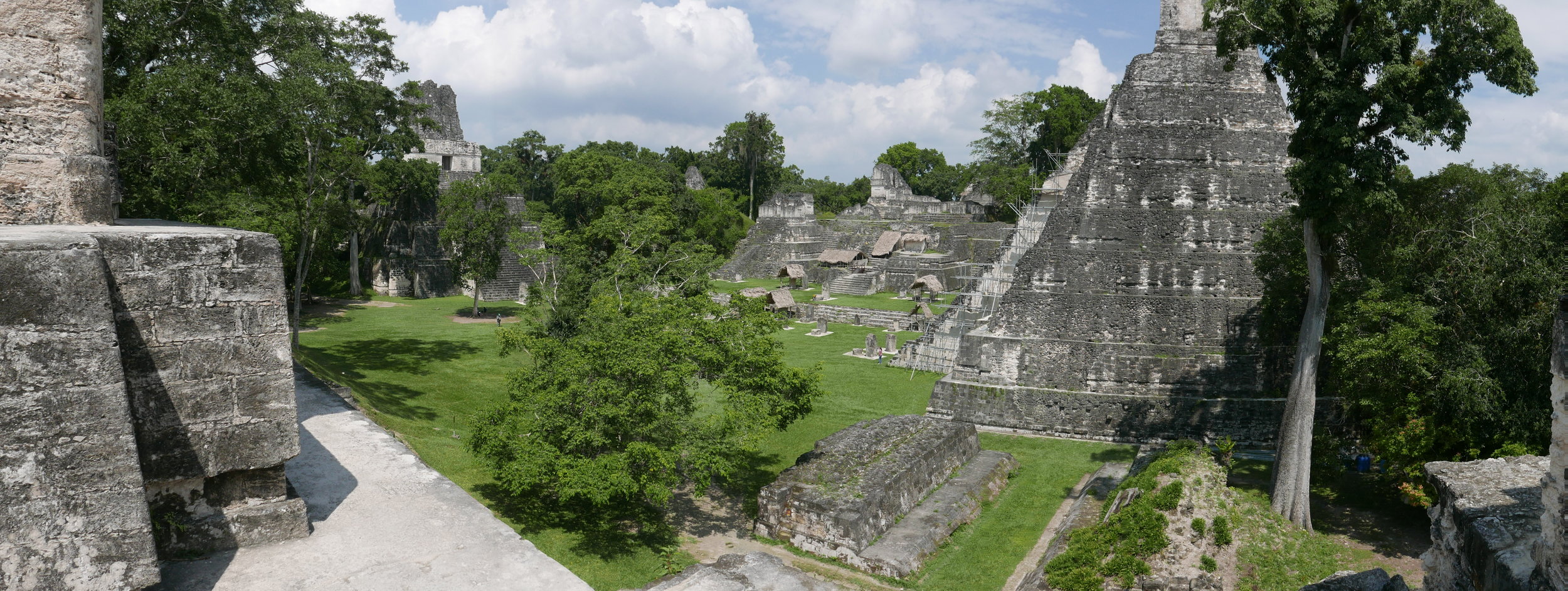
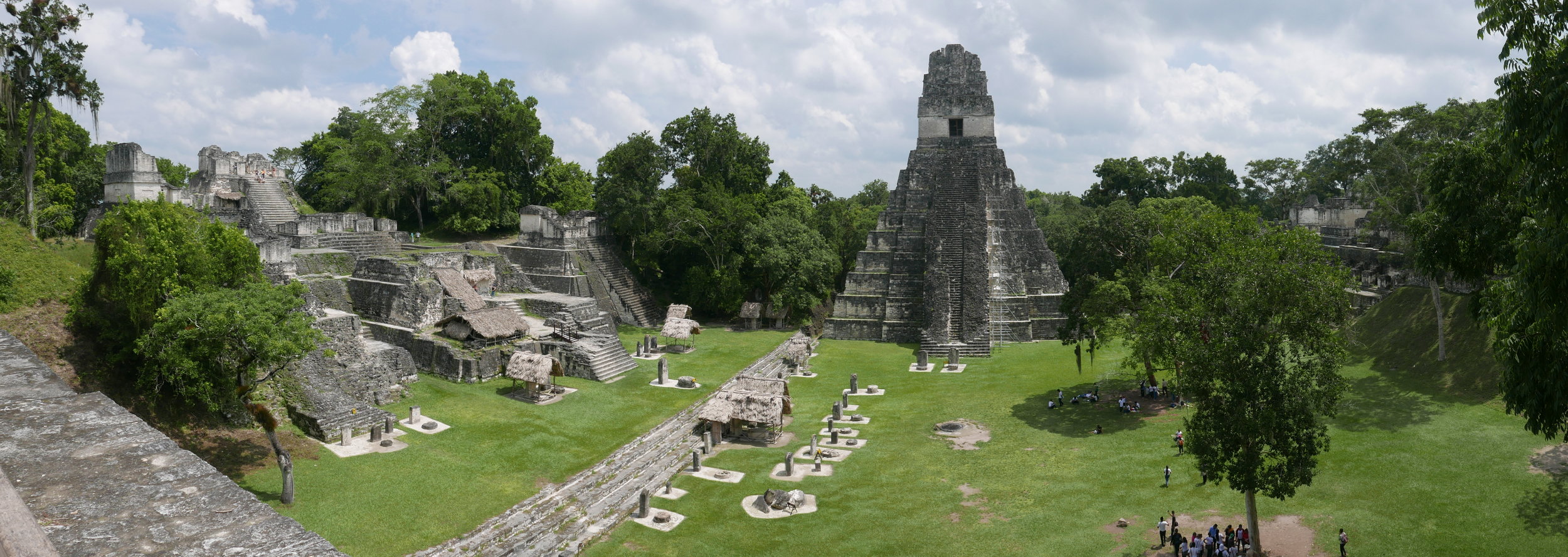
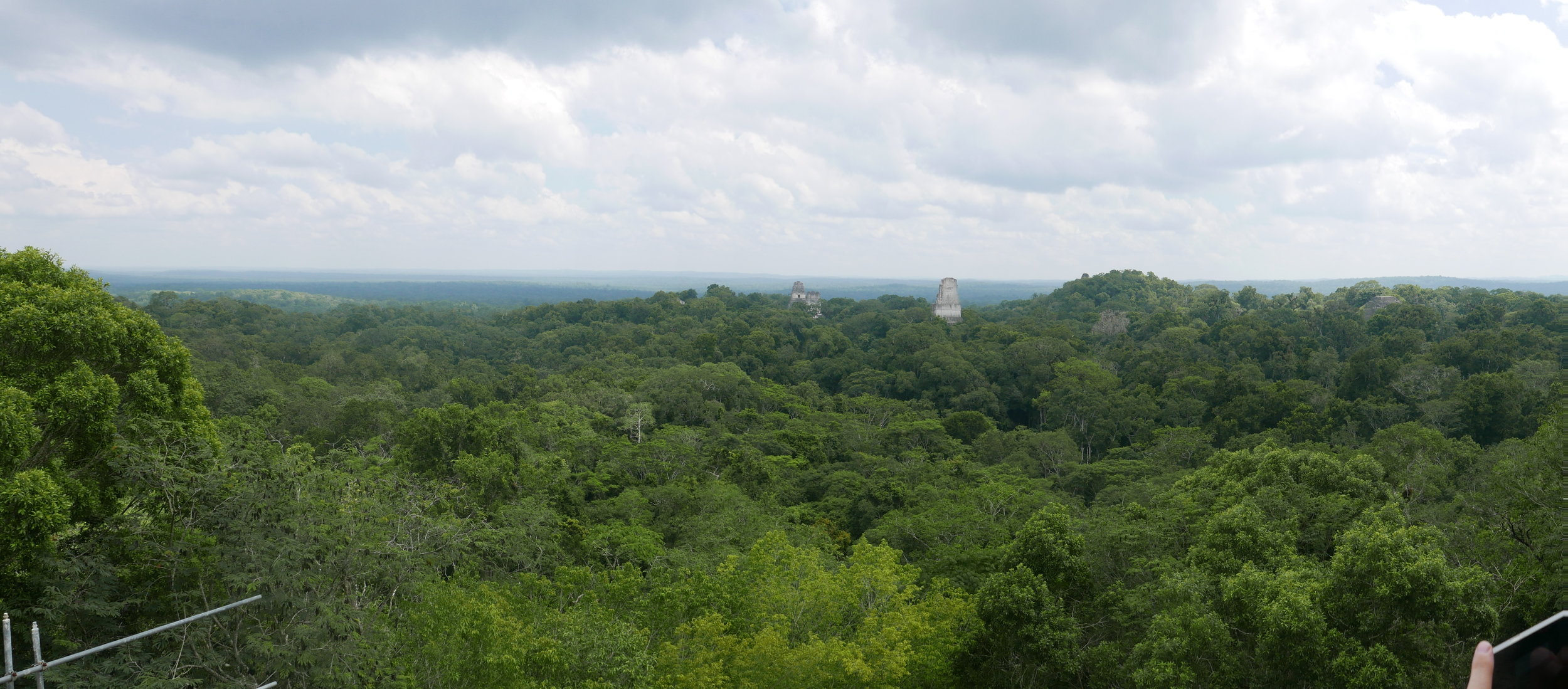
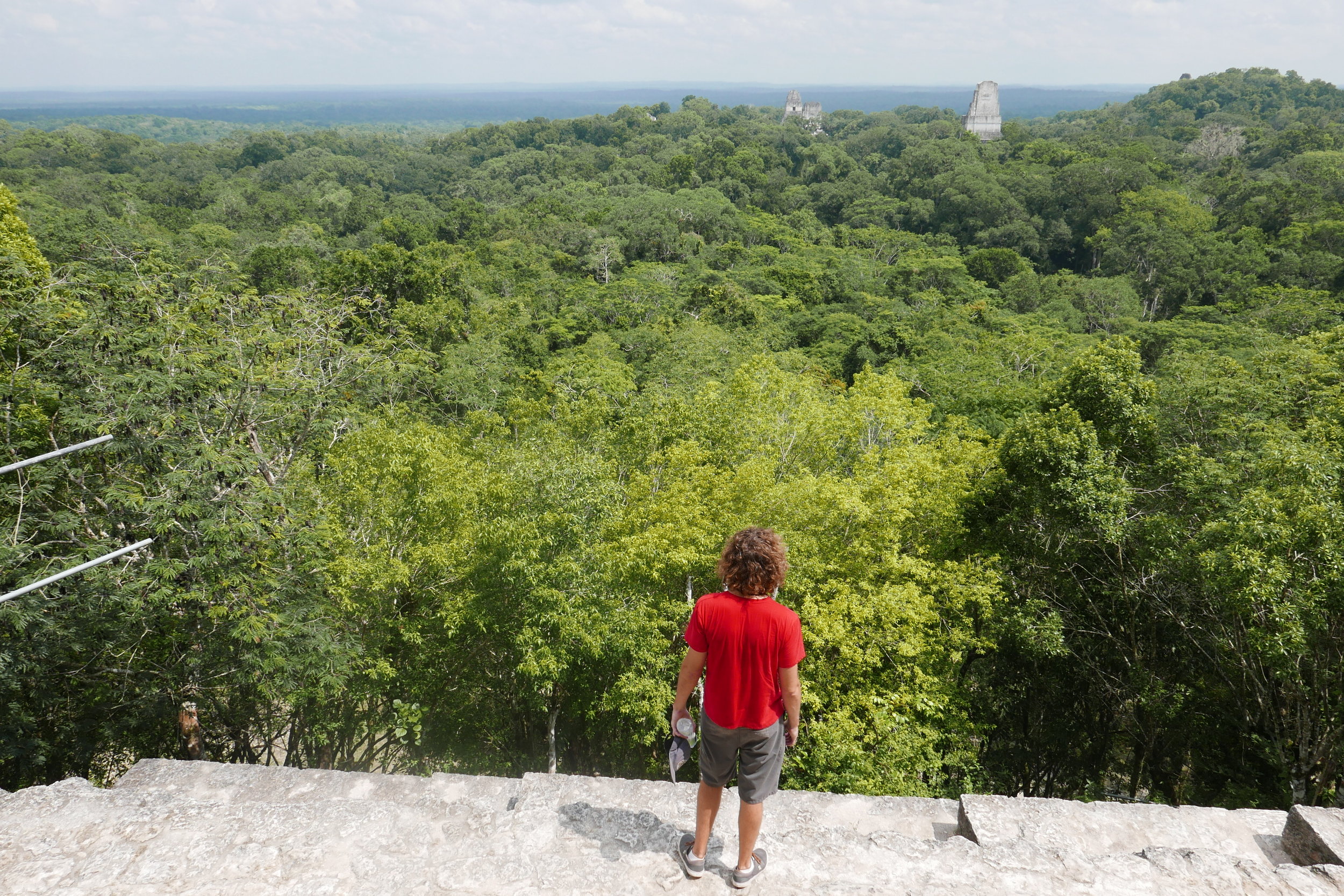
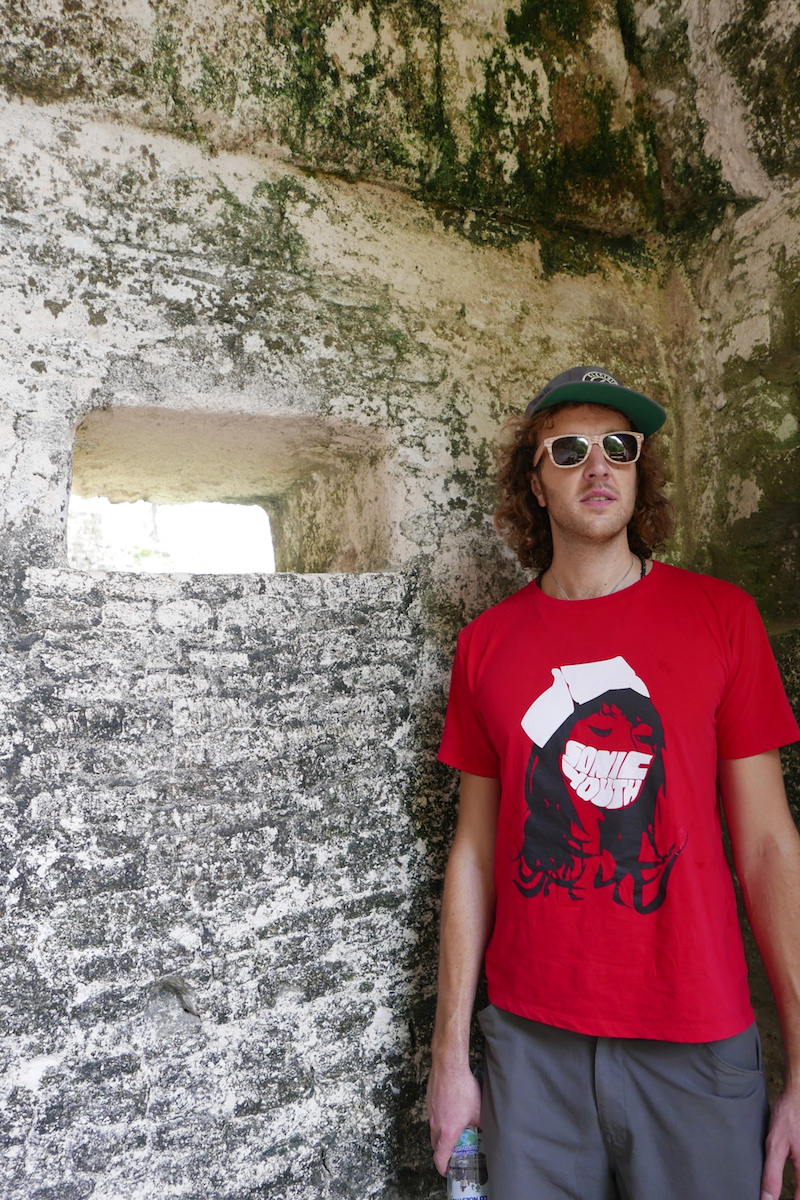
The ruler here was unusually tall -almost 2 meters. Thus for once only Richie could see out the windows from the master bedroom!
Cost: 34 USD including transportation, entrance and a guide
2. Xunantunich , San Ignacio, Belize.
This was not on our “to-do” list but as we were in San Ignacio and the owner of our hostel was the best ever and offered a drive to these ruins, why not see them?
This place is also very much in the jungle and a lot of is not restored yet. There was almost no-one there and we got to explore the pyramids on our own. Climbing the highest pyramid was a bit nerve-wrecking as it was pouring down rain which made all the rocks very slippery.
Cost: 6 USD including entrance, bus back to town
3. Palenque, Mexico.
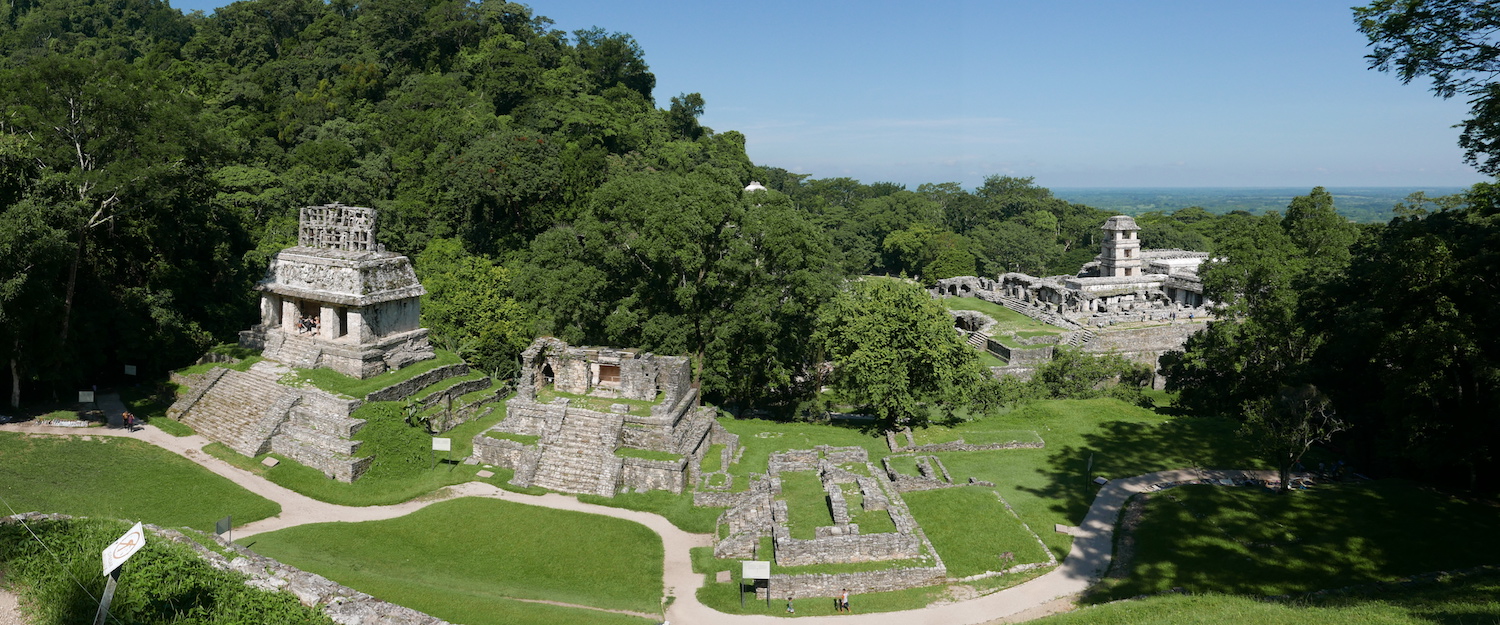
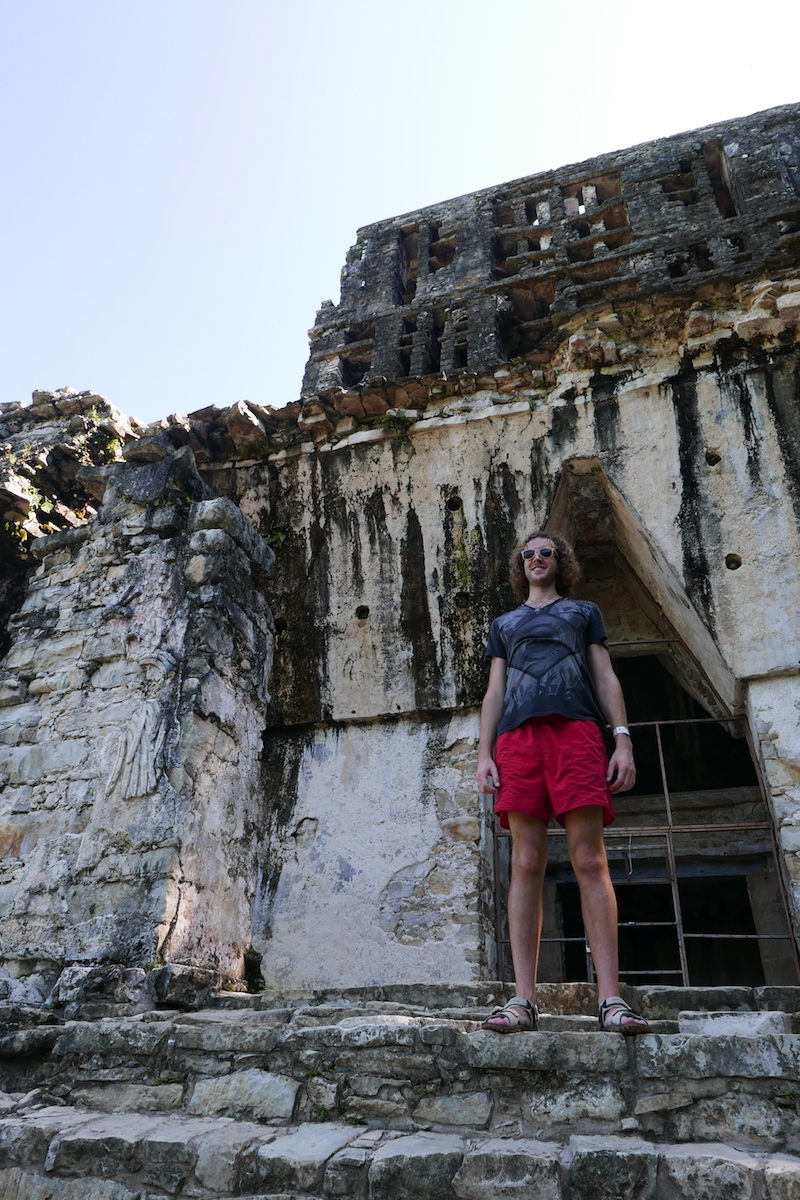
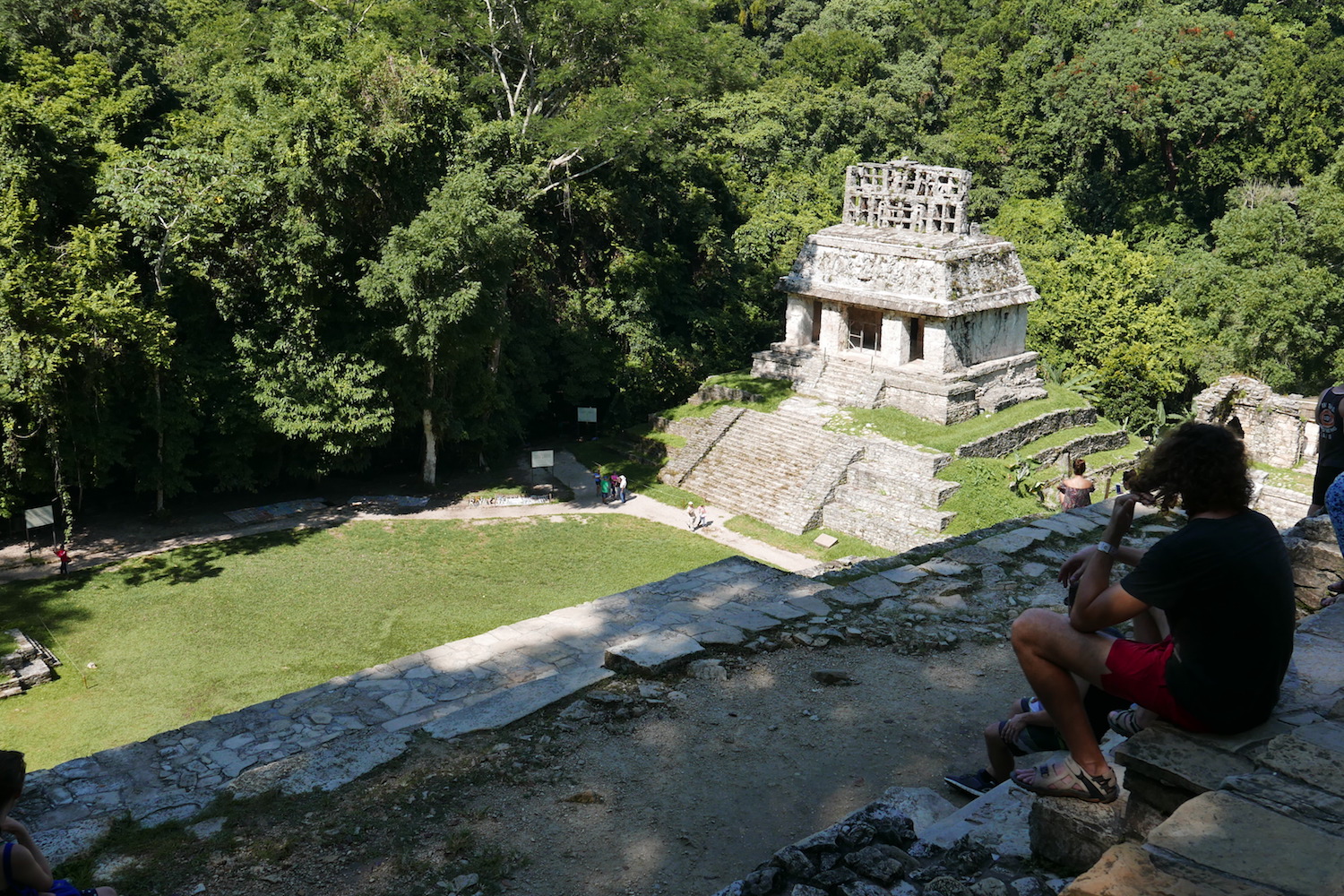
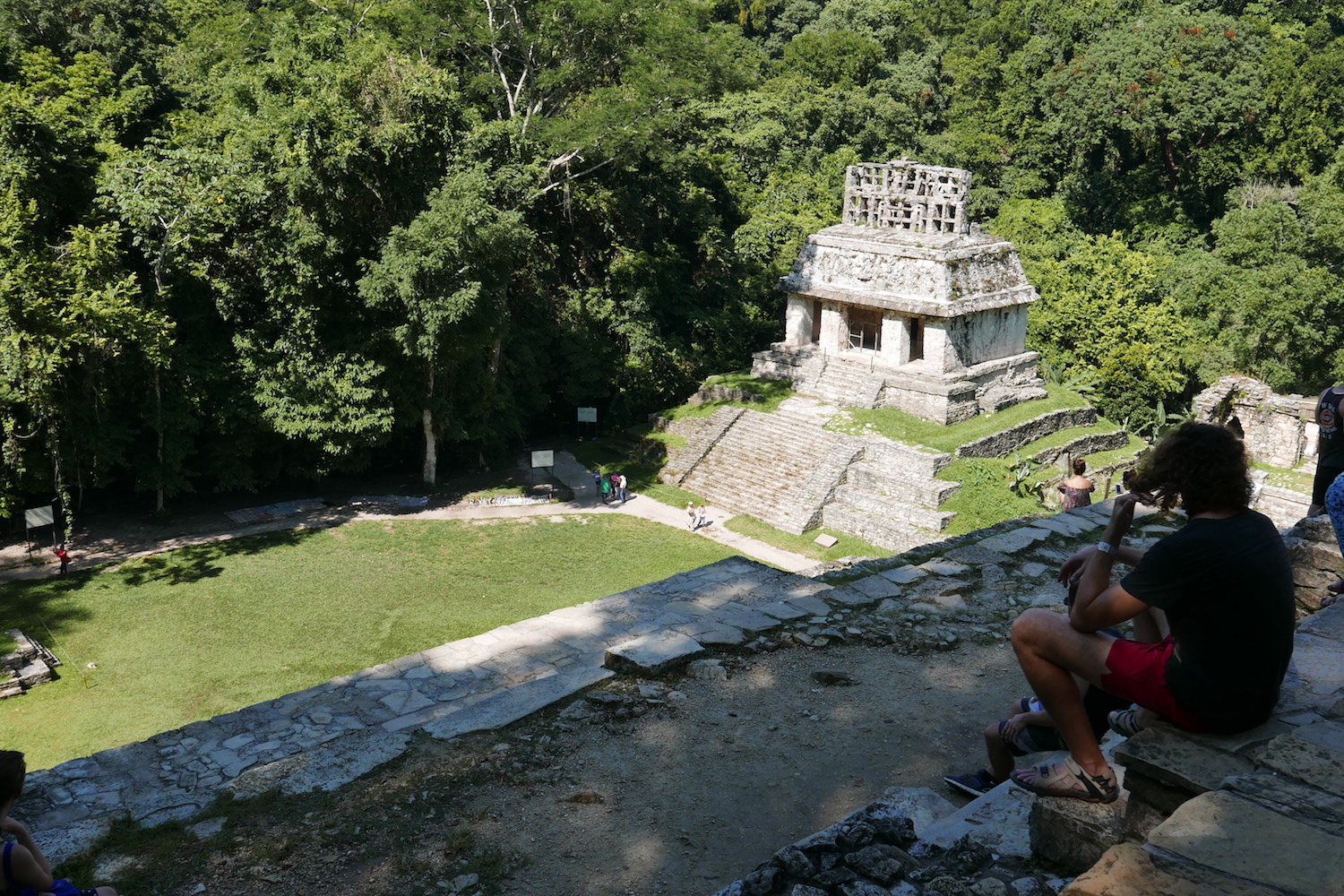
Same story as with the previous ones, it’s good because it’s in the middle of the jungle. You can climb some of the buildings. Our tour guide was not the greatest through and there are souvenir sellers here inside the area.
Also if you have ever heard of stories about Mayans and aliens or Mayan disappearing to space, this is one of the places where “evidence” of this was found. And by evidence, I mean that some self-trained pseudoscientist Erich Anton Paul von Däniken told everyone that a decoration of the Mayan ruler K'inich Janaab Pakal, found in his tomb in Palenque, depicts him riding a spaceship.

See, it's clearly a spaceship!
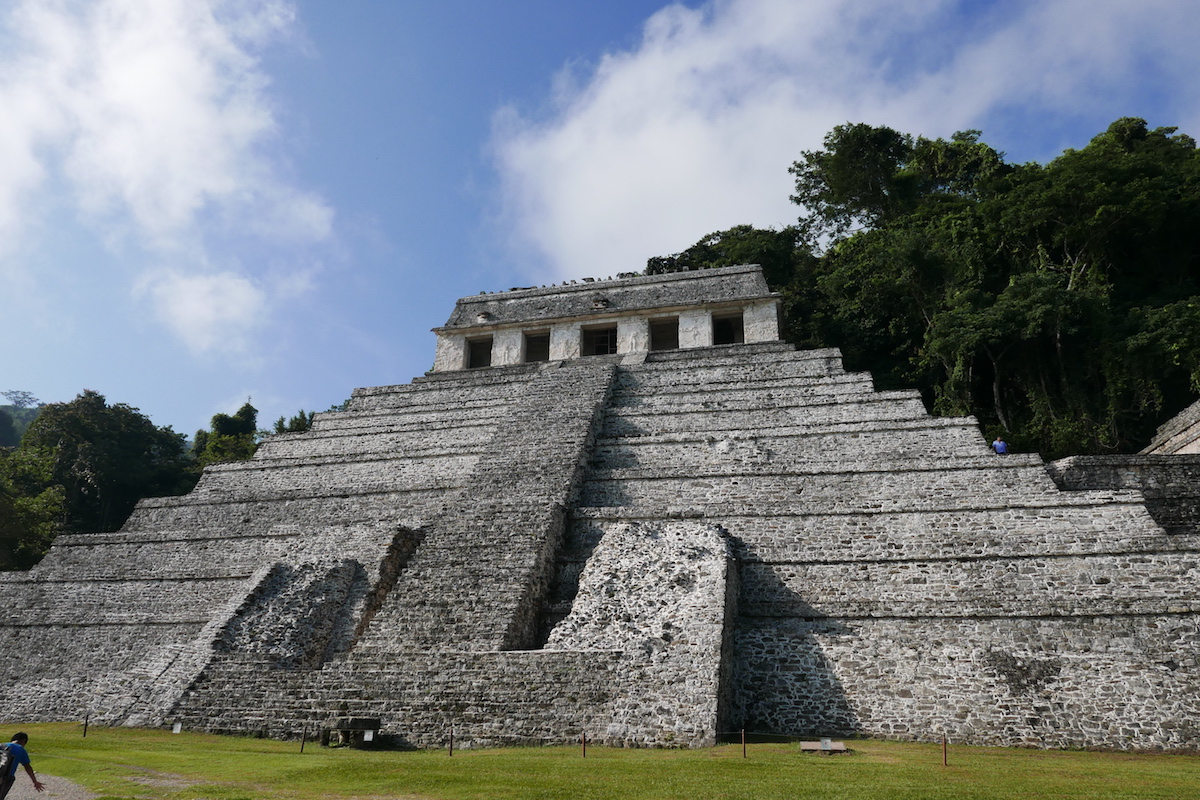
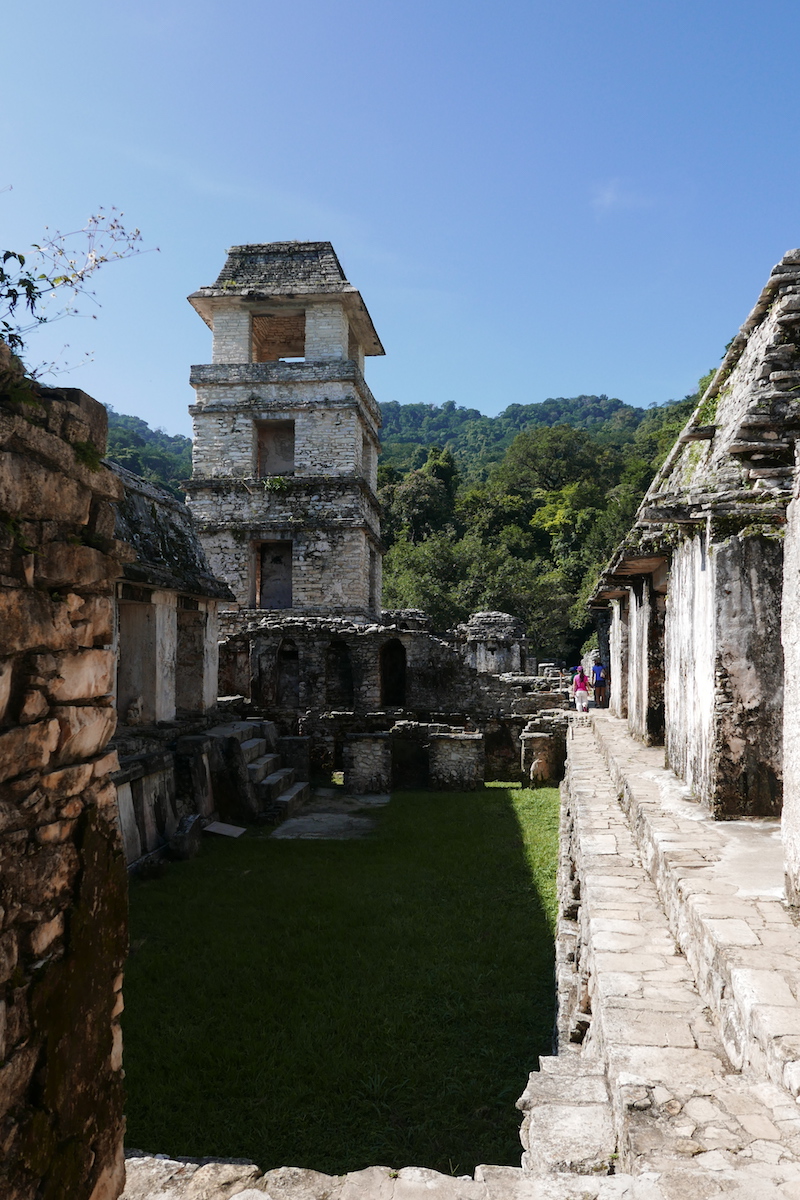
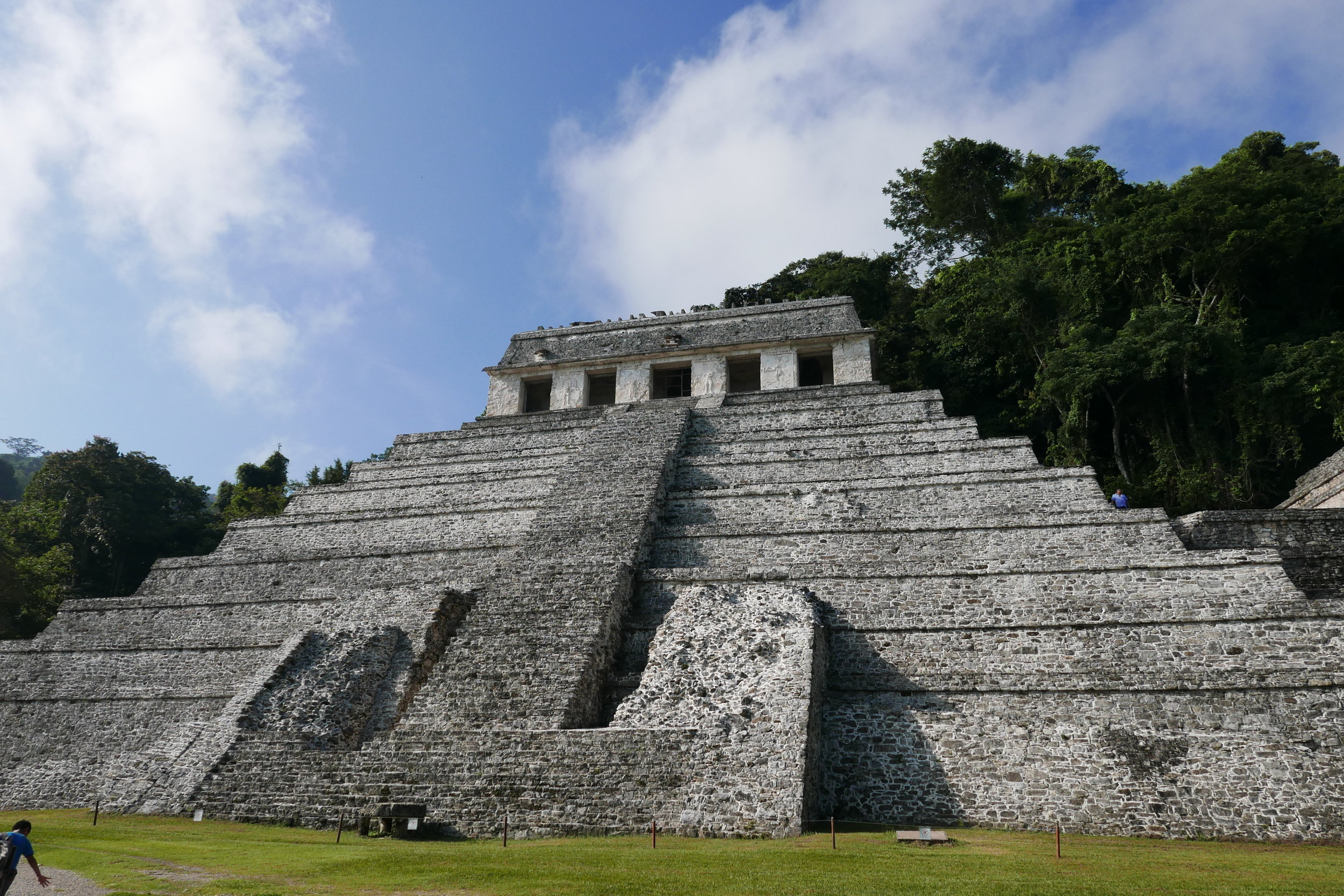
Cost: 4.40 USD entrance only, we did it as a part of a wider tour and added a guide for 10.50 USD each.
4. Tulum, Mexico.
The ruins here are not that impressive, it’s more about the setting next to the beach. I do remember studying Mayan culture a lot during upper secondary school but I can’t remember us learning about the culture being a naval one.
There are no souvenir sellers here inside the area either which is a bonus but then a huge minus is hordes of American tourists everywhere. Go very early or very late to avoid this (we went very late).

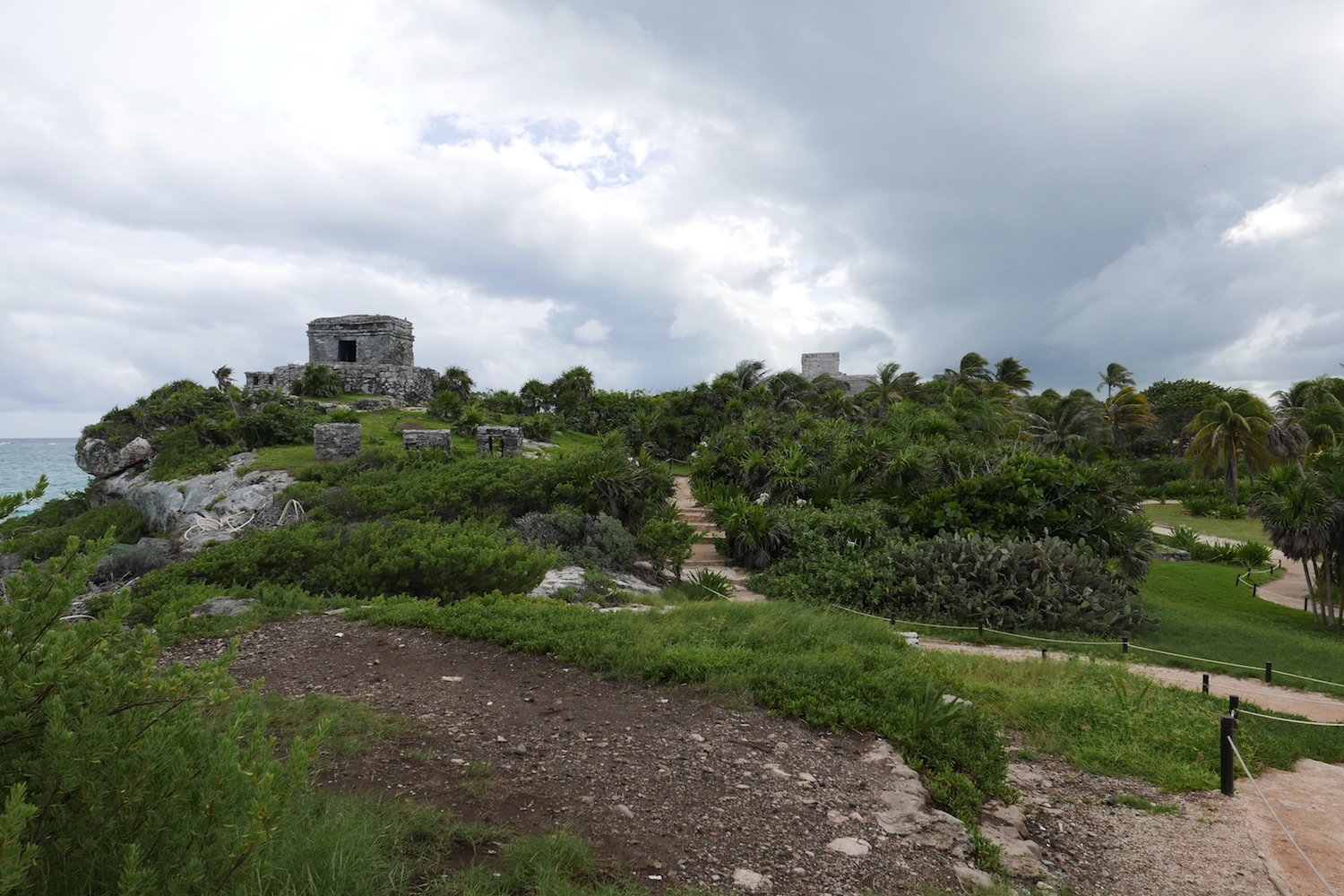
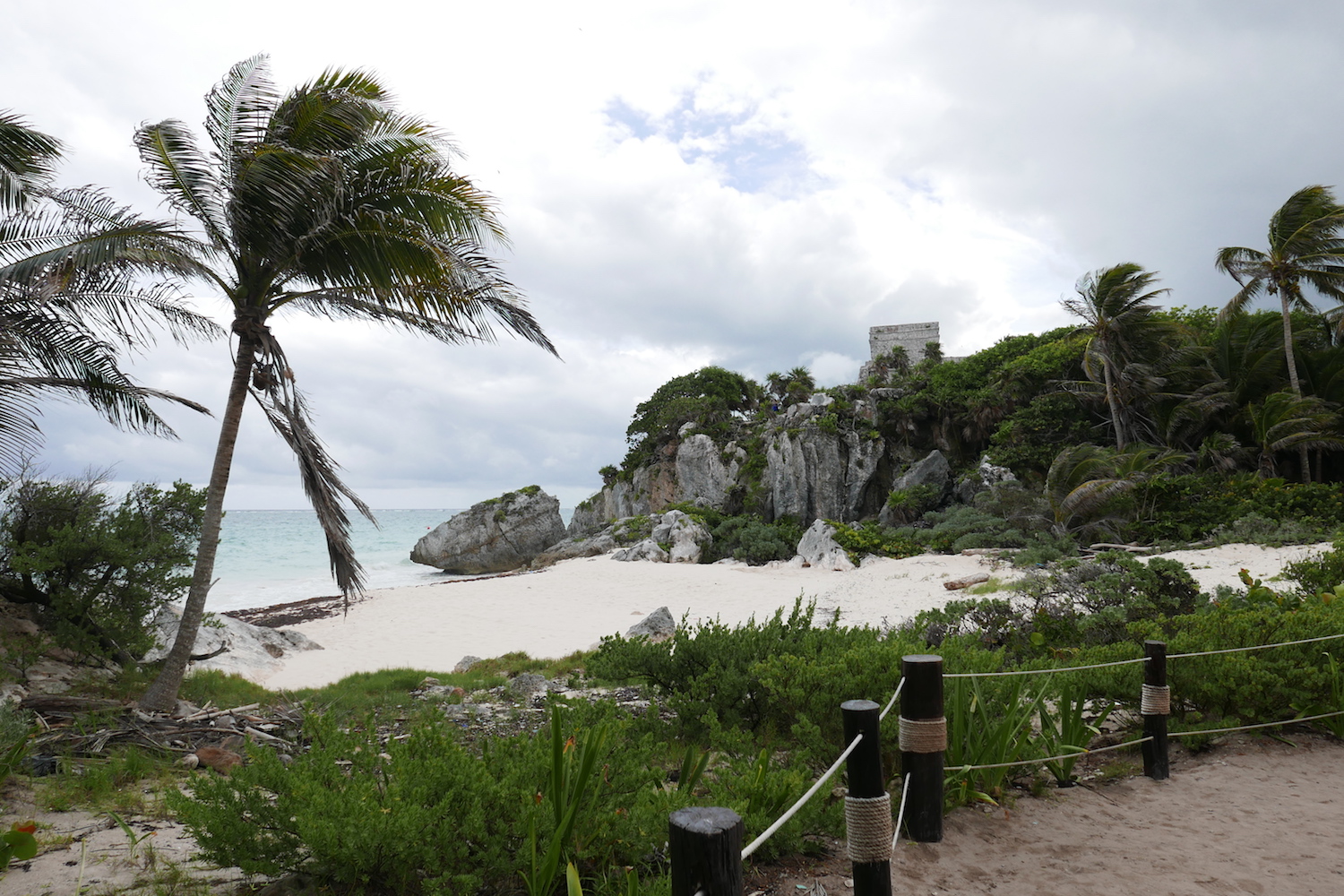
Cost: 3.6 USD entrance only
5. Teotihuacan, Mexico.
This was the only non-Mayan place we visited. And to my surprise it’s still not known which culture built Teotihuacan.
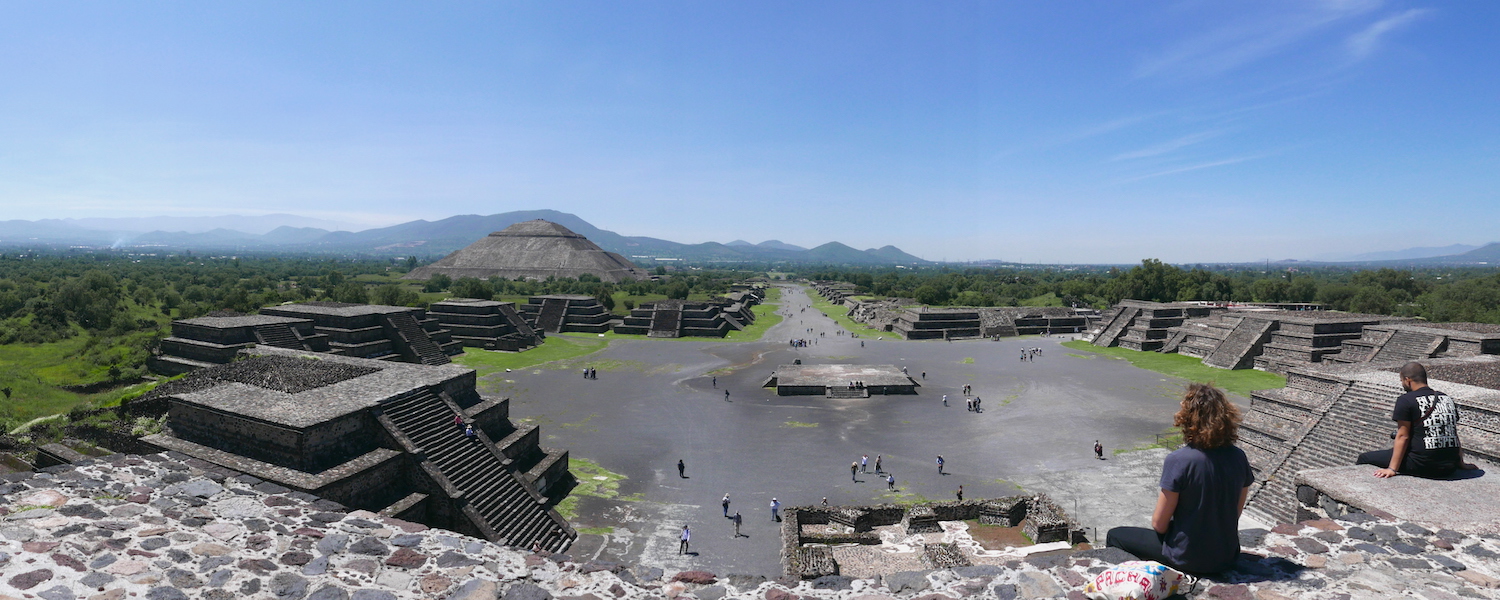

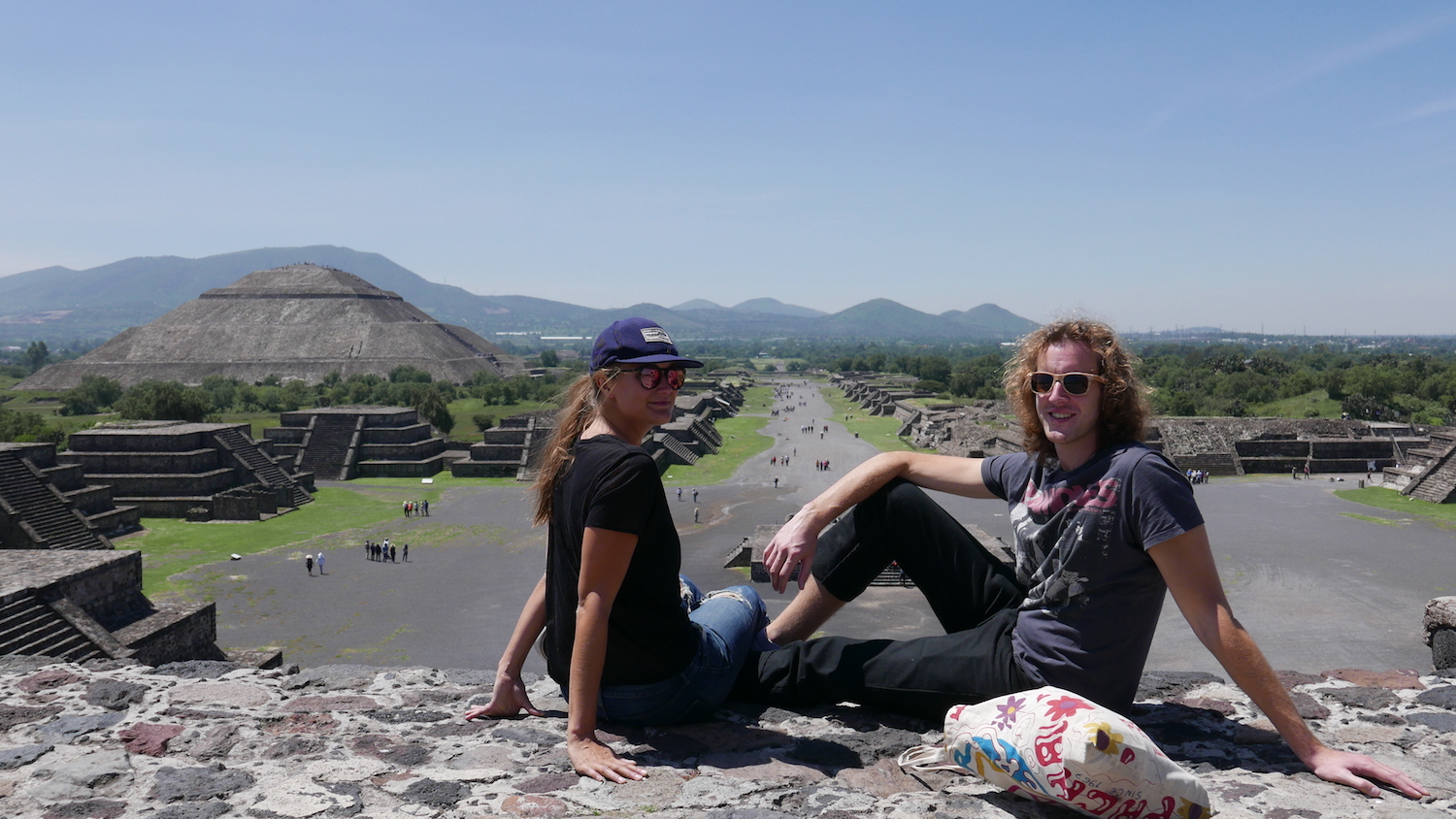
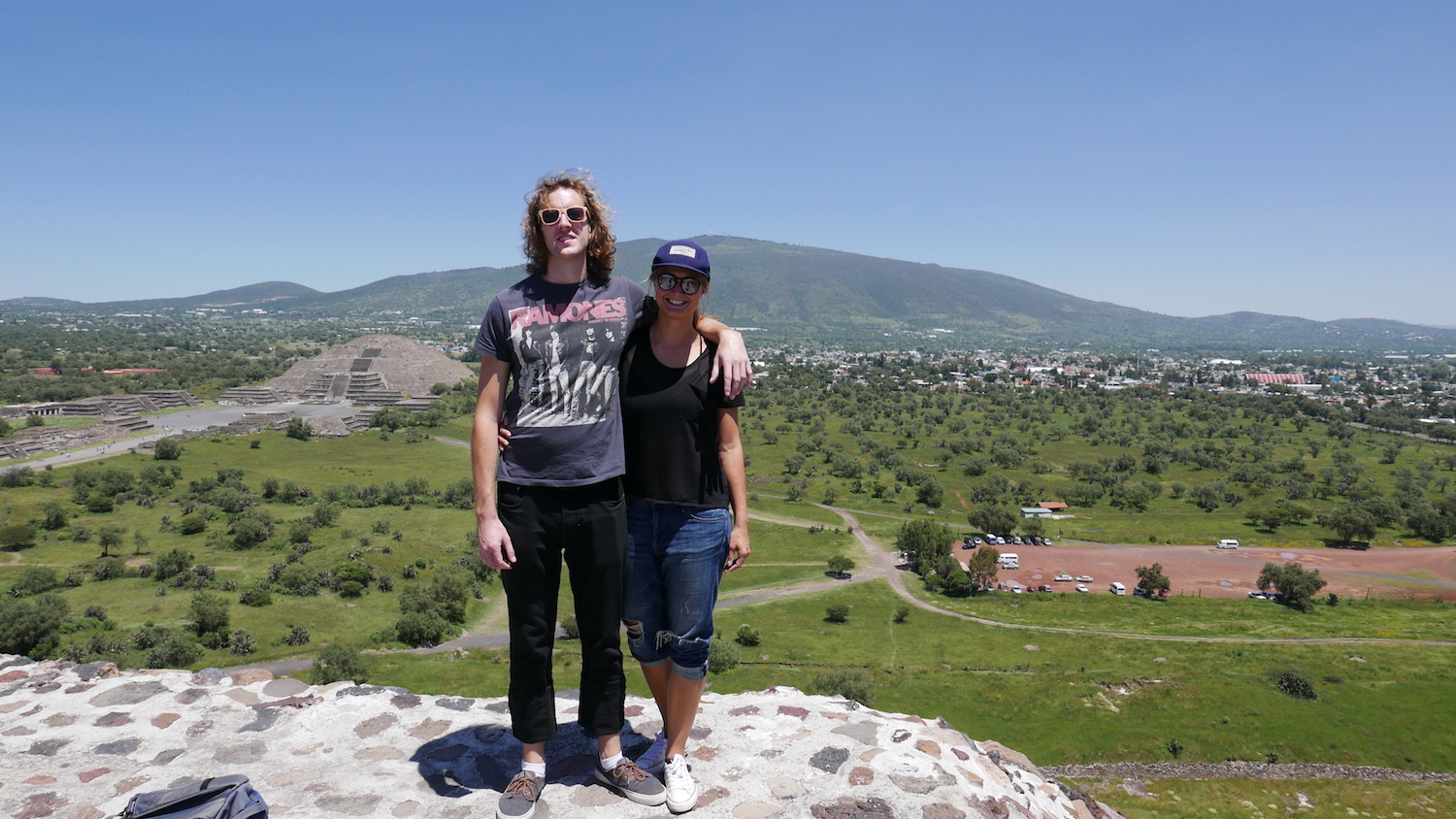
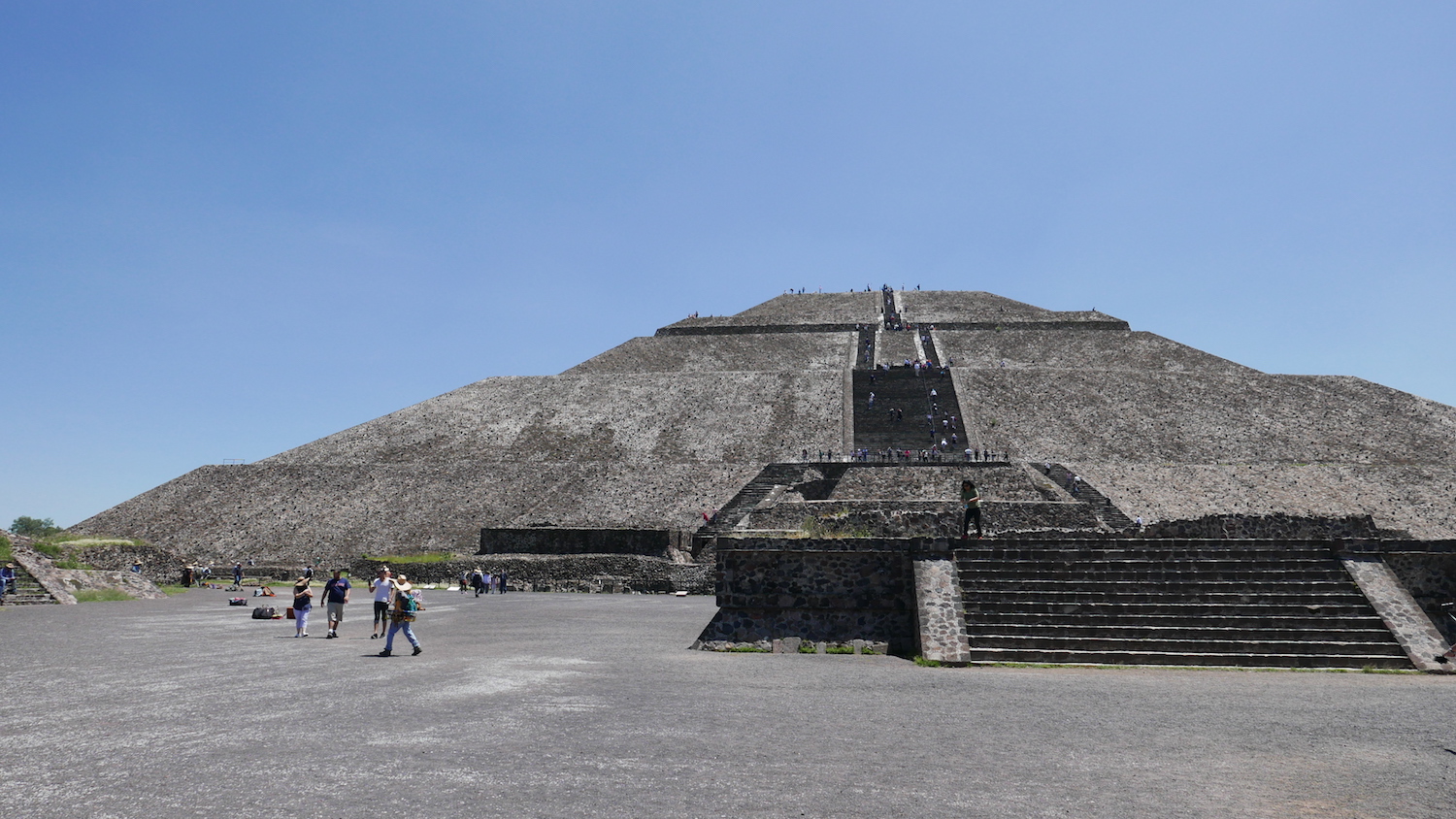
You can climb the Pyramid of the Sun (biggest one) and half-way to the Pyramid of the Moon.
Bonus fact: The Pyramid of the Sun was destroyed with dynamite in the hopes of finding gold. Thus majority of it as of today is not original but restored. And during the restoration they build one terrace too much.. talk about making mistakes at your job!
Cost: 8 USD including entrance and round-trip bus from Mexico City
6. ...and the last place goes to Chichen Itza!
Maybe the most famous Mayan ruins and thus also the most touristic one. Souvenir sellers fill all the paths and areas and you can’t walk anywhere without hearing a sales pitch. Massive tourist busses coming from Cancun multiple times a day, people posing for photos (and boyfriends going above and beyond trying to take the perfect pyramid photo of their girlfriends). We also heard that the guided tours offered by hostels & hotels were pretty average, guides abandoning the groups after 1 hour of basic stories and cliché’s.
We opted for self-organised bus trip there and eaves-dropping on other groups here and there.

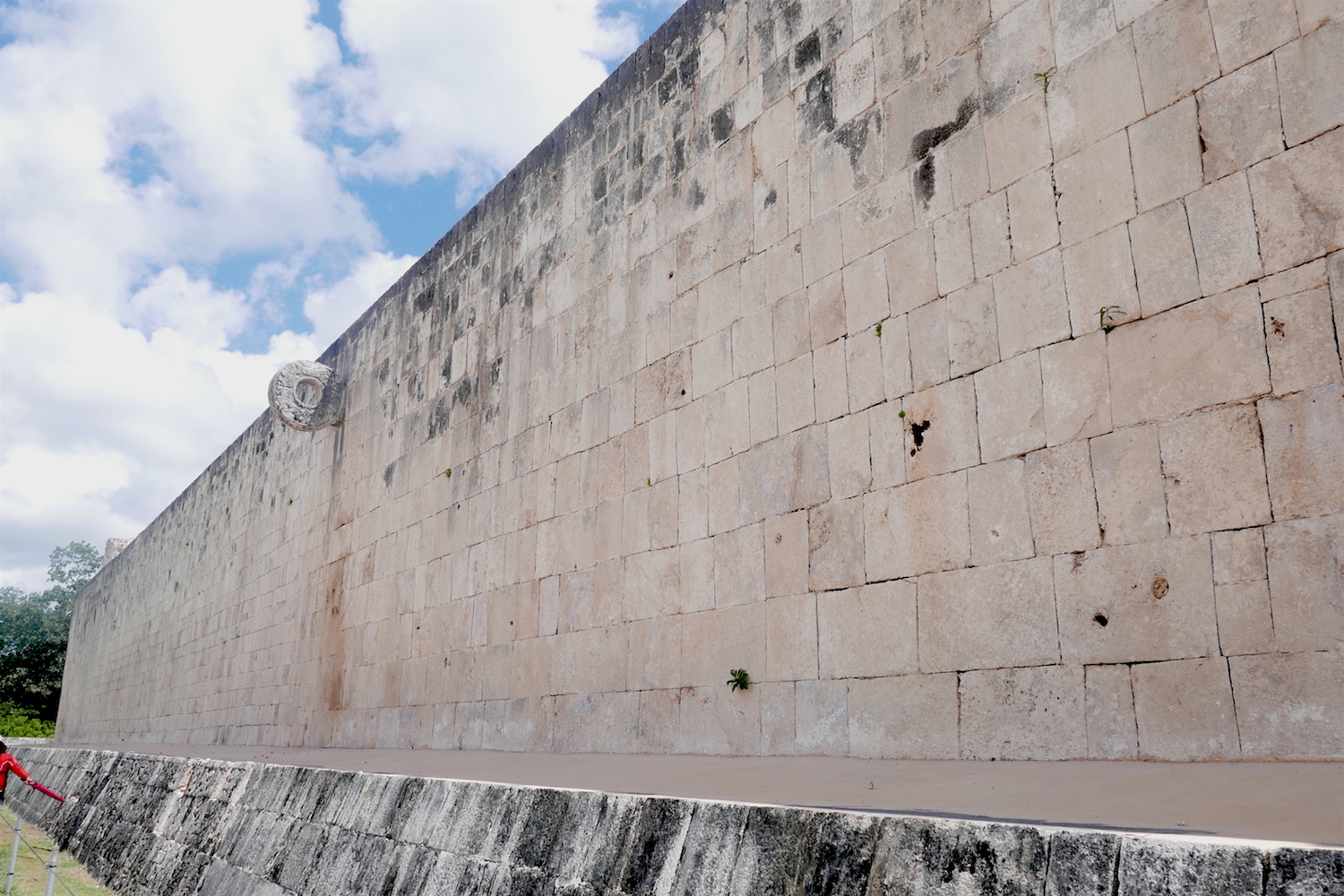
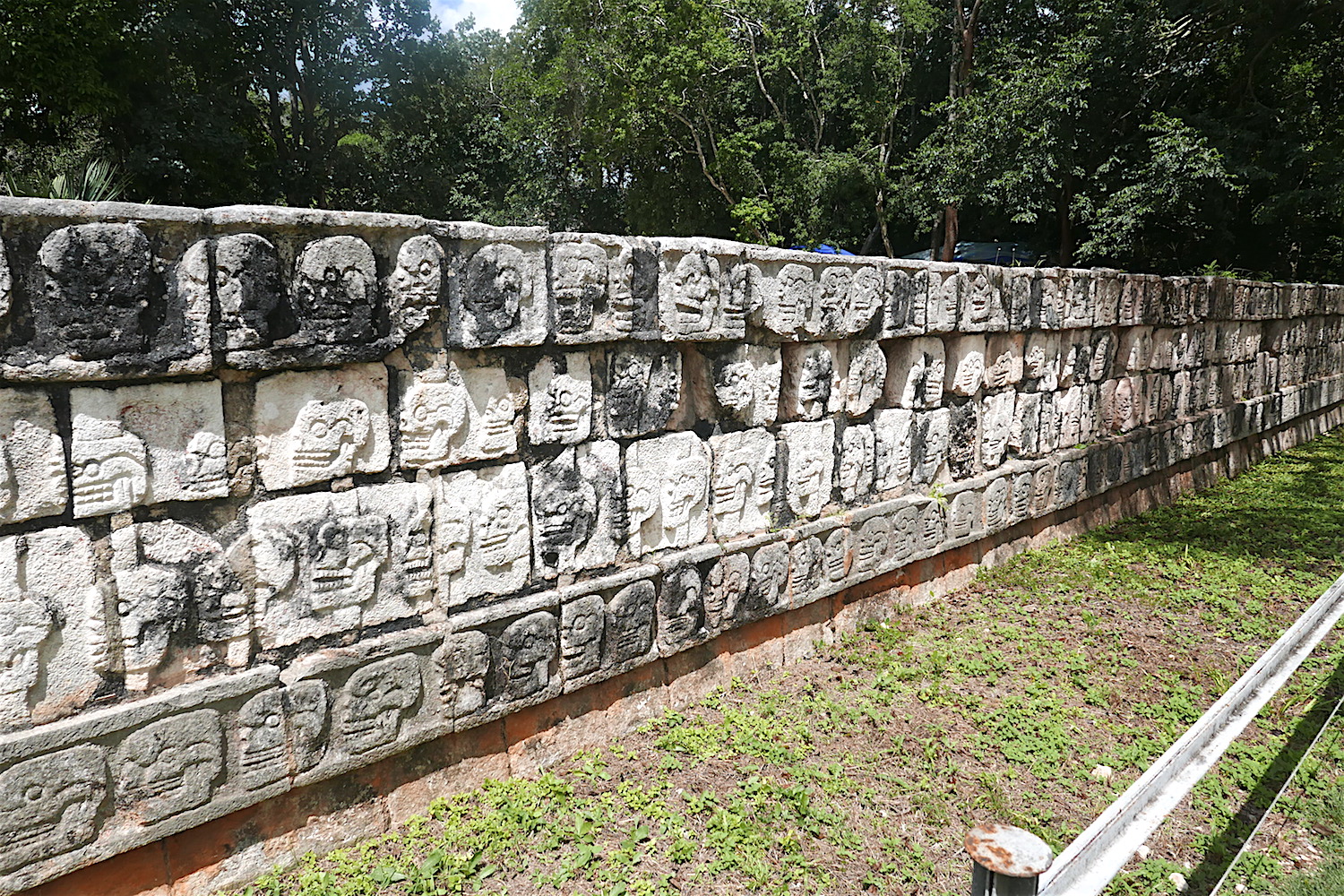
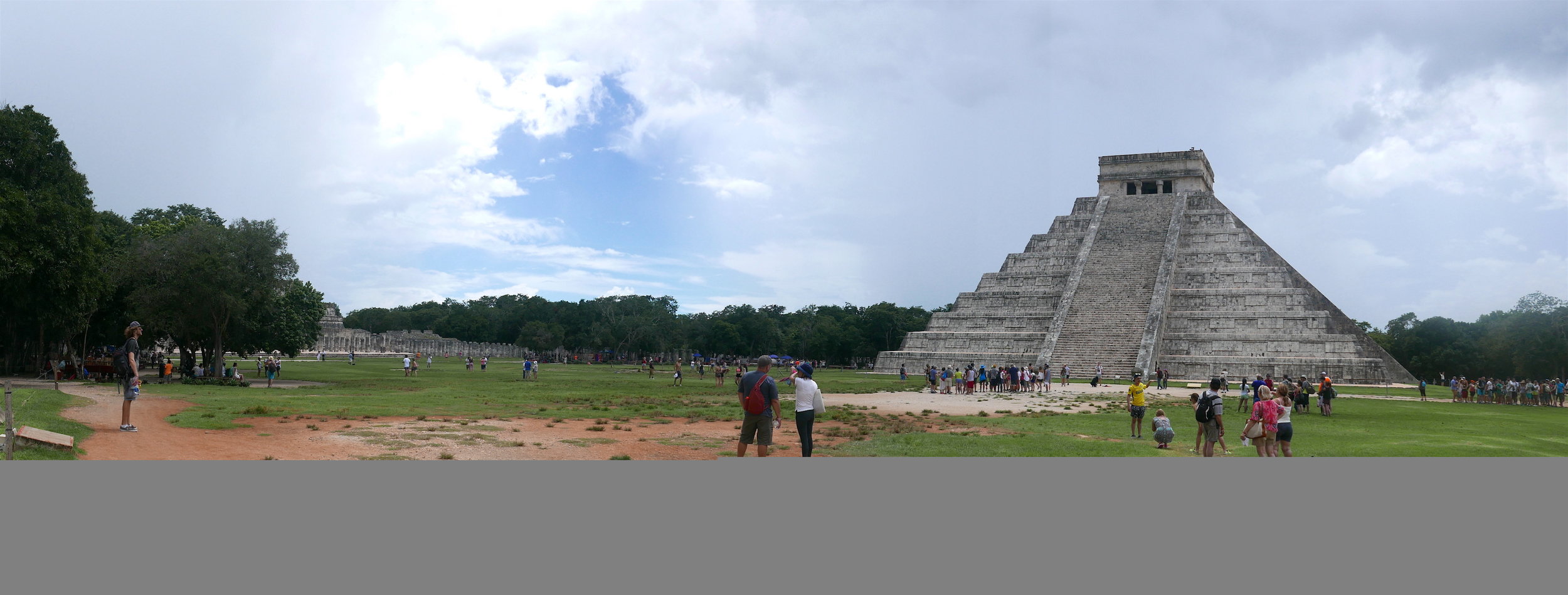
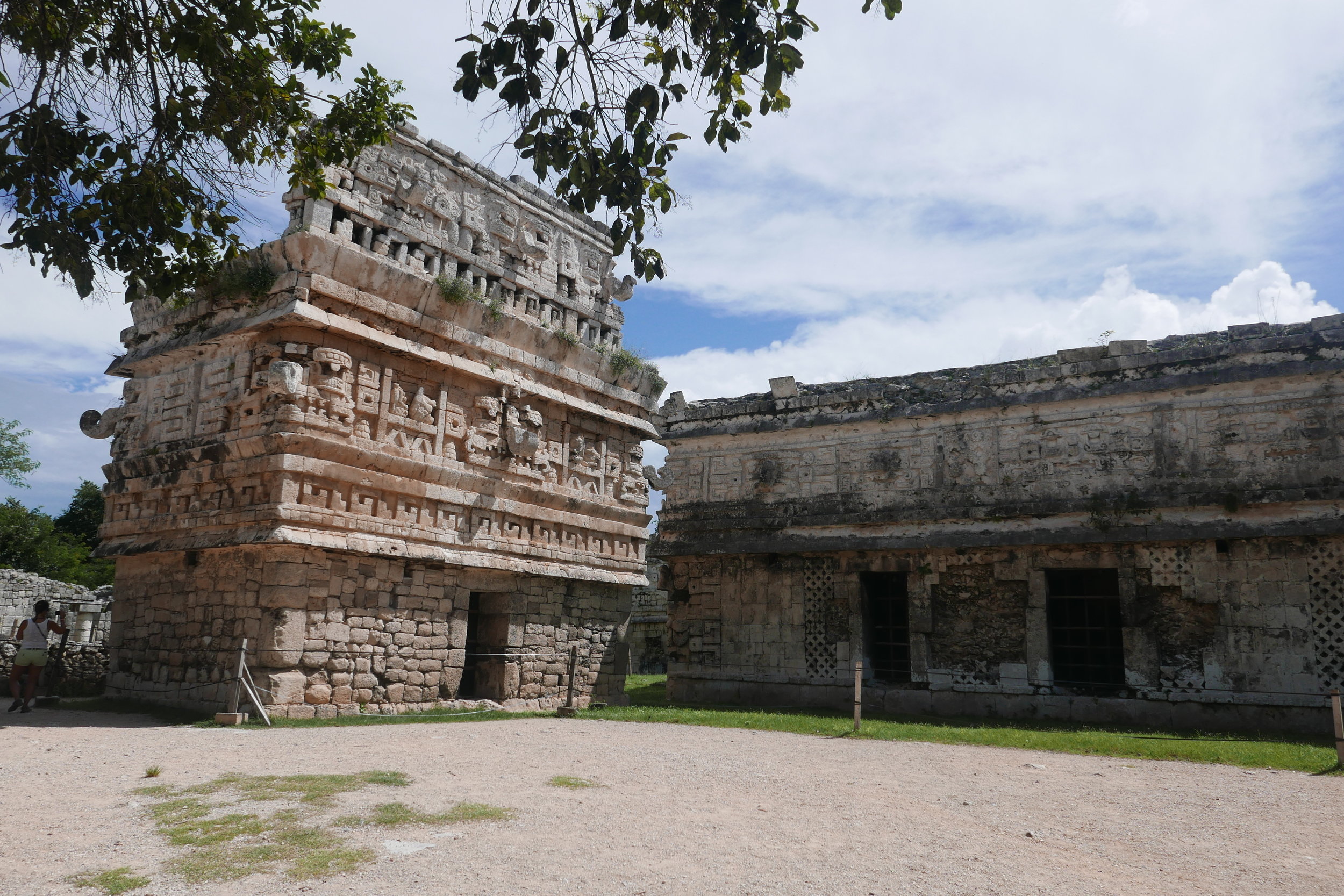
Coolest part was the biggest ball-game field and knowing that during the Spring and Autum Equinox light hitting the main pyramid staircase forms a serpent.

I don’t know if I would skip this as it is “a 7th Wonder of the World” but also those lists change every year and Chichen Itza got into the list through a corporate sponsoring. Definitely the worst overall experience.
Cost: About 25 USD entrance + round-trip bus from Tulum to Chichen Itza
Now we'll be ruin-free for a while and have to fill our days with something else. That has lately been waterfalls, laying on the beach or pool and re-reading Game of Thrones books (god I forgot how boring the fourth book is).
“I’m too old for this shit – “ Danny Glover (Heini Ulmanen)
..is a thought I’ve had couple of times during the past few days. I guess there is a good reason why the majority of backpackers are in their early twenties (which age group Richie still claims to belong to). Who else can endure all the seven layers of hell one goes through in a 15 hour bus trip while suffering from food poisoning? Who else can survive with 5 hours of sleep and a throbbing hangover before jumping into a 9 hour trip in the smallest chicken bus you can imagine? And who else can drink 8 days straight and still smile, joke and continue being friends with everyone else around you?
The other option is that I grew up to be an especially cranky thirty-year-old and I’d say it’s “fifty-sixty” (as a famous Finnish ski jumper used to say) towards either outcome.
As I once wrote, when I was still in my early twenties, it’s not interesting or gripping to describe all the awesome things you have done or to tell people every day of your life is full of epic shit. That’s something Americans do so much better.
Thus bare with me as I paint a picture of our latest adventures in Mexico. As the Lego Movie song goes, everything is as awesome as you’d imagine a 1.5 year break from regular life to be, and today even more awesome as I spent more than I should have on the first proper, Bondi-style avocado-heaven brekkie. Mind you, I have not had almost anything decent to eat in the last 48 hours.
Our route so far has been Mexico City – San Cristobal de las Casas – Palenque (El Panchan village in the middle of the jungle) – Isla Holbox through Merida.

Long journey would take us to this paradise called Isla Holbox
The “suffering” really happened during our tedious transportation from Palenque to Isla Holbox. Since we are trying to be backbackers on a budget, or to put it better I am trying as I think Richie was born as an Uncle Scrooge type of penny guardian, it means catching the cheapest busses wherever possible. What’s funny though is that there are even cheaper means of transportation available here, called collectivos, but I honestly think my better half could not fit in those. Alas, I guess we are not strictly backpackers after all since we use the more expensive Ado-buses wherever we go..
Almost the cheapest option now meant a 9 hour wait at the bus station followed by a 9 hour bus followed by an almost 6 hour bus and a water taxi to get to Isla Holbox. Buses were overnight which in theory means you could do a teleportation trick by sleeping the whole way and wake up at your next destination. Being cheap meant that we could not store our things at the bus station (20 pesos for an hour, who can afford that!) and Richie was running around the town getting us food and supplies. I managed to convince him it’s for his own good, for once he can practice his Spanish without me being around taking care of everything.
And then he brought back the evil, evil tacos…
We did not know these were evil tacos until 6 hours later, middle of the night, in the bus. They looked like normal tacos, though a bit tired and lukewarm. Evil evil tacos.
Long disgusting story short, the evil tacos gave us food poisoning. Some say we oughta know as these were from a stall but stalls have been good to us so far. I slept probably 1,5-2 hours during the whole 15 hours of traveling. Other time was spent, ahem, you know where.
Arrival to Isla Holbox in the middle of the day could have been a nice one, heading straight to the beach and to explore the sandy narrow paths but after all this torment the only thing to do was to take a long shower and a long nap, only to wake up to fever and a feeling “I can’t ever eat anything again”.
So, there you have it, the thing that makes me go “I am too old for this shit”. Then you sleep 12 hours in an air-conditioned room with a king-size bed where you don’t have to fight over space (you barely know there’s someone else next to you, what else can you ask for!), get some breakfast and suddenly it’s all good again.
Until the mosquito-swarm attack, constant sweat and stickiness, layer of salt on your skin, ant infested ground around your thin sarong and 200 pesos for a beach chair make you question things again.. but more of that later!
Around Mexico City, Spanish word number 2: Basura
I never would have thought I would spend a weekend in one of the liveliest cities in the world by sleeping 9-12 hours every night. Afterwards we heard about after parties lasting until 8 am, people dancing all of the rhythms of Mexico and felt kind of old until we remember why we were so tired – spending 8 days in a desert partying every day until late and all the preparations before and after did not leave a lot of room for sleep. Both of us have been a bit sick as well, Richie more and he’s mainly running around the city looking for a trash-can to put the tissues to – thus the Spanish lesson number 2, trash = Basura.
Thus, for us Mexico City has been all about daytime exploring in a very relaxed phase. And late starts. During our second day here we were able to see Parque Mexico and La Condesa area with millions of dogs (and dog poop), avoided the rain for an hour in a café, ate tacos and a burrito from a stall making new friends and getting a free taste of La Birria- soup (tender goat meat) and cow’s stomach- soup. You can guess which was our favourite.
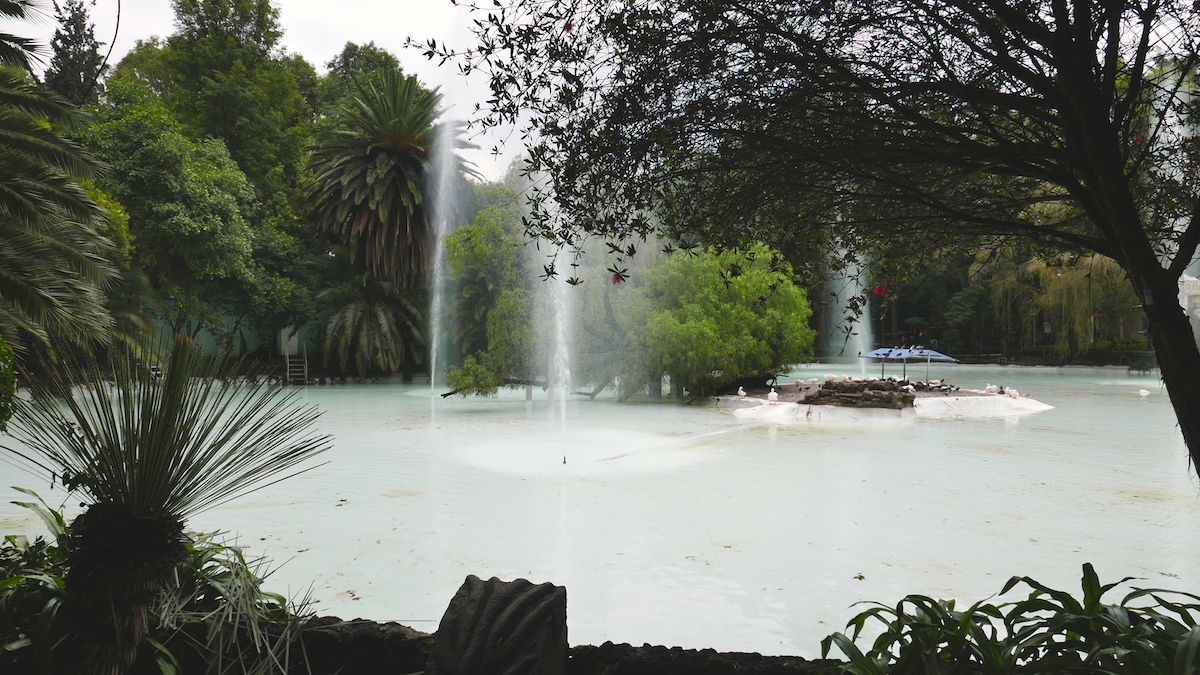
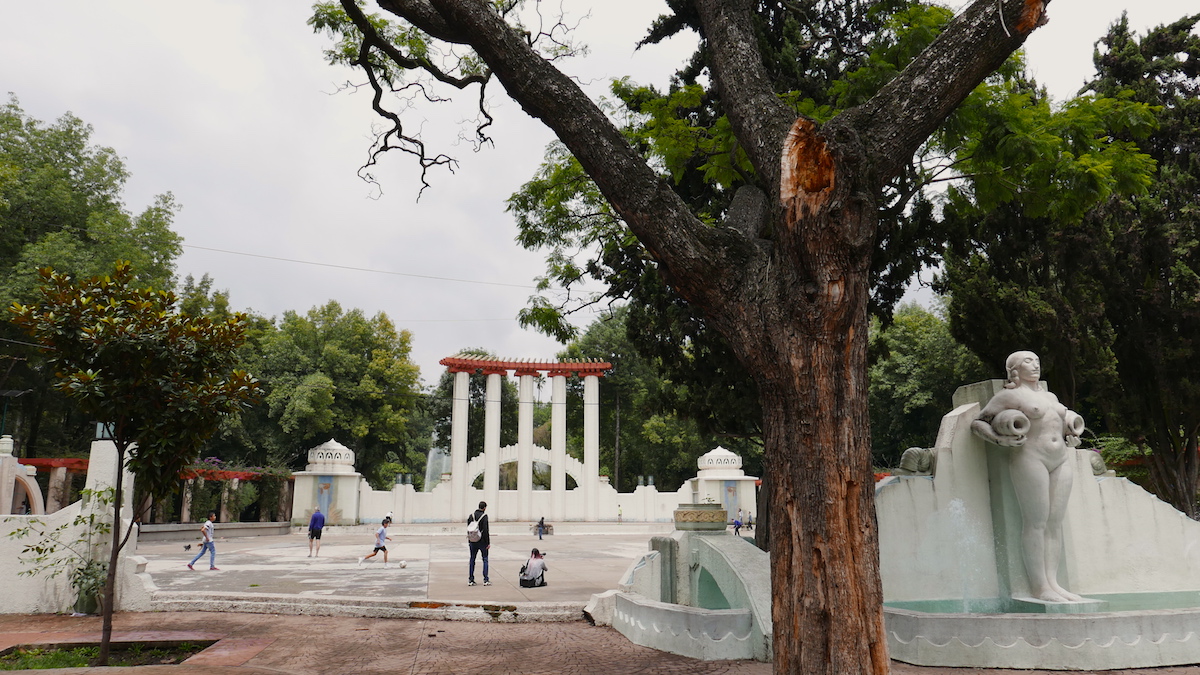
I also really wanted to climb on top of a hill to see the Castle Chapultepec but by the time we were there, the whole park with museums was closing. I don’t know how many kilometers we have been walking around trying to find the places, metro stops or bus stops without a prepaid internet connection and keeping your phone in your purse as much as possible. The final adventure for the day was to catch the metro to the wrong direction, luckily it was only for two stops, and then we got home to cook a “shit load of vegetables” as Richie would say. Eating tacos with mainly meat and cheese and a burger-filler stint in America truly made one crave for something green and red.

Richie enjoying the rainy park walks

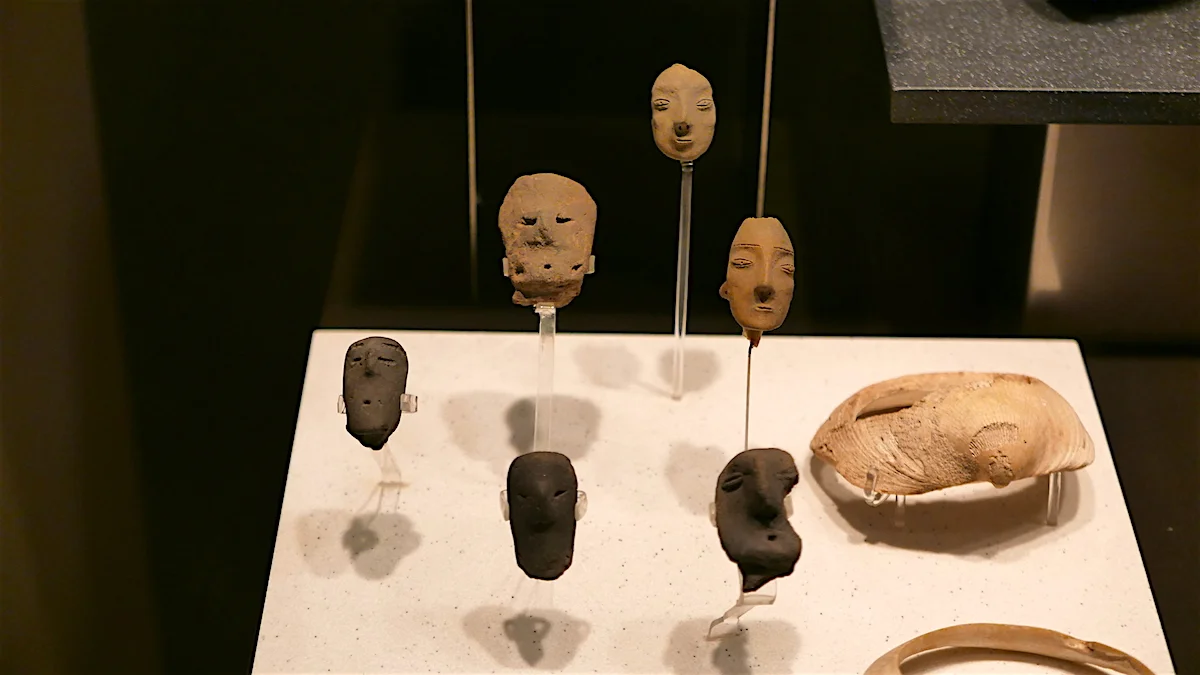
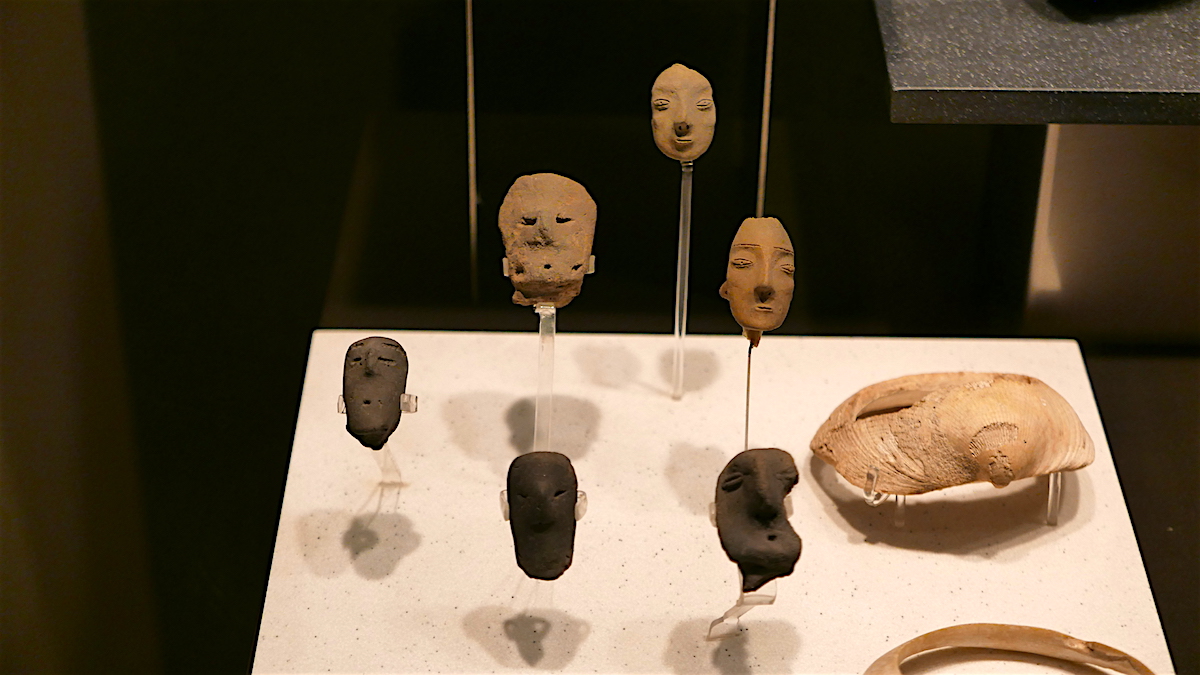
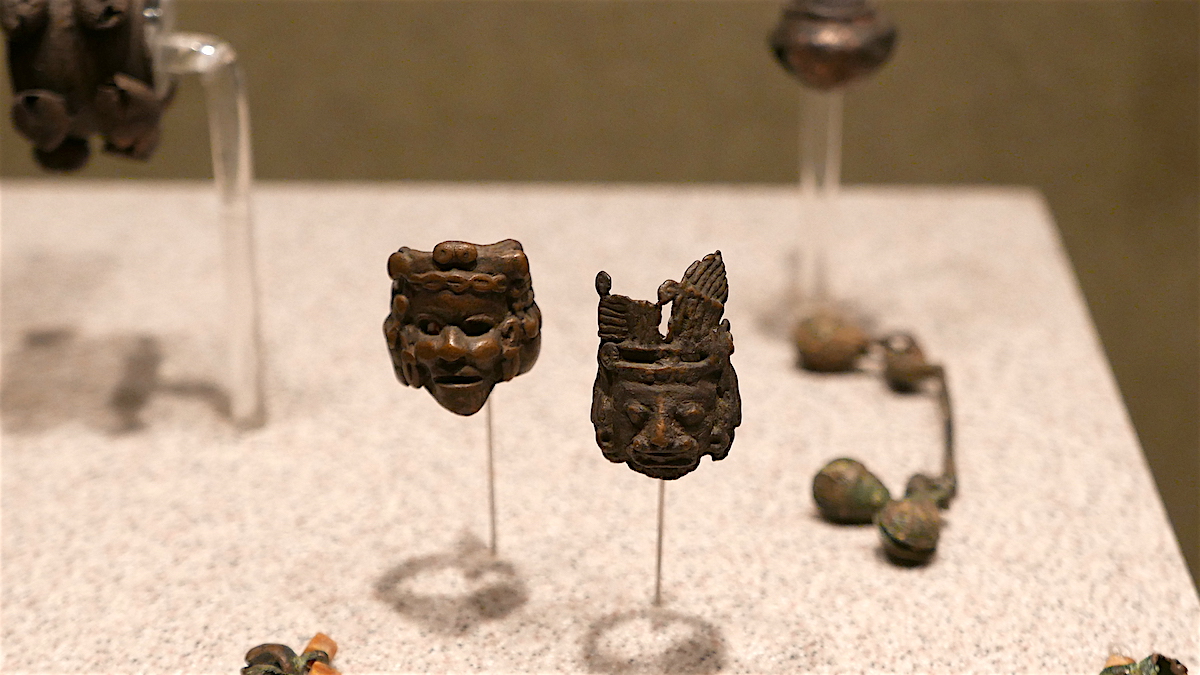
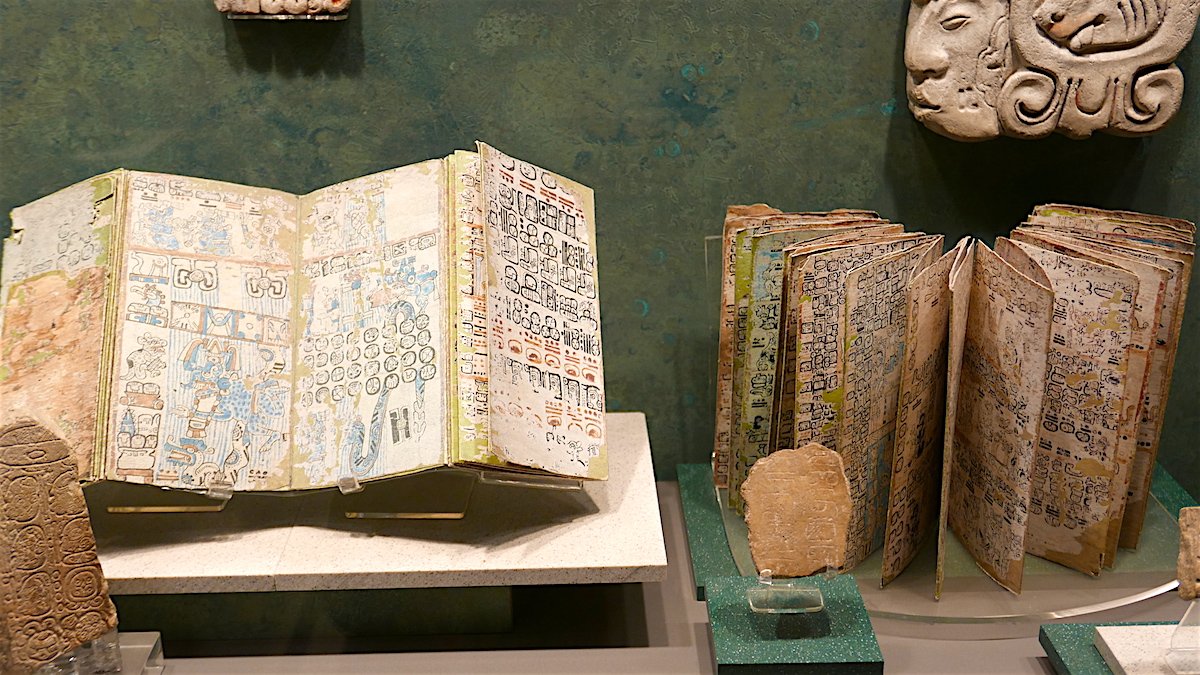
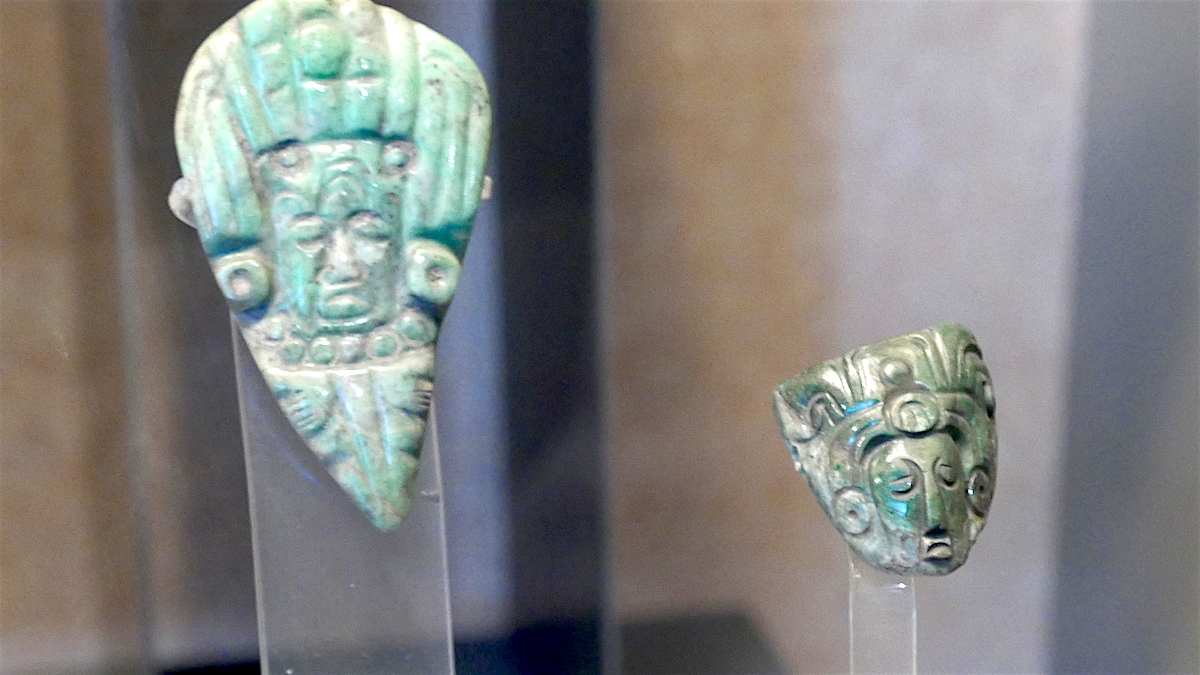
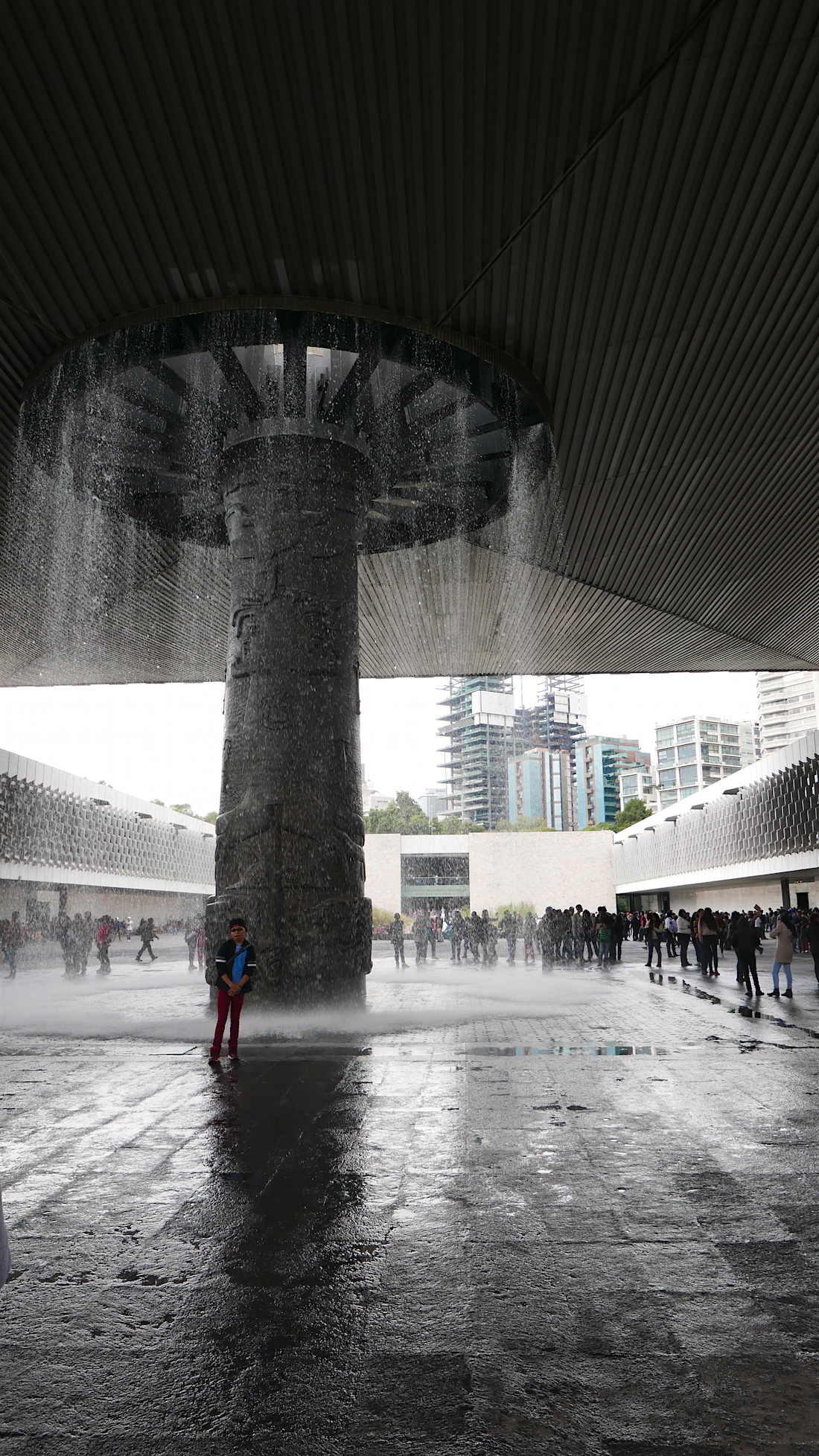
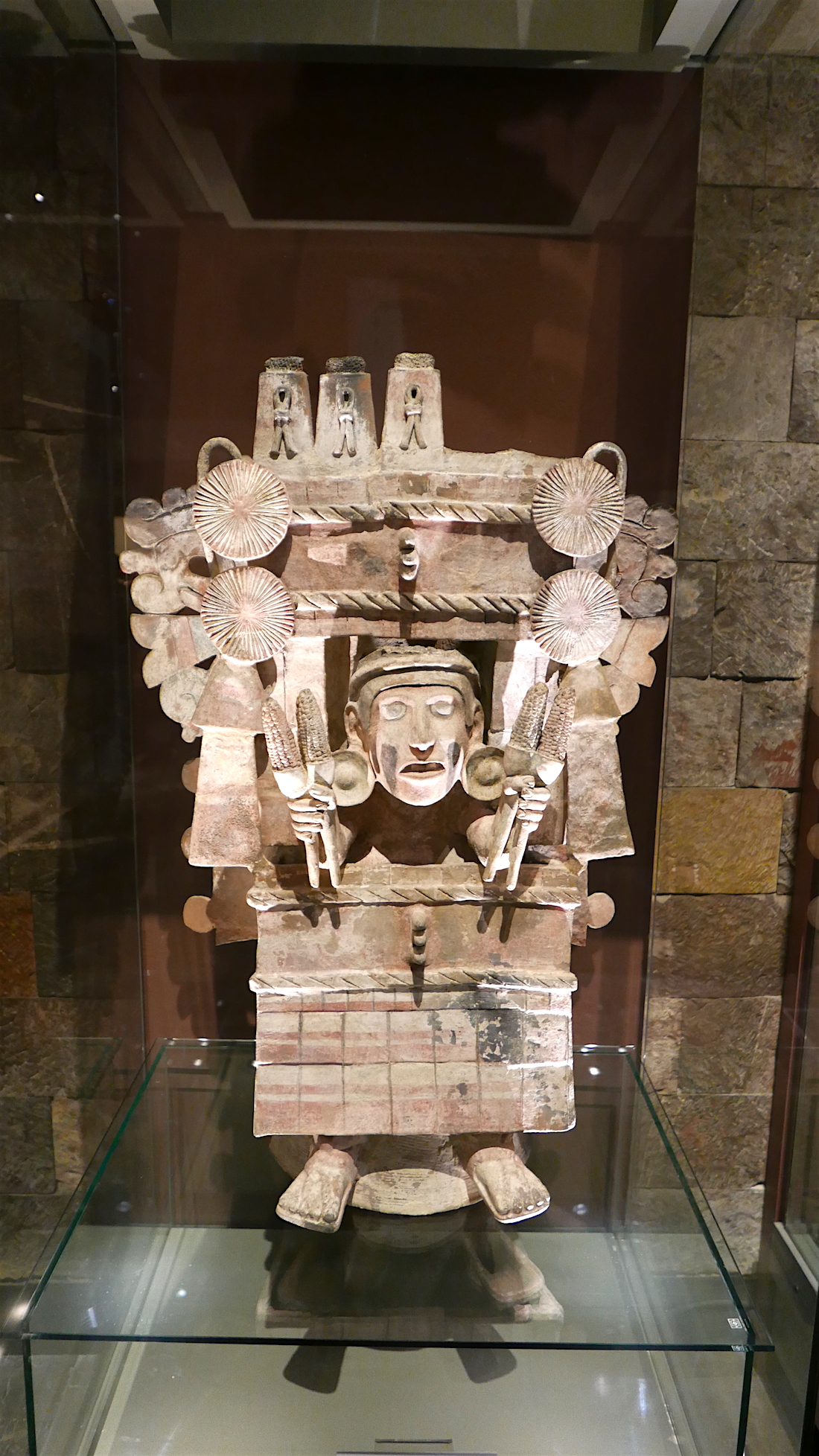
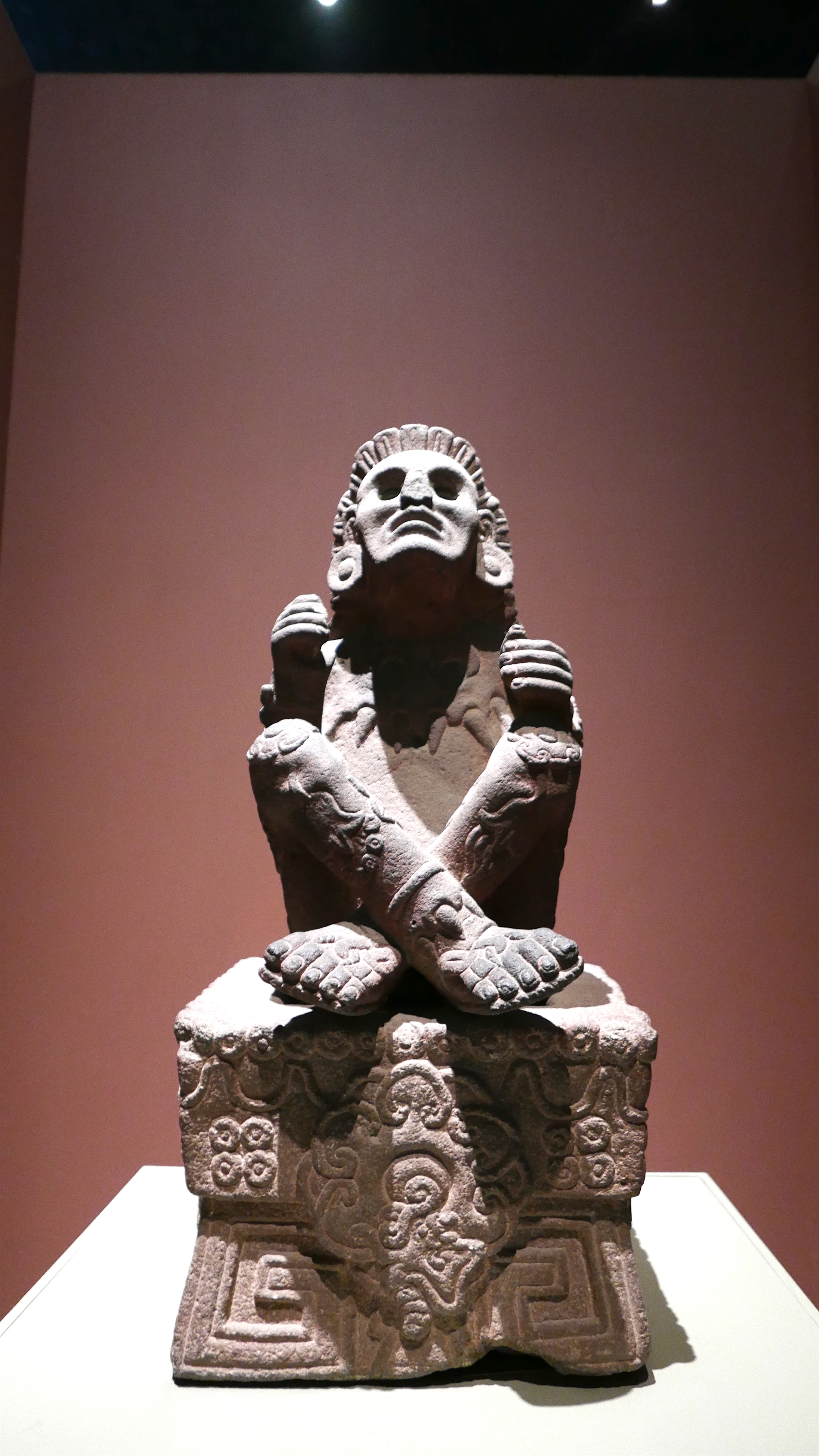
Third day, waking up from another 12 hour beauty-sleep, we opted in for an Uber to the Anthropology Museum. Most interesting displays were the Mayan and Aztec ones and albeit I enjoy looking at these amazing artifacts, about 20% of the texts were in English and you surely miss a lot of the finer details of the history. I was fascinated by small face- figures in each different culture though. Highly recommend visiting this museum!

Spanish word number 1: Terremoto (Location Mexico City, Mexico)
“Guys, we have to get out! It’s an earthquake!” (Earthquake = Terremoto or sismo)
Waking up to this yell in pitch black dark was quite the start for our travels in Mexico. We had gone to bed early trying to catch up with all the sleep we lost during Burning Man. I was already part awake as people had been yelling loudly in Spanish and I just cursed them off as drunken idiots. Next thing I noticed was my bed shaking violently but as I was at the top bunk again I thought a drunken person just couldn’t get into their bed. Little did I know it was an earthquake shaking the whole building.
Running downstairs in our pajamas/underwear, barefoot, without any lights was a scary experience as the building was still shaking. Imagine walking down the stairs of a boat thats sailing over small waves, in the dark when you have only seen the exit route once briefly. Outside we gathered together with other hostel quests and people from nearby buildings and waited for any news. From other people we heard that this was a very strong earthquake and that was proved right later in the news – the strongest earthquake in a century. Electricity was gone and as was internet and it was challenging to get the news back home that we were ok. This earthquake didn’t cause destruction like the 1985 one and I learnt that for example our hostel is partly built with the same materials as bridges are. That makes the buildings sway instead of breaking into tiny pieces.
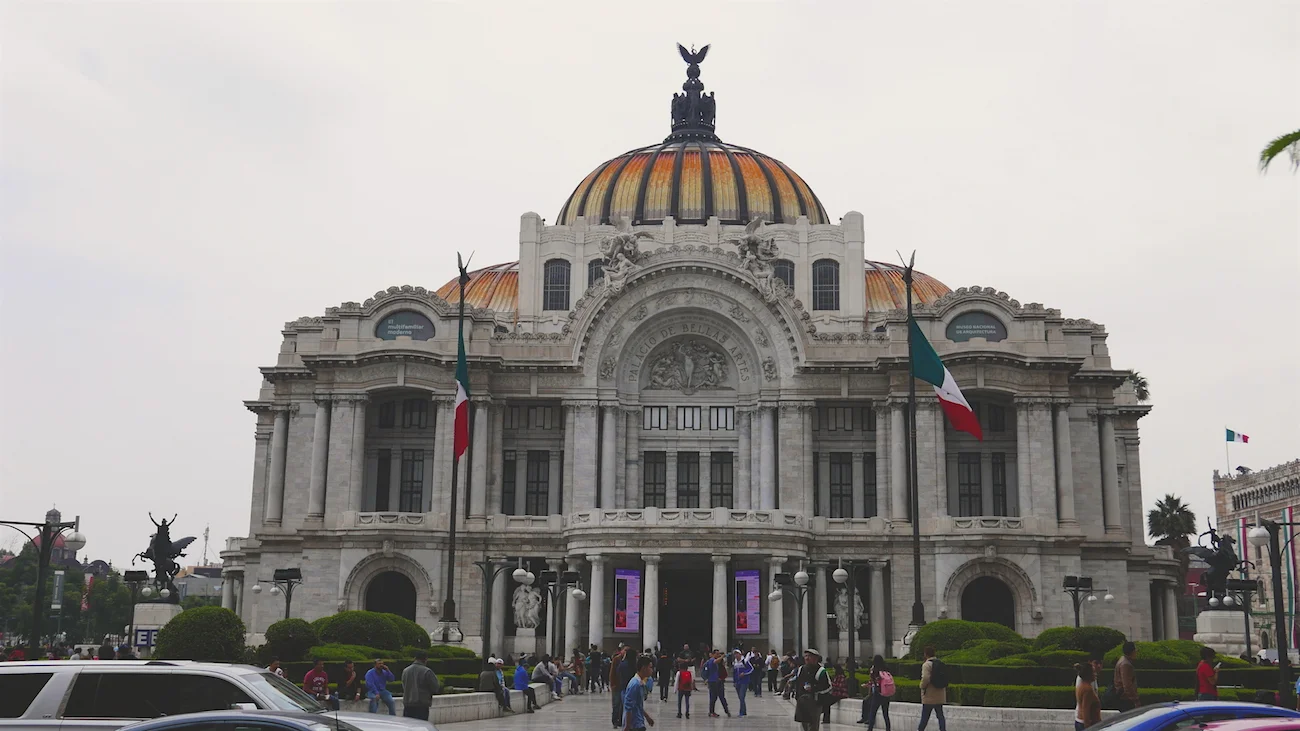
The hostel we are staying is super nice and in a good area (La Roma Norte) and next morning we set out to explore the historical center of Mexico City. Moving around with the Metrobus is quite easy after you have managed to buy the rechargeable card from the machine that has instructions only in Spanish. Our intention during our whole stay in Australia was to learn Spanish but we ended up with 1 month’s irregular practice with Duolingo which taught us only how to say “a turtle drinks water”. Luckily, I can still remember some of my school Spanish and we have been able to get food and travel around. No risk of starving or getting lost – yet. We also managed to purchase a book with English to Spanish phrases so we are all set for countries where English is even less common than here.


So far after two days here I can say the food is delicious (although you don’t always know what you are eating), architecture beautiful and interesting and you are safe as long as you are smart. I am still being cautious on taking my camera out, thus we have way less pictures than from our previous destinations but that might only be a good thing. No more going through hundreds of exact same photos of buildings and scenery..


Europe pit-stop and San Francisco, a.k.a sightseeing in the fog
After our journeys across Tasmania, New Zealand, NT & Western Australia, we simply had to take a holiday from our holiday. No more going from place a to place b, no more setting up and tearing down our sleeping quarters, no more driving 10 hours straight. Now we wanted to lie in bed until 11am, read and be fed by our parents.
4 weeks in Finland and a couple more in Dublin were mostly spent like this although there was a lot of festivals, summer house weekends and of course “a few pints” every evening in Dublin. I forgot how big real pints are (disclaimer: I used to order half pints during my time in Dublin).
Feeling as re-charged as a Bondi it-girl who had just attended a two thousand dollar get-away in Bali we headed out for the next adventure to San Francisco and Burning Man. If I can give you a tip for Burning Man – get rest before that because most likely you won’t be able to get it during the week. Or at least we couldn’t with our first-timers setup where you can’t usually sleep past 9am because it’s way too hot.
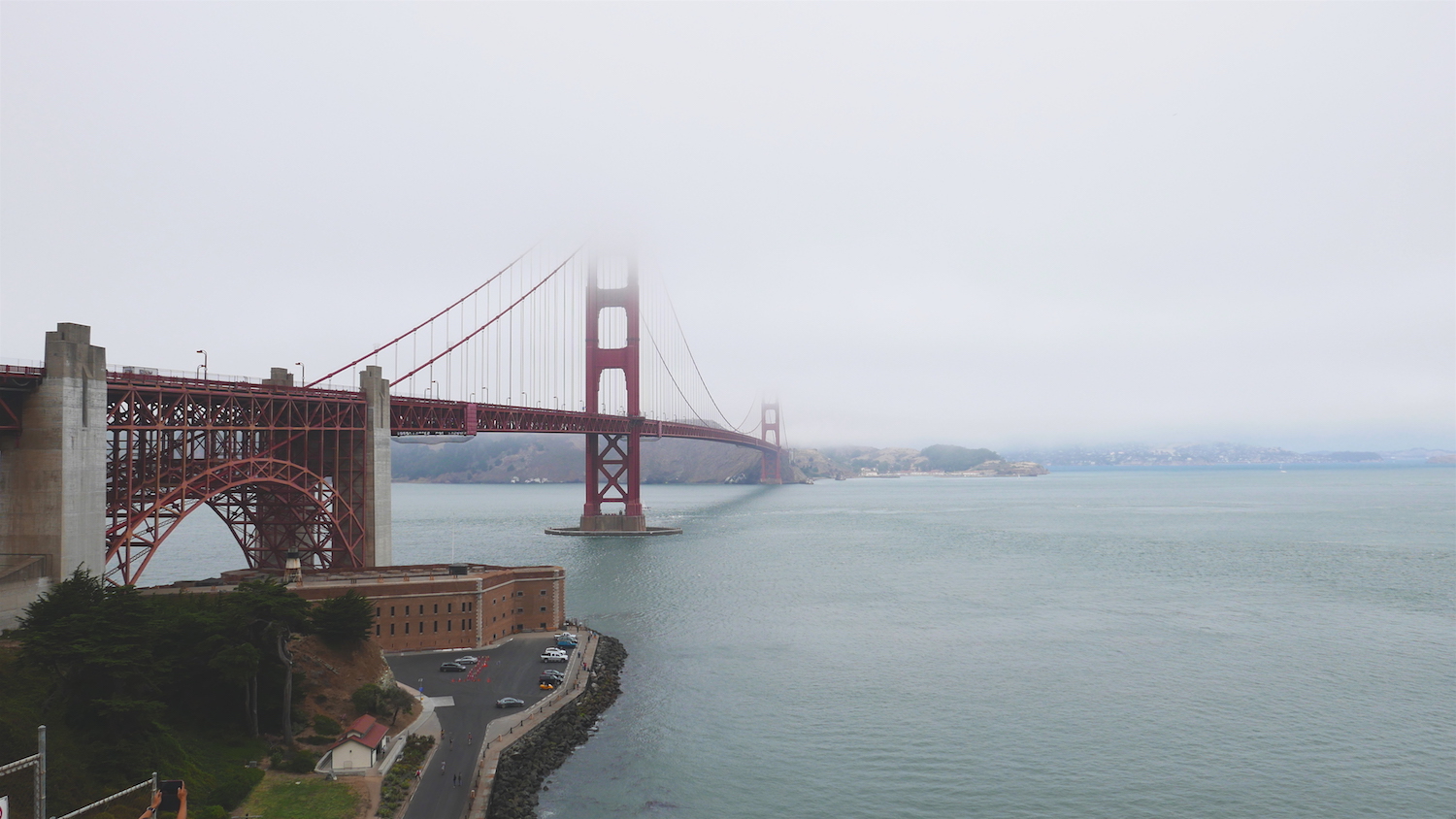
San Francisco showed its best sides to Richie right away as I had booked a hotel in the area that houses a lot of the city’s homeless people. It wasn’t Tenderloin so I think we were grand. During the next two days, we pretty much ran through the usual sights – visiting Coit Tower was a fourth time for me – but we ended up not actually seeing that much because of Karl the Fog. I’ve only ever visited San Fran before June and haven’t witnessed the famous all-covering clouds that roll in and now we got to experience it all.
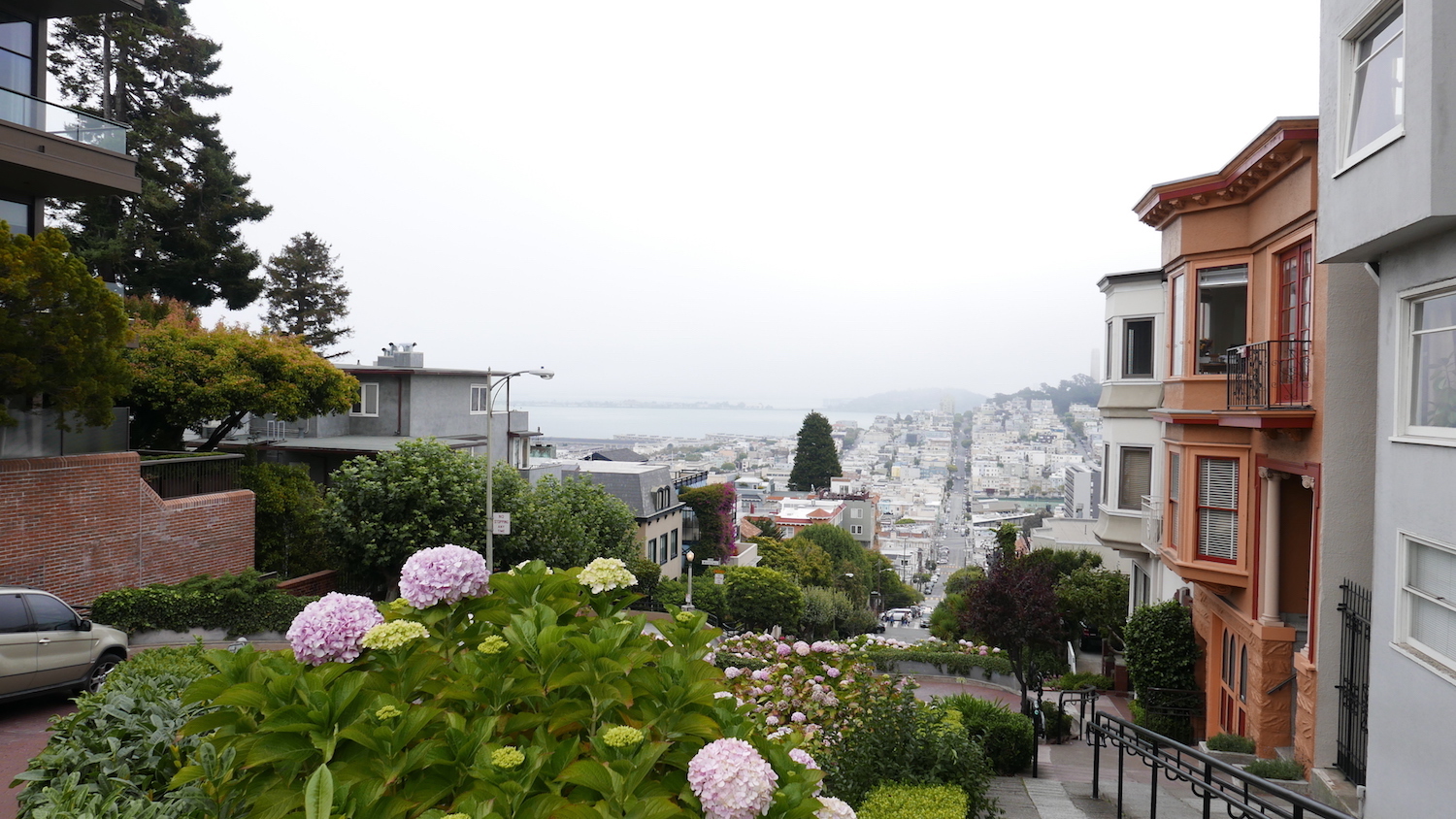
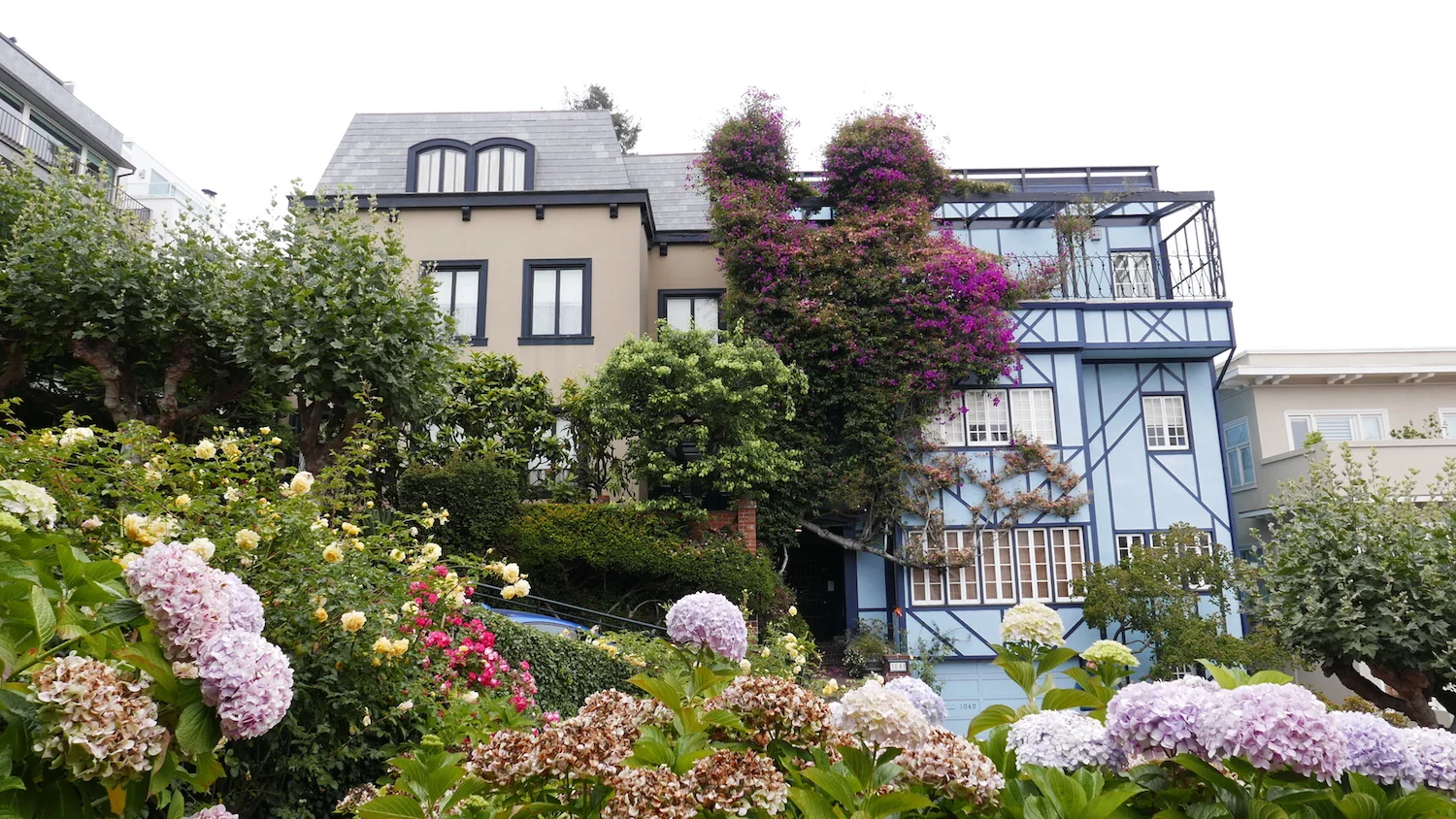
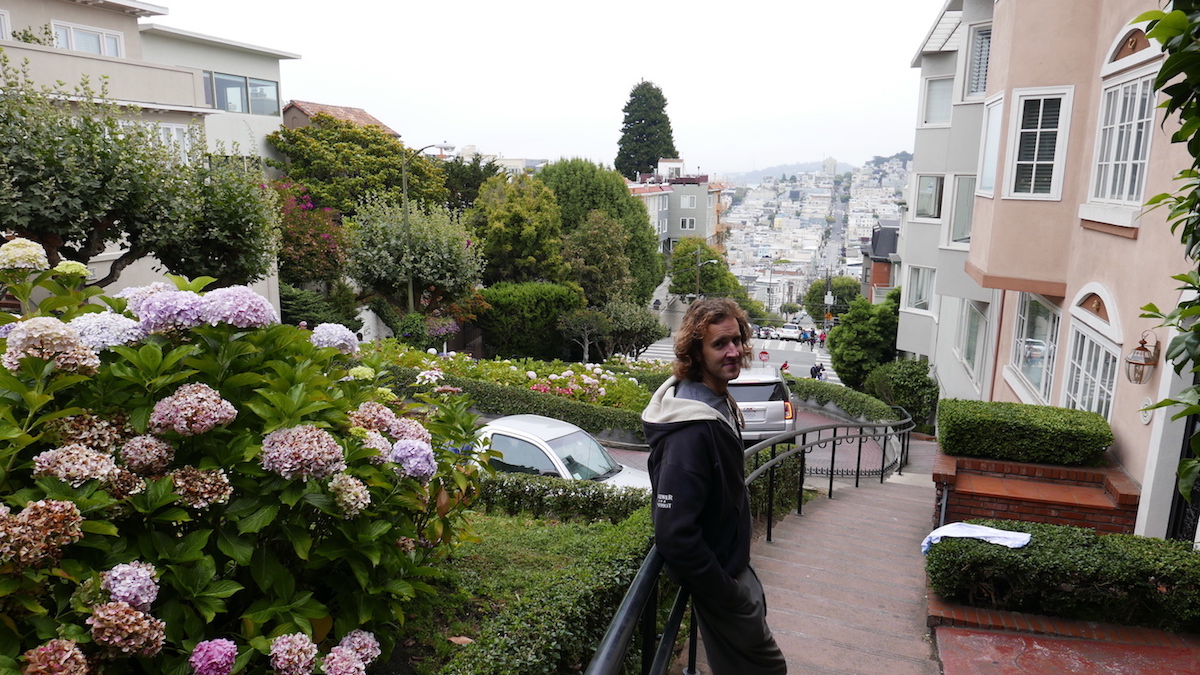
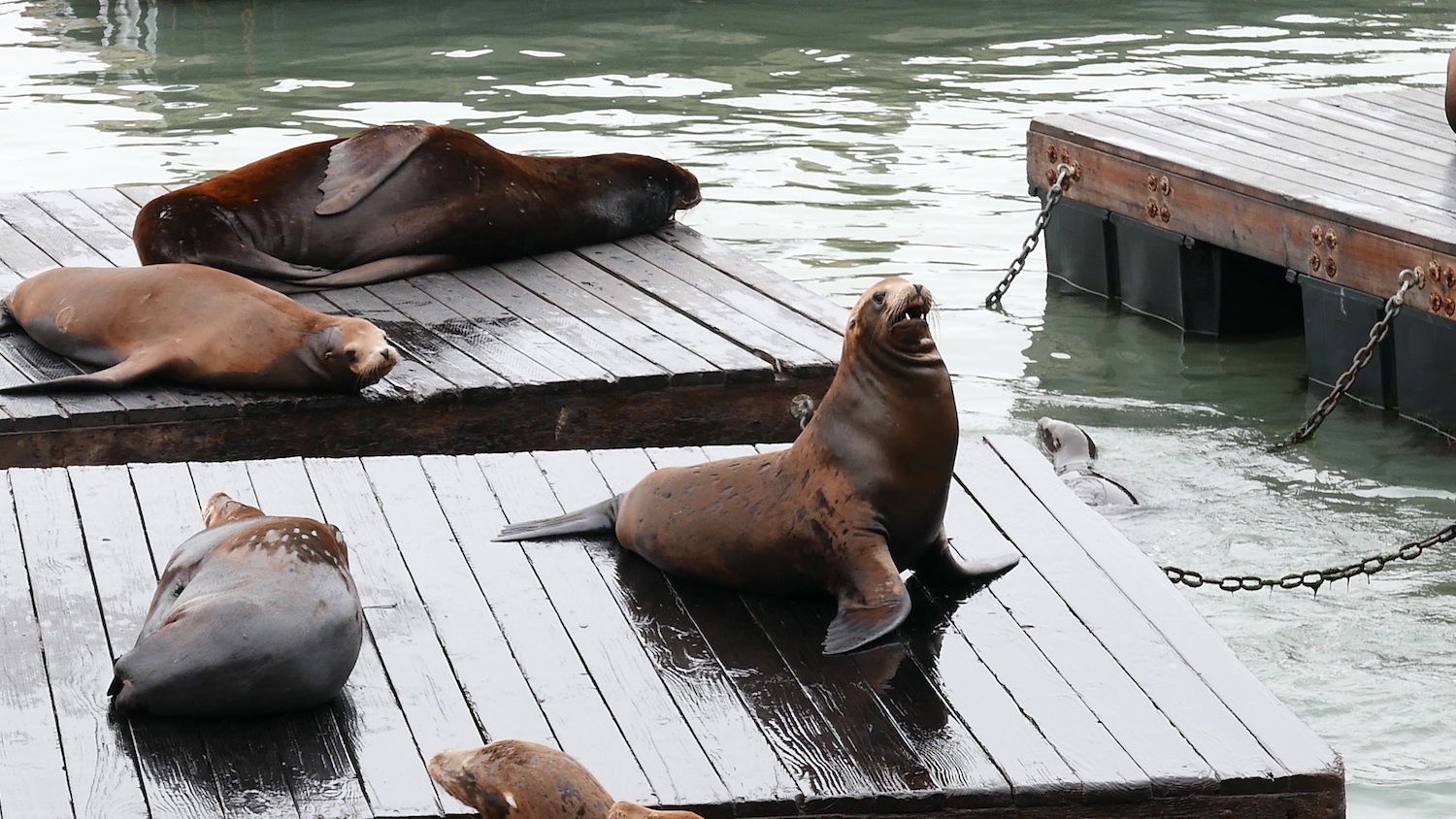
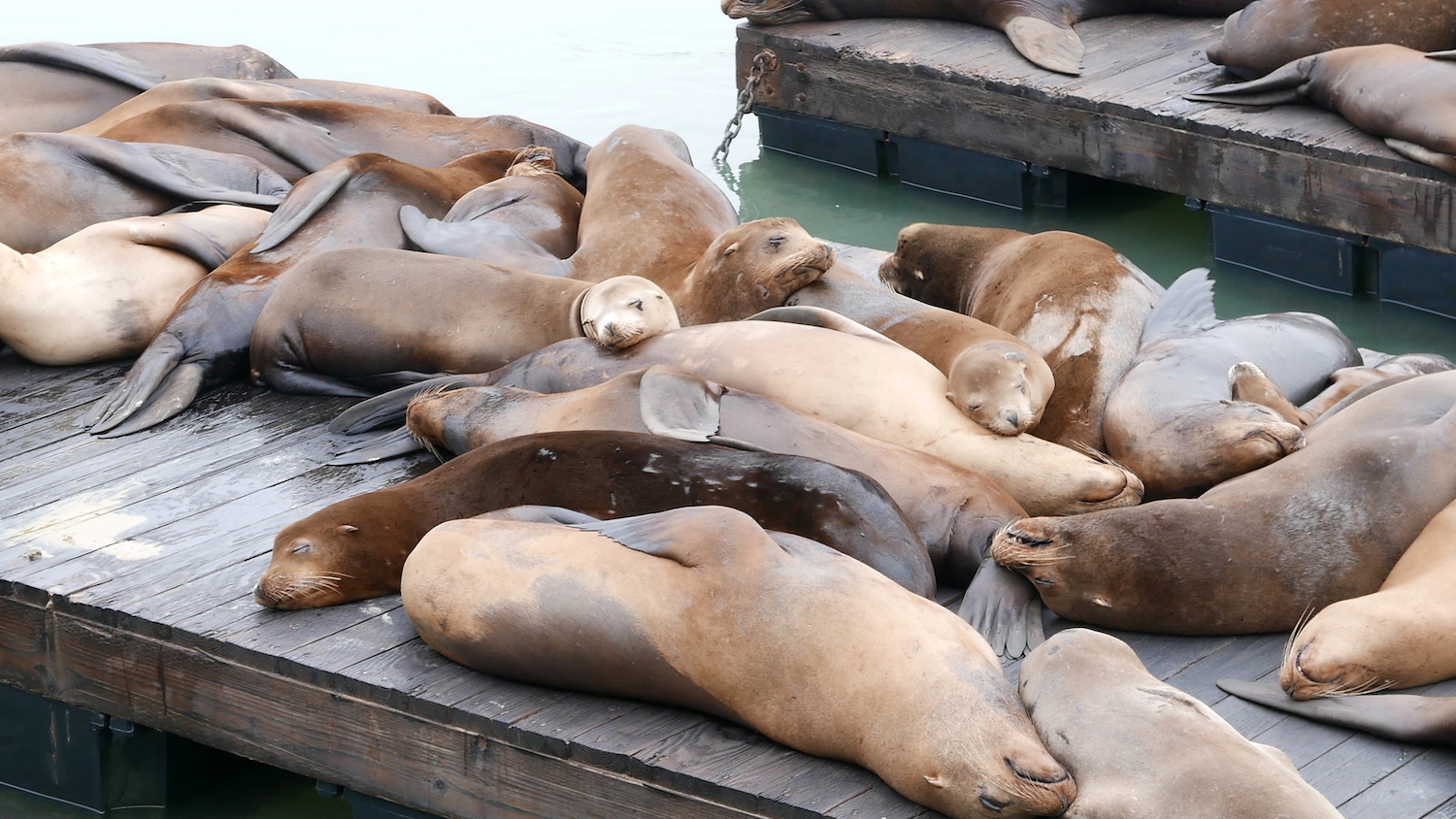

My favourite spot to take a photo of San Francisco
I seem to only have photos of Richie and the fog.
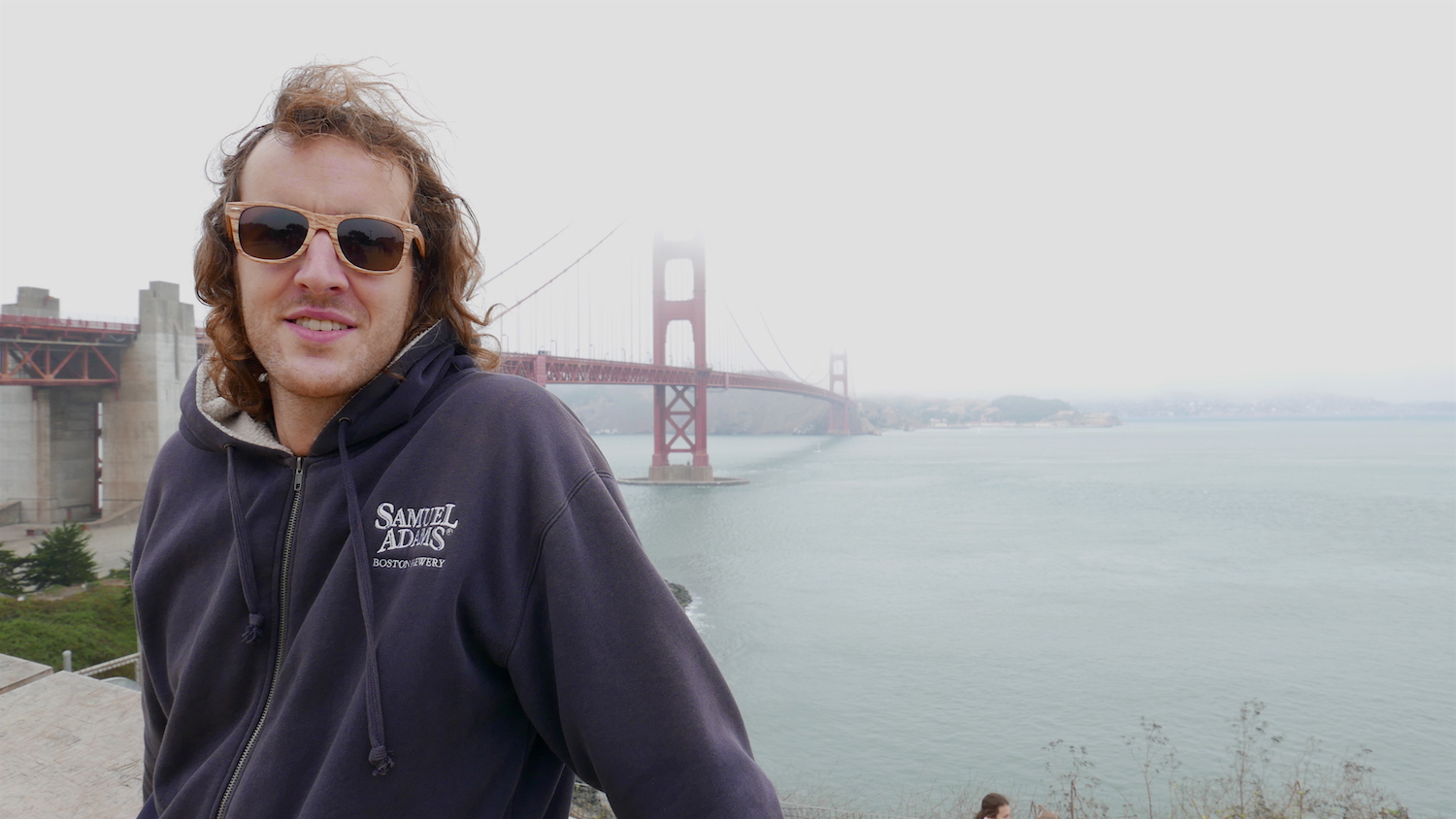
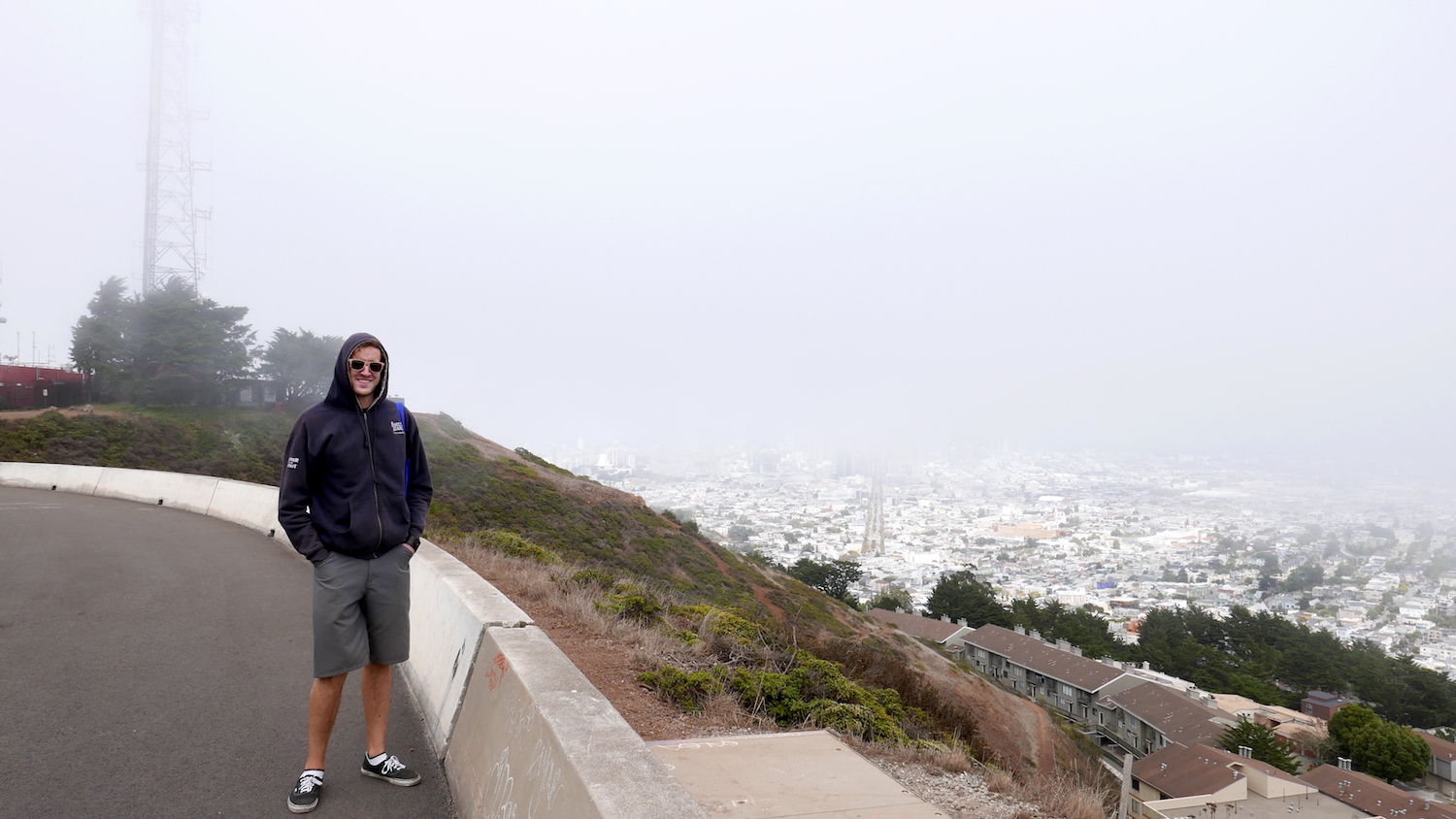
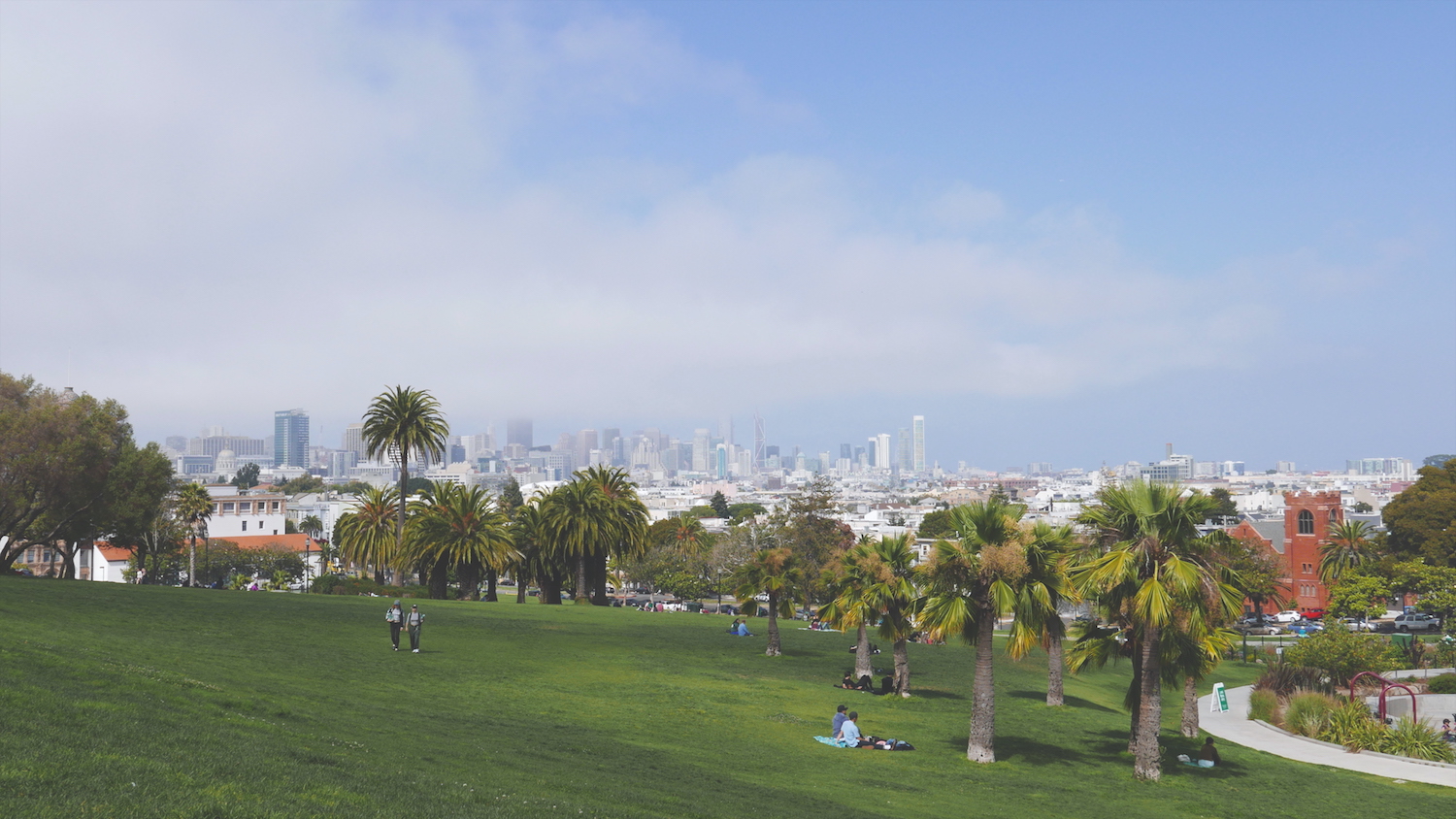
Another quite amusing feature of our travels is Richie not being impressed by some attractions. While visiting Painted Ladies this cranky Irishman was heard saying “They're just fucking houses in a row. Four fucking houses... in a row. How is this a thing? All of these people have been scammed!” I think that pretty much sums up what it’s like to travel with this guy.

The infamous Painted Ladies with Karl hovering in the background

Australia roadtrip in a nutshell
We spent 6 weeks driving from Darwin to Perth and internet connection was spotty at best. Thus this blog didn't see any action in a loong time.
Rainy days in Finland meant I could finally go through all of our video material, including too many minutes of us walking around and swimming in different waterfalls. To save you all from the rest of the footage I have put together 8 minutes that pretty much shows how it was.
And it was bloody awesome.

Tongariro Alpine Crossing
You know a hike should be good when it was changed to include ”Alpine” in it to make people realize how challenging it is. As New Zealand is such a popular travel and backpacker destination you have a lot of people trying to do some of the great hikes wearing jean shorts and ballerina shoes.
But not us, we were prepared with our hiking boots and hiking pants! Ready to judge those Sunday walkers who thought this was an easy stroll, look at their inadequate gear and laugh condescendingly.
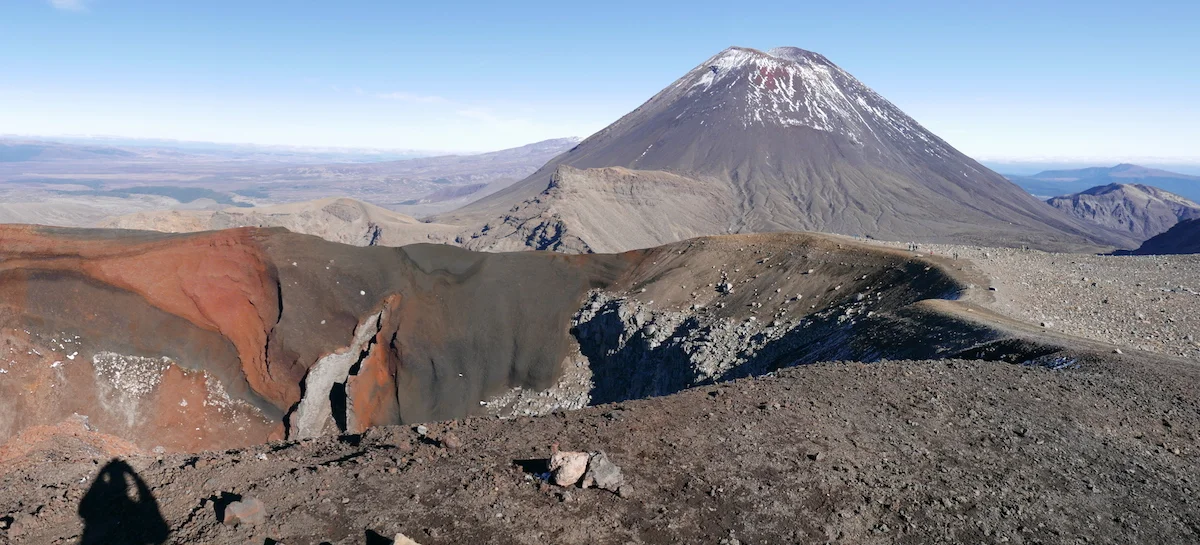
The crossing is 19,4km long including a lot of climbing and a bit more if you decide to climb Mt. Ngarurahoe (also known as Mt. Doom).
This 19,4km would be much more challenging than our 20km leisurely stroll in Abel Tasman. Of course we thought the time estimates exaggerate by hours and though that by starting at 8am we’d be finished around 2-3pm, including the climb to Mt. Doom.
Prior to the Sunday we spent a very cold another thing to look out for – Saturday saw 75km/h winds when 50km/h is the max the recommendations say you can do the hike in. We got very lucky with the weather and Sunday was meant to be perfect.
As the crossing is not a loop or a return track you need to either have a shuttle to bring you from car park to another or arrange a group with two cars. Luckily we had two cars as Richie’s friend from Brisbane, Josh, who night in a close-by free camping spot full of other travelers aiming to do the crossing. One needs to check the weather reports very closely as not only clouds ruin the views, it might be dangerous not to be able to spot the route markers in some of the steep climbs. Winds are now lives in NZ was joining us for the hike and so we avoided paying the $30pp shuttle fee. The car parks fill up really quickly – we left one car at the end at 6.30am and we’re at the start at 7am and got some of the last close spots in the small parking area.

This was definitely the busiest of the walks we have done in NZ, groups of people starting in regular intervals. As we are hikey-people now, fast and confident with our gear, we flew by other people!

Start of the walk, Mt. Doom looming upon us
It took about an hour to reach the point where one has to make the crucial decision: To climb Mt. Doom or not? Sign says 3hrs return and that’s quite a bit to add to an already 6-8hrs long walk. We could already see a lot of people scrambling up and decided to do it.
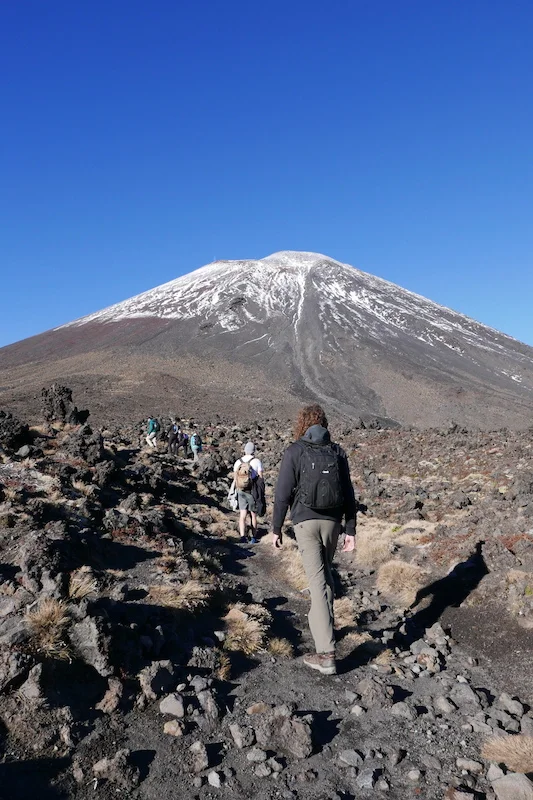
I thought Cradle Mountain Summit- climb was challenging but at least there you were walking/crawling on solid rock boulders the whole way. Wherever you reached for a grip you knew you could trust. At Mt. Ngarurahoe the ground is deceiving in every step. It’s mainly loose volcanic rock, which can be very sharp and breaks easily, and often means one step forward is two sliding steps down. Since winter is approaching there was already a bit of snow on the way which actually made the climb easier. You could make proper steps and hope the snow doesn’t give in under you weight.
Another thrilling feature of the climb were “Rock!”- yells from other fellow climbers now and then. None of the falling rocks were big but it is steep enough that they don’t really stop before the bottom and at full speed those could have very bad consequences and some people have had to be rescued from this exact mountain after being hit by a falling rock. We heard a story about a guy who dropped his bag on the mountain and it rolled most of the way down with the volcanic rocks tearing it to shreds on the way!

After closer to 2 hours of climbing we finally reached the top. You can either choose to go to the “Frodo ring”-side or the actual highest point – or do both if you have the time and energy. We sat on the warm rocks, surrounded by the steam from the volcano now and then, enjoying our lunch.
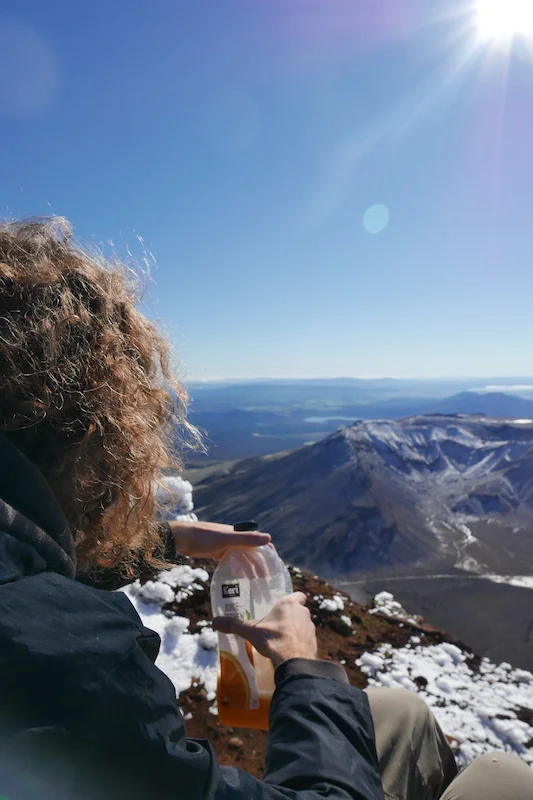
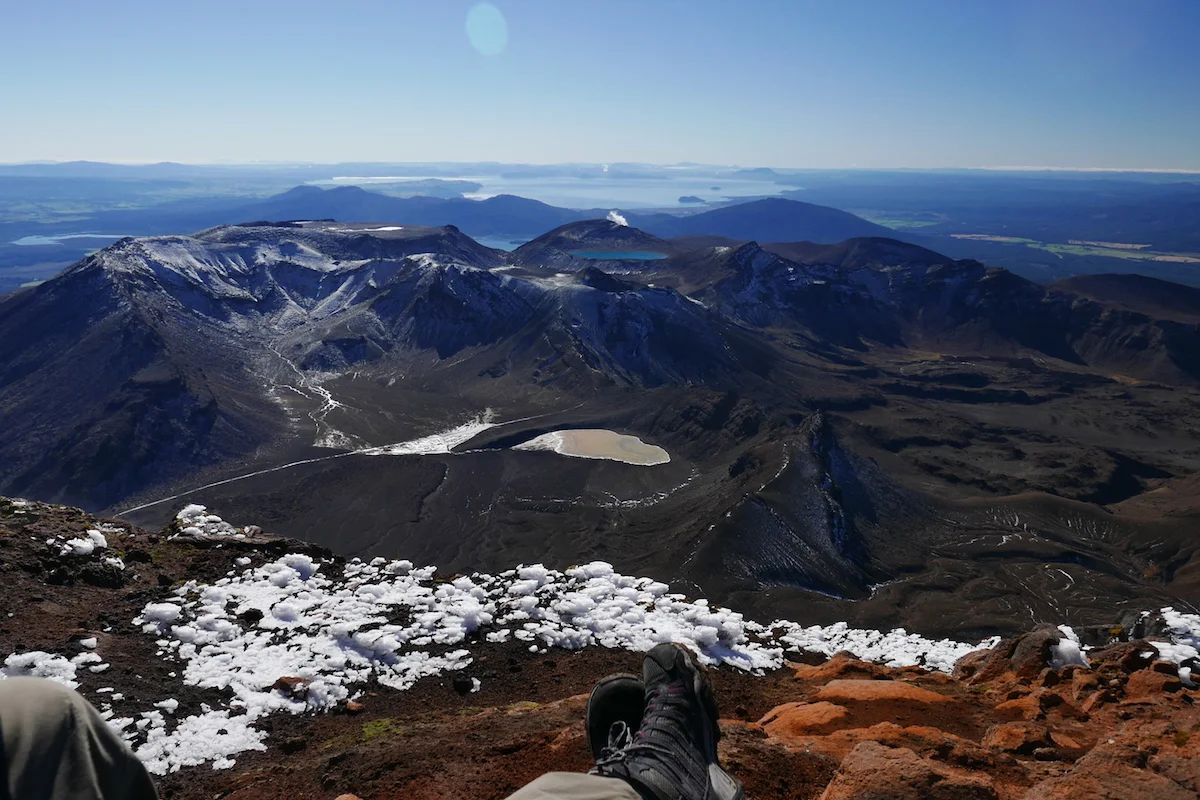
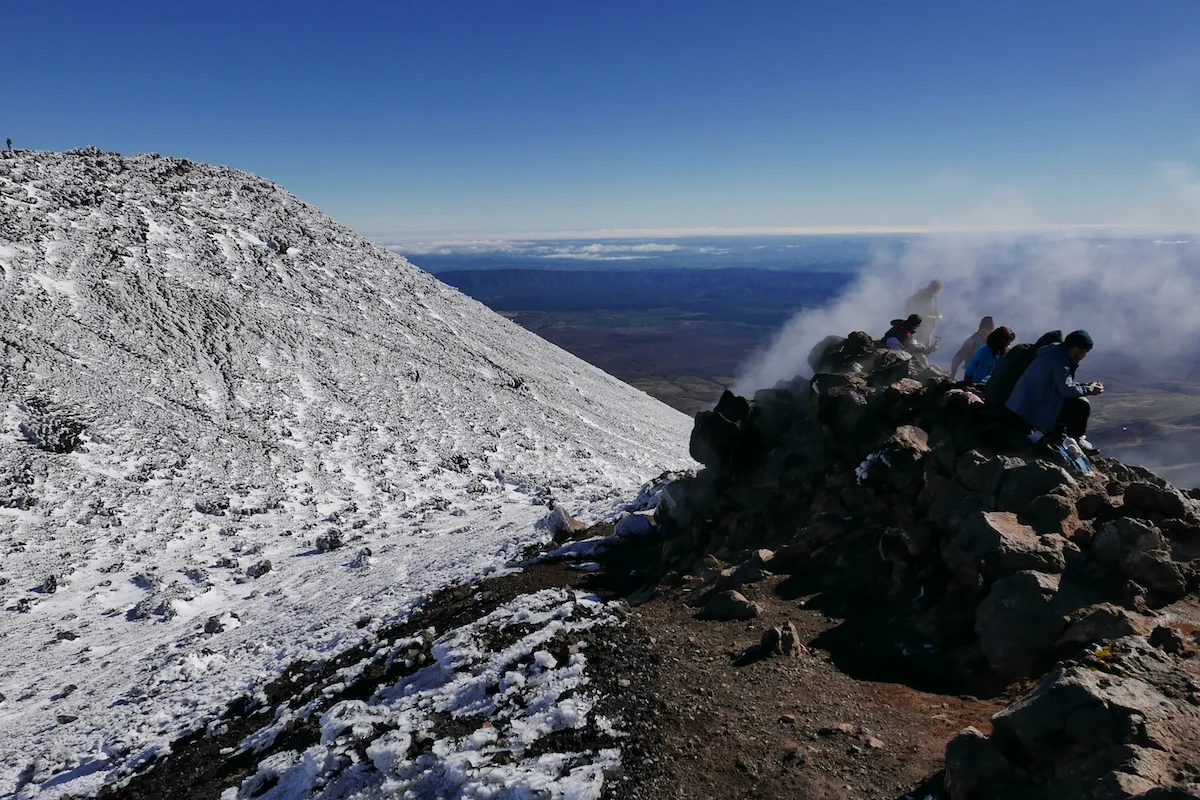
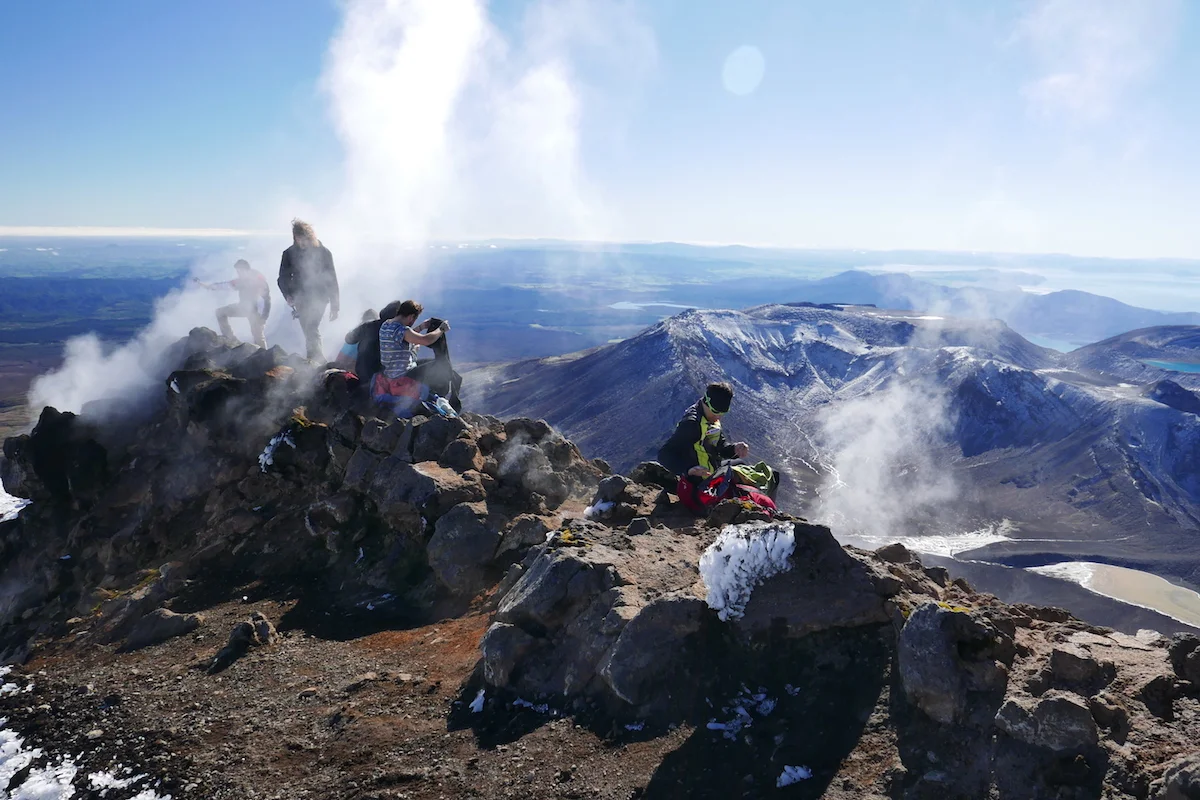
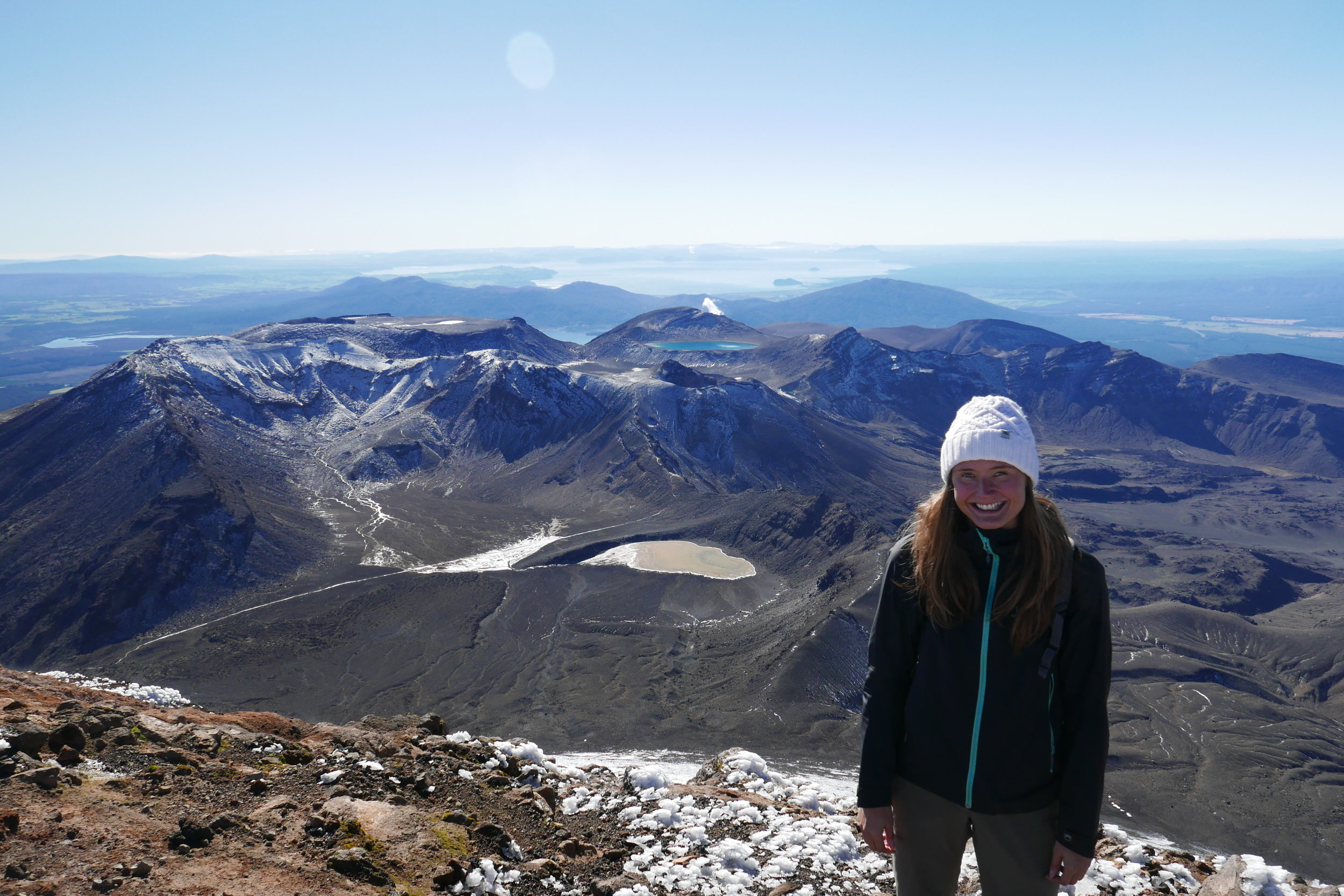
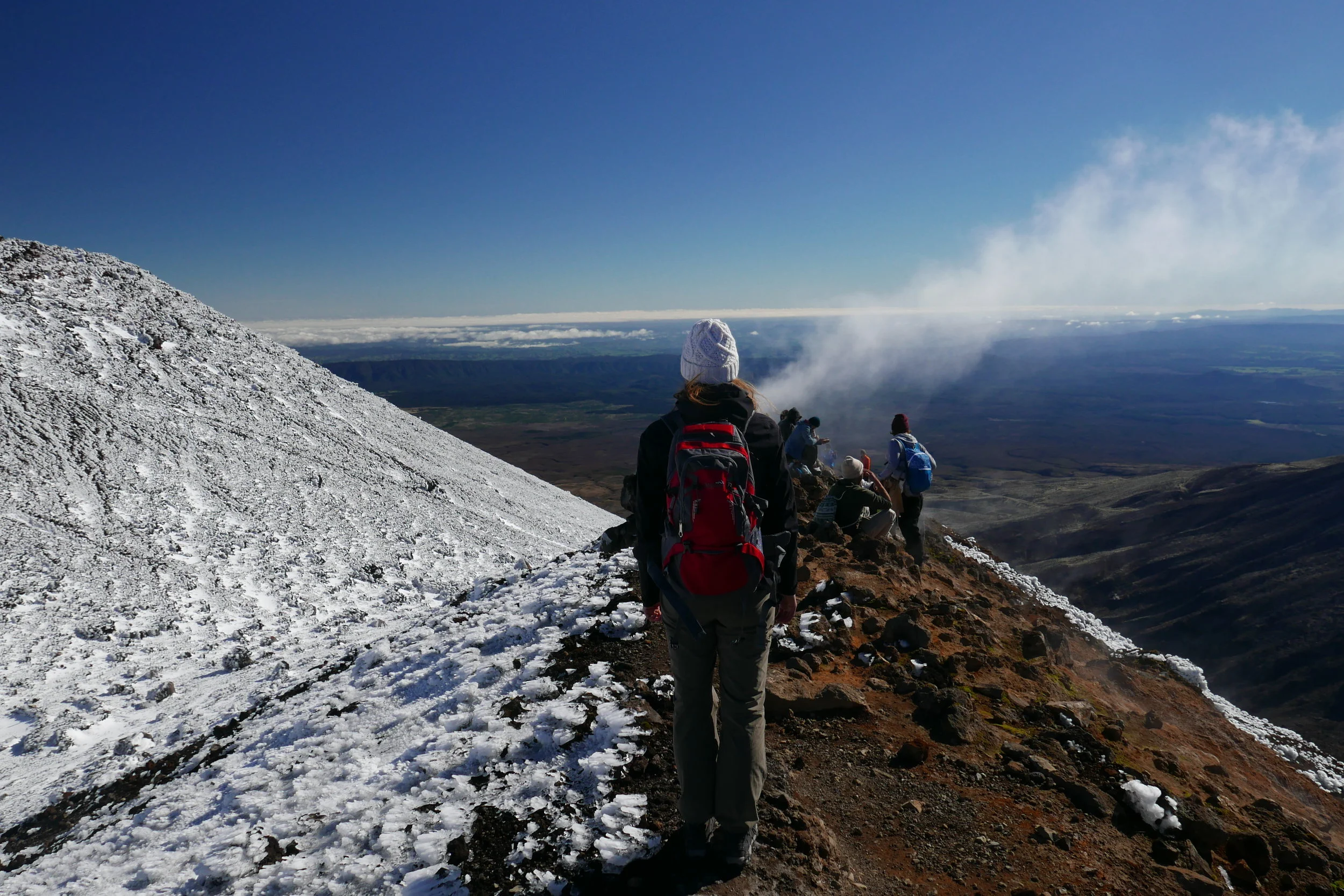
I only found out later (should have read all the Wikipedia info before doing the crossing) that nothing was actually filmed at the top of Mt. Ngarurahoe as it’s a sacred Maori place. This mountain was used as a place-holder and the close-up scenes we’re filmed at Mt Ruapehu so any of the ring photos people took are technically at the wrong mountain!
Coming down was a lot quicker. I started out slow and carefully backtracking my steps but the guys were already half-way down sliding on the snow and gravel on their assess and running along with the sliding gravel. Sliding down was actually a lot of fun – except I worried of my pants tearing open at any point – but you really needed to focus on not going too fast or twisting your ankles. Coming down I dreamed about fresh snow and snowboarding it because people do ski these walls down during winter.
You know the feeling that you’ve accomplished a lot and you think the majority of the walk and work is behind you? Well that’s how we felt after being on the road for 4 hours until we saw the main walk signs saying we still have majority of the actual walk left – 13,4km to be exact. I also had promised to the guys that “yeah I think majority of the climbing is behind is” and I was quite wrong on saying that because the main climb of the crossing was ahead of us.
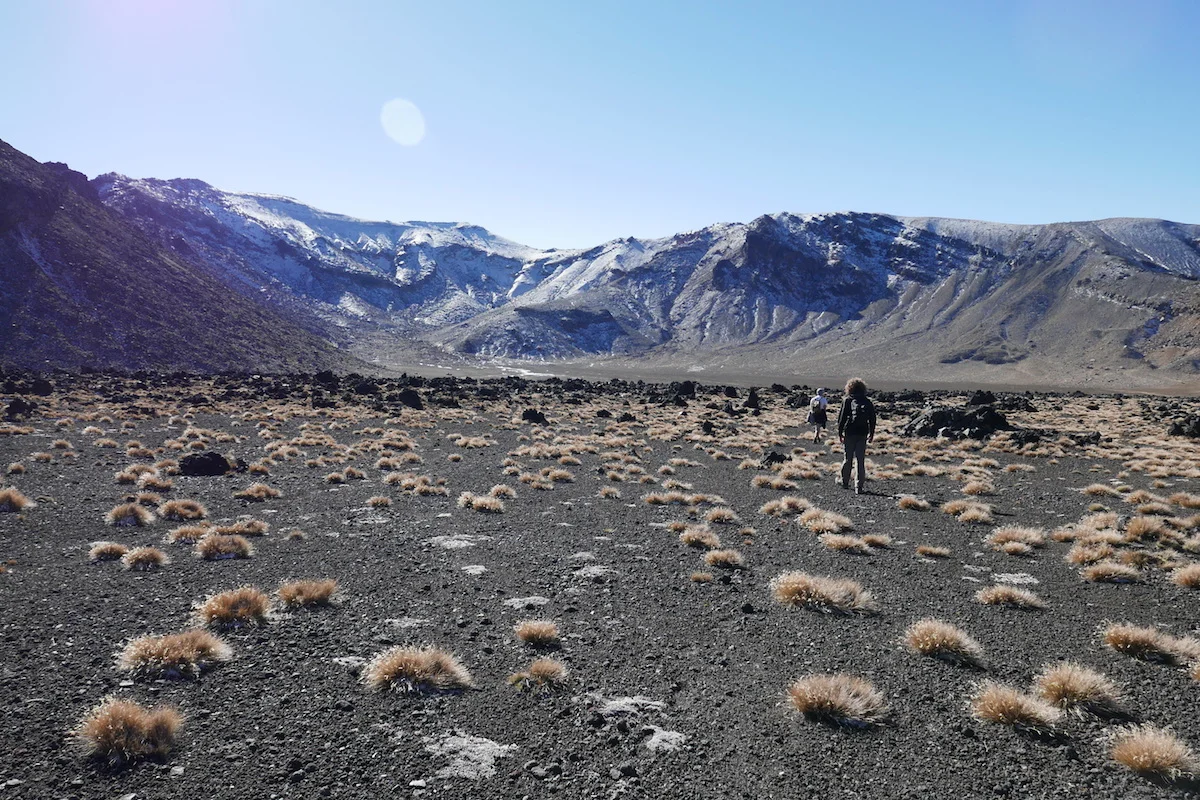
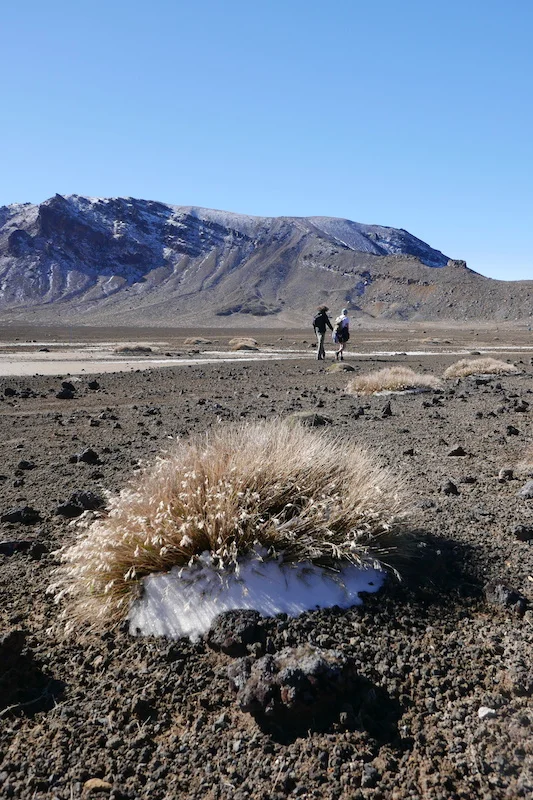
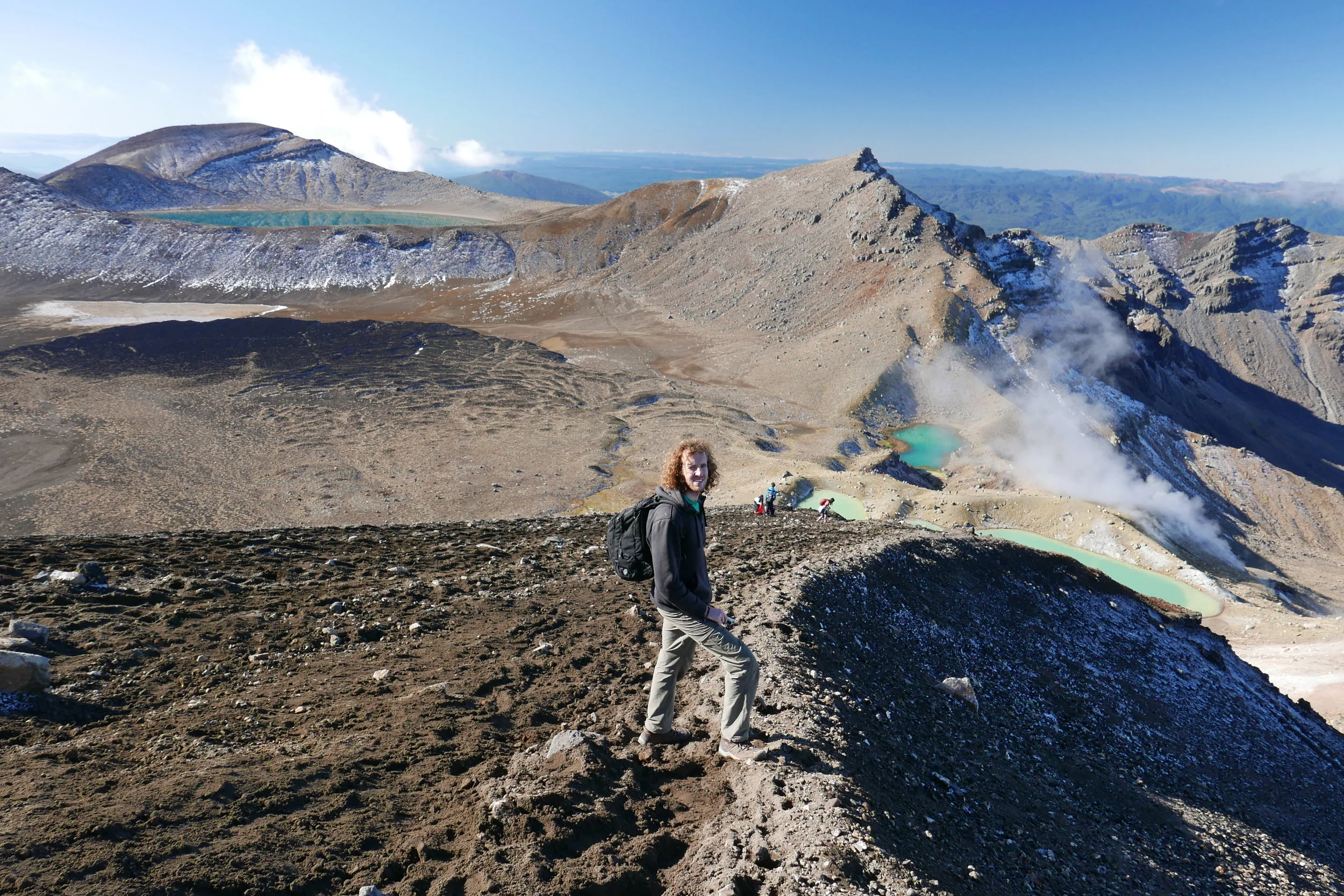
After the climb you get to the most-photographed point of the Tongariro Crossing – Blue pools. A lot of people walk here and then turn back and later I learned why. The crowds were definitely thinning the further we walked, at the Emerald Lake we barely saw anyone and after that the paths were clear for a long way.
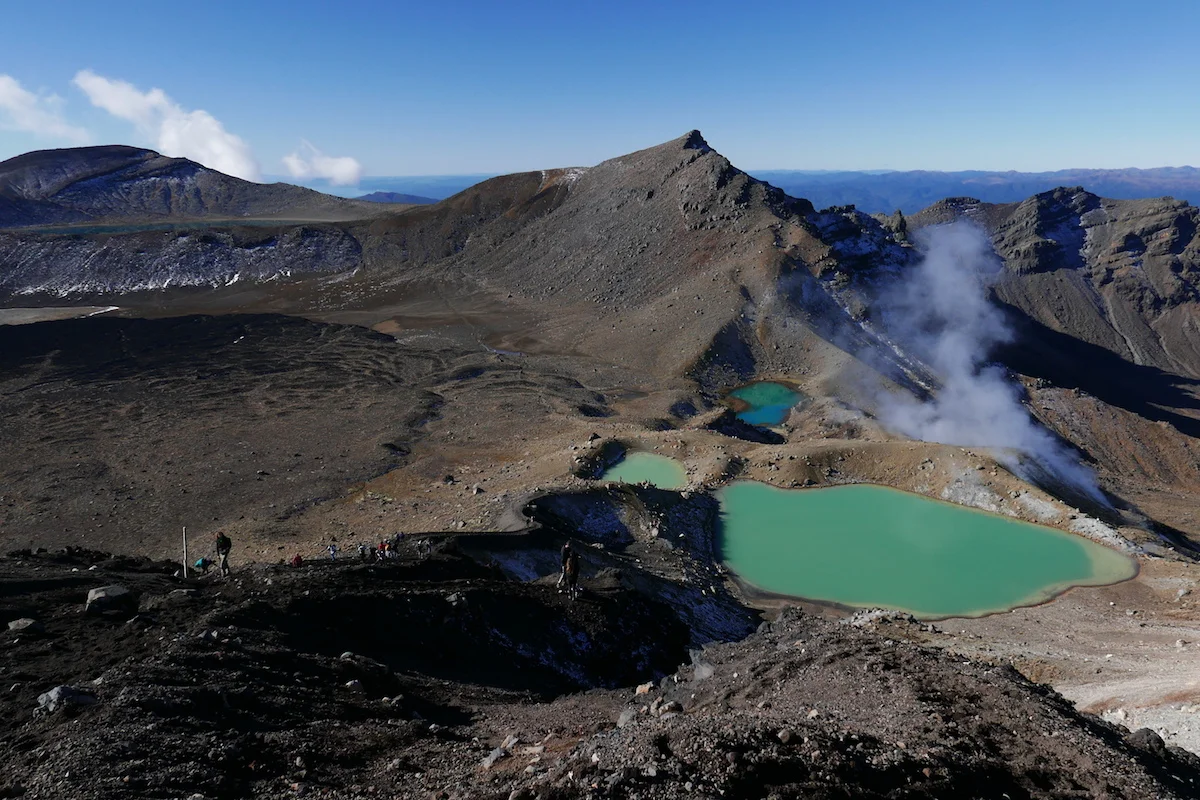
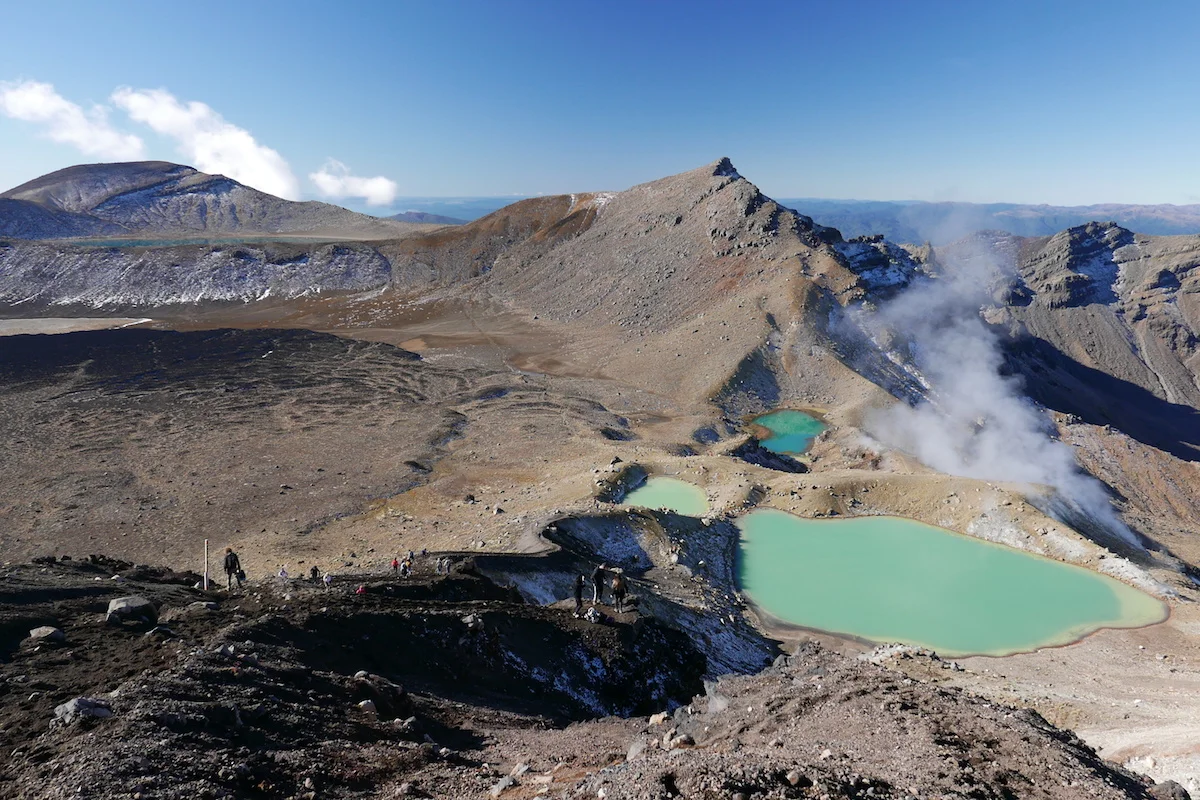
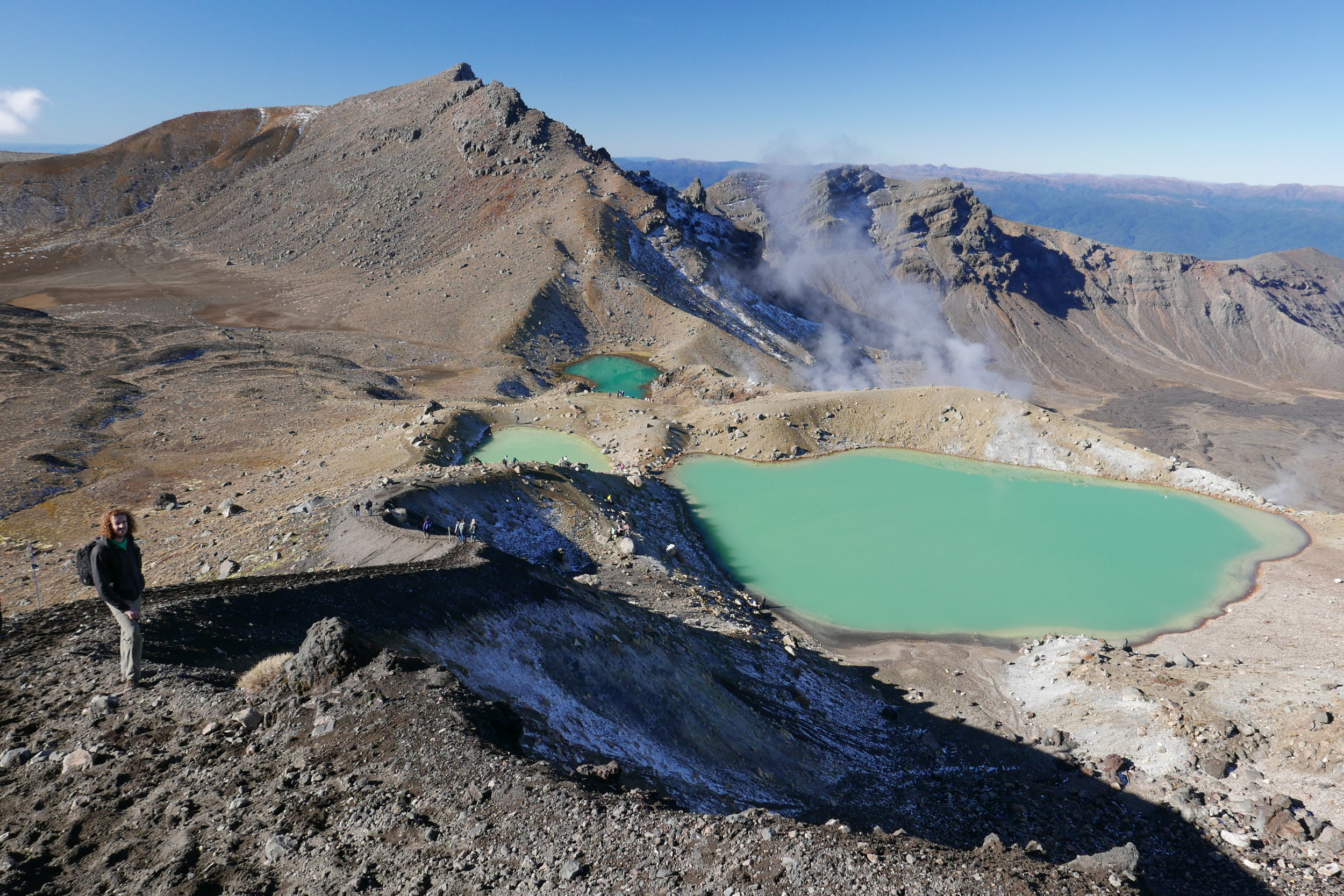
It turns out that all the kilometers after Emerald Lake is very, very boring. And there was still almost seven of those kilometers left. And the worst part is that you can see the pathway going down the hills, you can see it far away in the horizon so it doesn’t stop mocking you and your tired pace at any point. You feel like it won’t end, ever. You calculate in your head that “surely we’ve come 6km now, there should only be 1km left” and then you see a sign telling you “3km to go!”. %!€%#!”!!€
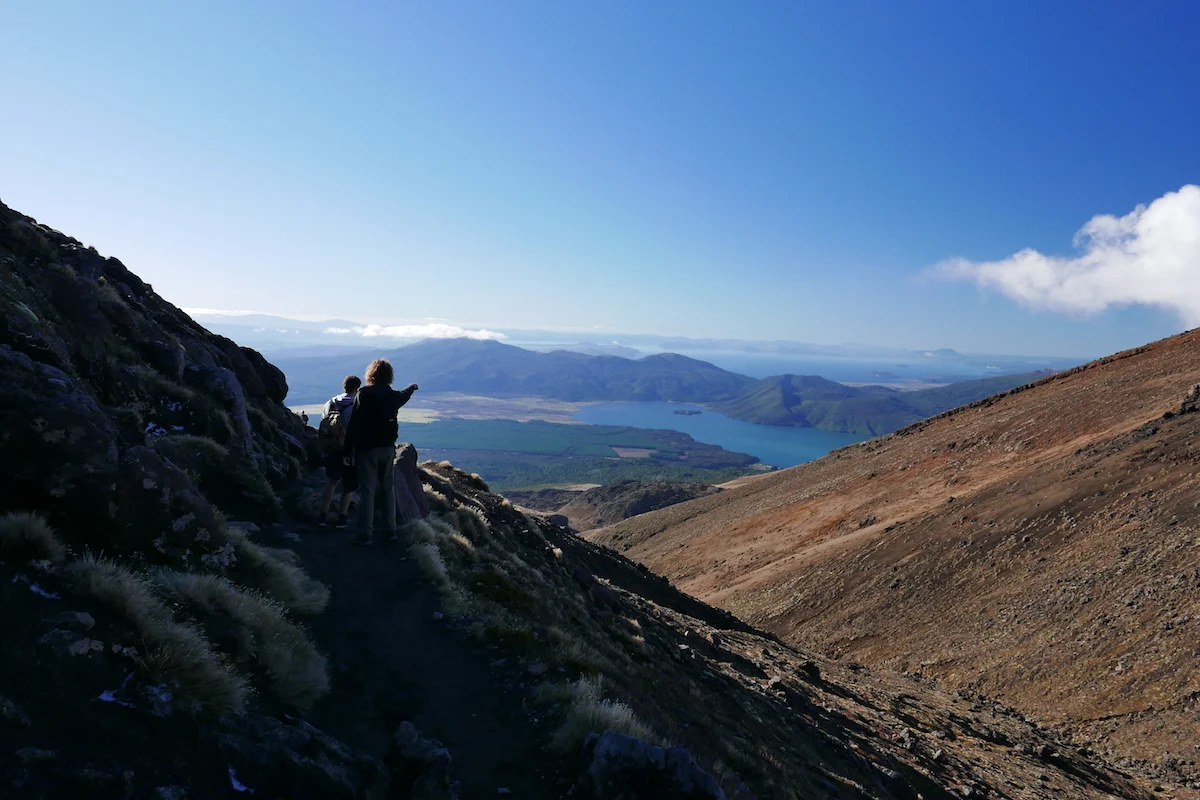
Still 7km to go..
We did made it in the end, the time was 5pm so we weren’t nearly as fast as we thought we would be but at least we got out before dark. Only the painful drive to pick-up the other car from the start through one of the worst gravel roads I’ve seen – in the morning already three cars had punctured tyres.
Instead of spending another extremely cold night in the car without a shower I used my “I am an adult with some money and I refuse to live like this”- card and got us a room in a hostel/motel. Best decision ever.
Definitely the most challenging walk and of the best ones in terms of scenery we’ve done and I would recommend it with Mt. Ngarurahoe climb – I bet without it this wouldn’t feel as rewarding ;). I might consider walking it the other direction because then you have cleared the most boring part first and after the mountain climb you have only 6.6km to go instead of 13.4.